

MOBILITY & PHYSICAL RECOVERY

Sitting Balance After a Stroke.

A calmer, easier-to-scan guide to why sitting balance can change after stroke, what may help, and when to seek professional advice.

AFO (Ankle Foot Orthosis) After Stroke

AFO (Ankle Foot Orthosis) After Stroke

July 05, 20266 min read

An Ankle Foot Orthosis (AFO) can improve walking, reduce trips and increase confidence after a stroke. Learn how AFOs work, who they help, the different types available and whether you will need one long term

You Want to Walk Naturally Again

After a stroke, even something as simple as taking a step can become difficult.

Your foot may drag.

Your toes catch the floor.

Every uneven surface feels like a hazard.

You start watching the ground instead of enjoying the walk.

An Ankle Foot Orthosis (AFO) is designed to make walking safer by supporting your foot and ankle during each step.

For many stroke survivors, an AFO provides the confidence needed to start walking further and more safely again.

✦ ✦ ✦

The Good News

Many stroke survivors, including myself find that an AFO immediately improves their walking.

It may:

✓ Reduce trips.

✓ Improve balance.

✓ Increase confidence.

✓ Make walking less tiring.

✓ Allow longer walks.

For some people, an AFO is temporary.

For others, it becomes a valuable long-term mobility aid.

Both are completely normal.

✦ ✦ ✦

What Is an AFO?

An Ankle Foot Orthosis (AFO) is a lightweight brace worn around the lower leg and foot.

Its purpose is to hold the foot in a better position while walking.

Instead of allowing the toes to drop towards the ground, the brace helps keep the foot lifted during the swing phase of walking.

This reduces the risk of catching your toes and falling.

✦ ✦ ✦

Why Do Stroke Survivors Need an AFO?

After a stroke, communication between the brain and the muscles controlling the ankle may be disrupted.

This can lead to:

✓ Foot drop

✓ Knee hyperextension

✓ Ankle instability

✓ Poor balance

✓ Increased risk of falls

An AFO does not cure these problems.

Instead, it provides external support while your brain continues to recover through rehabilitation.

✦ ✦ ✦

How Does an AFO Work?

An AFO supports your ankle in a more stable position throughout your walking cycle.

It helps:

✓ Lift the toes.

✓ Prevent the foot from rolling inwards or outwards.

✓ Improve knee control.

✓ Encourage a smoother walking pattern.

✓ Reduce compensatory movements.

Many people notice they walk more efficiently because they no longer need to lift their knee excessively or swing their leg around.

✦ ✦ ✦

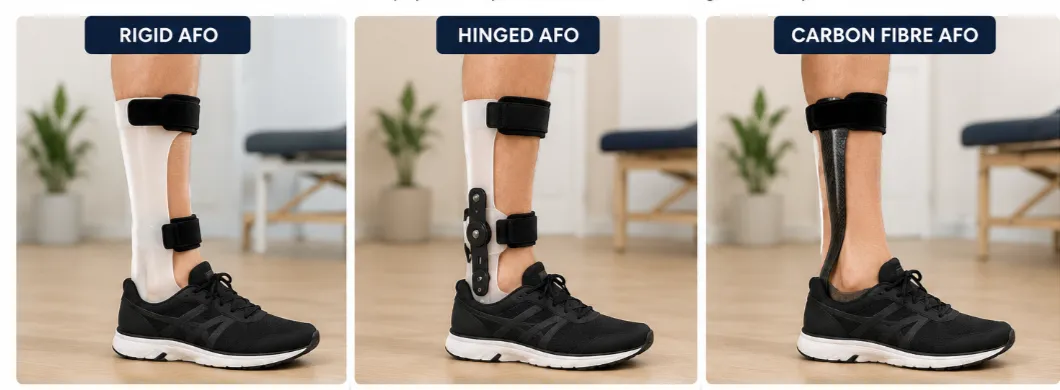
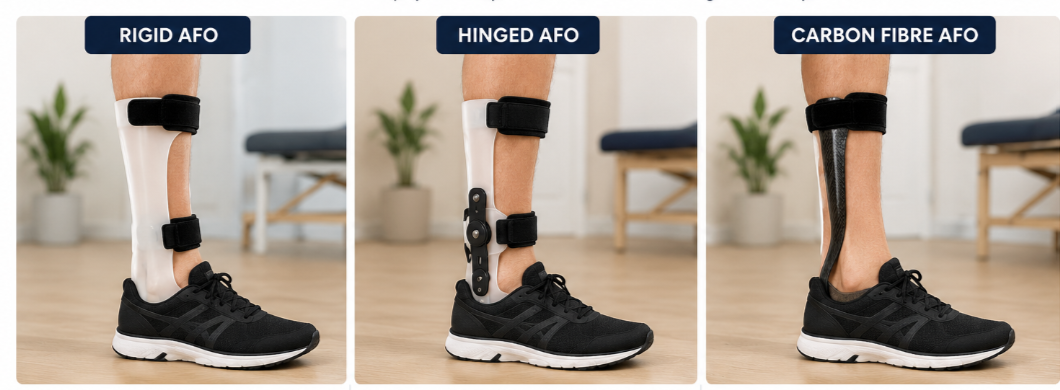
Different Types of AFO

There isn't one AFO that suits everyone.

Rigid AFO

Provides maximum support.

Often recommended for significant weakness or instability.

Hinged AFO

Allows some ankle movement while still providing support.

Often suitable as strength improves.

Carbon Fibre AFO

Lightweight and spring-like.

Designed to assist a more natural walking pattern.

Often used by people with mild to moderate foot drop.

✦ ✦ ✦

What Does It Feel Like to Wear an AFO?

When you first wear an AFO, it can feel strange.

Some people describe it as:

  • Stiff.

  • Restrictive.

  • Unusual.

This is completely normal.

Most people need time to adapt.

As walking becomes easier and more stable, the brace often begins to feel much more natural.

✦ ✦ ✦

Can an AFO Slow Down Recovery?

This is one of the most common questions stroke survivors ask.

The answer is usually no.

An AFO doesn't stop your brain learning.

Instead, it allows you to practise walking more safely and with better movement quality.

Your physiotherapist may encourage you to practise some exercises without the AFO in a safe environment while using it for everyday walking.

✦ ✦ ✦

Physiotherapy and an AFO

An AFO works best when combined with rehabilitation.

Physiotherapy may include:

✓ Strengthening exercises.

✓ Balance training.

✓ Gait training.

✓ Stretching.

✓ Functional practice.

The brace supports your walking.

Your exercises help retrain your brain.

Together, they complement each other.

✦ ✦ ✦

Practical Tips

Wear the Right Shoes

Choose supportive trainers with enough room to comfortably fit the AFO.

Check Your Skin

Inspect your foot and ankle daily for redness or pressure areas.

Build Up Gradually

Start with short periods of walking before increasing the time.

Keep It Clean

Follow your orthotist's instructions for cleaning your AFO.

Attend Follow-Up Appointments

As your walking changes, your AFO may need adjustment.

✦ ✦ ✦

When Should You Seek Advice?

Contact your rehabilitation team if:

✓ Your AFO causes pain.

✓ You notice skin breakdown.

✓ Your walking becomes worse.

✓ The brace feels loose.

✓ The AFO cracks or becomes damaged.

✦ ✦ ✦

My Perspective

When I first wore an AFO, I wasn't thinking about recovery.

I was thinking about not falling.

The brace immediately made walking feel safer.

It wasn't the end of my rehabilitation—it was part of it.

As my walking improved, I gradually needed it less.

Looking back, the AFO gave me confidence during a stage when confidence was something I desperately needed.

✦ ✦ ✦

Frequently Asked Questions

Will I always need an AFO?

Not necessarily. Some people use one temporarily, while others benefit from long-term support.

Can I drive wearing an AFO?

This depends on which foot is affected, your vehicle and local driving regulations. Speak to your healthcare professional before driving.

Can I wear an AFO inside any shoe?

Yes. Supportive footwear is usually recommended to ensure the AFO fits correctly and works effectively.

Can I exercise wearing an AFO?

Often, yes. Many people wear their AFO during walking practice and everyday activities, although some rehabilitation exercises may be performed without it under professional guidance.

✦ ✦ ✦

Related Articles

  • Foot Drop After Stroke

  • Walking After Stroke

  • Functional Electrical Stimulation (FES)

  • Knee Hyperextension (Genu Recurvatum)

  • Balance Problems After Stroke

  • Gait Training After Stroke

  • Neuroplasticity After Stroke

✦ ✦ ✦

Key Takeaways

✓ An AFO supports the foot and ankle during walking.

✓ It helps reduce trips and improve confidence.

✓ Different types of AFO suit different levels of recovery.

✓ An AFO works best alongside physiotherapy.

✓ Many stroke survivors continue improving while wearing an AFO.

✦ ✦ ✦

About the Author

Alisia Gayle is a stroke survivor who achieved 96% neurological recovery following an ischaemic stroke.

After years of rehabilitation, she now shares practical, evidence-informed resources to help stroke survivors, carers and families better understand recovery and rebuild their lives with confidence.

Alisia is also the author of Brain Damage: My Journey to 96% Recovery, where she shares her personal stroke recovery story and the lessons she learned throughout her rehabilitation.

✦ ✦ ✦

Medical Disclaimer

This article is intended for educational purposes only and should not replace professional medical advice, diagnosis or treatment.

Always seek advice from your doctor, physiotherapist or rehabilitation team regarding symptoms, concerns or changes in your condition.

Final Thoughts

  • An AFO isn't a sign that you've stopped recovering.

  • For many people, it's the tool that allows recovery to continue.

  • Every safe step...

  • Every walk...

  • Every day you keep moving...

  • Gives your brain another opportunity to learn.

  • Recovery isn't about walking perfectly.

  • It's about walking forward—one step at a time

blog author avatar
Stroke Survivor and Author
Back to Blog

What you’ll learn

Why sitting balance can be affected after a stroke

Common problems people notice day to day

Simple rehabilitation approaches that may help

When changes in balance need medical attention

Why sitting balance matters

Sitting balance is often one of the foundations for standing, walking and everyday activities. After a stroke, some people find it difficult to sit upright without support, lean to one side, or feel unsteady when reaching.

The good news

Sitting balance often improves with rehabilitation, practice and time. Even small improvements can support confidence and independence.

Why can balance change after a stroke?

A stroke may affect several systems that help you stay upright, including strength, coordination, sensation, body awareness and balance control.

Strength

Trunk muscles may become weaker or slower to respond.

Coordination

Movements may feel less automatic or less controlled.

Sensation

You may have less feedback about where your body is in space.

Confidence

Fear of falling can make movement feel harder.

Common sitting problems after a stroke

  • Leaning to one side

  • Difficulty sitting upright without support

  • Feeling unstable when reaching

  • Falling or drifting backwards

  • Increased fatigue during longer periods of sitting

Some people may also experience pusher syndrome, where they actively push towards their weaker side. This should be assessed by a rehabilitation professional.

What May Help

Physiotherapy and occupational therapy often work on trunk control, weight shifting, posture, coordination and everyday activities.

Examples of exercises

  • Sitting unsupported for short periods

  • Gentle reaching tasks

  • Weight shifting from side to side

  • Trunk strengthening

  • Practising on different safe surfaces when appropriate

Keep it individual

Exercises should be matched to your own abilities and professional advice.

More detail: posture and positioning

Helpful strategies may include keeping both feet supported, maintaining an upright posture, and using supportive cushions when recommended.

More detail: fatigue and balance

Balance can become worse when you are tired. Regular rest periods and shorter practice sessions may help.

More detail: tips for family and carers

Encourage safe practice, avoid unexpected pulling or pushing, and help maintain good posture while celebrating small improvements.

When should you seek medical advice?

Arrange an appointment with a healthcare professional if sitting balance is worsening, falls are occurring, new weakness develops, or balance problems are significantly affecting daily activities.

Seek urgent medical attention for sudden new weakness, new speech difficulties, sudden confusion or sudden vision changes.

Key takeaways

Sitting balance is commonly affected after stroke.

Weakness, sensation and body awareness can all contribute.

Good sitting balance supports everyday activity and later mobility.

Recovery can continue over months and years.

Frequently asked questions

Is poor sitting balance common after a stroke?

Yes. Many stroke survivors experience difficulty with sitting balance, particularly during earlier stages of recovery.

Will my sitting balance improve?

Many people improve through rehabilitation, ongoing recovery and repeated practice.

Can exercises help?

Targeted exercises can help improve trunk control, balance and confidence when they are appropriate for the individual.

About Alisia

Alisia Gayle is a stroke survivor who achieved 96% neurological recovery following an ischaemic stroke.

After years of rehabilitation, she now shares practical, evidence-informed resources to help stroke survivors, carers and families better understand recovery and rebuild their lives with confidence.

Alisia is also the author of Brain Damage: My Journey to 96% Recovery, where she shares her personal stroke recovery story and the lessons she learned throughout her rehabilitation.

Next articles

Medical disclaimer

This article is intended for educational purposes only and should not replace professional medical advice, diagnosis or treatment.

Always seek advice from your doctor, physiotherapist or rehabilitation team regarding symptoms, concerns or changes in your condition.

Alisia Gayle is a stroke survivor, author, and advocate whose life was transformed in a single, ordinary day.

Contact us

800 1234 5678

FOLLOW US

Copyright 2026. Alisia Gayle | Stroke Recovery Through Lived Experience. All Rights Reserved.