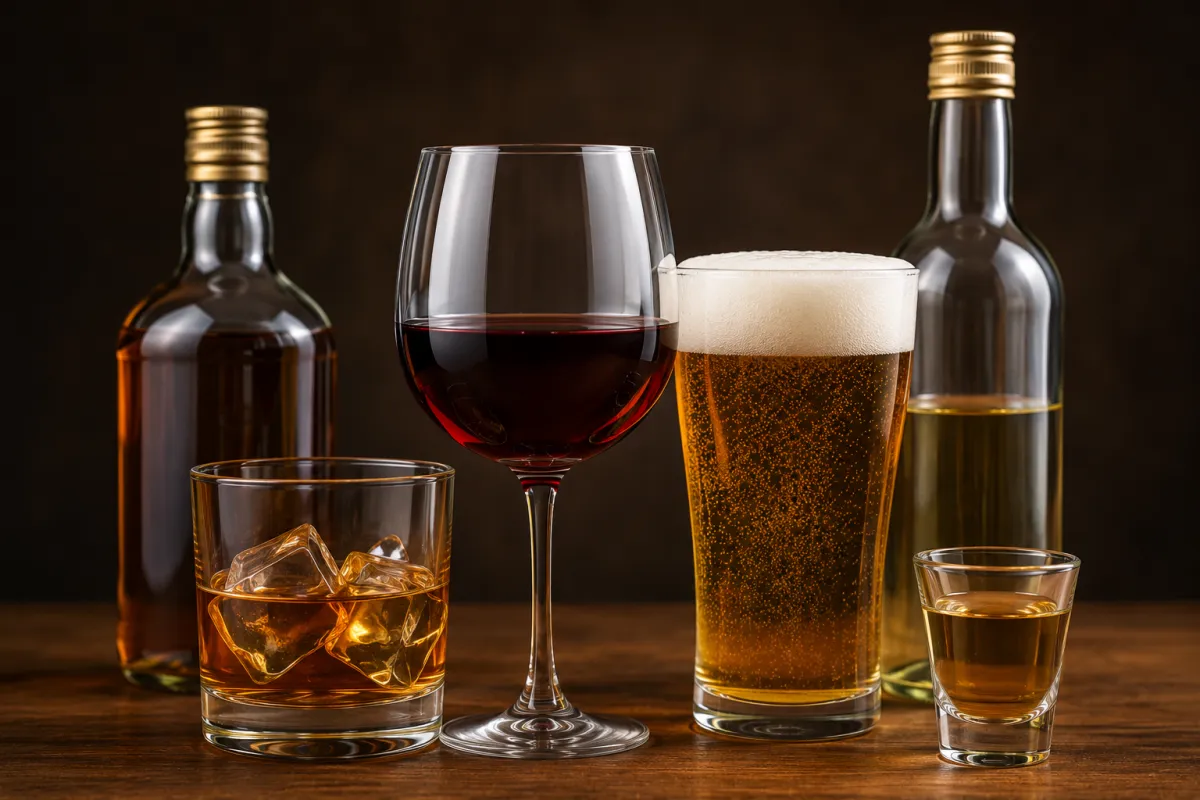
Drinking alcohol after a stroke is not automatically forbidden for everyone, but alcohol can affect blood pressure, heart rhythm, balance, judgement, medication and overall cardiovascular health. Heavy drinking and binge drinking can increase stroke risk, while some people may be advised to avoid alcohol completely because of their medication, medical conditions or the cause of their stroke. If you do drink, understanding your personal risk and staying within recommended limits is important.
After your stroke...
You may suddenly question things you never thought twice about before.
Can I have a glass of wine?
What about a beer with dinner?
Can I drink at Christmas?
Will alcohol interfere with my medication?
Could drinking cause another stroke?
Perhaps alcohol was already part of your social life.
Maybe you only drank occasionally.
Perhaps you drank heavily before your stroke and are now wondering whether that contributed.
Or perhaps you have stopped completely because you are frightened of doing anything that might increase your risk.
You begin wondering...
"Is any amount of alcohol safe?"
"Do I have to give it up forever?"
"Is red wine actually good for the heart?"
"What happens if I drink while taking stroke medication?"
"How much is too much?"
These are important questions.
Because alcohol affects much more than your liver.
It can influence your blood pressure.
Your heart.
Your coordination.
Your judgement.
And ultimately...
Your stroke risk.
✦ ✦ ✦
The Good News
Having had a stroke does not necessarily mean that every person must avoid alcohol permanently.
But it does mean you need to be more thoughtful about drinking.
Current UK guidance advises both men and women not to regularly drink more than 14 units of alcohol per week if they choose to drink. Those units should be spread over at least three days rather than concentrated into one or two heavy drinking sessions.
And there is an important point that often gets lost:
14 units is not a target.
You do not need to drink 14 units.
Drinking less reduces your exposure.
And if you do not currently drink alcohol, there is no health reason to start. NHS guidance is clear that there is no completely risk-free level of alcohol consumption.
After stroke, your doctor may recommend a lower amount or complete avoidance depending on your individual circumstances.
✦ ✦ ✦
How Can Alcohol Increase Stroke Risk?
Alcohol can influence several recognised stroke risk factors.
Heavy or excessive drinking may contribute to:
✓ High blood pressure
✓ Abnormal heart rhythms
✓ Weight gain
✓ Poor diabetes control
✓ Raised triglycerides
✓ Liver disease
✓ Reduced medication adherence
✓ Falls and injuries
Alcohol is recognised as a contributor to cardiovascular disease, including stroke, particularly when consumption becomes excessive.
The risk is not simply:
"Alcohol enters the body and causes a stroke."
The relationship is often more complicated.
Alcohol may increase another condition...
Which then increases stroke risk.
One of the clearest examples is high blood pressure.
✦ ✦ ✦
Alcohol and High Blood Pressure
High blood pressure is one of the most important modifiable risk factors for stroke.
Heavy habitual drinking can raise blood pressure.
Large amounts consumed during a single drinking session can also cause blood pressure to rise substantially.
That matters enormously after stroke.
Perhaps your healthcare team has spent months trying to bring your blood pressure under control.
You take medication.
You reduce salt.
You monitor your readings.
Then several nights of heavy drinking may work against those efforts.
If you already have hypertension, reducing alcohol may form part of your overall blood-pressure management strategy.
Do not focus entirely on medication while ignoring lifestyle factors that may be pushing your blood pressure in the opposite direction.
✦ ✦ ✦
Alcohol and Atrial Fibrillation
Alcohol can also affect heart rhythm.
Atrial fibrillation, often shortened to AF, is an irregular heart rhythm that can significantly increase the risk of ischaemic stroke because blood clots can form inside the heart and travel to the brain.
Heavy and binge drinking are particularly concerning.
Current UK alcohol-treatment guidance identifies binge drinking as a risk factor for atrial fibrillation and notes that AF risk increases as alcohol intake rises.
If your stroke was associated with atrial fibrillation, this is particularly relevant.
Ask your cardiologist, stroke specialist or GP what level of alcohol, if any, is appropriate for you.
General population guidance does not automatically override your individual medical advice.
✦ ✦ ✦
What Exactly Is a Unit of Alcohol?
Alcohol units help measure how much pure alcohol you are consuming.
In the UK, one unit equals 10 millilitres or 8 grams of pure alcohol.
The number of units in a drink depends on:
✓ The size of the drink
✓ The percentage of alcohol
A stronger wine contains more units than a weaker wine of the same volume.
A large glass contains more than a small glass.
A strong craft beer may contain considerably more alcohol than a standard lager.
This is why:
"I only had two drinks"
does not tell you much.
Those two drinks might contain four units.
Or eight.
It depends on what you actually drank.
✦ ✦ ✦
What Does 14 Units Look Like?
Current NHS guidance gives a rough comparison.
Fourteen units is approximately equivalent to:
✓ Six pints of average-strength beer
or
✓ Around six medium glasses of average-strength wine
depending on the exact alcoholic strength.
Again...
That is a weekly upper guideline for people choosing to drink regularly.
It is not permission to save everything for Saturday night.
If you regularly drink as much as 14 units per week, UK guidance recommends spreading it across at least three days.
Seven drinks in one evening is not equivalent, from a health perspective, to smaller quantities spread across a week.
✦ ✦ ✦
Why Is Binge Drinking Particularly Concerning?
Binge drinking exposes the body to a large amount of alcohol over a short period.
This can affect:
✓ Blood pressure
✓ Heart rhythm
✓ Coordination
✓ Judgement
✓ Hydration
✓ Blood glucose
Heavy episodic drinking is associated with cardiovascular harm and can increase the likelihood of arrhythmias such as atrial fibrillation.
After a stroke, there may be another problem.
You may already have:
✓ Reduced balance
✓ Weakness
✓ Slower reactions
✓ Visual difficulties
✓ Fatigue
✓ Medication effects
Alcohol can add impairment on top of impairment.
That can significantly increase the risk of falling or injuring yourself.
✦ ✦ ✦
Alcohol Can Make Stroke Symptoms Feel Worse
You may notice that after drinking:
Your balance becomes worse.
Your speech becomes less clear.
Your affected leg feels less reliable.
Your thinking becomes slower.
You become more fatigued.
Alcohol impairs memory, coordination, sensory processing and motor function even in people who have never experienced a stroke.
Add those effects to a recovering brain and the difference may become much more noticeable.
This does not necessarily mean your stroke damage has suddenly worsened.
It may simply mean alcohol is temporarily reducing your ability to compensate for existing neurological difficulties.
But if you develop new or sudden neurological symptoms, do not assume they are caused by alcohol.
Seek urgent medical assessment.
✦ ✦ ✦
Alcohol and Post-Stroke Fatigue
Post-stroke fatigue can already make everyday activities exhausting.
Alcohol can make fatigue worse.
You may initially feel relaxed or sleepy after drinking.
But alcohol can interfere with sleep quality.
You may fall asleep quickly but wake feeling poorly rested.
For someone whose brain already needs more energy to perform everyday tasks, this can make the following day considerably harder.
Pay attention to your own response.
Perhaps one drink seems to cause:
✓ Severe tiredness
✓ Brain fog
✓ Headaches
✓ Poor concentration
✓ Worse balance
If that happens consistently, your body is giving you useful information.
You do not need to continue drinking simply because your intake technically falls below a population guideline.
✦ ✦ ✦
Can Alcohol Interact With Stroke Medication?
Yes.
Potential interactions depend on what medication you take.
After stroke, you may be prescribed medicines such as:
✓ Anticoagulants
✓ Antiplatelet medicines
✓ Blood-pressure medication
✓ Statins
✓ Diabetes medication
✓ Antidepressants
✓ Anti-seizure medication
Alcohol may interact differently with each of these.
For example, heavy drinking can increase bleeding concerns with some anticoagulant medicines.
Alcohol may also worsen dizziness or low blood pressure when combined with certain medications.
And some medicines are processed by the liver, making heavy alcohol consumption particularly problematic.
Do not rely on generic internet advice here.
Ask your doctor or pharmacist about your exact medication combination.
✦ ✦ ✦
What About Blood Thinners?
Many stroke survivors use the phrase "blood thinner" for anticoagulant or antiplatelet medicines.
If you take one, alcohol deserves additional attention.
Large amounts of alcohol may increase the chance of:
✓ Falls
✓ Injury
✓ Bleeding
This can become especially important if you are anticoagulated.
Imagine becoming intoxicated, losing your balance and hitting your head.
The issue is no longer simply the alcohol.
It is alcohol plus impaired balance plus medication that affects clotting.
That is why individual advice matters.
Do not stop your medication so that you can drink.
That would be backwards.
✦ ✦ ✦
Alcohol and Diabetes
If you have diabetes, alcohol may complicate blood-glucose management.
Some alcoholic drinks contain large amounts of carbohydrate or sugar.
Others may contribute to low blood glucose in certain people, particularly when alcohol is combined with diabetes medication or consumed without adequate food.
Alcohol also contains significant calories.
If diabetes contributed to your cardiovascular risk before the stroke, drinking heavily may make your prevention plan harder to manage.
Speak with your diabetes team about how alcohol fits your specific medication and meal plan.
✦ ✦ ✦
Alcohol and Weight
Alcohol contains calories.
Those calories can accumulate quickly, particularly when drinking becomes frequent.
NHS guidance notes that alcoholic drinks can make a substantial contribution to daily calorie intake.
Weight is not the only marker of health.
But if you are trying to lose excess weight because of high blood pressure, diabetes or cardiovascular risk, several drinks every evening can quietly undermine your progress.
Then there are the behavioural effects.
After drinking, you may also be more likely to eat:
Takeaways.
Crisps.
Fast food.
High-salt snacks.
Large portions.
So the calories in the drink may only be part of the problem.
✦ ✦ ✦
Is Red Wine Good for Your Heart?
This idea has survived for years.
You may hear:
"A glass of red wine is good for your heart."
That is not a good reason to begin drinking.
Current health advice does not recommend starting alcohol for cardiovascular protection.
Alcohol itself carries health risks, and NHS guidance states there is no completely safe level of drinking.
If you want cardiovascular benefits associated with Mediterranean-style living, focus on:
✓ Vegetables
✓ Fruit
✓ Wholegrains
✓ Fish
✓ Beans
✓ Nuts
✓ Olive oil
✓ Physical activity
You do not need wine to follow a Mediterranean diet.
✦ ✦ ✦
Should You Stop Drinking Completely After Stroke?
For some people, yes.
Complete avoidance may be particularly sensible or medically necessary if:
✓ Your doctor advises it
✓ Alcohol contributed significantly to your stroke risk
✓ You have alcohol dependence
✓ You have significant liver disease
✓ You take medication that should not be combined with alcohol
✓ Drinking repeatedly triggers atrial fibrillation
✓ Alcohol seriously worsens balance or cognition
✓ You have difficulty controlling how much you drink
✓ Alcohol is interfering with your rehabilitation
For other people, limited drinking may be considered acceptable.
The answer depends on the person.
That is why the question:
"Can stroke survivors drink?"
is too broad.
The better question is:
"Is alcohol safe for me, given my stroke, medication and medical history?"
✦ ✦ ✦
What If You Never Drank Before?
Do not start.
There is no need.
You do not need red wine for heart protection.
You do not need alcohol to socialise.
And you certainly do not need to begin drinking because someone claims small amounts are "healthy."
Alcohol is a psychoactive substance associated with multiple health risks.
If you are already a non-drinker...
Remain one if that suits you.
There is no cardiovascular disadvantage in refusing alcohol.
✦ ✦ ✦
What If You Only Drink Occasionally?
Occasional drinking may present a different risk profile from regular heavy drinking.
But quantity still matters.
Someone who drinks nothing for three weeks and then consumes twelve drinks in one night has not created a healthy drinking pattern.
Avoid the mindset:
"I don't drink often, so tonight doesn't count."
Binge drinking can still place considerable strain on the cardiovascular system, regardless of how infrequently it occurs.
Frequency matters.
But so does intensity.
✦ ✦ ✦
How Can You Reduce Your Alcohol Intake?
Start by finding out how much you actually drink.
Do not guess.
Record it for one or two weeks.
Include:
✓ Wine
✓ Beer
✓ Spirits
✓ Cocktails
✓ Drinks at home
✓ Weekend drinking
✓ Social drinking
People frequently underestimate drinks poured at home.
A "glass of wine" may actually be two or three standard measures.
Once you know your real intake, you can make practical changes.
✦ ✦ ✦
Have Alcohol-Free Days
If you drink regularly, build alcohol-free days into your week.
NHS guidance recommends several drink-free days when trying to reduce alcohol intake.
This can help break the habit of:
"Work finished, therefore wine."
Try replacing the routine with:
✓ Sparkling water
✓ Alcohol-free beer
✓ Alcohol-free wine
✓ Tea
✓ A walk
✓ Another evening ritual
Sometimes what you miss is not the alcohol.
It is the transition between one part of the day and another.
Create a new transition.
✦ ✦ ✦
Change the Size of Your Drink
Simple changes can reduce alcohol without making social occasions feel completely different.
Try:
✓ Smaller wine glasses
✓ Lower-strength beer
✓ Single rather than double spirits
✓ Alternating alcohol with water
✓ Choosing alcohol-free alternatives
✓ Not automatically refilling your glass
A larger glass can quietly turn one drink into several units.
Measure occasionally at home.
You may discover that your "small" home pour is anything but small.
✦ ✦ ✦
Do Not Use Alcohol to Manage Stroke Anxiety
After a stroke, anxiety can be intense.
You may worry about:
Another stroke.
Your health.
Your job.
Your finances.
Your relationships.
Your future.
Alcohol can temporarily make you feel more relaxed.
That can become dangerous.
If the pattern becomes:
Anxiety → alcohol → temporary relief,
your brain may begin treating drinking as a coping strategy.
Over time, you may need more alcohol to produce the same effect.
If you are drinking primarily to manage fear, stress, trauma or low mood after stroke, tell someone.
Speak with:
✓ Your GP
✓ Stroke team
✓ Psychologist
✓ Counsellor
✓ Mental health professional
Treat the problem you are trying to numb.
✦ ✦ ✦
What If You Are Drinking Heavily?
This needs different advice.
If you drink heavily every day or believe you may be dependent on alcohol, do not suddenly stop without medical advice.
Alcohol withdrawal can be dangerous in people who are physically dependent.
Current UK clinical guidance emphasises proper assessment and medically managed withdrawal where necessary.
Speak with your GP or specialist alcohol service.
Signs that drinking may need professional attention include:
✓ Needing alcohol every day
✓ Drinking in the morning
✓ Shaking when you do not drink
✓ Sweating during withdrawal
✓ Needing increasing amounts
✓ Being unable to stop once you begin
✓ Drinking despite serious health consequences
This is not the moment for a DIY detox.
Get medical help.
✦ ✦ ✦
The Emotional Impact
Alcohol can be tied closely to ordinary life.
A glass of wine with dinner.
Beer with friends.
Champagne at celebrations.
Drinks on holiday.
After stroke, being told to reconsider alcohol can feel like yet another restriction.
You may think:
"Is there anything I'm still allowed to enjoy?"
That feeling is understandable.
But try to separate enjoyment from one particular substance.
You are not being punished.
You are assessing risk.
Perhaps you can still drink occasionally.
Perhaps you decide alcohol is no longer worth it.
Either way, the decision should come from understanding your health rather than resentment about what has changed.
✦ ✦ ✦
My Perspective
After a stroke, people often want a simple answer.
Can I drink?
Yes or no?
Unfortunately, recovery rarely works that neatly.
The real answer depends on:
Why you had the stroke.
What medication you take.
Whether you have high blood pressure.
Whether you have atrial fibrillation.
Whether alcohol affects your balance.
How much you drink.
And whether you can genuinely stop at the amount you intended.
What I would not do is convince myself that alcohol is healthy because I enjoy it.
If you drink...
Be honest about the amount.
If one glass becomes four every evening...
That matters.
If drinking makes your balance worse...
That matters.
If your medication makes alcohol unsafe...
That matters.
And if you decide the simplest solution is not drinking at all...
That is perfectly reasonable too.
Protecting your brain is more important than proving that stroke has not changed your social life.
✦ ✦ ✦
When Should You Seek Medical Advice?
Speak with your doctor, pharmacist or stroke team if:
✓ You are unsure whether alcohol interacts with your medication
✓ You have atrial fibrillation
✓ You take anticoagulant medication
✓ You have uncontrolled high blood pressure
✓ Alcohol makes your neurological symptoms noticeably worse
✓ You experience frequent falls
✓ You have liver disease
✓ You have diabetes and are unsure how alcohol affects your treatment
✓ You regularly exceed recommended drinking limits
✓ You think you may be dependent on alcohol
Seek urgent medical attention for new symptoms of stroke.
Do not assume sudden slurred speech, weakness or confusion is simply because somebody has been drinking.
✦ ✦ ✦
Frequently Asked Questions
Can I Drink Alcohol After a Stroke?
Some stroke survivors may be able to drink limited amounts, but whether alcohol is appropriate depends on your stroke, medication and other health conditions.
Ask your healthcare professional if you are unsure.
How Much Alcohol Is Recommended in the UK?
For people who choose to drink regularly, UK guidance advises both men and women not to exceed 14 units per week and to spread consumption over at least three days.
Does Alcohol Increase Stroke Risk?
Excess alcohol consumption is associated with increased cardiovascular and stroke risk, particularly through mechanisms including raised blood pressure and abnormal heart rhythms.
Is Red Wine Protective Against Stroke?
You should not begin drinking red wine for cardiovascular protection.
Alcohol carries health risks, and there is no completely safe level of drinking.
Can Alcohol Affect Stroke Medication?
Yes.
The interaction depends on the medication.
Ask your doctor or pharmacist about your specific prescriptions.
Should I Quit Alcohol Completely?
Some people should.
Others may be able to drink small amounts.
Your medical history should determine the answer rather than a generic rule.
Is Binge Drinking Dangerous After Stroke?
Yes.
Heavy episodic drinking can raise blood pressure, impair coordination and increase the risk of atrial fibrillation and other cardiovascular problems.
✦ ✦ ✦
Key Takeaways
✓ Heavy drinking can increase stroke and cardiovascular risk.
✓ Alcohol can contribute to high blood pressure.
✓ Binge drinking can increase the risk of atrial fibrillation.
✓ UK guidance advises no more than 14 units per week for people who choose to drink regularly.
✓ Those units should be spread across at least three days.
✓ Fourteen units is an upper guideline, not a drinking target.
✓ Alcohol can worsen balance, fatigue, coordination and judgement after stroke.
✓ Alcohol may interact with stroke medications.
✓ You do not need to drink red wine for cardiovascular health.
✓ Some stroke survivors may be advised to avoid alcohol completely.
✓ If you are physically dependent on alcohol, seek medical advice before stopping suddenly.
✦ ✦ ✦
Related Articles
Continue learning about reducing stroke risk:
Smoking After Stroke
Diabetes and Stroke Risk
Salt and Blood Pressure After Stroke
Mediterranean Diet After Stroke
High Blood Pressure After Stroke
Cholesterol After Stroke
Preventing a Second Stroke
Healthy Eating After Stroke
Weight Management After Stroke
Exercise and Stroke Prevention
✦ ✦ ✦
About the Author
Alisia Gayle is a stroke survivor who achieved 96% neurological recovery following an ischaemic stroke.
After years of rehabilitation, she now shares practical, evidence-informed resources to help stroke survivors, carers and families better understand recovery and rebuild their lives with confidence.
Alisia is also the author of Brain Damage: My Journey to 96% Recovery, where she shares her personal stroke recovery story and the lessons she learned throughout her rehabilitation.
✦ ✦ ✦
Medical Disclaimer
This article is intended for educational purposes only and should not replace professional medical or alcohol-treatment advice.
The amount of alcohol that may be appropriate after stroke varies according to the type and cause of stroke, medication, blood pressure, heart rhythm, liver health and other individual factors.
Speak with your doctor, pharmacist or stroke team before drinking alcohol if you are uncertain about your personal circumstances.
If you drink heavily or may be physically dependent on alcohol, seek medical advice before stopping abruptly because withdrawal can require medical management.
Never change prescribed stroke medication because you want to drink alcohol.
✦ ✦ ✦
Final Thoughts
Alcohol after stroke...
Is not necessarily a simple question of:
Allowed.
Or forbidden.
What matters is risk.
How much are you drinking?
How often?
What medication are you taking?
What caused your stroke?
What happens to your balance when you drink?
What happens to your blood pressure?
What happens to your heart rhythm?
Those questions matter far more than whether somebody else with a stroke has a glass of wine every Friday.
Your brain has already experienced a major vascular event.
Protecting it deserves more thought than:
"I've always had a few drinks, so I'm carrying on."
If you choose to drink...
Know the units.
Keep the amount low.
Avoid binge drinking.
Have alcohol-free days.
Pay attention to medication interactions.
And be honest with yourself about how much you are actually consuming.
If you decide not to drink at all...
You are not missing a health benefit.
And if alcohol has become difficult to control...
Get professional help rather than attempting to manage dependence alone.
Because stroke prevention is rarely about one dramatic change.
It is about repeatedly removing risks where you reasonably can.
Alcohol may be one of them.