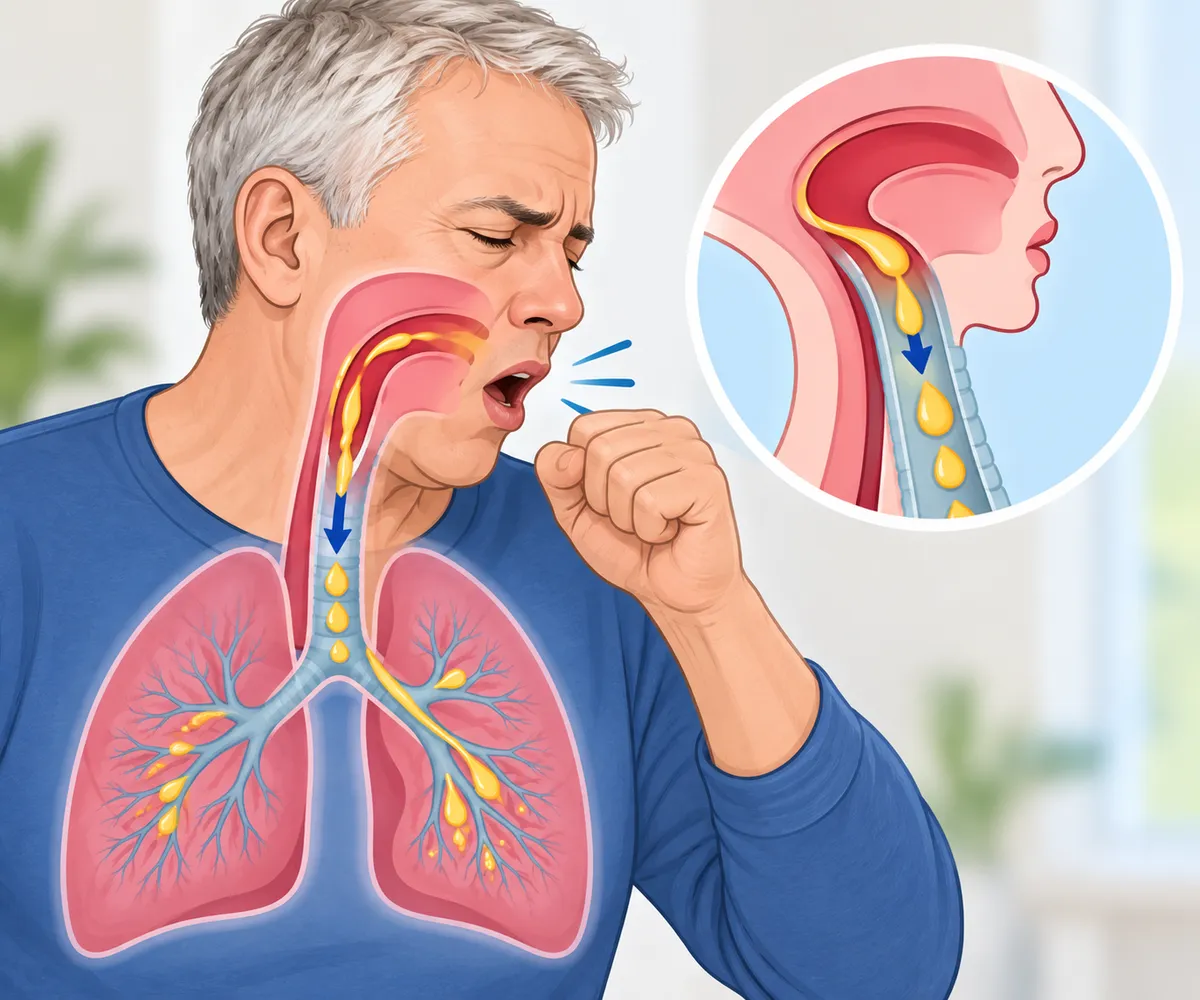
Aspiration after a stroke occurs when food, drink, saliva or stomach contents enter the airway instead of the stomach. It is a serious complication of swallowing difficulties (dysphagia) and can lead to chest infections or aspiration pneumonia. Learn the warning signs of aspiration, how it is diagnosed, and what you can do to reduce the risk.
After your stroke...
You cough after taking a sip of water.
Your voice sounds wet or gurgly after eating.
Food seems to go down the wrong way.
Or perhaps...
You don't cough at all.
Yet you keep developing chest infections.
You begin wondering...
"Could food be getting into my lungs?"
For some stroke survivors...
The answer is yes.
This is called aspiration, and it needs to be taken seriously.
✦ ✦ ✦
The Good News
Many people who experience aspiration after a stroke improve with the right treatment.
Speech and language therapy, swallowing exercises and practical changes to eating and drinking can greatly reduce the risk.
The earlier aspiration is recognised, the better the outcome.
✦ ✦ ✦
What Is Aspiration?
Aspiration happens when food, drink, saliva or stomach contents enter the airway and lungs instead of travelling safely into the stomach.
Normally, your swallowing reflex closes the airway to protect your lungs.
After a stroke, this protective mechanism may not work properly.
As a result, material can enter the lungs, increasing the risk of infection.
✦ ✦ ✦
Can a Stroke Cause Aspiration?
Yes.
A stroke can damage the areas of the brain that control swallowing.
This may affect:
✓ The tongue.
✓ The throat muscles.
✓ The timing of the swallow.
✓ The muscles that close the airway.
If these muscles don't work together properly, aspiration becomes more likely.
✦ ✦ ✦
What Is Silent Aspiration?
One of the biggest dangers after a stroke is silent aspiration.
Normally, if food enters the airway, you cough to clear it.
With silent aspiration...
Food or drink enters the lungs without causing any coughing or choking.
Because there are no obvious symptoms, it often goes unnoticed until complications such as chest infections develop.
This is why swallowing assessments are so important after a stroke.
✦ ✦ ✦
Warning Signs of Aspiration
Symptoms vary depending on the severity.
You may notice:
✓ Coughing during meals.
✓ Coughing after drinking.
✓ A wet or gurgly voice.
✓ Frequent throat clearing.
✓ Food sticking in your throat.
✓ Difficulty swallowing.
✓ Recurrent chest infections.
✓ Fever after eating.
✓ Shortness of breath.
✓ Unexplained weight loss.
Silent aspiration may cause no obvious symptoms at all.
✦ ✦ ✦
Why Is Aspiration Dangerous?
Aspiration can lead to serious complications, including:
✓ Aspiration pneumonia.
✓ Chest infections.
✓ Breathing difficulties.
✓ Lung inflammation.
✓ Malnutrition.
✓ Dehydration.
Aspiration pneumonia is one of the leading medical complications after a stroke.
Early recognition and treatment are essential.
✦ ✦ ✦
How Is Aspiration Diagnosed?
If aspiration is suspected, a speech and language therapist will assess your swallowing.
They may examine:
✓ Lip movement.
✓ Tongue movement.
✓ Voice quality.
✓ Swallowing ability.
✓ Cough strength.
Further investigations may include:
✓ Video Fluoroscopic Swallow Study (VFSS).
✓ Fibreoptic Endoscopic Evaluation of Swallowing (FEES).
These tests show exactly how food and drink move through your mouth and throat during swallowing.
✦ ✦ ✦
Treatment Options
Treatment depends on the cause and severity of the swallowing problem.
✦ ✦ ✦
Swallowing Therapy
Speech and language therapists teach exercises that strengthen the muscles involved in swallowing and improve coordination.
Regular practice often reduces the risk of aspiration.
✦ ✦ ✦
Modified Food and Drinks
Some people temporarily require:
✓ Thickened drinks.
✓ Soft foods.
✓ Puréed meals.
These textures move more safely through the throat and reduce the risk of aspiration.
Only change food textures under the guidance of your healthcare team.
✦ ✦ ✦
Safe Swallowing Techniques
You may be advised to:
✓ Sit upright while eating.
✓ Take small mouthfuls.
✓ Swallow twice.
✓ Eat slowly.
✓ Stay upright for at least 30 minutes after meals.
These simple strategies can significantly improve swallowing safety.
✦ ✦ ✦
Good Oral Hygiene
Keeping your mouth clean reduces harmful bacteria.
If aspiration occurs, fewer bacteria enter the lungs, lowering the risk of aspiration pneumonia.
Good oral hygiene is an important but often overlooked part of stroke recovery.
✦ ✦ ✦
Practical Tips to Prevent Aspiration
Sit Upright for Meals
Never eat or drink while lying down.
Good posture helps protect your airway.
✦ ✦ ✦
Eat Slowly
Take your time.
Small bites and sips are much safer than rushing meals.
✦ ✦ ✦
Avoid Talking While Eating
Focus on swallowing before speaking.
This reduces the chance of food entering the airway.
✦ ✦ ✦
Follow Your Swallowing Plan
Complete your swallowing exercises and follow advice about food textures and fluids.
These recommendations are designed to keep you safe.
✦ ✦ ✦
Keep Your Mouth Clean
Brush your teeth regularly and maintain good oral hygiene to reduce the risk of infection if aspiration occurs.
✦ ✦ ✦
Tips for Family and Carers
If you're supporting someone with swallowing difficulties:
✓ Ensure they sit upright during meals.
✓ Encourage slow eating.
✓ Offer small mouthfuls.
✓ Avoid distractions while eating.
✓ Watch for coughing or changes in voice quality.
✓ Follow all swallowing recommendations provided by the healthcare team.
Your support can significantly reduce the risk of aspiration.
✦ ✦ ✦
When Should You Seek Medical Advice?
Speak with your healthcare professional if:
✓ You cough regularly while eating or drinking.
✓ Your voice becomes wet or gurgly after meals.
✓ You have repeated chest infections.
✓ You develop a fever after swallowing difficulties.
✓ You lose weight without trying.
Seek emergency medical attention immediately if:
✓ You cannot breathe because your airway is blocked.
✓ You develop sudden difficulty swallowing.
✓ Swallowing problems occur alongside new weakness, facial drooping or speech difficulties.
These may be signs of another stroke or another medical emergency.
✦ ✦ ✦
My Perspective
Swallowing problems after a stroke can feel frightening.
But aspiration isn't something you should simply accept.
The right assessment...
The right therapy...
And a few practical changes...
Can make eating and drinking much safer.
Every safe swallow is helping you recover.
✦ ✦ ✦
Frequently Asked Questions
What Is the Difference Between Aspiration and Choking?
Aspiration occurs when food or drink enters the airway or lungs.
Choking happens when the airway becomes blocked, making it difficult or impossible to breathe.
Although related, they are different medical problems.
✦ ✦ ✦
Can Aspiration Improve After a Stroke?
Yes.
Many people improve with swallowing therapy, rehabilitation and time.
Recovery depends on the severity of the swallowing problem.
✦ ✦ ✦
What Is Silent Aspiration?
Silent aspiration occurs when food or drink enters the lungs without triggering coughing or obvious symptoms.
It can only be detected through specialist assessment.
✦ ✦ ✦
Can Aspiration Be Prevented?
In many cases, yes.
Following your swallowing programme, eating safely and following professional advice can significantly reduce the risk.
✦ ✦ ✦
Key Takeaways
✓ Aspiration occurs when food or drink enters the airway instead of the stomach.
✓ Stroke-related swallowing difficulties are a common cause.
✓ Silent aspiration may occur without coughing.
✓ Aspiration can lead to pneumonia and other serious complications.
✓ Speech and language therapy plays a key role in prevention and recovery.
✓ Safe swallowing techniques greatly reduce the risk.
✦ ✦ ✦
About the Author
Alisia Gayle is a stroke survivor who achieved 96% neurological recovery following an ischaemic stroke.
After years of rehabilitation, she now shares practical, evidence-informed resources to help stroke survivors, carers and families better understand recovery and rebuild their lives with confidence.
Alisia is also the author of Brain Damage: My Journey to 96% Recovery, where she shares her personal stroke recovery story and the lessons she learned throughout her rehabilitation.
✦ ✦ ✦
Medical Disclaimer
This article is intended for educational purposes only and should not replace professional medical advice, diagnosis or treatment.
Always seek advice from your doctor, speech and language therapist or other healthcare professional regarding symptoms, concerns or changes in your condition.
If you experience severe choking, difficulty breathing or sudden swallowing problems, seek emergency medical attention immediately.
✦ ✦ ✦
Final Thoughts
Swallowing safely is something we often take for granted...
Until a stroke changes it.
Every swallowing exercise...
Every safe meal...
Every small improvement...
Is helping protect your lungs and rebuild your confidence.
Take your time.
Trust the process.
Recovery happens one safe swallow, one meal and one day at a time.