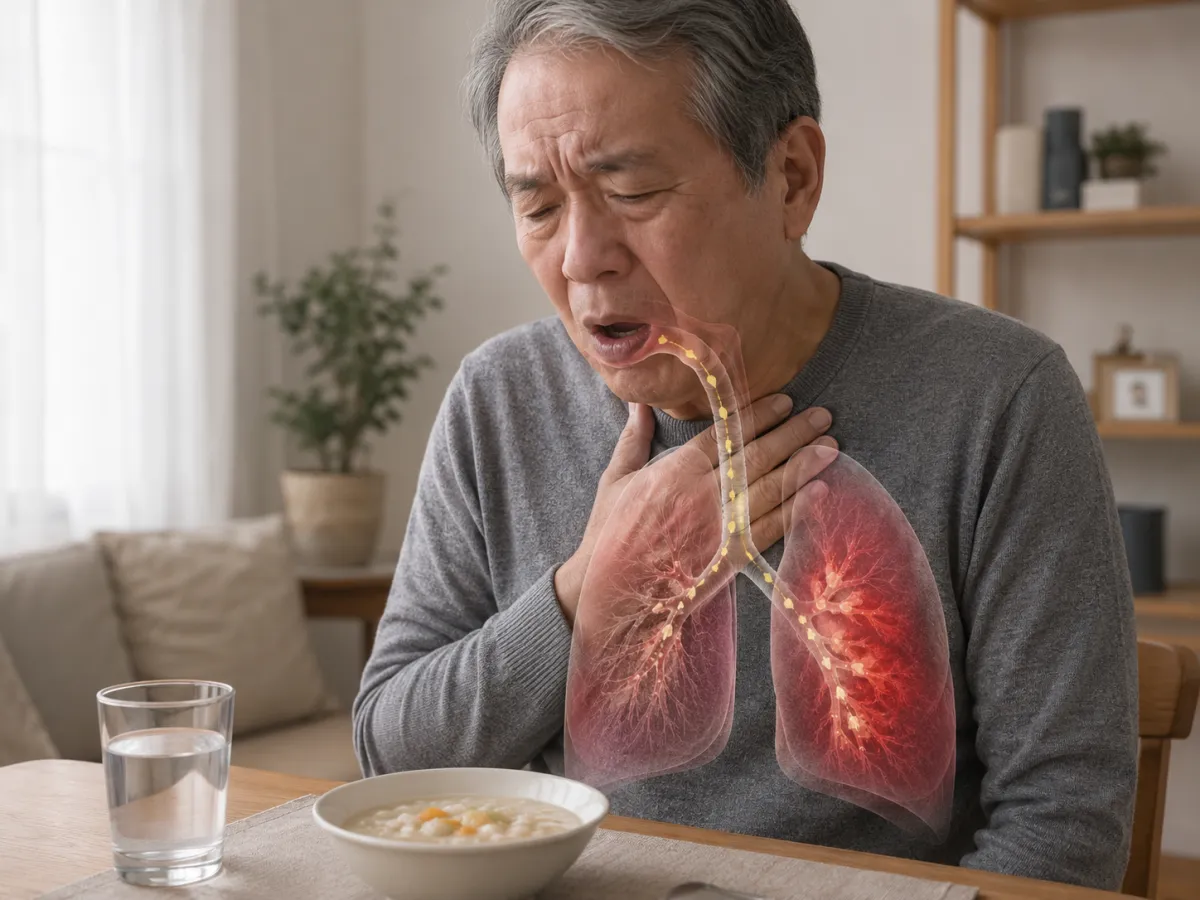
Aspiration pneumonia after a stroke is a lung infection that can develop when food, drink, saliva, vomit or other material enters the airway and lungs instead of travelling safely towards the stomach. Stroke survivors with swallowing difficulties are particularly vulnerable, and aspiration can sometimes happen without coughing or choking.
It is important, however, to understand the difference between aspiration and aspiration pneumonia.
Aspiration means material has entered the airway. It does not automatically mean you have pneumonia. Aspiration pneumonia develops when aspirated material contributes to an infection in the lungs.
For stroke survivors and their families, recognising swallowing problems early, following individual dysphagia recommendations and maintaining good oral hygiene can all form an important part of reducing the risk.
✦ ✦ ✦
After Your Stroke, Did Anyone Warn You About Aspiration Pneumonia?
You may leave hospital knowing about weakness.
You know about speech problems.
You know you should watch your blood pressure.
You may have been told about another stroke.
But then somebody mentions aspiration pneumonia.
Suddenly eating and drinking sound dangerous.
You start wondering:
Did that cough after water mean something went into my lungs?
What if I choke in my sleep?
Could I aspirate without knowing?
Does every coughing episode mean pneumonia?
And if food does go down the wrong way, what happens next?
These are sensible questions.
Swallowing difficulty is common after stroke, and people with post-stroke dysphagia have a higher risk of aspiration and pneumonia than people whose swallowing is unaffected. NICE specifically recognises the increased risk of aspiration pneumonia in people with dysphagia after acute stroke.
But having dysphagia does not mean pneumonia is inevitable.
Understanding the risk gives you something useful:
the ability to manage it.
✦ ✦ ✦
The Good News
Aspiration pneumonia is a serious complication, but there are things healthcare teams, stroke survivors and carers can do to reduce the risk.
These include identifying swallowing problems, following an appropriate eating and drinking plan, providing effective mouth care and seeking medical attention when signs of infection develop. NICE recommends swallowing assessment after stroke and effective mouth care for people with swallowing difficulty.
Research has also found that intensified oral hygiene alongside dysphagia screening may reduce pneumonia risk in hospitalised stroke patients.
So the message is not:
“Be frightened every time you eat.”
It is:
Know your swallowing problem, follow your recommendations and recognise when something has changed.
✦ ✦ ✦
What Is Aspiration?
Aspiration happens when something other than air enters your airway.
That material might be:
Instead of moving safely through the oesophagus towards the stomach, some material enters the respiratory tract.
Your body will often react by coughing.
That cough is a protective mechanism designed to clear the airway.
But the protection does not always work.
✦ ✦ ✦
What Is Aspiration Pneumonia?
Aspiration pneumonia is an infection of the lungs associated with aspirated material entering the respiratory system.
For stroke survivors, the combination of impaired swallowing and aspiration can increase the risk of a serious chest infection.
The distinction matters:
Aspiration = material goes into the airway.
Aspiration pneumonia = a lung infection develops in association with aspiration.
So coughing after one sip of water does not automatically mean that you now have pneumonia.
But repeated aspiration—particularly alongside other risk factors—deserves proper assessment.
✦ ✦ ✦
Why Can Stroke Increase the Risk?
Swallowing is neurological.
Your brain has to coordinate your:
Tongue
Lips
Jaw
Throat muscles
Sensation
Breathing
Airway protection
Timing of the swallow
A stroke can disrupt that coordination.
Dysphagia may allow food or liquid to enter the airway rather than travelling towards the stomach, which is why swallowing function is screened early following stroke.
The problem is not necessarily that a survivor is “bad at eating.”
Their neurological system may no longer be controlling swallowing in the same way.
✦ ✦ ✦
What Is Silent Aspiration?
This is one of the most important things for stroke survivors and carers to understand.
Silent aspiration means material enters the airway without producing the expected cough or obvious choking response.
So somebody may aspirate while appearing relatively comfortable.
Research involving acute stroke specifically identifies silent aspiration as an important pneumonia risk.
This destroys one particularly dangerous myth:
“If they aren't coughing, their swallowing must be safe.”
No.
The absence of coughing does not prove that food or drink has stayed out of the airway.
That is why dysphagia assessment matters.
✦ ✦ ✦
Does Everyone Who Aspirates Develop Pneumonia?
No.
Aspiration and aspiration pneumonia are not interchangeable.
An aspiration event can occur without pneumonia subsequently developing. Aspiration becomes more concerning when material reaches the respiratory system repeatedly or when other factors make lung infection more likely.
Risk is influenced by more than swallowing alone.
The condition of the mouth, the material being aspirated and a person's general health can all matter.
This is one reason prevention involves more than simply changing food texture.
✦ ✦ ✦
Why Does Oral Hygiene Matter So Much?
This is one of the less obvious parts of aspiration pneumonia prevention.
Your mouth naturally contains microorganisms.
If oral hygiene becomes poor, harmful bacterial burden can increase. If contaminated saliva or oral material is then aspirated into the lungs, it can contribute to infection risk.
Studies after stroke have found an association between poor oral hygiene and aspiration pneumonia, while oral-care interventions have been investigated as a way of reducing pneumonia risk.
NICE therefore recommends effective mouth care for people who have difficulty swallowing after stroke in order to reduce aspiration-pneumonia risk.
Brushing somebody's teeth after stroke is not merely about fresh breath.
It can be part of their healthcare.
✦ ✦ ✦
What Are the Symptoms of Aspiration Pneumonia?
Symptoms of pneumonia can vary, but warning signs of aspiration pneumonia may include:
✓ A new or worsening cough.
✓ Coughing up phlegm.
✓ Fever.
✓ Difficulty breathing.
✓ Faster breathing than usual.
✓ Chest discomfort or pain.
✓ Reduced appetite.
✓ Unusual tiredness or weakness.
✓ Confusion or a noticeable change in behaviour.
✓ A deterioration in general condition.
NHS England guidance on aspiration pneumonia lists features including cough with sputum, fever, breathing difficulty, increased respiratory rate, chest pain, reduced appetite and confusion or behavioural change.
Do not wait for every symptom on the list to appear before seeking medical advice.
✦ ✦ ✦
What Might Happen Before Pneumonia Develops?
Sometimes there are clues that swallowing is not working safely.
Watch for:
✓ Coughing while eating or drinking.
✓ Choking episodes.
✓ A wet or gurgly voice after swallowing.
✓ Food remaining inside the mouth.
✓ Food collecting inside the cheek.
✓ Difficulty chewing.
✓ Taking an unusually long time to finish meals.
✓ Breathlessness during eating.
✓ Repeated chest infections.
✓ Unexplained weight loss.
✓ Difficulty managing saliva.
These can indicate dysphagia and possible aspiration risk and should prompt assessment rather than endless self-management.
✦ ✦ ✦
How Is Aspiration Pneumonia Diagnosed?
If doctors suspect pneumonia, they will assess the person's symptoms and clinical condition.
Depending on the circumstances, investigations may include examination of the chest, measurement of oxygen levels, blood tests and chest imaging.
The swallowing problem also needs attention.
Treating a chest infection without addressing repeated aspiration can leave the underlying problem unresolved.
For a stroke survivor, this may mean further assessment by a speech and language therapist to understand what is happening during eating and drinking.
In some cases, more detailed instrumental swallowing investigations may be required.
✦ ✦ ✦
How Is Aspiration Pneumonia Treated?
Aspiration pneumonia requires medical assessment.
Treatment depends on how ill the person is, their overall health and the nature of the infection.
Some people may require antibiotics, oxygen or hospital treatment, while seriously unwell patients may need more intensive respiratory support.
At the same time, clinicians may need to reassess whether eating and drinking remain safe.
The important mistake to avoid is trying to diagnose or treat suspected pneumonia at home simply because the person already has known dysphagia.
A change in respiratory health deserves proper medical assessment.
✦ ✦ ✦
How Can Stroke Survivors Reduce the Risk?
There is no strategy that guarantees aspiration pneumonia will never happen.
But several risk-reduction measures make sense.
✦ ✦ ✦
Follow Your Individual Swallowing Recommendations
If a speech and language therapist has recommended a particular food texture, drink consistency, technique or level of supervision, follow it.
Do not casually change it because eating differently feels easier.
And do not copy another survivor's plan.
Their swallowing impairment may be completely different from yours.
✦ ✦ ✦
Sit in the Position Recommended for Eating
Good positioning can support safer eating and drinking.
People with swallowing difficulty are commonly advised to sit upright and well supported during meals, where clinically appropriate.
If sitting balance is difficult after stroke, ask your rehabilitation team for help rather than eating while badly slumped in bed.
✦ ✦ ✦
Do Not Rush Meals
If swallowing now requires concentration, give it time.
Finish one mouthful before taking another.
Follow any advice you have been given about mouthful or sip size.
Do not allow somebody to continually spoon food into a survivor's mouth faster than they can safely clear it.
Needing assistance with eating and drinking can itself be associated with increased aspiration-pneumonia risk, making appropriate feeding support particularly important.
✦ ✦ ✦
Keep the Mouth Clean
Good oral care deserves the same seriousness as food consistency.
Where appropriate:
✓ Brush teeth regularly.
✓ Clean gums.
✓ Clean the tongue.
✓ Clean dentures.
✓ Remove food residue.
✓ Seek dental help for significant oral problems.
Evidence supports attention to oral health as one component of reducing pneumonia risk following stroke.
✦ ✦ ✦
Pay Attention to Fatigue and Alertness
A survivor who is exhausted or very drowsy may have more difficulty participating safely in eating and drinking.
If someone is unusually drowsy, acutely unwell or unable to engage safely with a meal, do not simply continue feeding them because it is lunchtime.
Seek appropriate clinical advice.
✦ ✦ ✦
Ask for Reassessment When Things Change
Swallowing can change during stroke recovery.
If it improves, you may eventually need fewer restrictions.
If it deteriorates, your current plan may no longer be adequate.
New coughing, repeated chest infections or increasing difficulty with meals should not simply become the new normal.
Ask for reassessment.
✦ ✦ ✦
Can Thickened Drinks Prevent Aspiration Pneumonia?
This is where simplistic advice becomes dangerous.
Thickened fluids can be appropriate for certain swallowing impairments, but they should not be treated as a universal pneumonia-prevention strategy.
The appropriate fluid consistency depends on the individual's swallowing physiology.
If you have been prescribed thickened drinks, follow the recommended consistency.
But do not start thickening every drink independently because you are frightened of pneumonia.
And if you believe you no longer need thickened fluids, request reassessment rather than simply abandoning them.
✦ ✦ ✦
What About Feeding Tubes?
Some stroke survivors who cannot initially swallow safely or cannot meet their nutritional and hydration needs orally may require tube feeding.
But feeding tubes do not make every aspiration risk disappear.
People can potentially aspirate saliva or regurgitated material as well as food and drink.
Stroke-associated pneumonia research has highlighted contaminated saliva and regurgitated gastric material as possible sources of aspiration.
Tube feeding therefore requires individual clinical management rather than being considered a guaranteed solution to aspiration.
✦ ✦ ✦
When Should You Seek Medical Advice?
Contact your GP, NHS 111 or your healthcare team promptly if a stroke survivor develops symptoms that could indicate a chest infection, particularly if they also have known swallowing difficulties.
These may include:
✓ A new persistent cough.
✓ Fever.
✓ Coughing up phlegm.
✓ Increasing breathlessness.
✓ Chest pain.
✓ Noticeably faster breathing.
✓ Marked weakness or deterioration.
✓ New confusion.
✓ Repeated chest infections.
✓ Increasing coughing or choking with meals.
Aspiration pneumonia can become serious, and severe pneumonia can be life-threatening.
Call 999 if the person has severe difficulty breathing, becomes severely unwell, loses consciousness, or you believe they are experiencing a medical emergency.
If food is actively blocking the airway and the person cannot breathe, speak or cough effectively, treat that as choking and an immediate emergency.
✦ ✦ ✦
My Perspective
Aspiration pneumonia is one of those stroke complications that can sound terrifying once you first hear about it.
And fear can easily make survivors think:
Maybe eating itself is dangerous now.
That is not the message I would want anyone to take from this.
The useful message is that swallowing deserves respect.
If your brain has been injured, something you once did without thinking may temporarily need assessment, strategies and concentration.
I would follow the swallowing advice I had been given.
I would take repeated coughing seriously.
I would not ignore recurring chest infections.
And I would pay far more attention to oral hygiene than most of us probably did before stroke.
But I would not analyse every single cough and convince myself I had pneumonia.
Aspiration is not automatically pneumonia.
A cough is not automatically aspiration.
And dysphagia does not mean pneumonia is inevitable.
Understand the risk without allowing the risk to control your life.
✦ ✦ ✦
Frequently Asked Questions
✦ ✦ ✦
Is Aspiration Pneumonia Common After Stroke?
Pneumonia is a recognised complication after stroke, and risk is higher among people with swallowing impairment. NICE specifically identifies people with dysphagia after acute stroke as being at increased risk of aspiration pneumonia.
✦ ✦ ✦
Does Aspiration Always Cause Pneumonia?
No.
Aspiration means material enters the airway. Pneumonia is a lung infection that may develop following aspiration. They are related but are not the same thing.
✦ ✦ ✦
Can You Aspirate Without Coughing?
Yes.
Silent aspiration occurs when material enters the airway without an obvious cough response. This has been specifically recognised in people after acute stroke.
✦ ✦ ✦
Can Saliva Cause Aspiration Pneumonia?
Saliva and oral secretions can be aspirated. Research into stroke-associated pneumonia has identified contaminated saliva among the material that may contribute to pneumonia risk.
✦ ✦ ✦
Why Is Brushing Your Teeth Important if You Have Dysphagia?
Poor oral hygiene can increase the bacterial burden in the mouth. If contaminated oral material is aspirated, this can contribute to infection risk. NICE recommends effective mouth care for people with post-stroke swallowing difficulties.
✦ ✦ ✦
Does Coughing During Meals Mean I Have Pneumonia?
No.
Coughing during eating or drinking can be a sign of swallowing difficulty or aspiration, but it does not by itself diagnose pneumonia.
Persistent coughing during meals should nevertheless be discussed with your speech and language therapist or healthcare team.
✦ ✦ ✦
Can Aspiration Pneumonia Be Treated?
Yes, but it can be serious and requires medical assessment. Treatment depends on the severity and circumstances of the infection.
The underlying swallowing problem should also be reviewed if aspiration is suspected to be contributing.
✦ ✦ ✦
Can Aspiration Pneumonia Happen Months After a Stroke?
Yes.
The risk is not restricted to the first days after stroke if significant swallowing impairment or another aspiration risk remains.
If swallowing changes later in recovery, seek reassessment rather than assuming that because the original stroke happened months or years ago it cannot be relevant.
✦ ✦ ✦
Key Takeaways
✓ Aspiration means food, drink, saliva or other material enters the airway.
✓ Aspiration pneumonia is a lung infection associated with aspirated material.
✓ Aspiration does not automatically mean pneumonia.
✓ Stroke-related dysphagia increases aspiration-pneumonia risk.
✓ Aspiration can sometimes occur without coughing.
✓ Repeated chest infections should not be ignored.
✓ Follow your individual swallowing recommendations.
✓ Do not independently change prescribed food or drink consistencies.
✓ Good oral hygiene is an important part of prevention.
✓ Seek medical advice if respiratory symptoms develop.
✓ Severe breathing difficulty is an emergency.
✦ ✦ ✦
The Bottom Line
Aspiration pneumonia after a stroke can be serious, but understanding the difference between dysphagia, aspiration and pneumonia removes a lot of unnecessary fear.
Dysphagia means swallowing is impaired.
Aspiration means material enters the airway.
Aspiration pneumonia means infection has developed in the lungs in association with aspiration.
They are connected.
They are not identical.
If you have post-stroke dysphagia, follow the swallowing plan designed specifically for you.
Eat in the recommended position.
Do not rush.
Pay attention to changes.
Keep your mouth clean.
And never ignore repeated chest infections, increasing breathlessness, fever or a significant deterioration in your general health.
The aim is not to become frightened of every meal.
It is to reduce preventable risk while allowing you to eat, drink and live as safely and normally as your recovery permits.
✦ ✦ ✦
Top 5 Related Articles
How to Eat Safely With Dysphagia After Stroke
Dysphagia After a Stroke
Silent Aspiration After a Stroke
Choking After a Stroke
Difficulty Chewing After a Stroke
✦ ✦ ✦
About the Author
Alisia Gayle is a stroke survivor and author of Brain Damage: My Journey to 96% Recovery. Her work combines lived experience with practical stroke-recovery information designed to answer the everyday questions survivors and families can find themselves trying to understand after leaving hospital.
✦ ✦ ✦
Medical Disclaimer
This article is for general information and education only and does not replace individual medical advice, diagnosis or treatment.
Aspiration pneumonia can be a serious medical condition.
If you have swallowing difficulties after stroke, follow the eating, drinking, positioning and oral-care recommendations provided by your speech and language therapist and healthcare team.
Do not independently change prescribed food textures, drink consistency, swallowing techniques or feeding arrangements.
Seek medical attention if symptoms suggest a chest infection or your swallowing deteriorates.
Call 999 for severe breathing difficulty, choking with an obstructed airway, loss of consciousness or another medical emergency.
✦ ✦ ✦
Final Thoughts
Stroke recovery teaches you how complicated supposedly simple things really are.
Eating is one of them.
Before stroke, you probably never considered where every sip of water went.
You swallowed.
Your brain protected your airway.
Life continued.
After stroke, that process may need more attention.
But knowing about aspiration pneumonia should make you better prepared—not permanently frightened.
Know the warning signs.
Look after your mouth.
Follow your swallowing plan.
Speak up when something changes.
And if you are repeatedly getting chest infections, coughing during meals or struggling more with swallowing, do not simply accept it as part of stroke recovery.
Get it investigated.
Because preventing complications is not separate from rehabilitation.
It is part of recovery.