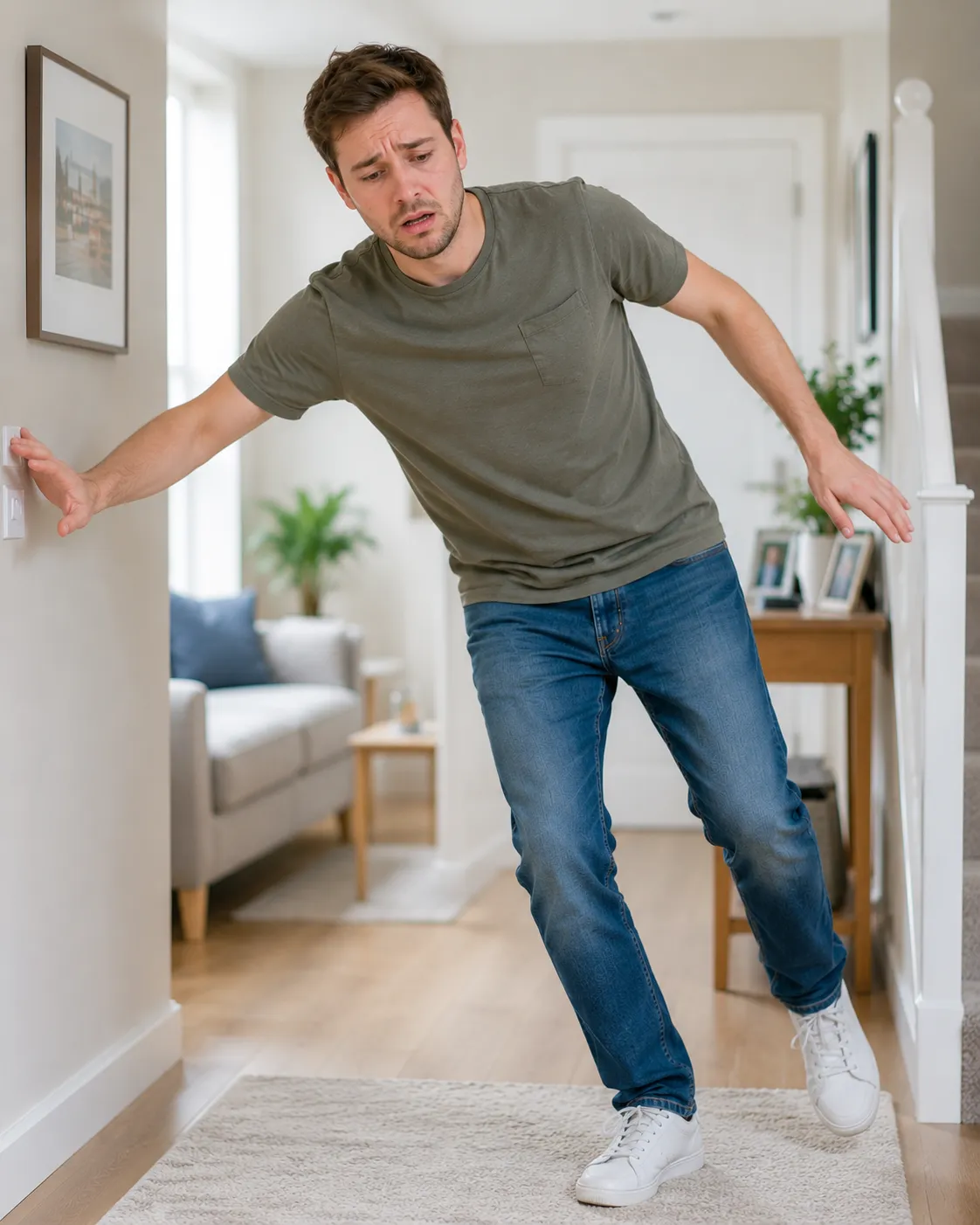
Balance problems after a stroke can affect your confidence, mobility and independence. Learn why balance changes after stroke, what causes it, and how rehabilitation can help you regain stability and reduce your risk of falls.
Standing Shouldn't Feel This Difficult.
Before your stroke...
You stood up.
Turned around.
Reached for something.
Walked across the room.
Without giving it a second thought.
Now...
Simply standing still may feel challenging.
You may find yourself wondering:
✓ Why do I feel unsteady?
✓ Why do I lean to one side?
✓ Why do I feel like I'm going to fall?
✓ Will my balance ever return?
Balance problems are one of the most common challenges after a stroke.
The good news is that balance can often improve with rehabilitation and consistent practice.
✦ ✦ ✦
The Good News
Many stroke survivors regain significant improvements in their balance.
Some recover quickly.
Others improve gradually over months and even years.
Every balance exercise.
Every safe step.
Every repetition.
Helps your brain strengthen the pathways responsible for keeping you upright.
Recovery rarely happens overnight.
It happens one step at a time.
✦ ✦ ✦
What Causes Balance Problems After a Stroke?
Balance depends on several systems working together.
Your brain combines information from:
• Your eyes.
• Your inner ears (vestibular system).
• Your muscles and joints.
• Your sense of body position (proprioception).
After a stroke, communication between these systems may be disrupted.
Even if your muscles are strong, your brain may struggle to process information quickly enough to keep you steady.
✦ ✦ ✦
Why Do I Feel Unsteady?
Several factors may contribute.
Muscle Weakness
Weakness in one leg or one side of the body makes it harder to support your weight evenly.
✦ ✦ ✦
Reduced Sensation
You may not always know exactly where your foot or leg is positioned.
This makes balancing more difficult.
✦ ✦ ✦
Visual Problems
Changes in vision can make judging distance, movement and obstacles much harder.
✦ ✦ ✦
Vestibular Problems
If the stroke has affected areas involved in balance, dizziness or feeling as though the room is moving may occur.
✦ ✦ ✦
Poor Coordination
The brain may struggle to activate muscles in the correct order to maintain stability.
✦ ✦ ✦
Fear of Falling
After one fall—or even one near miss—many people naturally become anxious.
Unfortunately, this often causes slower, stiffer movements that can make balance even more difficult.
✦ ✦ ✦
Common Signs of Balance Problems
Balance problems affect everyone differently.
Common symptoms include:
✓ Feeling unsteady when standing.
✓ Leaning towards one side.
✓ Feeling dizzy.
✓ Difficulty turning.
✓ Needing furniture for support.
✓ Walking with a wider stance.
✓ Difficulty walking on uneven ground.
✓ Feeling unsafe in busy environments.
✓ Fear of falling.
✦ ✦ ✦
How Can Balance Affect Everyday Life?
Poor balance can make many everyday activities more difficult.
You may notice problems when:
• Walking outdoors.
• Climbing stairs.
• Getting in and out of bed.
• Showering.
• Carrying shopping.
• Reaching into cupboards.
• Turning quickly.
• Walking in crowded places.
Many people also avoid activities because they lose confidence.
Rebuilding confidence is just as important as improving physical balance.
✦ ✦ ✦
Can Balance Improve?
Yes.
The brain has an incredible ability to adapt through neuroplasticity.
Recovery depends on many factors, including:
✓ Stroke severity.
✓ Rehabilitation.
✓ Consistency of practice.
✓ General health.
✓ Time.
Many people continue improving long after formal rehabilitation has ended.
✦ ✦ ✦
How Are Balance Problems Assessed?
A physiotherapist may assess:
✓ Standing balance.
✓ Walking.
✓ Turning.
✓ Weight distribution.
✓ Muscle strength.
✓ Joint movement.
✓ Coordination.
✓ Functional mobility.
Watching how you move often provides valuable information about which areas need the most rehabilitation.
✦ ✦ ✦
Treatment Options
Most people benefit from combining several different approaches.
✦ ✦ ✦
Physiotherapy
Physiotherapy remains the cornerstone of balance rehabilitation.
Exercises focus on improving stability, confidence and movement control.
✦ ✦ ✦
Balance Exercises
Your physiotherapist may gradually challenge your balance using increasingly difficult exercises.
These exercises help retrain the brain to respond more effectively.
✦ ✦ ✦
Strength Training
Improving strength in the hips, knees, ankles and core muscles provides a stronger foundation for balance.
✦ ✦ ✦
Walking Practice
Walking itself is excellent balance training.
Practising on different surfaces helps prepare you for everyday life.
✦ ✦ ✦
Vestibular Rehabilitation
If dizziness contributes to your balance problems, specialised vestibular exercises may help.
✦ ✦ ✦
Walking Aids
Walking sticks, quad sticks and walking frames may improve safety while your balance continues to recover.
Using an aid is not a sign of failure.
For many people, it provides confidence to remain active.
✦ ✦ ✦
Practical Tips
Small changes can significantly reduce your risk of falling.
Wear Supportive Shoes
Choose shoes with good grip and support.
Avoid loose slippers.
✦ ✦ ✦
Improve Lighting
Good lighting makes obstacles easier to see, particularly at night.
✦ ✦ ✦
Remove Trip Hazards
Keep your home free from:
✓ Loose rugs.
✓ Electrical cables.
✓ Clutter.
✓ Small objects on the floor.
✦ ✦ ✦
Take Your Time
Many falls happen because people rush.
Moving more slowly often improves balance.
✦ ✦ ✦
Practise Every Day
Regular balance exercises are usually more effective than occasional longer sessions.
✦ ✦ ✦
Manage Fatigue
Balance often becomes worse when you're tired.
Rest before fatigue significantly affects your walking.
✦ ✦ ✦
When Should You Seek Medical Advice?
Speak with your healthcare professional if:
✓ Your balance suddenly becomes worse.
✓ You experience repeated falls.
✓ New dizziness develops.
✓ New weakness appears.
✓ You experience sudden vision changes.
✓ Walking becomes increasingly difficult.
Prompt assessment may prevent injuries and allow your rehabilitation programme to be adjusted.
✦ ✦ ✦
My Perspective
One of the hardest parts of recovery wasn't weakness.
It was trusting my body again.
I found myself thinking about every step.
Every turn.
Every uneven surface.
As my balance improved, something else improved too.
My confidence.
Eventually, I stopped thinking about every movement.
Walking slowly became natural again.
Recovery wasn't about becoming fearless.
It was about becoming more confident, one step at a time.
✦ ✦ ✦
Frequently Asked Questions
Will My Balance Return After a Stroke?
Many people experience significant improvements.
Recovery varies depending on the individual and the severity of the stroke.
✦ ✦ ✦
How Long Does Balance Recovery Take?
Some improvements happen within weeks.
Others continue for months or years.
Recovery rarely follows a straight line.
✦ ✦ ✦
Is Walking Good for Balance?
Yes.
Walking helps retrain the brain and challenges the balance systems in a functional way.
Safe, regular practice is one of the best ways to improve.
✦ ✦ ✦
Why Do I Lean to One Side?
Some stroke survivors develop weakness, altered sensation or changes in body awareness that make them unknowingly shift their weight to one side.
Physiotherapy can help improve weight distribution and body awareness.
✦ ✦ ✦
Key Takeaways
✓ Balance problems are common after stroke.
✓ Weakness, reduced sensation and poor coordination all contribute.
✓ Physiotherapy remains the most effective treatment.
✓ Regular balance practice supports neuroplasticity.
✓ Confidence often improves alongside physical recovery.
✓ Many people continue improving months and years after stroke.
✦ ✦ ✦
Related Articles
✦ ✦ ✦
About the Author
Alisia Gayle is a stroke survivor who achieved 96% neurological recovery following an ischaemic stroke.
After years of rehabilitation, she now shares practical, evidence-informed resources to help stroke survivors, carers and families better understand recovery and rebuild their lives with confidence.
Alisia is also the author of Brain Damage: My Journey to 96% Recovery, where she shares her personal stroke recovery story and the lessons she learned throughout her rehabilitation.
✦ ✦ ✦
Medical Disclaimer
This article is intended for educational purposes only and should not replace professional medical advice, diagnosis or treatment.
Always seek advice from your doctor, physiotherapist or rehabilitation team regarding symptoms, concerns or changes in your condition.
✦ ✦ ✦
Final Thoughts
Balance problems can make the world feel uncertain.
But every exercise you complete...
Every safe step you take...
Every moment you challenge your balance...
Helps your brain become stronger and more adaptable.
Recovery rarely happens all at once.
It happens one step at a time.