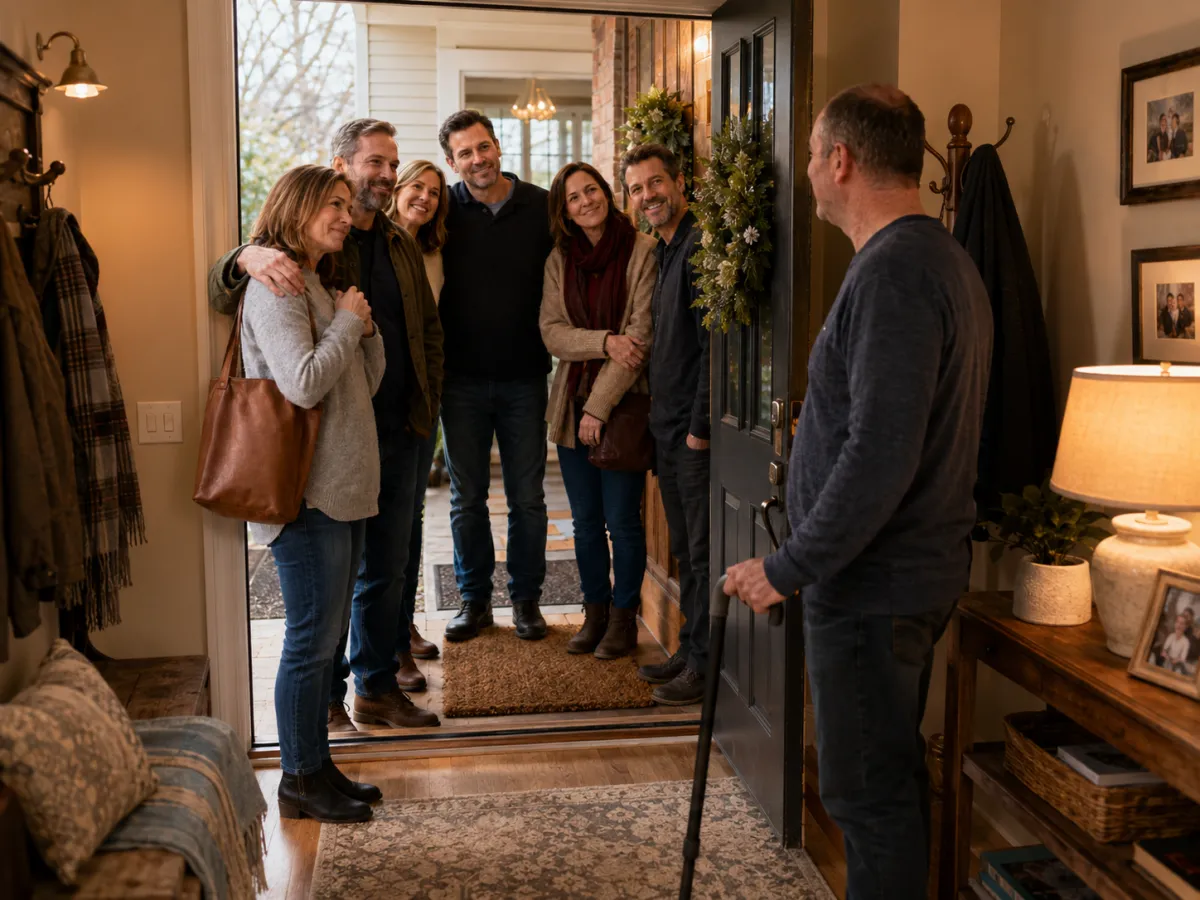
Recovery after stroke can be long, unpredictable and difficult to manage alone. A strong support network can provide practical help, emotional encouragement, professional guidance and connection during periods when your independence, confidence or energy may be reduced. But support does not always appear automatically, and the people you expected to rely on may not always be the people who ultimately help you most. Learn how to build a support network after stroke, who should be part of it and how to ask for the right kind of help without losing your independence.
You Were Never Supposed to Recover Completely Alone
After a stroke, there can be enormous pressure to become independent again.
You may want to prove that you can manage.
You may hate asking for help.
You may worry about becoming a burden.
You may also have discovered that some of the people you expected to support you were far less available than you imagined.
That can make you determined to do everything yourself.
But stroke recovery can involve:
Trying to manage every part of this without adequate support can make an already difficult recovery considerably harder.
A support network does not mean surrounding yourself with dozens of people.
It means having the right people available for the right things.
✦ ✦ ✦
The Good News
Your support network does not have to look the way it did before your stroke.
Some relationships may become stronger.
Others may fade.
You may also receive valuable support from people who were previously only acquaintances, colleagues or professionals.
You can build new relationships too.
A strong support network may eventually include:
You do not need one person to meet every need.
In fact, expecting a spouse, parent, child or best friend to become your entire support system can place enormous pressure on that relationship.
The strongest support networks usually spread responsibility across several people and services.
What Is a Support Network?
A support network is the group of people and services you can turn to for different kinds of assistance.
Some may provide emotional support.
Others may provide practical help.
Some may understand your medical needs.
Others may simply give you somewhere to laugh, talk or temporarily forget about stroke.
Your network might include somebody who:
Drives you to appointments
Listens when you are struggling
Helps with childcare
Understands your rehabilitation
Goes walking with you
Helps with paperwork
Checks in regularly
Understands stroke fatigue
Helps with shopping
Supports your return to work
Shares your experience of stroke
These people do not all need to know each other.
They simply form different parts of the structure supporting your recovery.
Different People Can Provide Different Types of Support
One mistake after stroke is expecting one person to provide everything.
Your partner may be excellent with practical tasks but uncomfortable discussing emotions.
A close friend may understand your frustration but know nothing about rehabilitation.
Your physiotherapist may understand your walking difficulties but cannot help with childcare.
A colleague may be the best person to help you understand what has changed at work.
That is normal.
Think of your support network as several layers rather than one relationship.
Different people can serve different purposes.
Emotional Support
Emotional support is about being able to talk without immediately being judged, corrected or told what you should feel.
After stroke, you may experience:
Sometimes you do not need someone to solve these feelings.
You need someone capable of hearing them.
A supportive person might say:
“That sounds really difficult.”
Or:
“Do you want me to listen or help you think through what to do?”
That can be more useful than:
“You need to stay positive.”
Practical Support
Practical help can remove pressure from everyday life.
This might include:
Grocery shopping
Preparing meals
School runs
Cleaning
Laundry
Collecting medication
Driving
Attending appointments
Filling in forms
Making telephone calls
Walking the dog
Helping with gardening
Collecting children
Helping with technology
Practical support can be especially important during the early stages of recovery.
Something that once took ten minutes may now use a large amount of your physical or mental energy.
Having someone else complete that task can leave more energy for rehabilitation.
Medical and Rehabilitation Support
Your professional support network may include:
These professionals have different roles.
Understanding who deals with what can prevent you from repeatedly asking the wrong person for help.
For example, a physiotherapist may focus primarily on:
Movement
Walking
Balance
Strength
Mobility
An occupational therapist may focus on:
A speech and language therapist may support:
Speech
Language
Communication
Swallowing
Knowing who belongs in your professional network can make navigating rehabilitation much easier.
Peer Support Can Be Different From Family Support
There are some parts of stroke that people may understand intellectually but never completely understand experientially.
Another stroke survivor may immediately understand what you mean when you describe:
Stroke fatigue
Fear of another stroke
Word-finding problems
Being treated differently
Losing confidence
Trying to walk normally again
Being told that you “look fine”
Feeling left behind while everybody else's life continues
Peer support can reduce the exhausting need to explain everything from the beginning.
Sometimes hearing:
“That happened to me too.”
can be enormously reassuring.
Your Family Does Not Automatically Have to Be Your Entire Support Network
There is often an assumption that family will take care of everything after serious illness.
Sometimes they do.
Sometimes they cannot.
And sometimes they simply do not.
A relative may live far away.
They may have children, health problems or financial difficulties of their own.
Some families have complicated relationships long before stroke enters the picture.
Being related to somebody does not automatically make them emotionally or practically capable of supporting you.
Build your network around reliability, not merely family titles.
The person who consistently checks on you may ultimately be more valuable than the relative who repeatedly promises help and never arrives.
Friends May Need Clear Instructions
Friends often genuinely want to help but do not know what to do.
They may say:
“Let me know if you need anything.”
The problem is that this puts the responsibility back on you.
You now have to identify the task, ask them and potentially feel uncomfortable doing so.
Instead, make requests specific.
For example:
“Could you drive me to physiotherapy on Tuesday?”
“Would you mind picking up a few groceries when you're shopping?”
“Can we meet somewhere quiet? Busy restaurants are difficult for me at the moment.”
“Could you stay for an hour while I have a rest?”
Clear requests make it easier for people to help.
Stop Expecting People to Read Your Mind
People cannot necessarily see what stroke has changed.
You may look physically well while struggling with:
Fatigue
Concentration
Memory
Sensory overload
Pain
Anxiety
Balance
Communication
Someone may assume you no longer need help because they saw you walking normally.
Another person may think you are avoiding them because you declined several invitations.
Where appropriate, explain what is happening.
For example:
“I can walk quite well now, but long distances still exhaust me.”
Or:
“I want to come, but I usually manage social activities better if they're shorter.”
Clear communication prevents people from having to guess.
Accepting Help Does Not Mean Giving Up Your Independence
This can be one of the hardest adjustments.
Before your stroke, perhaps you were the person everyone else relied upon.
You organised everything.
You looked after other people.
You solved problems.
Now somebody is offering to carry your shopping bag.
That can feel humiliating.
But independence does not mean refusing every form of assistance.
True independence includes making intelligent decisions about where your energy is best spent.
If accepting a lift allows you to attend physiotherapy without exhausting yourself before the session begins, accepting that lift may actually support your independence.
The goal is not to prove that you can struggle alone.
The goal is to recover.
Do Not Let Other People Take Over Everything
There is another extreme.
Sometimes people become so determined to help that they begin controlling the survivor's life.
They may:
Speak on your behalf
Answer questions directed at you
Organise your entire schedule
Decide what you should eat
Decide where you should go
Handle your finances unnecessarily
Prevent you attempting things
Treat every activity as dangerous
Support should increase your ability to participate in life.
It should not automatically remove control from you.
Where possible, say clearly:
“I appreciate the help, but I would like to do this part myself.”
Recovery often involves gradually reclaiming responsibility.
Your support network should help that happen.
Learn to Separate Help From Control
Sometimes the difference is obvious.
Sometimes it is not.
Helpful support may sound like:
“Would you like me to come with you?”
Controlling behaviour may sound like:
“You're not going unless I come with you.”
Helpful support:
“Do you want help getting dressed?”
Control:
“I'll do it. You'll take too long.”
Helpful support gives you options wherever possible.
Control removes them unnecessarily.
There will be situations where safety genuinely limits what you can do.
But disability should not automatically mean losing your voice in decisions affecting your own life.
Create an Inner Circle
Not everybody needs full access to your recovery.
You may find it useful to have a small inner circle of people who understand what is really happening.
These might be the people you contact when:
You receive difficult medical news
You need urgent practical help
You are emotionally struggling
You have an important appointment
Something changes in your recovery
You need someone to advocate for you
Choose these people carefully.
They should ideally be:
Someone does not belong in your inner circle simply because you have known them for twenty years.
Reliability matters more than history.
Then Build a Wider Circle
Your wider network might contain people you do not speak to every day.
For example:
They may provide occasional rather than intensive support.
That still matters.
One neighbour who occasionally collects groceries.
One parent who can collect your child from school.
One colleague who keeps you informed about work.
One survivor who understands rehabilitation setbacks.
Together these relationships can create considerable support.
Do Not Depend Completely on One Person
This deserves particular attention.
If your entire support system is one person, both of you become vulnerable.
If that person becomes:
everything can collapse at once.
Spreading support across several people reduces pressure on everyone.
This is particularly important when a spouse or partner is the primary caregiver.
Your partner can still be central to your support network without becoming the entire network.
Build a Professional Network Before You Need It
Do not wait until something goes wrong before learning who to contact.
Keep useful information somewhere accessible.
This might include:
GP details
Stroke team
Consultant
Physiotherapist
Occupational therapist
Pharmacy
Social worker
Emergency contacts
Local stroke services
Transport services
Equipment suppliers
You may also want to keep:
After stroke, memory and concentration difficulties can make finding information during a stressful situation harder.
Organisation reduces that pressure.
Ask for Help Early Rather Than at Breaking Point
Many people wait until they are desperate before asking for help.
That creates unnecessary crises.
You do not need to wait until:
Small amounts of support introduced earlier may prevent much larger problems later.
Think ahead.
If you know Tuesday's physiotherapy session leaves you exhausted, arrange help with dinner on Tuesday.
If mornings are difficult, move non-essential appointments later.
If your caregiver needs regular time away, organise cover before resentment develops.
A support network works best when it is proactive rather than purely reactive.
Learn How to Say Yes When Someone Offers Genuine Help
Some survivors automatically reply:
“No, I'm fine.”
They say it before even considering the offer.
Sometimes pride is speaking.
Sometimes habit.
Sometimes embarrassment.
Before rejecting help, ask yourself:
Would accepting this make my recovery easier?
If yes, consider accepting it.
You can still have boundaries.
Someone bringing you dinner does not mean they now have control over your life.
Someone driving you to an appointment does not make you incapable.
You can accept help selectively.
Learn How to Say No Too
Being unwell can make other people feel entitled to participate in your life.
Not every offer of support will actually help.
You may encounter people who:
Give constant unwanted advice
Compare your recovery with someone else's
Pressure you to try treatments
Ask intrusive questions
Turn every conversation into a discussion about stroke
Make you feel helpless
Demand updates
Become offended when you set boundaries
You are allowed to say no.
For example:
“Thank you, but I've already agreed my rehabilitation plan with my clinical team.”
Or:
“I appreciate you asking, but I don't want to discuss my medical situation today.”
Support should reduce pressure, not create more of it.
Social Media Can Be Part of a Support Network
Online communities can provide connection when leaving home is difficult.
They may be particularly helpful if:
Your mobility is limited
You do not have a local stroke group
You experience fatigue
You live alone
You are younger than most people attending local stroke services
You want to connect with people experiencing similar symptoms
Online support can include:
However, use judgement.
Not every piece of medical advice shared online is accurate.
Someone else's recovery does not determine what will happen to you.
Use online communities for connection and shared experience, but discuss medical decisions with appropriately qualified professionals.
What If You Do Not Have Supportive Family or Friends?
This is a difficult reality for some survivors.
You may be recovering without a partner.
Your relatives may live abroad.
Friendships may have disappeared.
Family relationships may be unhealthy.
Do not assume this means you have no possibility of building support.
Start with services and communities.
Consider:
Stroke support organisations
Local community centres
Peer-support groups
Disability organisations
Social prescribing
Rehabilitation groups
Faith communities
Volunteering organisations
Local authority services
Online stroke communities
A support network can be built.
It does not need to have existed before your stroke.
What If People Disappear During Your Recovery?
Some will.
This can be painful.
People may disappear because:
They feel uncomfortable
They do not know what to say
Your lifestyle has changed
They assume you have recovered
Supporting you requires more effort than they expected
The friendship was less substantial than you believed
You may be tempted to chase them.
Before you do, consider whether your limited energy would be better invested elsewhere.
One honest attempt to reconnect may be worthwhile.
Repeatedly carrying an entire friendship is different.
Your support network should contain people who demonstrate some willingness to participate.
Do Not Measure Support Only by Words
Someone may constantly say:
“I'm always here for you.”
Another person may say very little but arrive every Thursday with groceries.
Pay attention to behaviour.
Useful support is usually visible through:
Reliability
Contact
Practical action
Respect
Consistency
Listening
Flexibility
A person's intentions may be good.
But recovery requires more than intentions.
Your Support Needs Will Change During Recovery
The support you need immediately after stroke may be very different from what you need two years later.
Early recovery may require help with:
Washing
Dressing
Medication
Transport
Mobility
Meals
Later, you may need more help with:
Returning to work
Confidence
Socialising
Exercise
Parenting
Fatigue management
Career planning
Emotional adjustment
Review your support network periodically.
Ask:
What can I now do independently?
What do I still struggle with?
Where am I relying too heavily on one person?
Which support is no longer necessary?
What new challenges have appeared?
The aim is for your support to evolve alongside your recovery.
Your Network Should Encourage Recovery, Not Dependency
Good support should gradually help you do more for yourself where possible.
That may involve someone:
Walking beside you rather than holding you
Supervising rather than completing a task
Giving you time to find a word
Allowing you to make mistakes safely
Encouraging rehabilitation exercises
Helping you plan instead of taking over
Supporting your return to hobbies and work
Sometimes helping less is actually more supportive.
If someone immediately completes every difficult task for you, you may lose opportunities to practise.
The right level of support changes as your abilities improve.
You Also Have Something to Offer
Stroke can make relationships feel one-directional.
You may be receiving more help than you are giving.
That can feel uncomfortable.
But relationships are not measured only through physical tasks.
You may still offer:
Friendship
Advice
Humour
Listening
Companionship
Encouragement
Knowledge
Affection
Perspective
Do not reduce your value to what you can physically do for another person.
Healthy relationships change over time.
There may be periods when you receive more.
Later, you may give more.
My Perspective
One of the biggest mistakes you can make during stroke recovery is believing that strength means doing everything yourself.
It does not.
There were times when independence mattered enormously to me because stroke had already taken so much of it away.
But independence and isolation are not the same thing.
You can fight to regain control of your life while still accepting appropriate support.
In fact, sometimes accepting help is precisely what gives you enough energy to keep fighting for independence.
I also learned that a support network should be judged by actions.
Illness has an uncomfortable way of revealing people.
Some people you expect to stand beside you may disappear.
Others may surprise you.
Try not to spend your entire recovery mourning the support you thought you were going to receive.
Notice the people who actually show up.
And where support does not already exist, build it deliberately.
Your network does not have to be large.
It needs to be useful, respectful and reliable.
Frequently Asked Questions
Why is a support network important after stroke?
Stroke recovery can involve physical, cognitive, emotional and practical challenges.
Having several sources of support can reduce isolation, provide practical assistance and prevent one family member or caregiver from becoming responsible for everything.
Who should be in my stroke support network?
There is no fixed answer.
Your network may include family, friends, healthcare professionals, other stroke survivors, colleagues, neighbours and community organisations.
Choose people according to the support they can realistically provide.
What if I hate asking people for help?
Start with specific, practical requests.
Instead of saying:
“I need help.”
try:
“Could you drive me to my appointment on Wednesday?”
A clear request is easier for both you and the other person.
What if my family does not support me?
Family is only one potential part of a support network.
Professional services, stroke groups, community organisations, neighbours, friends and online communities may become equally or more important.
How many people should be in a support network?
There is no ideal number.
Quality and reliability matter more than quantity.
Three dependable people may provide more genuine support than twenty people who occasionally say they are available.
Should my partner be my main caregiver?
That depends on your circumstances.
A partner may provide significant support, but wherever possible, avoid placing every practical and emotional responsibility on one person.
Additional family, professional or community support can reduce caregiver pressure.
How do I know whether someone is genuinely supportive?
Look at patterns rather than promises.
Ask whether the person:
Consistency is more important than dramatic gestures.
Should I join a stroke support group?
It can be useful.
Peer support may provide understanding that family and friends cannot always offer because other survivors have experienced similar challenges.
However, support groups are not right for everyone, and you do not have to participate if you find them unhelpful.
Is online stroke support safe?
Online communities can provide valuable connection and shared experience.
However, medical claims should be treated cautiously.
Do not change medication or treatment because another survivor recommends it without discussing the decision with an appropriately qualified healthcare professional.
Can I outgrow parts of my support network?
Yes.
As your recovery progresses, you may need less help from some people and different help from others.
That is often a positive sign.
A good support network adapts as your independence increases.
Key Takeaways
Stroke recovery does not have to be managed alone.
A support network can include family, friends, healthcare professionals, peers, colleagues and community services.
Different people can provide different types of support.
One person should not be expected to meet every emotional and practical need.
Specific requests make it easier for others to help.
Accepting appropriate help does not mean giving up independence.
Support should encourage independence rather than unnecessary dependency.
Judge support by consistent behaviour rather than promises.
Online and peer communities can provide valuable connection, but medical advice should be checked with qualified professionals.
Your support needs will change as your recovery progresses.
The Bottom Line
A good support network does not carry you through recovery while you remain passive.
It gives you enough support to keep moving forward yourself.
Some people will help with practical problems.
Some will provide emotional support.
Some will understand stroke.
Some will simply remind you that your entire identity is not defined by what happened to your brain.
You may lose people during recovery.
You may also find people you never expected.
Do not waste all of your energy trying to turn unreliable people into dependable ones.
Build around the people who show up.
Add professional and community support where your personal network has gaps.
And as you recover, keep adjusting that network so that support gradually becomes a platform for greater independence rather than a substitute for it.
Related Articles
Friendships After Stroke: Why Relationships Change and How to Cope
Loneliness and Social Isolation After Stroke
Resentment in Caregivers After Stroke
Family Dynamics After Stroke
Asking for and Accepting Support After Stroke
About the Author
Alisia Gayle is a stroke survivor and the author of an award-winning stroke recovery memoir.
After experiencing a major ischaemic stroke and rebuilding her mobility, independence and confidence, she created this website to give stroke survivors and their families honest, practical and hopeful information about recovery.
Her articles combine lived experience with evidence-based information to help survivors understand what may be happening and feel less alone during recovery.
Medical Disclaimer
This article provides general information and personal insight. It is not a substitute for individual medical advice, diagnosis or treatment.
Stroke affects every person differently. The amount and type of support you need will depend on your health, abilities, living arrangements and stage of recovery.
Speak to your GP, stroke team, rehabilitation professionals or relevant social-care services if you are struggling to manage safely at home, experiencing significant isolation or need additional practical support.
Final Thoughts
There may be periods after stroke when accepting help feels almost as difficult as the tasks themselves.
You may want your old independence back so badly that every offer of assistance feels like evidence of what you have lost.
But support is not necessarily the opposite of independence.
Used properly, it can be the bridge back to it.
Allow people to help where help genuinely makes your life easier.
Keep responsibility for the things you can safely manage.
Take more back as your abilities improve.
Release relationships that repeatedly drain more energy than they provide.
And remain open to new people.
Your life after stroke may require a different support network from the one you had before.
Different does not mean weaker.
Sometimes the network you deliberately build after everything changes turns out to be stronger than the one you assumed would always be there.