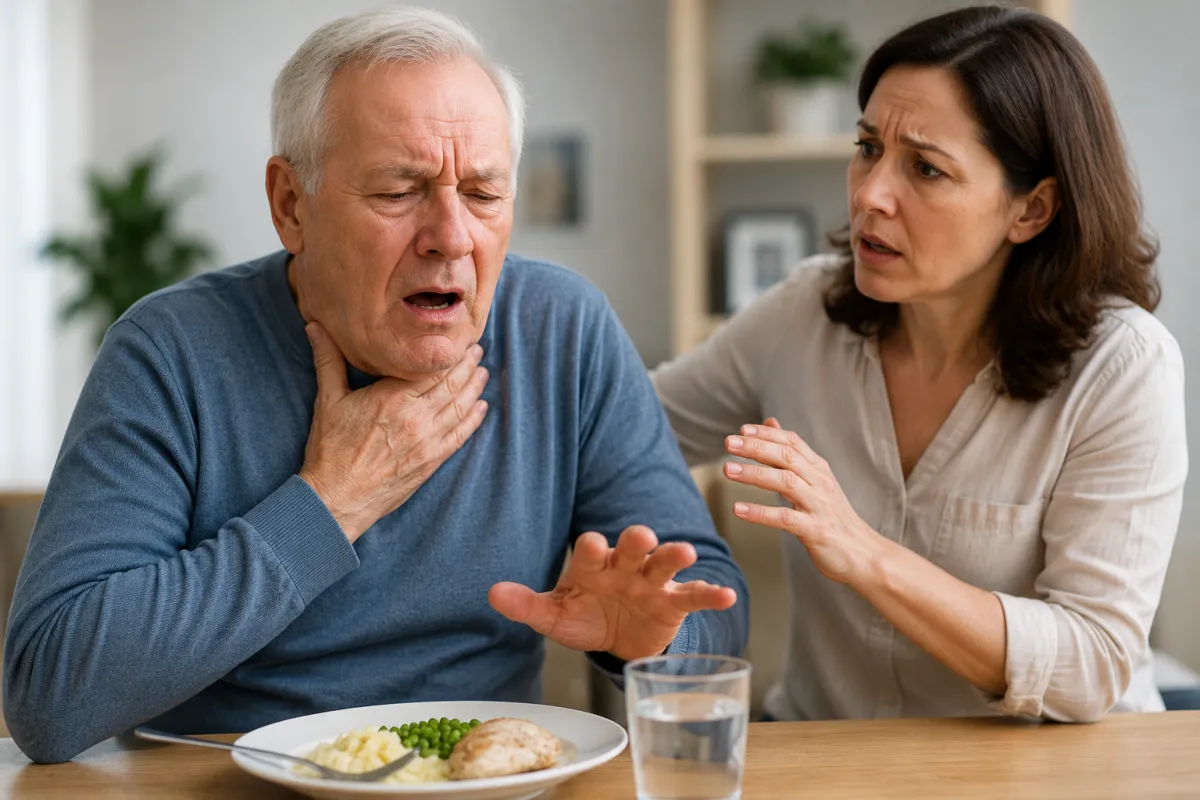
Choking after a stroke is often caused by swallowing difficulties (dysphagia), which can make eating and drinking unsafe. While occasional coughing doesn't always mean you're choking, repeated choking episodes should never be ignored. Learn why choking happens after a stroke, how to reduce your risk, and when to seek emergency medical help.
After your stroke...
A sip of water makes you cough.
Food seems to go down the wrong way.
You suddenly struggle to breathe.
Meals become something you worry about instead of enjoy.
You begin wondering...
"Is this normal after a stroke?"
For many stroke survivors...
Difficulty swallowing is common.
But choking should always be taken seriously.
✦ ✦ ✦
The Good News
Many people who experience choking after a stroke improve significantly with the right treatment.
Speech and language therapy, swallowing exercises and simple changes to the way you eat can make swallowing much safer.
The sooner swallowing problems are identified, the better.
✦ ✦ ✦
Can a Stroke Cause Choking?
Yes.
A stroke can affect the muscles and nerves responsible for swallowing.
Normally, swallowing happens automatically.
After a stroke, food or drink may enter the airway instead of travelling safely into the stomach.
This increases the risk of choking.
✦ ✦ ✦
Why Does Choking Happen After a Stroke?
Swallowing requires more than 30 muscles and several nerves working together in perfect coordination.
A stroke can affect:
✓ The tongue.
✓ The throat muscles.
✓ The muscles that protect the airway.
✓ The timing of the swallowing reflex.
When these muscles don't work properly, swallowing becomes less safe.
✦ ✦ ✦
Choking vs Coughing — What's the Difference?
Many people cough while eating after a stroke.
Coughing is actually a protective reflex that helps clear food or drink from the airway.
Choking is more serious.
During choking, the airway becomes partially or completely blocked.
Signs of choking include:
✓ Difficulty breathing.
✓ Inability to speak.
✓ Silent attempts to cough.
✓ Bluish lips or skin.
✓ Grasping the throat.
A choking emergency requires immediate action.
✦ ✦ ✦
Symptoms of Swallowing Problems
You may notice:
✓ Coughing while eating or drinking.
✓ Choking episodes.
✓ Food sticking in your throat.
✓ A wet or gurgly voice after swallowing.
✓ Needing several swallows.
✓ Drooling.
✓ Difficulty chewing.
✓ Meals taking much longer.
✓ Avoiding certain foods.
✓ Repeated chest infections.
Even mild symptoms should be discussed with your healthcare professional.
✦ ✦ ✦
Why Is Choking Dangerous?
If food or drink enters the lungs instead of the stomach, it can lead to:
✓ Aspiration.
✓ Aspiration pneumonia.
✓ Chest infections.
✓ Breathing difficulties.
✓ Malnutrition.
✓ Dehydration.
Some people experience silent aspiration, where food enters the lungs without causing coughing.
This is why swallowing assessments are so important.
✦ ✦ ✦
How Is Choking Assessed?
If swallowing problems are suspected, a speech and language therapist may assess:
✓ Swallowing ability.
✓ Tongue movement.
✓ Lip control.
✓ Voice quality.
✓ Cough strength.
Further investigations may include:
✓ Video Fluoroscopic Swallow Study (VFSS).
✓ Fibreoptic Endoscopic Evaluation of Swallowing (FEES).
These tests help identify the safest way for you to eat and drink.
✦ ✦ ✦
Treatment Options
Treatment depends on the cause and severity of the swallowing problem.
✦ ✦ ✦
Swallowing Therapy
Speech and language therapists teach exercises designed to strengthen swallowing muscles and improve coordination.
Regular practice often leads to significant improvement.
✦ ✦ ✦
Food and Drink Modifications
Some people temporarily require:
✓ Soft foods.
✓ Puréed meals.
✓ Thickened drinks.
These reduce the risk of choking while swallowing improves.
Only make these changes if recommended by your healthcare team.
✦ ✦ ✦
Safe Swallowing Techniques
Your therapist may recommend:
✓ Sitting upright.
✓ Taking smaller mouthfuls.
✓ Eating slowly.
✓ Swallowing twice.
✓ Remaining upright after meals.
These simple strategies can make swallowing much safer.
✦ ✦ ✦
Feeding Tubes
If swallowing is unsafe, temporary tube feeding may be recommended until swallowing improves.
This helps maintain good nutrition while protecting the lungs.
✦ ✦ ✦
Practical Tips
Sit Upright
Always eat and drink while sitting upright.
Good posture helps food travel safely into the stomach.
✦ ✦ ✦
Take Small Mouthfuls
Avoid large bites or gulps.
Small amounts are easier to swallow safely.
✦ ✦ ✦
Don't Rush Meals
Allow yourself plenty of time.
Eating too quickly increases the risk of choking.
✦ ✦ ✦
Avoid Talking While Eating
Finish swallowing before speaking.
This reduces the chance of food entering the airway.
✦ ✦ ✦
Follow Your Therapist's Advice
If you've been given swallowing exercises or advice about food textures, follow it consistently.
These recommendations are designed to keep you safe.
✦ ✦ ✦
Tips for Family and Carers
If you're supporting someone with swallowing difficulties:
✓ Ensure they sit upright during meals.
✓ Encourage small mouthfuls.
✓ Allow plenty of time.
✓ Avoid distractions during eating.
✓ Watch for coughing or choking.
✓ Know what to do in a choking emergency.
Never force someone to eat if swallowing is unsafe.
✦ ✦ ✦
What Should You Do If Someone Is Choking?
If someone cannot breathe, cough or speak:
✓ Encourage them to cough if they are able.
✓ Call your local emergency services immediately if the airway is blocked.
✓ Begin appropriate first aid if you have been trained to do so.
✓ Continue until emergency help arrives.
If the choking episode resolves but swallowing problems continue, arrange medical assessment as soon as possible.
✦ ✦ ✦
When Should You Seek Medical Advice?
Speak with your healthcare professional if:
✓ You frequently cough while eating or drinking.
✓ Food regularly sticks in your throat.
✓ Meals become difficult or stressful.
✓ You lose weight without trying.
✓ You develop repeated chest infections.
Seek emergency medical attention immediately if:
✓ You are choking and cannot breathe.
✓ You suddenly develop severe difficulty swallowing.
✓ Choking is accompanied by new weakness, facial drooping or speech problems.
These may be signs of another stroke or another medical emergency.
✦ ✦ ✦
My Perspective
Eating should be one of life's simple pleasures.
After a stroke, it can become something you fear.
The important thing to remember is that choking isn't something you should simply "put up with."
The right assessment...
The right therapy...
And the right strategies...
Can make eating much safer and far less stressful.
✦ ✦ ✦
Frequently Asked Questions
Is Choking Common After a Stroke?
Yes.
Many stroke survivors experience swallowing difficulties, particularly during the early stages of recovery.
✦ ✦ ✦
Will My Swallowing Improve?
Many people improve significantly with swallowing therapy, exercises and time.
Recovery varies from person to person.
✦ ✦ ✦
Why Do I Cough When Drinking Water?
Thin liquids move quickly through the throat.
If swallowing muscles are slow or weak, water may enter the airway before it can be protected.
A speech and language therapist can assess whether changes to fluid consistency are needed.
✦ ✦ ✦
Can I Prevent Choking?
Following your swallowing therapy programme, eating slowly, sitting upright and following professional advice can greatly reduce the risk.
✦ ✦ ✦
Key Takeaways
✓ Choking after a stroke is usually caused by swallowing difficulties (dysphagia).
✓ Swallowing problems should always be assessed by a healthcare professional.
✓ Speech and language therapy can significantly improve swallowing safety.
✓ Simple changes during meals often reduce the risk of choking.
✓ Choking emergencies require immediate medical attention.
✓ Many people regain safer swallowing with rehabilitation.
✦ ✦ ✦
About the Author
Alisia Gayle is a stroke survivor who achieved 96% neurological recovery following an ischaemic stroke.
After years of rehabilitation, she now shares practical, evidence-informed resources to help stroke survivors, carers and families better understand recovery and rebuild their lives with confidence.
Alisia is also the author of Brain Damage: My Journey to 96% Recovery, where she shares her personal stroke recovery story and the lessons she learned throughout her rehabilitation.
✦ ✦ ✦
Medical Disclaimer
This article is intended for educational purposes only and should not replace professional medical advice, diagnosis or treatment.
Always seek advice from your doctor, speech and language therapist or other healthcare professional regarding symptoms, concerns or changes in your condition.
If someone is choking and cannot breathe, treat it as a medical emergency and call your local emergency services immediately.
✦ ✦ ✦
Final Thoughts
Swallowing safely is something most of us never think about...
Until it becomes difficult.
Every swallowing exercise...
Every safe meal...
Every small improvement...
Helps rebuild your confidence and independence.
Be patient.
Trust the process.
Recovery happens one safe swallow, one meal and one day at a time.