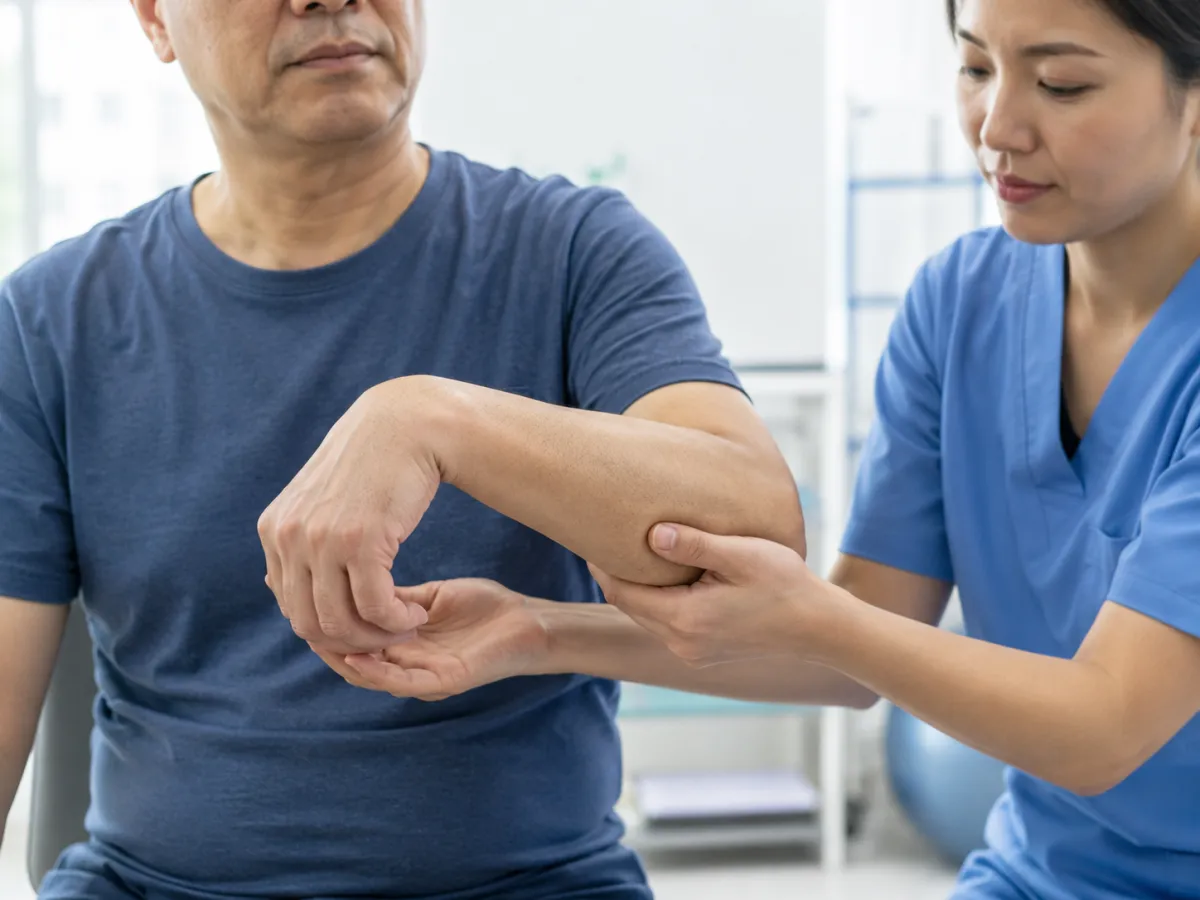
Contractures after stroke can gradually reduce movement, cause pain and make everyday activities more difficult. Learn why they happen, how to prevent them and the treatments that may help preserve movement and independence
You Want to Move...
You tell your arm to straighten.
Or your fingers to open.
Or your ankle to bend.
But your body won't let you.
Instead…
✓ Your muscles feel tight.
✓ Your joints become harder to move.
✓ Stretching feels uncomfortable.
✓ Your arm or leg seems to stay in the same position.
This is known as a contracture.
Unlike temporary muscle stiffness, a contracture is a permanent shortening of muscles, tendons or surrounding tissues that restricts movement.
The good news?
Many contractures can be delayed or even prevented with early rehabilitation and regular movement.
✦ ✦ ✦
The Good News
Many stroke survivors never develop severe contractures.
Early treatment, regular stretching and good positioning can make a significant difference.
Recovery doesn't happen overnight.
It happens through consistent care.
One stretch.
One movement.
One day at a time.
✦ ✦ ✦
What Is a Contracture?
A contracture is the permanent tightening or shortening of muscles, tendons, ligaments or other soft tissues around a joint.
Over time, this causes the joint to become stiff and difficult or sometimes impossible to move fully.
After a stroke, contractures most commonly affect:
✓ Fingers
✓ Wrist
✓ Elbow
✓ Shoulder
✓ Hip
✓ Knee
✓ Ankle
Without treatment, everyday tasks such as dressing, washing, walking or opening your hand may become increasingly difficult.
✦ ✦ ✦
Can a Stroke Cause Contractures?
Yes.
Stroke is one of the most common causes of contractures.
The stroke itself doesn't shorten the muscles.
Instead, changes in muscle activity, weakness and reduced movement gradually allow muscles and surrounding tissues to tighten over time.
This is why early rehabilitation is so important.
✦ ✦ ✦
What Causes Contractures After a Stroke?
Several factors can contribute to contracture development.
Reduced Movement
When a joint isn't moved through its full range regularly, muscles and connective tissues gradually shorten.
Spasticity
Increased muscle tone causes muscles to remain tight for long periods, placing constant tension across the joint.
Muscle Weakness
Weak muscles make it difficult to move the affected limb frequently enough to maintain flexibility.
Poor Positioning
Leaving an arm, hand or leg in the same position for long periods increases the risk of tightening.
Pain
Pain often discourages movement, which can accelerate stiffness and contracture formation.
✦ ✦ ✦
Symptoms of Contractures
Symptoms often develop gradually.
They may include:
✓ Increasing stiffness.
✓ Reduced range of movement.
✓ Difficulty straightening the arm or leg.
✓ Curled fingers.
✓ Difficulty opening the hand.
✓ Pain during stretching.
✓ Difficulty walking.
✓ Difficulty dressing or washing.
✓ Fixed joint positions.
The earlier these symptoms are recognised, the easier they are usually to manage.
✦ ✦ ✦
How Do Contractures Affect Daily Life?
Contractures affect much more than movement.
They can make everyday activities more difficult, including:
✓ Walking.
✓ Standing.
✓ Getting dressed.
✓ Washing.
✓ Using the affected hand.
✓ Sleeping comfortably.
✓ Maintaining good posture.
In more severe cases they can increase pain, reduce independence and make personal care more challenging.
✦ ✦ ✦
Can Contractures Improve?
Yes, but prevention is far easier than treatment.
Early rehabilitation offers the best opportunity to maintain normal joint movement.
Even when contractures have already developed, treatment may still improve comfort, movement and function.
The sooner treatment begins, the better the outcome is likely to be.
✦ ✦ ✦
How Are Contractures Diagnosed?
Your healthcare professional may assess:
✓ Joint movement.
✓ Muscle tone.
✓ Muscle strength.
✓ Pain.
✓ Walking ability.
✓ Hand function.
✓ Daily activities.
They will also look at how much movement is available at each affected joint and whether stiffness is caused by muscle tightness, spasticity or a fixed contracture.
✦ ✦ ✦
Treatment Options
Treatment usually combines several approaches.
The aim is to maintain movement, reduce stiffness and preserve independence.
✦ ✦ ✦
Physiotherapy
Physiotherapy helps maintain joint movement and reduce stiffness.
Treatment may include:
✓ Stretching.
✓ Strengthening exercises.
✓ Functional movement practice.
✓ Walking practice.
✓ Balance exercises.
Regular movement gives the muscles the best chance of remaining flexible.
✦ ✦ ✦
Stretching
Gentle daily stretching helps maintain muscle length and joint mobility.
Stretching works best when performed consistently over time.
Slow, sustained stretches are generally more effective than forceful movements.
✦ ✦ ✦
Positioning
Correct positioning of the arm, hand and leg helps prevent prolonged muscle shortening.
Your therapist may recommend splints, cushions or positioning techniques during sitting and sleeping.
✦ ✦ ✦
Splints and Orthotics
Some people benefit from splints that help maintain a better joint position.
These may be worn during the day or overnight depending on your rehabilitation programme.
✦ ✦ ✦
Spasticity Management
If spasticity contributes to the contracture, treatments may include:
✓ Stretching.
✓ Physiotherapy.
✓ Splinting.
✓ Medication.
✓ Botulinum toxin (Botox) injections when appropriate.
Your rehabilitation team will advise which treatments are suitable.
✦ ✦ ✦
Home Exercise Programme
Recovery continues between therapy sessions.
Daily stretching and movement help maintain flexibility and reinforce the progress made during rehabilitation.
Consistency is far more important than intensity.
✦ ✦ ✦
Practical Tips
Move Little and Often
Frequent movement throughout the day is usually more beneficial than one long exercise session.
✦ ✦ ✦
Maintain Good Positioning
Avoid leaving your arm or leg in the same position for prolonged periods.
✦ ✦ ✦
Stretch Daily
Gentle stretching helps maintain joint movement and reduce stiffness.
✦ ✦ ✦
Stay Active
Regular activity encourages movement and helps reduce the risk of contracture development.
✦ ✦ ✦
Ask for Help Early
Don't wait until movement becomes severely restricted.
Early treatment often produces the best results.
✦ ✦ ✦
When Should You Seek Medical Advice?
Speak with your healthcare professional if:
✓ Your joints become increasingly stiff.
✓ You notice worsening muscle tightness.
✓ Your fingers begin curling into the palm.
✓ Stretching becomes painful.
✓ Your walking becomes more difficult.
✓ You develop new pain or reduced movement.
Early assessment allows treatment to begin before contractures become more severe.
✦ ✦ ✦
My Perspective
One lesson I learned during recovery was that movement matters—even on the days when progress felt slow.
There were times when stretching felt repetitive and frustrating.
It was tempting to skip a session because I couldn't see immediate results.
But recovery isn't built in a single day.
It's built through consistent habits repeated over weeks and months.
Every stretch.
Every movement.
Every exercise.
They all helped protect the movement I had worked so hard to regain.
✦ ✦ ✦
Frequently Asked Questions
Can contractures be reversed after a stroke?
Some improvement is possible, particularly when treatment starts early. Long-standing contractures are more difficult to reverse completely, making prevention especially important.
✦ ✦ ✦
Are contractures the same as spasticity?
No.
Spasticity is increased muscle tone caused by changes in the brain after stroke.
A contracture is the permanent shortening of muscles and surrounding tissues that develops over time.
Spasticity can increase the risk of developing contractures.
✦ ✦ ✦
Can stretching prevent contractures?
Regular stretching, combined with movement and good positioning, can help reduce the risk of contractures developing.
✦ ✦ ✦
Do contractures always happen after a stroke?
No.
Many stroke survivors never develop contractures, particularly when rehabilitation begins early and movement is maintained.
✦ ✦ ✦
Key Takeaways
✓ Contractures are caused by permanent tightening of muscles and surrounding tissues.
✓ They develop gradually when joints are not moved regularly.
✓ Early rehabilitation is the best form of prevention.
✓ Daily stretching and movement help maintain flexibility.
✓ Good positioning reduces the risk of muscle shortening.
✓ Treatment can improve comfort, movement and independence.
✦ ✦ ✦
About the Author
Alisia Gayle is a stroke survivor who achieved 96% neurological recovery following an ischaemic stroke.
After years of rehabilitation, she now shares practical, evidence-informed resources to help stroke survivors, carers and families better understand recovery and rebuild their lives with confidence.
Alisia is also the author of Brain Damage: My Journey to 96% Recovery, where she shares her personal stroke recovery story and the lessons she learned throughout her rehabilitation.
✦ ✦ ✦
Medical Disclaimer
This article is intended for educational purposes only and should not replace professional medical advice, diagnosis or treatment.
Always seek advice from your doctor, physiotherapist or rehabilitation team regarding symptoms, concerns or changes in your condition.
✦ ✦ ✦
Final Thoughts
Contractures can change the way you move.
But they don't have to define your recovery.
Every stretch you complete...
Every joint you move...
Every effort you make...
Helps protect your movement for the future.
Recovery rarely happens all at once.
It happens one movement at a time.