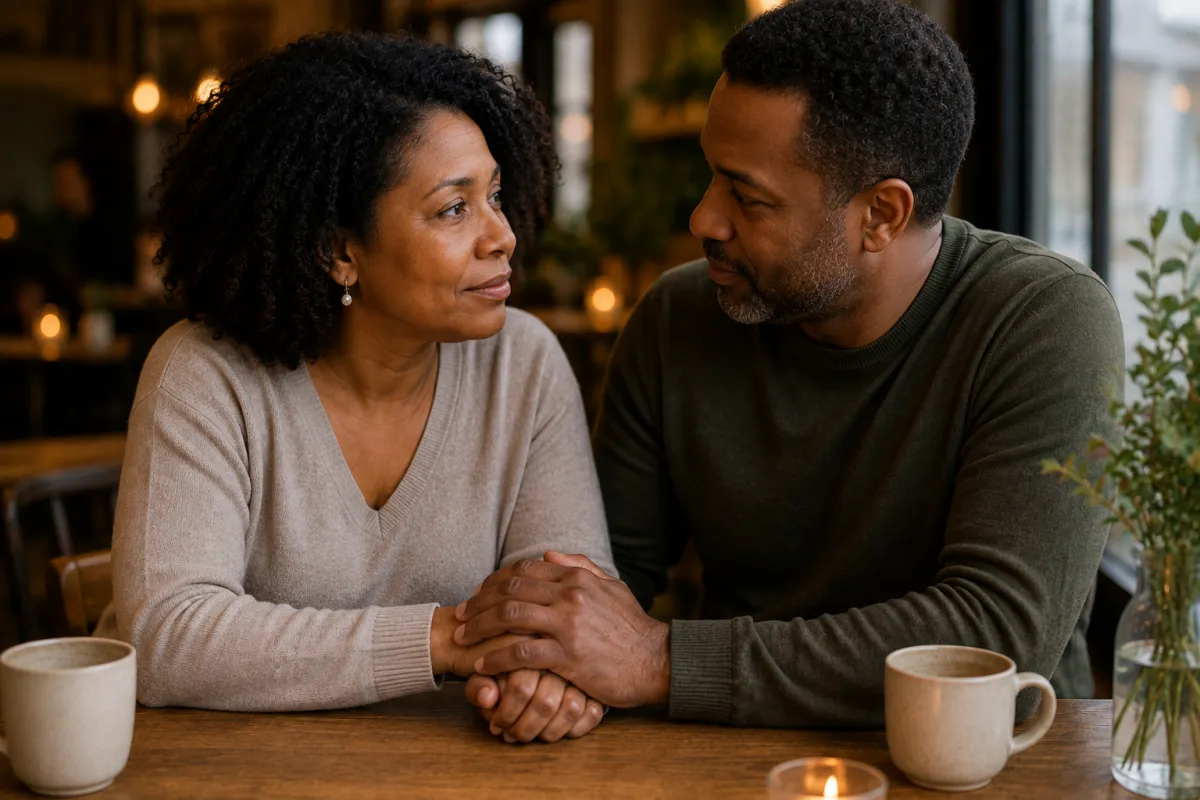
Dating after a stroke can feel intimidating. You may be dealing with physical changes, communication difficulties, fatigue, reduced confidence or fears about how another person will react.You may wonder whether anyone will accept the person you are now.
But having a stroke does not make you unlovable. It does not remove your need for companionship, intimacy, affection or connection. Dating may feel different after a stroke, but meaningful relationships are still possible.
This article explains how to begin dating after a stroke, when to disclose your medical history, how to rebuild confidence and how to recognise whether someone is genuinely right for you.
✦ ✦ ✦
After Your Stroke, Dating May Feel Like Another World
Before your stroke, dating may have felt spontaneous.
You could meet someone, get dressed, go out and enjoy the experience without thinking about accessibility, fatigue, medication, speech difficulties or whether your body would cooperate.
After a stroke, even a simple date can require planning.
You may worry about:
Walking into a crowded venue
Using cutlery with one hand
Finding the right words during conversation
Becoming tired halfway through the date
Having visible weakness, tremors or facial changes
Explaining why you cannot drive
Being judged because of your disability
Discussing your stroke without frightening someone away
Becoming emotionally or physically vulnerable again
These concerns are understandable.
A stroke can affect far more than movement. It can change how you see yourself and how confident you feel around other people.
✦ ✦ ✦
The Good News
You do not need to be completely recovered before you are allowed to date.
You do not need perfect speech, perfect movement or complete independence to be worthy of a relationship.
The right person will be interested in your personality, values, humour, intelligence, kindness and the life you are building—not simply what your body can or cannot do.
Dating after stroke is not about convincing someone to tolerate you.
It is about discovering whether another person deserves access to your life.
✦ ✦ ✦
Why Dating After Stroke Can Feel So Difficult
Your confidence may have changed
Stroke can alter your appearance, movement, speech and independence.
Even when other people barely notice these changes, you may be intensely aware of them.
You may compare yourself with who you were before your stroke and assume that everyone else is making the same comparison.
They usually are not.
Most people meeting you for the first time only know the person standing in front of them now.
You may feel uncomfortable in your body
Weakness, spasticity, changes in sensation, balance difficulties or weight changes can affect body confidence.
You may worry about how your body looks during intimacy or whether it will respond in the way you expect.
These fears can make you avoid dating altogether, even when you want companionship.
You may fear rejection
Rejection is unpleasant for anyone, but after a life-changing medical event, it may feel more personal.
You may believe that rejection proves you are damaged or no longer desirable.
It does not.
Dating involves rejection for almost everyone. Sometimes there is no chemistry. Sometimes lifestyles are incompatible. Sometimes another person is emotionally unavailable.
Not every rejection is about your stroke.
You may have less energy
Stroke fatigue can make long evenings, noisy restaurants and spontaneous plans difficult.
A person who does not understand neurological fatigue may mistakenly believe you are uninterested, distant or unreliable.
Clear communication can prevent many of these misunderstandings.
Your life may have become more complicated
You may have appointments, rehabilitation exercises, medication schedules or transport limitations.
This does not make dating impossible, but it may mean choosing dates that work with your current reality instead of pretending that reality does not exist.
✦ ✦ ✦
When Are You Ready to Date After Stroke?
There is no medically defined waiting period for dating.
You may be ready when you feel interested in meeting someone—not when every part of your recovery is complete.
However, dating is more likely to be healthy when:
You are looking for connection rather than rescue
You can communicate at least some of your needs
You can tolerate the possibility that not every date will work out
You are not relying on another person to repair your confidence
You can recognise disrespectful or manipulative behaviour
You are beginning to accept the person you are now
You have enough physical and emotional energy to engage with someone
You do not need to feel completely fearless.
You only need enough stability to participate without abandoning your own needs and boundaries.
✦ ✦ ✦
Do You Have to Tell Someone You Had a Stroke?
You are not required to disclose your entire medical history immediately.
Your stroke is personal information. You decide when and how to share it.
However, disclosure may be helpful when your stroke affects the date or the development of the relationship.
For example, you may need to explain:
Why you walk differently
Why you need an accessible venue
Why you cannot stay out late
Why you occasionally struggle to find words
Why you do not drink alcohol
Why you cannot drive
Why you need to take medication
Why you may need assistance with a particular activity
You do not need to turn the conversation into a medical presentation.
A straightforward explanation is often enough:
“I had a stroke a few years ago. I have recovered well, but I still experience fatigue and some weakness.”
You can then decide whether you want to share more.
✦ ✦ ✦
When Should You Mention Your Stroke?
There is no single correct time.
Before the first date
Mentioning it before meeting may reduce anxiety, particularly when your disability is visible or affects the arrangements.
It can also filter out people who are immature, prejudiced or uncomfortable with disability.
That may feel painful, but it saves you from wasting time on someone unsuitable.
During the first few dates
You may prefer to let someone meet you as a person before discussing your stroke.
This can be reasonable when your stroke does not significantly affect the date.
However, repeatedly hiding it may increase your anxiety and make the conversation feel more difficult later.
When the relationship becomes serious
Some people wait until they know there is genuine potential.
The risk is that the other person may feel important information was deliberately withheld, especially when the stroke has a substantial effect on your everyday life.
A useful rule is this:
You do not owe a stranger your entire story, but you should not build a serious relationship around concealment.
✦ ✦ ✦
How to Talk About Your Stroke Without Apologising
Your stroke is not a confession.
You do not need to present it as a warning or apologise for what happened to you.
Avoid language such as:
“I need to tell you what is wrong with me.”
“You probably will not want to see me after this.”
“I understand if this is too much for you.”
“I am damaged now.”
“My body does not work properly.”
That language places you beneath the other person before they have earned any authority over your self-worth.
Instead, be factual:
“I had a stroke three years ago. I have made a strong recovery, although I still have some weakness in my left side.”
Or:
“My speech can become slower when I am tired. It is a result of a stroke, so I sometimes need an extra moment.”
You are providing relevant information—not asking permission to exist.
✦ ✦ ✦
Choosing the Right Kind of First Date
Your first date does not need to be physically demanding or last several hours.
Choose an environment where you can feel comfortable and communicate properly.
Possible first dates include:
A quiet café
A short lunch
A walk somewhere accessible
A museum or gallery with seating
A relaxed afternoon drink
A video call before meeting
A casual activity that can be ended easily if you become tired
Consider:
Noise levels
Accessible toilets
Distance from parking or public transport
Availability of seating
Uneven ground
How long the date is likely to last
Whether you can leave independently
A difficult venue is not a test of your recovery.
The purpose of the date is to assess the person, not prove how much discomfort you can tolerate.
✦ ✦ ✦
Dating Apps After Stroke
Dating apps can make meeting people easier, particularly when fatigue, mobility problems or transport difficulties limit your social activities.
However, they can also be superficial and emotionally draining.
Should you mention your stroke in your dating profile?
You can, but you do not have to.
Some people mention disability openly because they do not want to spend time explaining it repeatedly.
Others prefer to disclose it privately after establishing basic interest.
Both approaches are valid.
Your profile should not be dominated by your stroke unless stroke advocacy or recovery is a major part of how you want to present yourself.
You are more than your medical history.
Include your interests, personality and the kind of life you enjoy.
Protect yourself online
Be cautious when someone:
Becomes intensely affectionate immediately
Pressures you for personal or financial information
Repeatedly asks about compensation, benefits or property
Wants to borrow money
Refuses video calls
Creates frequent emergencies
Pushes for commitment before meeting
Treats your vulnerability as an opportunity
Ignores your boundaries
Stroke survivors can feel isolated, and dishonest people may exploit that loneliness.
Attention is not the same as genuine care.
✦ ✦ ✦
Rebuilding Confidence Before Dating
Confidence does not always return because someone else finds you attractive.
It is stronger when it is rebuilt independently.
Wear clothes that make you feel like yourself
You do not need to hide every physical difference.
Choose clothing that is comfortable, flattering and practical for your body now.
Practise talking about your stroke
Prepare one or two sentences explaining what happened and how it affects you.
Rehearsing the explanation can reduce anxiety and prevent you from oversharing because you feel nervous.
Start gradually
You may begin with messaging, short video calls or brief daytime meetings.
You do not have to begin with an elaborate evening date.
Continue building your own life
Maintain your friendships, rehabilitation, interests, work, goals and routines.
A healthy relationship should add to your life, not become the only thing in it.
Stop treating your pre-stroke self as your competition
You may not move, speak or live exactly as you once did.
That does not mean the current version of you is inferior.
Recovery is not only about returning to who you were. It can also involve building a different but still meaningful life.
✦ ✦ ✦
What If You Have Aphasia or Communication Difficulties?
Aphasia can make dating especially frustrating.
You may know exactly what you want to say but struggle to produce the words. Fast conversations, noisy venues and nervousness can make the problem worse.
You can tell your date:
“I understand everything, but sometimes I need longer to find the words.”
Helpful strategies include:
Choosing quiet venues
Asking the other person not to interrupt
Using your phone to type difficult words
Taking breaks when fatigued
Using gestures, photographs or communication apps
Meeting for shorter periods
Explaining that aphasia does not affect intelligence
Pay attention to how the person responds.
Someone suitable will give you time.
Someone who mocks you, speaks over you or treats you as less intelligent is showing you exactly who they are.
Believe the evidence.
✦ ✦ ✦
What If You Have a Visible Disability?
You may use a walking stick, wheelchair, AFO or other mobility aid.
You may have a weakened hand, facial asymmetry or an altered walking pattern.
A visible disability may attract questions. You decide how much you want to answer.
You should not tolerate:
Intrusive questions immediately
Being treated like an inspirational story
Infantilising language
Someone speaking to your companion instead of you
Assumptions that you cannot have sex
Comments suggesting you should feel grateful for romantic attention
Someone behaving as though dating you is an act of charity
You are not fortunate simply because someone without a disability shows interest in you.
The relevant question is whether that person meets your standards.
✦ ✦ ✦
Intimacy and Sex After Stroke
A stroke can affect sexual desire, sensation, movement, confidence and physical stamina.
Medication, depression, fatigue and fear of another stroke may also affect intimacy.
Common concerns include:
These problems are not shameful.
Communication, pacing and experimentation may help. Pillows, supportive positioning, lubrication and choosing times when energy is highest can make intimacy more comfortable.
Speak with your GP or stroke team when sexual difficulties persist. Medication side effects and treatable health conditions may be contributing.
Do not stop prescribed medication without medical advice.
✦ ✦ ✦
Can Sex Cause Another Stroke?
For most medically stable stroke survivors, sexual activity is not considered unusually dangerous.
Sex generally places a similar demand on the body to moderate physical activity.
However, you should seek individual medical advice when you have:
Uncontrolled blood pressure
Unstable heart disease
Chest pain
Severe breathlessness
A recent major cardiovascular event
Specific restrictions from your medical team
Fear can remain even after you have been medically cleared.
Discussing that fear with a healthcare professional may provide reassurance.
✦ ✦ ✦
Dating When You Have a Carer
Dating can feel complicated when you rely on a family member, professional carer or personal assistant.
You still have a right to privacy and adult relationships.
Where possible:
Arrange private time
Agree clear boundaries with carers
Decide what information can be shared
Plan transport and personal care in advance
Avoid allowing family members to control your romantic decisions
Speak directly for yourself whenever possible
Needing support does not remove your autonomy.
However, anyone you date should respect the people helping you without trying to take control of your care, finances or decisions.
✦ ✦ ✦
Warning Signs in a New Relationship
Loneliness can make it tempting to overlook poor behaviour.
Do not lower your standards because you had a stroke.
Be cautious when someone:
Dismisses your fatigue or symptoms
Pressures you into activities you cannot manage
Becomes angry when you need to rest
Tries to control your medication or appointments
Makes jokes about your speech, walking or disability
Treats you as dependent or incapable
Moves into your home quickly
Asks for access to your money
Encourages you to isolate yourself
Uses your stroke during arguments
Suggests nobody else would want you
Ignores sexual boundaries
Presents basic respect as a favour
These are not minor imperfections.
They are evidence that the person may be unsafe or unsuitable.
✦ ✦ ✦
Signs of a Healthy Partner
A healthy partner does not need to understand stroke perfectly from the beginning.
They do need to be willing to listen and learn.
Positive signs include someone who:
Asks what support is helpful instead of assuming
Respects your independence
Gives you time to communicate
Accepts changes to plans without punishing you
Does not treat you as fragile
Shows consistent behaviour
Respects physical and emotional boundaries
Encourages your goals
Can discuss intimacy honestly
Sees your stroke as one part of your life—not your entire identity
Words matter, but behaviour matters more.
Judge the person by repeated actions over time.
✦ ✦ ✦
What If Someone Rejects You Because of Your Stroke?
It will hurt.
But rejection from an incompatible person is not proof that you are unworthy.
Someone may lack the maturity, emotional capacity or willingness to understand disability.
That tells you something about them.
Do not beg for acceptance, provide endless explanations or try to prove that your disability will never inconvenience them.
You are seeking a partner, not applying for permission to be loved.
Let unsuitable people remove themselves early.
✦ ✦ ✦
Dating Someone You Knew Before Your Stroke
Dating a person who knew you before your stroke can create a different pressure.
You may worry that they are comparing you with your former self.
They may also struggle to understand changes in your energy, confidence or personality.
Honest conversations are essential.
Ask whether they accept the relationship as it exists now—not whether they are waiting for you to become exactly who you were before.
A relationship cannot survive when one person is permanently grieving a previous version of the other.
✦ ✦ ✦
Dating After the End of a Previous Relationship
Some relationships do not survive stroke.
A partner may become a carer, emotional closeness may disappear or the relationship may expose problems that already existed.
Beginning again can feel frightening, particularly when you expected your previous relationship to last.
Do not rush into a new relationship simply to prove that you are still desirable.
Take time to understand:
What went wrong previously
What behaviour you will no longer tolerate
What kind of relationship you now want
Which boundaries need to be stronger
Whether you are emotionally available
Whether you are seeking companionship or escape
A new relationship will not automatically repair the damage caused by an old one.
✦ ✦ ✦
Tips for Family and Carers
Family members may become protective after a stroke.
Their concern may be genuine, but the stroke survivor remains an adult with the right to make personal decisions.
Family and carers should:
Avoid interrogating potential partners
Respect privacy
Discuss safety without becoming controlling
Support transport or communication when requested
Avoid assuming the survivor cannot consent
Take concerns seriously when there is evidence of exploitation
Encourage independence rather than dependency
Protection should not become imprisonment.
✦ ✦ ✦
When Should You Seek Professional Support?
Consider speaking with your GP, stroke team, psychologist or counsellor when:
Fear of rejection prevents you from meeting anyone
You feel worthless or undesirable
You are experiencing persistent depression
You cannot accept changes to your body
Previous relationship trauma is affecting new relationships
Sexual difficulties are causing distress
You feel pressured or controlled by a partner
You suspect financial or emotional exploitation
You are unsure whether changes in sexual behaviour may be related to your stroke
Relationship concerns are a valid part of stroke recovery.
You do not have to wait for a crisis before asking for support.
✦ ✦ ✦
My Perspective
After a stroke, it is easy to believe that you must become fully recovered before you can return to life.
But life does not pause politely while recovery takes place.
You may still have weakness. Your hand may not move exactly as it once did. You may become tired more easily or occasionally struggle to find a word.
That does not mean you are no longer capable of love, attraction or intimacy.
The most important shift is to stop approaching dating as though another person is being asked to accept a burden.
You have also survived something that tested your resilience, patience and identity.
You have standards, choices and value.
Dating after stroke is not only about whether somebody wants you.
It is also about whether you want them.
✦ ✦ ✦
Frequently Asked Questions
Can stroke survivors have relationships?
Yes. Stroke survivors can have loving, intimate and long-term relationships. Some adjustments may be needed when stroke has affected mobility, communication, fatigue or sexual function.
Should I put my stroke on my dating profile?
You can, but you are not required to. Some people prefer early disclosure, while others discuss it privately after establishing initial contact.
Will people reject me because I had a stroke?
Some may, but not every rejection will be related to your stroke. Someone who cannot accept your circumstances is not the right match for you.
How do I explain aphasia on a date?
Explain that aphasia affects communication rather than intelligence. Ask the person to give you time to find words and choose a quiet environment.
Is it safe to have sex after a stroke?
Sex is generally safe for medically stable stroke survivors. Ask your doctor for individual advice when you have cardiovascular concerns or have been given activity restrictions.
Can a stroke affect sexual desire?
Yes. Brain changes, fatigue, depression, medication and relationship stress can increase or reduce sexual desire.
What should I do if my date treats me like a patient?
Correct the behaviour directly. Explain that you want to be treated as an equal partner. When the behaviour continues, reconsider whether the person is suitable.
Am I obligated to disclose my disability?
You control your personal information. However, honest disclosure becomes increasingly important when the condition affects plans, intimacy or the development of a serious relationship.
Can I date while I am still recovering?
Yes. Recovery does not need to be complete. However, make sure dating is not interfering with rehabilitation or being used to escape serious emotional distress.
What if I need help during a date?
Plan ahead. Choose an accessible location, arrange transport and tell the person about any practical assistance you may need.
✦ ✦ ✦
Key Takeaways
Having a stroke does not make you unlovable or undesirable.
You do not need to be fully recovered before dating.
You control when and how you disclose your stroke.
Explain your needs without apologising for them.
Choose accessible, low-pressure dates that work with your energy.
Watch behaviour rather than relying on flattering words.
Do not lower your standards because you have a disability.
Seek medical advice for persistent sexual problems or safety concerns.
A good partner will respect both your independence and your limitations.
Dating is not only about being chosen. You are also choosing.
✦ ✦ ✦
Related Articles
Friendships After Stroke
Learn why friendships can change after a stroke and how to recognise which relationships are worth rebuilding.
Relationships After Stroke
Understand how stroke can affect communication, intimacy, responsibilities and emotional connection between partners.
Sex After Stroke
Explore common changes in sexual function, confidence and intimacy following a stroke.
Emotional Changes After Stroke
Learn how changes in the brain can affect mood, behaviour, confidence and relationships.
Rebuilding Confidence After Stroke
Practical ways to regain trust in your body, identity and ability to participate in life again.
✦ ✦ ✦
Final Thoughts
Dating after stroke can feel exposing because it asks you to be seen at a time when you may still be learning to accept yourself.
But your stroke did not erase your personality, humour, intelligence, sexuality or capacity to connect with another person.
You are not required to hide what happened.
You are also not required to make your stroke the centre of every relationship.
Be honest. Protect your boundaries. Choose people according to their behaviour, and do not mistake attention for respect.
The goal is not to find someone willing to overlook your stroke.
It is to find someone capable of seeing your whole life—and adding something worthwhile to it.