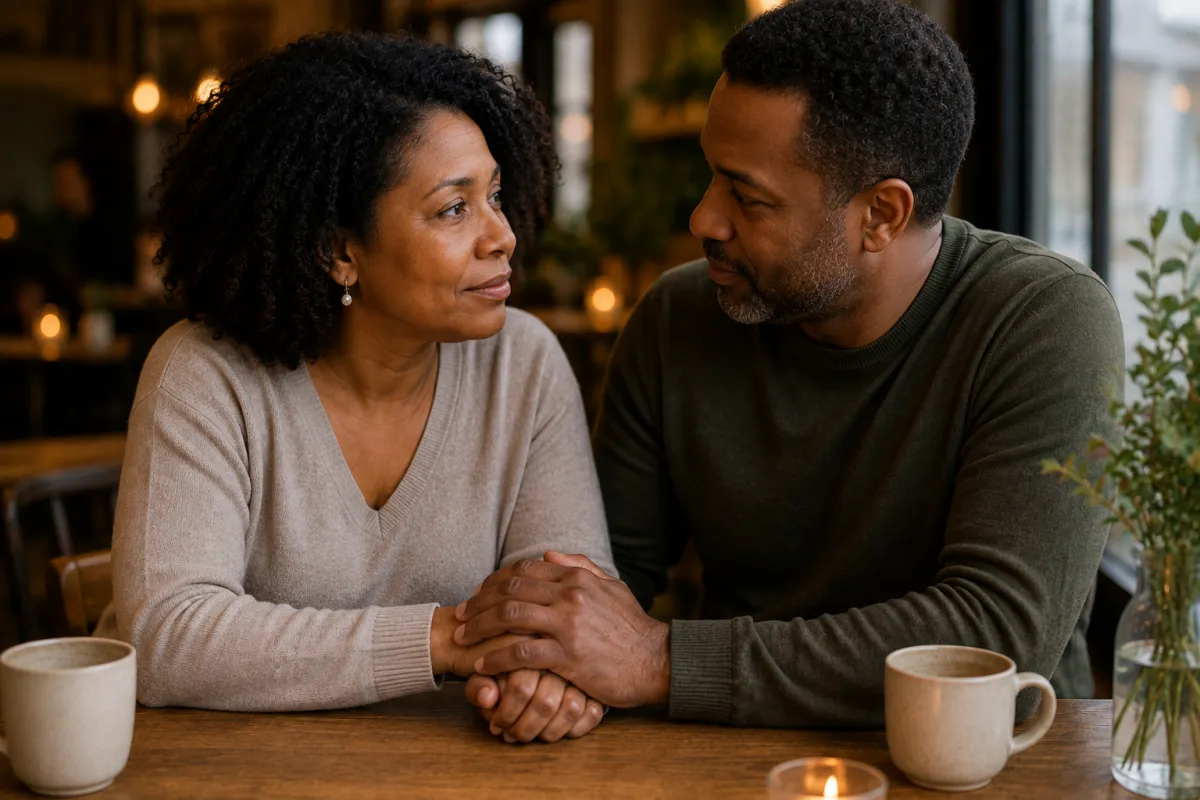
Dating after a stroke can feel particularly complicated when the stroke happened while you were still young. You may be rebuilding your confidence at the same time as trying to meet new people, explain invisible symptoms, manage fatigue or adjust to changes in your body. You may wonder when to disclose your stroke, whether someone will see you differently, or whether dating will ever feel carefree again. A stroke may change parts of your dating life, but it does not remove your ability to build attraction, intimacy, companionship or a meaningful relationship.
After your stroke...
Dating may suddenly feel different.
Before, you may have worried about ordinary things.
Do they like me?
Will we have anything to talk about?
Should I message first?
Where should we meet?
Now there may be another layer.
"When do I tell them I had a stroke?"
"What if they notice something before I explain it?"
"What if they think I am too complicated?"
"What if I get tired halfway through the date?"
"What if my body doesn't work exactly as it did before?"
"What if they reject me because of my stroke?"
Perhaps you are in your twenties.
Your thirties.
Your forties.
People around you may be dating, getting married, having children and building families.
Meanwhile, you may feel as though stroke temporarily removed you from that world.
It did not.
Your dating life may need adjusting.
Your confidence may need rebuilding.
But having experienced a stroke does not make you undateable.
✦ ✦ ✦
The Good News
Stroke survivors can date.
They can fall in love.
They can have relationships.
They can have fulfilling intimate lives.
Stroke may affect sex and relationships through physical disability, emotional changes, fatigue, communication difficulties or changes in confidence, but these difficulties can often be managed or adapted.
And being single after stroke has one advantage that people sometimes overlook.
You get to decide how someone enters your life now.
They meet the person you are today.
You are not required to recreate the exact dating life you had before your stroke.
You can build something new.
At your own pace.
With somebody who understands that your stroke is part of your history rather than your entire identity.
✦ ✦ ✦
Why Can Dating Feel So Difficult After a Young Stroke?
Dating already requires vulnerability.
You allow someone to assess you.
You hope they like what they see.
After stroke, that vulnerability can feel much greater.
You may be carrying insecurities about:
✓ Walking
✓ Speech
✓ Memory
✓ Fatigue
✓ Scars
✓ Tremor
✓ Facial weakness
✓ Mobility aids
✓ Sexual function
✓ Employment
✓ Driving
✓ Independence
Before stroke, you may have felt confident about your appearance and future.
After stroke, you may wonder whether somebody will now see:
A patient.
A disability.
A medical problem.
instead of seeing you.
That fear can become so strong that you reject yourself before anyone else gets the opportunity to know you.
✦ ✦ ✦
You Are Not Your Stroke
This sounds obvious.
But it is easy to forget.
You may have spent months introducing yourself to healthcare professionals through your diagnosis.
"What stroke did you have?"
"What medication are you taking?"
"Which side was affected?"
"How far can you walk?"
Your entire world becomes organised around what happened to your brain.
Dating is different.
A new person may care about:
Your humour.
Your opinions.
Your ambitions.
Your kindness.
Your confidence.
Your interests.
Your personality.
Your attraction to each other.
Your stroke is information about you.
It is not a complete description of you.
Try not to walk into every date mentally wearing a label that says:
STROKE SURVIVOR.
You are allowed to simply be a person meeting another person.
✦ ✦ ✦
When Should You Tell Someone You Had a Stroke?
There is no universal rule.
You do not necessarily need to announce your complete medical history before the first drink arrives.
But you also do not need to hide your stroke indefinitely.
The right timing depends on:
✓ How visible the effects are
✓ Whether the stroke affects the date practically
✓ How comfortable you feel
✓ How serious the relationship is becoming
✓ Whether medication or symptoms may matter
If you use a mobility aid, have obvious weakness or experience communication difficulties, the subject may naturally come up earlier.
If you have no visible effects, you may choose to wait until trust develops.
The important thing is that disclosure should be a conversation.
Not a confession.
You have not done something wrong.
✦ ✦ ✦
You Do Not Owe Your Medical History on a Dating App
Your dating profile does not have to read:
"Hi, I'm 29, love travelling, enjoy music and had an ischaemic stroke three years ago."
Unless you genuinely want it to.
Some people prefer being completely open from the beginning.
Others do not want their first impression reduced to a medical event.
Both approaches can be reasonable.
Ask yourself:
"Am I sharing this because I want to?"
or:
"Am I sharing it because I feel obligated to warn people about me?"
Those are very different motivations.
Your stroke does not make you defective merchandise requiring a disclosure notice.
✦ ✦ ✦
What If Your Stroke Is Visible?
Visible disability can make dating feel more exposed.
Perhaps you:
✓ Walk with a limp
✓ Use a stick
✓ Wear an AFO
✓ Have weakness in one arm
✓ Have facial asymmetry
✓ Experience tremor
You may imagine that every person you meet is immediately assessing your disability.
Some people will notice.
That does not mean they will care in the way you fear.
You can address it simply.
For example, you may explain that you had a stroke and have some residual weakness.
Then move on.
You do not need to spend the entire first date giving a neurological case presentation.
If the person is interested, they can ask respectful questions.
And if they react badly?
That is information about them.
Not evidence about your worth.
✦ ✦ ✦
Invisible Stroke Effects Can Be Harder to Explain
Sometimes you look completely unaffected.
That can create different problems.
You may still experience:
✓ Severe fatigue
✓ Brain fog
✓ Memory difficulties
✓ Headaches
✓ Sensory overload
✓ Anxiety
✓ Word-finding problems
✓ Reduced stamina
Your date may think:
"But you look completely fine."
This can become frustrating.
You do not need to prove that your symptoms are legitimate.
Explain the practical effect.
For example:
"I had a stroke a while ago and recovered really well, but I still fatigue faster than I used to."
That tells them what they actually need to understand.
You can provide more detail later if the relationship develops.
✦ ✦ ✦
What If You Need to End Dates Early?
Young dating culture can involve:
Late nights.
Alcohol.
Busy restaurants.
Crowded bars.
Long journeys.
Several hours out.
That may be exhausting after stroke.
Do not destroy yourself trying to prove that you can date exactly as you did before.
Choose dates that fit your current capacity.
You might prefer:
✓ Coffee
✓ Lunch
✓ A walk
✓ An early dinner
✓ A quiet restaurant
✓ A museum
✓ A short activity
Your first date does not need to become a six-hour endurance test.
If you know two hours is enough...
Plan two hours.
Leaving while you still feel good is far better than staying until your neurological battery is empty.
✦ ✦ ✦
Fatigue Can Affect Dating
Post-stroke fatigue can be difficult for somebody new to understand.
One moment you appear energetic.
Then suddenly you are finished.
You may need:
Rest.
Quiet.
Sleep.
A change of plan.
Your date may initially interpret this as:
"They've lost interest."
"They don't want to stay."
"I've done something wrong."
Clear communication helps.
You do not need to apologise endlessly.
Simply explain that stroke-related fatigue can arrive quickly and is not necessarily a reflection of how much you are enjoying yourself.
Someone worth continuing to date can learn that distinction.
✦ ✦ ✦
Dating Apps After Stroke
Dating apps can be both useful and difficult.
One advantage is control.
You can:
Choose when to respond.
Take time writing messages.
Decide when to disclose your stroke.
Arrange dates around your energy.
Avoid physically exhausting social environments.
But apps can also amplify insecurity.
People swipe quickly.
Conversations disappear.
Someone may suddenly stop responding.
Do not automatically interpret every rejection as:
"They found out about my stroke."
Dating apps involve rejection for everyone.
People disappear for dozens of reasons.
Do not make your stroke the explanation for every disappointing interaction.
✦ ✦ ✦
Rejection May Hurt More After Stroke
Before your stroke, rejection may have felt like:
"They weren't interested."
After your stroke, you may think:
"They rejected me because I'm damaged."
That conclusion can hit much harder.
But unless someone actually tells you that your stroke is the reason, you do not know.
Dating contains rejection.
Sometimes there is no chemistry.
Sometimes lifestyles are incompatible.
Sometimes people return to ex-partners.
Sometimes they meet somebody else.
Sometimes they are simply rude.
Do not allow every failed connection to become another verdict on your recovery.
One person's lack of interest does not establish your future.
✦ ✦ ✦
What If Someone Rejects You Because of the Stroke?
It may happen.
Some people will not want to date somebody with a medical history or disability.
That may hurt.
But trying to convince them otherwise is pointless.
You are looking for compatibility.
Not universal approval.
If somebody decides that having had a stroke makes you unsuitable for them...
Let them go.
Do not audition for acceptance.
A relationship with someone who sees you primarily as a burden would become far more damaging than their early departure.
Early rejection can save you time.
✦ ✦ ✦
Confidence in Your Body May Change
Stroke can affect how you see your own body.
Perhaps one arm looks different.
One leg feels weaker.
Your gait changed.
You gained weight during recovery.
You lost muscle.
There may be scars from procedures.
You may no longer feel physically attractive.
That can influence dating long before another person says anything.
You may:
Avoid certain clothes.
Avoid photographs.
Avoid intimacy.
Assume somebody will dislike parts of your body.
Confidence may need rebuilding gradually.
Wear clothes that make you feel good.
Exercise safely where appropriate.
Take care of your appearance if that matters to you.
But do it for yourself.
You do not need to conceal every physical sign of survival.
✦ ✦ ✦
Intimacy After Young Stroke
Dating may eventually lead to sex.
Stroke can affect intimacy in different ways.
Physical and emotional changes after stroke can contribute to changes in:
✓ Sexual desire
✓ Arousal
✓ Sensation
✓ Movement
✓ Confidence
✓ Comfort
✓ Communication
✓ Fatigue
Some people experience little change.
Others experience substantial difficulties.
If something has changed, do not assume your intimate life is finished.
Different positions.
More time.
Better communication.
Planning around fatigue.
Medical advice where necessary.
can all help.
The goal is not recreating sex exactly as it was before.
It is finding what works now.
✦ ✦ ✦
Fear of Having Another Stroke During Sex
This is a common fear.
Your heart rate increases.
You breathe harder.
You are physically exerting yourself.
After stroke, those sensations may trigger anxiety.
You think:
"What if this causes another one?"
For many people who are medically stable, sexual activity can eventually be resumed, but individual circumstances differ.
If you have:
✓ Uncontrolled blood pressure
✓ Significant heart problems
✓ Recent major stroke complications
✓ Severe physical limitations
or specific concerns about exertion...
Ask your healthcare professional.
Do not let embarrassment stop you.
Doctors have heard questions about sex before.
✦ ✦ ✦
Medication Can Affect Your Sex Life
Some medicines may affect sexual function.
Possible problems can include:
✓ Reduced desire
✓ Erectile difficulties
✓ Changes in arousal
✓ Difficulty reaching orgasm
But stroke itself, fatigue, depression, anxiety and relationship factors can also contribute.
Do not immediately stop medication because your sex life changed.
Discuss the problem.
Your clinician may be able to:
Change the dose.
Review another medicine.
Investigate another cause.
Suggest treatment.
Secondary stroke-prevention medication should not be sacrificed because discussing sexual side effects feels embarrassing.
✦ ✦ ✦
What If You Still Live With Your Parents?
Young stroke can temporarily reverse independence.
You may have lived alone before.
Then after the stroke...
You move back home.
Your parents help with:
Meals.
Transport.
Medication.
Appointments.
Finances.
That can make dating feel awkward.
You may think:
"I'm nearly thirty and living with my parents again. Who will want this?"
Context matters.
You are recovering from a serious neurological event.
That is not the same as refusing to build an independent life.
If somebody cannot understand temporary dependence during rehabilitation, they may not be the right person for you.
Keep working toward independence where possible.
But do not manufacture shame around receiving help while you recover.
✦ ✦ ✦
What If You Cannot Drive?
Driving can be a surprisingly big issue in dating.
You may need:
Public transport.
Taxis.
A lift.
Your date to travel toward you.
You might feel embarrassed saying:
"I can't drive at the moment."
Do not be.
You can explain briefly if needed.
If you are temporarily unable to drive because of stroke or licensing restrictions, that is simply a practical fact.
Plan around it.
Meet somewhere accessible.
Use transport you can manage safely.
Do not drive before you are medically and legally allowed simply because dating makes you want your independence back faster.
✦ ✦ ✦
Financial Changes Can Affect Confidence
Stroke may interrupt work.
Perhaps you are:
On sick leave.
Working fewer hours.
Changing careers.
Receiving benefits.
Still in rehabilitation.
Dating can cost money.
Restaurants.
Travel.
Activities.
Weekends away.
If your finances have changed, choose dates you can comfortably afford.
A relationship built around spending beyond your means is a terrible foundation anyway.
Walks.
Coffee.
Picnics.
Museums.
Cooking together later in a relationship.
Good dates do not need to be expensive.
Your bank balance after a medical crisis is not a measure of your desirability.
✦ ✦ ✦
Do Not Date Just to Prove You Are "Normal"
This is an important trap.
You may rush back onto dating apps because you want evidence that stroke did not change you.
You want someone to find you attractive.
You want sex.
You want validation.
You want proof.
That can make you tolerate people you would previously have rejected.
Do not lower your standards because you are frightened nobody else will want you.
Your stroke does not mean you should become grateful for any attention offered.
Dating should still involve you deciding whether you like them.
Do not forget that part.
✦ ✦ ✦
Watch for People Who Treat You Like a Patient
Some people may become excessively protective after hearing about your stroke.
At first, that might feel caring.
But pay attention.
There is a difference between:
"Do you need a break?"
and:
"You shouldn't be doing that."
There is a difference between support and control.
A partner should not automatically assume authority over:
Your medication.
Your activities.
Your friendships.
Your work.
Your rehabilitation.
Your medical decisions.
You may need help.
That does not mean you need permission.
A healthy relationship should support your independence rather than gradually replacing it.
✦ ✦ ✦
Do Not Confuse Pity With Love
This deserves saying clearly.
Someone feeling sorry for you is not the same as someone respecting you.
You do not need a rescuer.
And you certainly do not need to stay with someone because:
"They accepted me after my stroke."
That creates a dangerous imbalance.
A partner should be with you because they:
Enjoy you.
Respect you.
Want you.
Value you.
Choose you.
Your medical history should not become a lifelong debt you believe you owe them.
✦ ✦ ✦
Talk About the Future When the Relationship Becomes Serious
A new date does not need your entire future medical plan.
A serious partner eventually may.
Depending on your circumstances, conversations may involve:
✓ Medication
✓ Recurrence risk
✓ Pregnancy
✓ Fertility
✓ Disability
✓ Driving
✓ Career plans
✓ Fatigue
✓ Financial changes
These discussions do not need to happen on date two.
But if you are building a long-term relationship, honesty matters.
You also deserve honesty from them.
The goal is not to convince somebody that your future is risk-free.
Nobody's future is.
The goal is deciding whether your lives fit together.
✦ ✦ ✦
Fear of Another Stroke Can Enter Relationships
You may become hyperaware of symptoms.
A headache.
A numb hand.
A moment of dizziness.
Suddenly your date becomes an emergency observer.
This can become exhausting for both people if every sensation triggers panic.
Learn:
✓ Your recognised residual symptoms
✓ Your personal stroke warning signs
✓ Your prevention plan
✓ When emergency action is required
If fear of recurrence dominates your daily life or prevents relationships developing, psychological support may help.
You deserve to date as a person.
Not spend every evening monitoring yourself for catastrophe.
✦ ✦ ✦
The Emotional Impact
Dating after young stroke can expose insecurities rehabilitation did not touch.
Physiotherapy may improve your leg.
Speech therapy may improve communication.
Occupational therapy may improve independence.
None of those automatically restore:
Sexual confidence.
Body confidence.
Trust.
Comfort with vulnerability.
You may feel:
✓ Embarrassed
✓ Anxious
✓ Lonely
✓ Angry
✓ Self-conscious
✓ Afraid of rejection
Stroke can affect emotions, relationships and sexual confidence as well as physical function.
Recognising that matters.
Because rebuilding a social and intimate life is also part of recovery.
✦ ✦ ✦
My Perspective
Dating after a young stroke can make you feel as though you now arrive with baggage that everybody else does not have.
But look around.
Everybody eventually arrives with something.
Divorce.
Children.
Debt.
Bereavement.
Illness.
Mental health struggles.
Family problems.
Past relationships.
Yours happens to include a stroke.
Do not make it bigger than your entire personality.
And do not make it smaller than it actually is.
Tell people when it becomes relevant.
Explain what affects you.
Ask for what you need.
But then get back to finding out whether you actually like the person sitting opposite you.
That is the part people forget.
You are not waiting for somebody to approve your medical history.
You are assessing them too.
Are they kind?
Interesting?
Reliable?
Emotionally mature?
Do they respect your independence?
Do you enjoy being around them?
Stroke does not remove your right to have standards.
✦ ✦ ✦
When Should You Seek Professional Advice?
Speak with your doctor, stroke team or another appropriate healthcare professional if:
✓ You are worried about sexual activity after stroke
✓ You experience significant sexual dysfunction
✓ Medication appears to affect sexual function
✓ Fatigue is severely limiting relationships
✓ Depression or anxiety is affecting dating or intimacy
✓ You have questions about contraception
✓ You are considering pregnancy
✓ You are worried about another stroke during sex
Stroke can affect sexual function and relationships through physical, emotional and psychological changes.
These problems deserve proper healthcare support.
They are not trivial simply because they involve dating or sex.
✦ ✦ ✦
Frequently Asked Questions
When Should I Tell Someone I Had a Stroke?
There is no fixed rule.
You may choose to disclose early or wait until trust develops.
If the effects of your stroke influence the date practically, discussing it earlier may make things easier.
Do I Need to Put My Stroke on My Dating Profile?
No.
Your dating profile is not your medical record.
You can include it if you want to, but you are not obligated to introduce yourself through your diagnosis.
Will People Reject Me Because I Had a Stroke?
Some people may.
Others will not care nearly as much as you fear.
Dating involves rejection for many reasons, and one person's reaction does not determine your future.
Can Stroke Affect Sex?
Yes.
Stroke may affect desire, movement, sensation, confidence, fatigue and other aspects of sexual activity.
Medical and practical support may help.
Can I Have a Relationship If I Still Need Help From Family?
Yes.
Temporary or ongoing support does not automatically prevent you from having an adult relationship.
What If I Cannot Drive After Stroke?
Plan dates around accessible transport.
Do not return to driving until you are medically and legally permitted to do so.
Will Dating Ever Feel Normal Again?
For many people, yes.
It may initially require more planning and confidence than before, but eventually the stroke may become only one part of the relationship rather than the centre of it.
✦ ✦ ✦
Key Takeaways
✓ Having a stroke young does not make you undateable.
✓ You decide when and how to disclose your stroke.
✓ You do not have to include your medical history on a dating profile.
✓ Visible and invisible stroke effects can both affect confidence.
✓ Post-stroke fatigue may require shorter or quieter dates.
✓ Dating-app rejection should not automatically be blamed on your stroke.
✓ Sexual function can change after stroke, but support and adaptation may help.
✓ Medication should never be stopped because of sexual side effects without medical advice.
✓ Temporary dependence on family does not eliminate your ability to have an adult relationship.
✓ Do not lower your standards because you are afraid nobody else will want you.
✓ Support is healthy; control and pity are not substitutes for a respectful relationship.
✓ Dating after stroke is still about deciding whether you like them, not simply whether they will accept you.
✦ ✦ ✦
Related Articles
Continue learning about relationships and young stroke:
Dating After Stroke
Stroke in Your 20s
Stroke in Your 30s
Stroke in Your 40s
Stroke Under 50
Sex After Stroke
Relationships After Stroke
Body Image After Stroke
Confidence After Stroke
Fear of Another Stroke
✦ ✦ ✦
About the Author
Alisia Gayle is a stroke survivor who achieved 96% neurological recovery following an ischaemic stroke.
After years of rehabilitation, she now shares practical, evidence-informed resources to help stroke survivors, carers and families better understand recovery and rebuild their lives with confidence.
Alisia is also the author of Brain Damage: My Journey to 96% Recovery, where she shares her personal stroke recovery story and the lessons she learned throughout her rehabilitation.
✦ ✦ ✦
Medical Disclaimer
This article is intended for educational purposes only and should not replace professional medical, psychological or sexual-health advice.
The effects of stroke on relationships, sexual function, fatigue, fertility and physical activity vary considerably between individuals.
Speak with your doctor, stroke rehabilitation team, sexual-health professional or another appropriate healthcare professional if you have concerns about sexual function, medication, contraception, pregnancy or the safety of returning to sexual activity.
Never stop prescribed stroke-prevention medication because you believe it is affecting your dating or sex life without first obtaining professional advice.
Seek emergency medical attention immediately for new or sudden symptoms of stroke.
✦ ✦ ✦
Final Thoughts
Dating after a young stroke...
Can feel terrifying at first.
You may wonder whether somebody will see the stroke before they see you.
Whether they will notice the limp.
The tremor.
The fatigue.
The word you struggle to find.
Or the parts nobody can see.
You may worry that you now have to convince somebody that you are still worth choosing.
You don't.
You are not attending dates to plead your case.
You are meeting another person to discover whether there is attraction.
Compatibility.
Trust.
Fun.
Respect.
Maybe love.
Your stroke may eventually become part of that conversation.
Tell them when you are ready.
Explain what matters.
Answer reasonable questions.
But do not spend every date apologising for surviving something serious.
And do not become so grateful for somebody's acceptance that you forget to ask whether they deserve a place in your life.
Date at a pace your body can manage.
Protect your energy.
Rebuild your confidence.
Keep your standards.
And remember...
A stroke may have changed the way you walk into a room.
It may have changed how long you can stay there.
It may even have changed the future you once imagined.
But it did not remove your ability to be attractive.
To connect.
To be wanted.
To choose someone.
Or to be loved.
Young stroke changed part of your story.
It did not cancel your right to write a relationship into what comes next.