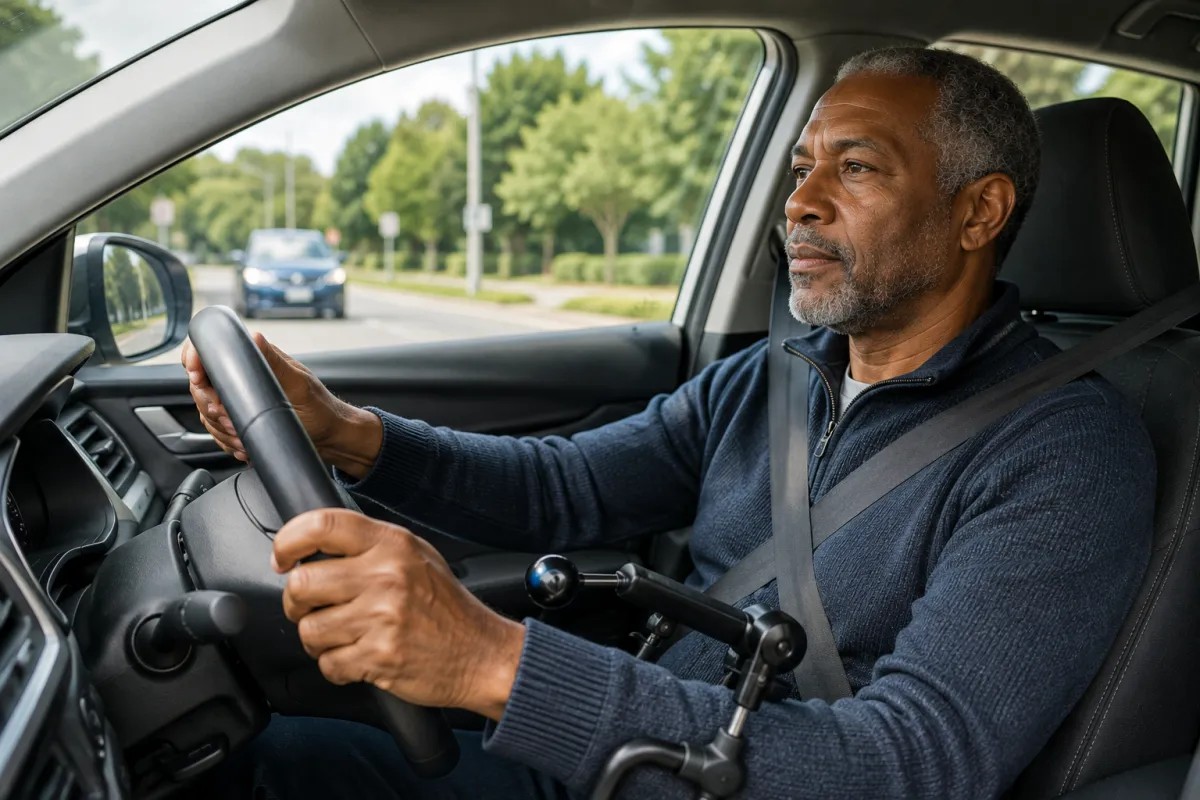
Driving after experiencing seizures following a stroke can be complicated emotionally, medically and legally. A seizure can temporarily remove your ability to drive even if you otherwise feel completely recovered. In the UK, seizures must be reported to the DVLA and you must stop driving immediately. How long you remain off the road depends on factors including the type of seizure, whether it was provoked by the stroke, whether further seizures occur and your individual risk of recurrence.
After your stroke...
You may already have lost so much independence.
Then you are told:
"You can't drive."
Perhaps you had a seizure in hospital.
Maybe it happened several weeks or months later.
Perhaps it was your first seizure ever.
You may feel completely normal afterwards.
You may even think...
"But I'm perfectly capable of driving."
"I haven't had another seizure."
"Why do I have to stop?"
"How long will I lose my licence?"
"Will I ever be allowed to drive again?"
For many stroke survivors, losing the ability to drive can feel like another major setback.
But having a seizure does not necessarily mean that you will never drive again.
It does mean that the risk must be properly assessed before you return to the road.
✦ ✦ ✦
The Good News
Many people who experience seizures are eventually able to drive again.
A seizure does not automatically mean a lifetime driving ban.
What happens depends on:
✓ The type of seizure
✓ When it occurred
✓ Whether it was your first seizure
✓ Whether it was associated directly with your stroke
✓ Whether you experience further seizures
✓ Your neurological investigations
✓ Your risk of another seizure
✓ The type of driving licence you hold
For ordinary car and motorcycle licences, the rules can be significantly different from those applying to bus and lorry drivers. DVLA refers to these as Group 1 and Group 2 licences.
The important thing is not to guess.
The DVLA makes licensing decisions based on the medical information available and the relevant driving standards.
✦ ✦ ✦
Why Can Seizures Happen After a Stroke?
A stroke damages an area of brain tissue.
That damaged tissue can sometimes disrupt the brain's normal electrical activity.
This may increase the likelihood of seizures.
A seizure occurs when abnormal electrical activity temporarily disrupts normal brain function.
Depending on which part of the brain is affected, a seizure may involve:
✓ Jerking movements
✓ Stiffness
✓ Loss of awareness
✓ Unusual sensations
✓ Changes in vision
✓ Difficulty speaking
✓ Confusion
✓ Strange smells or tastes
✓ Brief staring episodes
✓ Loss of consciousness
Not every seizure involves collapsing or dramatic convulsions.
This matters because someone may experience a seizure without initially recognising it as one.
✦ ✦ ✦
Early and Late Seizures After Stroke
Timing matters.
A seizure occurring during a stroke or shortly afterwards may be treated differently from a seizure developing later.
Current DVLA medical guidance states that a seizure occurring at the time of a stroke or during the first week afterwards may be treated as a provoked seizure for licensing purposes, provided there is no previous history of unprovoked seizures or relevant pre-existing cerebral pathology.
A seizure occurring much later may raise different concerns because it can indicate an ongoing tendency towards seizures.
Your neurologist will consider factors such as:
✓ When the seizure occurred
✓ What caused it
✓ Whether there have been previous episodes
✓ Brain scan findings
✓ EEG findings where relevant
✓ Whether anti-seizure medication is required
✓ The likelihood of recurrence
This is why two stroke survivors who have both experienced a seizure may receive different driving advice.
✦ ✦ ✦
You Must Stop Driving After a Seizure
This is one area where there should be no confusion.
If you experience a seizure, fit or convulsion, do not simply wait to see whether another one happens.
In Great Britain, you must tell the DVLA about seizures and stop driving. GOV.UK also warns that failing to disclose a medical condition affecting driving can lead to a fine of up to £1,000, and prosecution may be possible if you are involved in an accident as a result.
Do not drive yourself to appointments.
Do not take "just a short trip."
Do not assume that feeling normal means the restriction no longer applies.
The concern is not how you feel between seizures.
The concern is what could happen if another seizure occurred unexpectedly while you were driving.
✦ ✦ ✦
How Long Do You Have to Stop Driving?
There is no single answer that applies to every seizure.
For a first unprovoked or isolated seizure, current DVLA medical guidance for a Group 1 car or motorcycle licence generally requires driving to stop for six months. That period may be extended to 12 months if there is an underlying factor that increases the risk of another seizure.
For established epilepsy or multiple unprovoked seizures, the usual Group 1 standard is generally 12 months seizure-free, although specific legal exceptions exist for particular seizure patterns.
A seizure considered provoked may have different rules.
Current DVLA guidance states that in most Group 1 cases, driving must cease for six months after a provoked seizure, although individual circumstances can alter the period.
This is exactly why generic advice such as:
"You always lose your licence for a year"
is not accurate.
The circumstances matter.
✦ ✦ ✦
What Is a Provoked Seizure?
A provoked seizure happens because of an identifiable temporary cause.
For DVLA purposes, the provoking factor generally needs to be recognisable and unlikely to recur.
Examples can include particular acute medical disturbances.
Importantly for stroke survivors, DVLA guidance specifically recognises that a seizure occurring during the first week following a stroke or TIA may be considered provoked in appropriate circumstances.
However, this classification is not something you should make yourself.
You cannot simply decide:
"My stroke caused it, therefore it was provoked."
The clinical circumstances and future seizure risk need to be assessed.
✦ ✦ ✦
What If You Had Only One Seizure?
One seizure does not automatically mean that you have epilepsy.
But it still matters for driving.
If it is your first-ever seizure while awake involving loss of consciousness, GOV.UK states that a Group 1 licence may potentially be reconsidered after six months without another seizure if DVLA medical advisers determine that you are not at high risk of recurrence.
Your medical information may therefore become very important.
The DVLA may consider information from your doctors and investigations.
This may include:
✓ Your neurological history
✓ Details of the seizure
✓ Brain imaging
✓ EEG findings where relevant
✓ Whether there is structural brain damage
✓ Whether further seizures have occurred
✓ Treatment and medication
Do not assume that six months automatically means you can drive again.
Licensing eligibility must still be established.
✦ ✦ ✦
What If You Have More Than One Seizure?
Repeated unprovoked seizures may lead to a diagnosis of epilepsy.
That changes the driving situation.
For a Group 1 car or motorcycle licence, the usual DVLA standard for epilepsy or multiple unprovoked seizures is generally 12 months without a seizure, subject to specific exceptions within the regulations.
The seizure-free period includes more than dramatic convulsive seizures.
Minor seizures can matter too.
That may include symptoms such as:
✓ Brief episodes of altered awareness
✓ Auras
✓ Limb jerking
✓ Absences
This is important because someone may think:
"I haven't had a proper seizure for a year."
But if smaller seizure activity is continuing, that may still affect licensing.
✦ ✦ ✦
What About Seizures During Sleep?
There are special provisions for established patterns of seizures occurring only during sleep.
This does not mean:
"Night seizures don't count."
They do.
GOV.UK states that someone who has only experienced seizures while asleep may potentially qualify for a licence once the relevant pattern and time requirements have been satisfied.
For example, a person whose seizures have only occurred during sleep may potentially qualify once at least 12 months have passed since the first seizure, subject to DVLA assessment.
Rules become more complicated where someone has previously experienced seizures while awake and later develops an established sleep-only pattern.
Always use your individual DVLA decision rather than interpreting these exceptions yourself.
✦ ✦ ✦
What About Seizures Without Loss of Consciousness?
Some seizures do not cause unconsciousness.
You may remain aware of your surroundings.
But that does not automatically make driving safe.
A seizure could still affect:
✓ Movement
✓ Vision
✓ Judgement
✓ Reaction time
✓ Awareness
✓ Control of the vehicle
There is a specific DVLA provision for people whose seizures have never affected consciousness or their ability to control their movements, but strict conditions apply.
GOV.UK states that this type of licensing may be possible when it is the only seizure pattern the person has ever experienced and the first such seizure occurred at least 12 months previously.
Again, this is a licensing decision.
It is not permission to assess yourself and continue driving.
✦ ✦ ✦
What If You Feel Completely Recovered?
This can be one of the most frustrating parts.
You may:
Walk normally.
Think clearly.
Work.
Exercise.
Travel.
Look completely healthy.
And still be unable to drive.
That may feel unreasonable.
But the restriction is based primarily on the risk of another sudden seizure rather than how disabled you appear between episodes.
You may feel absolutely normal for months.
The relevant question is:
"What is the risk that something could suddenly happen while I am controlling a vehicle?"
That requires medical assessment.
✦ ✦ ✦
Medication and Driving
Some stroke survivors who experience seizures are prescribed anti-seizure medication.
Medication may reduce the risk of further seizures.
But taking medication does not automatically mean you can drive.
You must still satisfy the relevant DVLA licensing requirements.
Medication itself can also produce side effects in some people, including:
✓ Sleepiness
✓ Dizziness
✓ Blurred vision
✓ Reduced concentration
✓ Slower reactions
If your medication affects your ability to drive safely, you should not drive even if you would otherwise meet the seizure requirements.
Never stop or reduce anti-seizure medication purely because you want your licence back.
Suddenly changing medication can increase seizure risk.
Discuss medication changes with your specialist.
✦ ✦ ✦
What Happens If Medication Is Reduced or Changed?
Anti-seizure medication changes need particular care.
A seizure occurring because medication has been medically reduced or withdrawn can be treated differently under DVLA rules.
Current GOV.UK guidance contains specific provisions for seizures associated with doctor-directed changes to anti-epilepsy medication, including circumstances where relicensing may be considered after six months once previous medication has been reinstated and no further seizures have occurred.
These are specialist rules.
Do not change medication based on a general article or someone else's experience.
Your neurologist and the DVLA need to consider your circumstances.
✦ ✦ ✦
Driving After Stroke Is About More Than Seizures
Even if your seizure restriction ends, you still need to be medically safe to drive following the stroke itself.
A stroke can affect:
✓ Vision
✓ Visual fields
✓ Attention
✓ Reaction time
✓ Memory
✓ Judgement
✓ Limb strength
✓ Coordination
✓ Spatial awareness
For a Group 1 licence, current DVLA guidance generally requires someone to stop driving for at least one month after a stroke. Driving may resume after that period if clinical recovery is satisfactory, although particular residual problems may require DVLA notification and further assessment.
If seizures have also occurred, the seizure rules can result in a substantially longer restriction.
The fact that the initial stroke driving restriction has passed does not override the seizure restriction.
✦ ✦ ✦
What About Visual Problems?
Vision deserves particular attention after stroke.
You may have:
✓ Visual field loss
✓ Double vision
✓ Visual neglect
✓ Problems judging distance
✓ Difficulty scanning
✓ Reduced visual processing
You might not immediately recognise some of these problems yourself.
Driving requires continuous awareness of:
Traffic.
Pedestrians.
Road signs.
Mirrors.
Vehicles approaching from different directions.
Changes in speed.
Unexpected hazards.
A seizure-free period does not automatically compensate for a visual problem that makes driving unsafe.
Your ability to drive needs to be considered as a whole.
✦ ✦ ✦
Why Losing Your Licence Can Feel So Difficult
Driving is rarely just about operating a vehicle.
It represents independence.
Being able to:
✓ Go to work
✓ Take children to school
✓ Visit family
✓ Attend appointments
✓ Shop
✓ Travel spontaneously
✓ Go wherever you want without asking for help
Suddenly losing that freedom can feel devastating.
You may become dependent on:
Partners.
Friends.
Family.
Public transport.
Taxis.
Community transport.
This can be particularly difficult after a stroke because you may already feel that you have lost control over parts of your life.
It is reasonable to be frustrated.
But frustration does not make driving before you are medically and legally cleared worth the risk.
✦ ✦ ✦
Finding Alternatives While You Cannot Drive
If the restriction lasts several months, create a transport plan rather than treating every journey as a crisis.
Consider:
✓ Public transport
✓ Taxi services
✓ Lift-sharing
✓ Family support
✓ Friends
✓ Community transport
✓ Online shopping
✓ Home delivery services
✓ Remote appointments where appropriate
✓ Working from home where possible
Planning can restore some independence.
Instead of:
"I cannot go anywhere because I cannot drive."
The question becomes:
"How am I going to get there while I temporarily cannot drive?"
That shift matters.
✦ ✦ ✦
What If Driving Is Essential for Your Job?
This can be particularly serious.
If you drive professionally or need to visit multiple locations for work, losing your licence may affect your employment.
Speak to your employer as early as appropriate.
Possible temporary arrangements might include:
✓ Alternative duties
✓ Remote working
✓ Working from one location
✓ Travelling with colleagues
✓ Public transport
✓ Temporary changes to responsibilities
Do not illegally continue driving because you fear what will happen at work.
The consequences of having another seizure behind the wheel could be far greater than the employment problem you are trying to avoid.
Group 2 bus and lorry licences are also subject to much stricter medical standards than ordinary Group 1 licences.
✦ ✦ ✦
Do Not Compare Your Case With Someone Else's
You may hear:
"My friend had a seizure and only stopped driving for six months."
Or:
"My neighbour had to wait a year."
Or:
"My cousin has epilepsy and still drives."
All three statements could be true.
They tell you almost nothing about your own situation.
Different people may have:
Different seizure types.
Different medical histories.
Different scan results.
Different recurrence risks.
Different licences.
Different established seizure patterns.
Your licence should be based on your medical circumstances and current DVLA requirements.
✦ ✦ ✦
Emotional Impact
Being unable to drive can leave you feeling:
✓ Frustrated
✓ Trapped
✓ Dependent
✓ Angry
✓ Embarrassed
✓ Anxious
✓ Less confident
You may particularly resent the restriction if you have experienced only one seizure.
But the temporary inconvenience exists for a reason.
A seizure at home is frightening.
A seizure while driving at motorway speed could be catastrophic.
Protecting yourself and everyone else on the road has to take priority.
✦ ✦ ✦
My Perspective
Losing the ability to drive after a stroke can feel like losing another piece of independence.
You may already have spent months fighting to regain control of your body and your life.
Then one seizure can suddenly place another restriction around you.
And perhaps the hardest part is that you may feel completely fine.
You can walk.
Talk.
Work.
Think.
Exercise.
Live normally.
Yet you still cannot get behind the wheel.
That can feel deeply frustrating.
But driving is different from many other aspects of recovery.
If you overestimate your ability while walking, perhaps you stumble.
If you overestimate your ability while controlling a moving vehicle, the consequences can involve other people.
So this is one area where impatience has to lose.
Follow the rules.
Complete the required seizure-free period.
Take your medication as prescribed.
Attend your neurological appointments.
Allow the medical evidence to accumulate.
And when you are eventually cleared to drive...
Getting behind the wheel again may represent something much bigger than transportation.
It may feel like another piece of your independence has finally returned.
✦ ✦ ✦
When Should You Seek Medical Advice?
A first seizure requires medical assessment.
Seek urgent medical attention when appropriate, particularly if:
✓ It is your first seizure
✓ A seizure lasts unusually long
✓ Seizures occur repeatedly without normal recovery between them
✓ You are injured
✓ You have difficulty breathing afterwards
✓ You develop new neurological symptoms
✓ The episode occurs long after your stroke without an obvious explanation
Also speak to your neurologist if you experience possible minor seizure symptoms such as recurrent unusual sensations, unexplained staring episodes, loss of awareness or limb jerking.
Do not hide seizure activity because you are frightened of losing your licence.
Accurate diagnosis is more important.
✦ ✦ ✦
Frequently Asked Questions
Can I Drive After Having a Seizure Following a Stroke?
Not immediately.
In Great Britain, you must stop driving and notify the DVLA following seizures. When you may drive again depends on the circumstances and relevant licensing rules.
Is It Always a One-Year Driving Ban?
No.
A first isolated seizure may result in a different restriction from established epilepsy, and some provoked seizures are treated differently again.
Is a Seizure Immediately After Stroke Different?
Potentially.
A seizure occurring during a stroke or within the following week may sometimes be treated as provoked for licensing purposes, depending on the circumstances.
Does One Seizure Mean I Have Epilepsy?
Not necessarily.
A seizure can occur for several reasons. Your medical team will consider the circumstances, investigations and likelihood of recurrence.
Can I Drive if My Seizures Only Happen While Sleeping?
Specific DVLA provisions exist for established sleep-only seizure patterns, but strict conditions apply and you must follow the DVLA's decision.
Can I Drive While Taking Anti-Seizure Medication?
Taking medication does not automatically prevent driving, but you must meet DVLA requirements and the medication itself must not impair your ability to drive safely.
Do I Need to Tell the DVLA?
Yes.
GOV.UK states that seizures, fits and convulsions must be reported to the DVLA.
✦ ✦ ✦
Key Takeaways
✓ Seizures can occur following stroke.
✓ You must stop driving after a seizure and notify the DVLA in Great Britain.
✓ A seizure does not necessarily mean that you will never drive again.
✓ The required seizure-free period depends on the type and circumstances of the seizure.
✓ A seizure occurring during or within the first week after stroke may sometimes be treated as provoked.
✓ A first isolated seizure and established epilepsy have different licensing rules.
✓ Group 2 bus and lorry licences have substantially stricter standards.
✓ Medication should never be stopped or altered simply to regain a driving licence.
✓ Stroke-related visual, cognitive or physical difficulties may still affect driving even after seizure requirements are met.
✓ Do not compare your case with someone else's.
✓ Wait until you satisfy the relevant medical and licensing requirements before returning to the road.
✦ ✦ ✦
Related Articles
Continue learning about seizures, driving and life after stroke:
Seizures After Stroke
Epilepsy After Stroke
First Seizure After Stroke
Can You Drive After a Stroke?
Returning to Driving After Stroke
Vision Problems and Driving After Stroke
Visual Field Loss After Stroke
Memory Problems After Stroke
Dizziness After Stroke
Independence After Stroke
✦ ✦ ✦
About the Author
Alisia Gayle is a stroke survivor who achieved 96% neurological recovery following an ischaemic stroke.
After years of rehabilitation, she now shares practical, evidence-informed resources to help stroke survivors, carers and families better understand recovery and rebuild their lives with confidence.
Alisia is also the author of Brain Damage: My Journey to 96% Recovery, where she shares her personal stroke recovery story and the lessons she learned throughout her rehabilitation.
✦ ✦ ✦
Medical Disclaimer
This article is intended for educational purposes only and should not replace professional medical advice, diagnosis, treatment or individual advice regarding fitness to drive.
Driving regulations vary between countries and can change.
The driving information in this article refers primarily to Great Britain and current DVLA guidance. Always check the latest DVLA requirements and follow any restrictions placed on your licence.
Speak to your doctor, neurologist or other appropriate healthcare professional about seizures following a stroke.
Never drive if you have been advised not to drive or if you do not meet the relevant medical and licensing requirements.
✦ ✦ ✦
Final Thoughts
Driving after seizures following a stroke...
Can feel complicated.
Frustrating.
And unfair.
Especially when you feel completely well.
You may look outside and see your car sitting exactly where you left it.
Yet suddenly you need someone else to take you places.
That loss of independence can hurt.
But this restriction is not about punishing you for having a seizure.
It is about risk.
Give your brain time.
Report the seizure.
Follow your medical advice.
Take medication as prescribed.
Complete the required seizure-free period.
And do not rush back behind the wheel simply because you feel normal.
Because when the day eventually arrives that you are medically and legally able to drive again...
You want to return knowing that you have done it properly.
Safely.
Legally.
And with confidence.