Electrical stimulation for hand recovery after a stroke uses small electrical impulses to activate weakened muscles in the hand and forearm. It can help improve muscle activation, reduce weakness, support rehabilitation and encourage the brain to rebuild movement through neuroplasticity. Learn how electrical stimulation works, who it may benefit, and what to expect during treatment.
After your stroke...
You tell your hand to open...
But nothing happens.
Your fingers barely move.
You know what you want your hand to do...
But your brain and muscles don't seem to be working together.
Then your therapist places small pads on your arm.
A gentle electrical pulse makes your fingers move.
You begin wondering...
"Can electrical stimulation help my hand recover?"
For many stroke survivors...
It can become an important part of rehabilitation.
✦ ✦ ✦
The Good News
Electrical stimulation can help some stroke survivors improve hand movement, muscle activation and arm function.
Although it isn't a cure, it may make rehabilitation exercises more effective when combined with physiotherapy and occupational therapy.
Recovery is built through repetition...
And electrical stimulation can help provide those repetitions.
✦ ✦ ✦
What Is Electrical Stimulation?
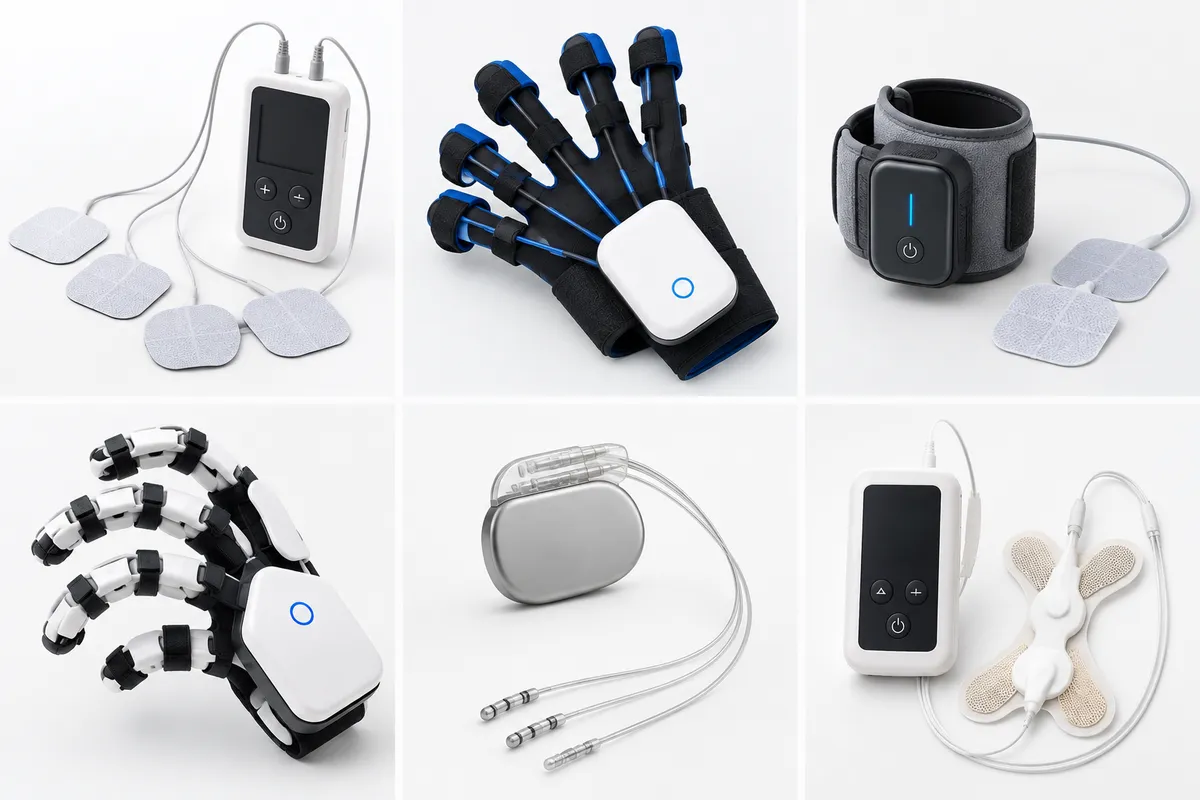
Electrical stimulation uses small electrical impulses delivered through sticky pads placed on the skin.
These impulses stimulate the nerves that control your muscles, causing them to contract.
For stroke rehabilitation, electrical stimulation is commonly used to:
✓ Open the hand.
✓ Straighten the fingers.
✓ Lift the wrist.
✓ Improve muscle activation.
✓ Support functional hand movements.
The treatment is carefully controlled and should not be painful.
✦ ✦ ✦
How Does Electrical Stimulation Work?
After a stroke, your brain may struggle to send strong enough signals to your muscles.
Electrical stimulation helps by:
✓ Activating weakened muscles.
✓ Encouraging repeated movement.
✓ Providing sensory feedback to the brain.
✓ Supporting normal movement patterns.
Repeated stimulation may help strengthen communication between your brain and muscles through neuroplasticity.
✦ ✦ ✦
What Is Functional Electrical Stimulation (FES)?
One common type of treatment is Functional Electrical Stimulation (FES).
FES delivers electrical impulses while you perform a specific movement.
For example:
✓ Opening your hand.
✓ Reaching for an object.
✓ Grasping a cup.
✓ Releasing an object.
The stimulation assists your movement rather than replacing it.
The goal is to help your brain relearn normal movement patterns.
✦ ✦ ✦
Who Can Benefit?
Electrical stimulation may benefit people who have:
✓ Hand weakness.
✓ Arm weakness.
✓ Difficulty opening the hand.
✓ Reduced finger movement.
✓ Poor hand coordination.
✓ Reduced wrist movement.
✓ Mild to moderate paralysis.
It is not suitable for everyone.
Your rehabilitation team will assess whether it is appropriate for your individual recovery.
✦ ✦ ✦
What Happens During Treatment?
Small adhesive pads are placed on your forearm or hand.
The therapist gradually increases the electrical stimulation until the muscles begin to contract.
You will usually be asked to:
✓ Try to move your hand at the same time.
✓ Reach for objects.
✓ Open your fingers.
✓ Practise gripping and releasing.
Combining your own effort with the stimulation helps maximise brain recovery.
✦ ✦ ✦
Potential Benefits
Electrical stimulation may help improve:
✓ Hand strength.
✓ Wrist movement.
✓ Finger extension.
✓ Grip function.
✓ Muscle activation.
✓ Coordination.
✓ Functional hand use.
✓ Confidence using the affected hand.
Results vary depending on the severity of your stroke and the amount of movement already present.
✦ ✦ ✦
Treatment Options
Electrical stimulation is usually combined with other rehabilitation techniques.
✦ ✦ ✦
Physiotherapy
Physiotherapists often combine electrical stimulation with exercises to improve:
✓ Strength.
✓ Movement.
✓ Coordination.
✓ Shoulder stability.
The combination often produces better results than either treatment alone.
✦ ✦ ✦
Occupational Therapy
Occupational therapists help transfer improved movement into everyday activities.
They may combine electrical stimulation with:
✓ Picking up objects.
✓ Writing.
✓ Dressing.
✓ Eating.
✓ Household tasks.
The aim is to improve independence.
✦ ✦ ✦
Mirror Therapy
Some rehabilitation programmes combine electrical stimulation with mirror therapy to increase sensory and visual feedback.
✦ ✦ ✦
Constraint-Induced Movement Therapy (CIMT)
For suitable stroke survivors, electrical stimulation may also be combined with CIMT to encourage greater use of the affected arm.
✦ ✦ ✦
Neuroplasticity
Electrical stimulation supports neuroplasticity by encouraging repeated movement and increasing communication between your brain and muscles.
Every contraction...
Every repetition...
Every exercise...
Helps strengthen new neural pathways.
Consistency is the key to recovery.
✦ ✦ ✦
Practical Tips
Take Part Actively
Don't rely on the machine to move your hand.
Try to perform the movement yourself while the stimulation is working.
Your own effort is an important part of recovery.
✦ ✦ ✦
Practise Regularly
Short, frequent sessions are usually more beneficial than occasional long ones.
Follow the programme recommended by your therapist.
✦ ✦ ✦
Continue Your Exercises
Electrical stimulation works best alongside your rehabilitation exercises.
Don't stop your physiotherapy or occupational therapy.
✦ ✦ ✦
Be Patient
Recovery takes time.
Some improvements happen gradually over weeks or months.
Stay consistent with your rehabilitation programme.
✦ ✦ ✦
Follow Professional Guidance
Electrical stimulation should only be used according to the advice of your rehabilitation team.
Incorrect use may reduce its effectiveness or cause skin irritation.
✦ ✦ ✦
Tips for Family and Carers
If you're supporting someone using electrical stimulation:
✓ Encourage regular practice.
✓ Help position equipment if advised by the therapist.
✓ Support rehabilitation exercises.
✓ Celebrate small improvements.
✓ Encourage use of the affected hand during daily activities.
Your support helps maintain motivation throughout recovery.
✦ ✦ ✦
When Should You Seek Medical Advice?
Speak with your healthcare professional if:
✓ You're unsure whether electrical stimulation is suitable.
✓ You develop skin irritation beneath the electrodes.
✓ Treatment becomes uncomfortable.
✓ Your movement continues to decline.
Electrical stimulation is not suitable for everyone. For example, it may not be appropriate for people with certain implanted electrical devices (such as some pacemakers), specific heart conditions or skin problems where the electrodes are placed. Always discuss your medical history with your healthcare professional before starting treatment.
Seek urgent medical attention immediately if:
✓ You suddenly develop new weakness.
✓ You experience facial drooping.
✓ Your speech becomes slurred.
✓ You develop sudden confusion or vision changes.
These could be signs of another stroke.
✦ ✦ ✦
My Perspective
Electrical stimulation doesn't do the hard work for you.
It helps your muscles respond...
But your brain still has to learn.
Every time you actively try to move while the stimulation assists...
You're giving your brain another opportunity to rebuild those damaged pathways.
Recovery comes from combining technology...
With determination...
And thousands of repetitions.
✦ ✦ ✦
Frequently Asked Questions
Does Electrical Stimulation Cure Hand Weakness?
No.
Electrical stimulation is a rehabilitation tool.
It helps activate muscles and support recovery, but it works best when combined with physiotherapy and occupational therapy.
✦ ✦ ✦
Is Electrical Stimulation Painful?
Most people describe it as a tingling or pulsing sensation.
The muscle contraction may feel unusual at first, but it should not be painful.
Tell your therapist if you experience discomfort.
✦ ✦ ✦
Can I Use Electrical Stimulation at Home?
Some people are prescribed home electrical stimulation devices after assessment by their rehabilitation team.
You should only use one under the guidance of a qualified healthcare professional.
✦ ✦ ✦
Can Electrical Stimulation Help Years After a Stroke?
Yes.
Some stroke survivors continue to benefit months or even years after their stroke, particularly when treatment is combined with regular rehabilitation and functional practice.
✦ ✦ ✦
Key Takeaways
✓ Electrical stimulation uses gentle electrical impulses to activate weakened muscles.
✓ Functional Electrical Stimulation (FES) combines stimulation with purposeful movement.
✓ It may improve hand strength, finger movement and coordination.
✓ It works best alongside physiotherapy and occupational therapy.
✓ Consistent practice supports neuroplasticity and long-term recovery.
✓ Your active participation is essential for the best results.
✦ ✦ ✦
Related Articles
Continue learning about hand and arm recovery with these helpful guides:
Arm Weakness After a Stroke – Learn why your arm feels weak and how rehabilitation rebuilds strength.
Hand Coordination After a Stroke – Discover exercises to improve smooth, controlled hand movements.
Constraint-Induced Movement Therapy (CIMT) After a Stroke – Learn how intensive practice encourages use of your affected arm.
Mirror Therapy After a Stroke – Discover how visual feedback helps stimulate brain recovery.
Neuroplasticity After Stroke: How Your Brain Rewires Itself – Understand how repetition helps your brain rebuild movement pathways.
✦ ✦ ✦
Final Thoughts
Electrical stimulation can help wake up muscles...
But lasting recovery comes from what you do with that movement.
Every contraction...
Every repetition...
Every attempt to use your hand...
Helps your brain build stronger connections.
Recovery happens one movement, one repetition and one day at a time.