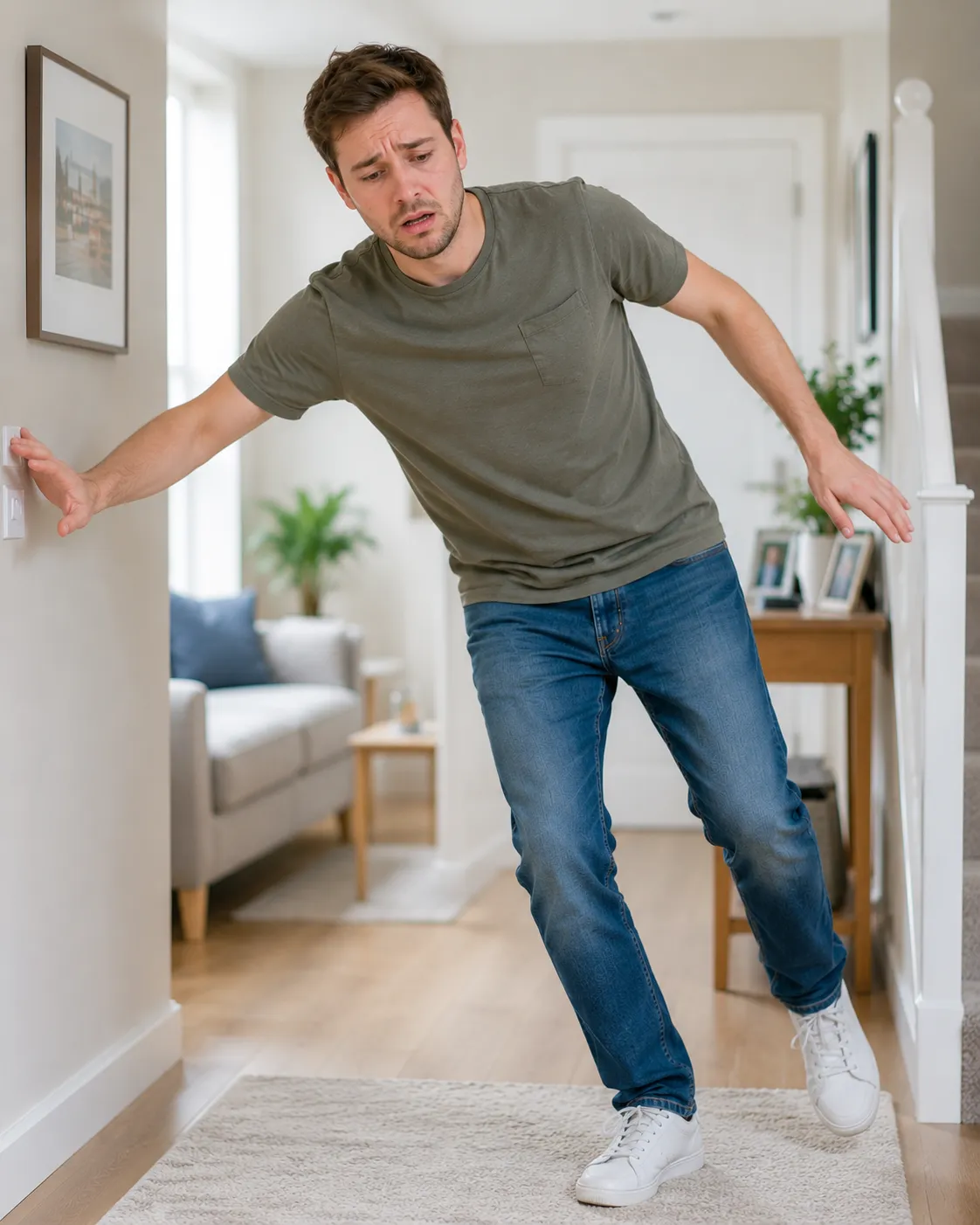
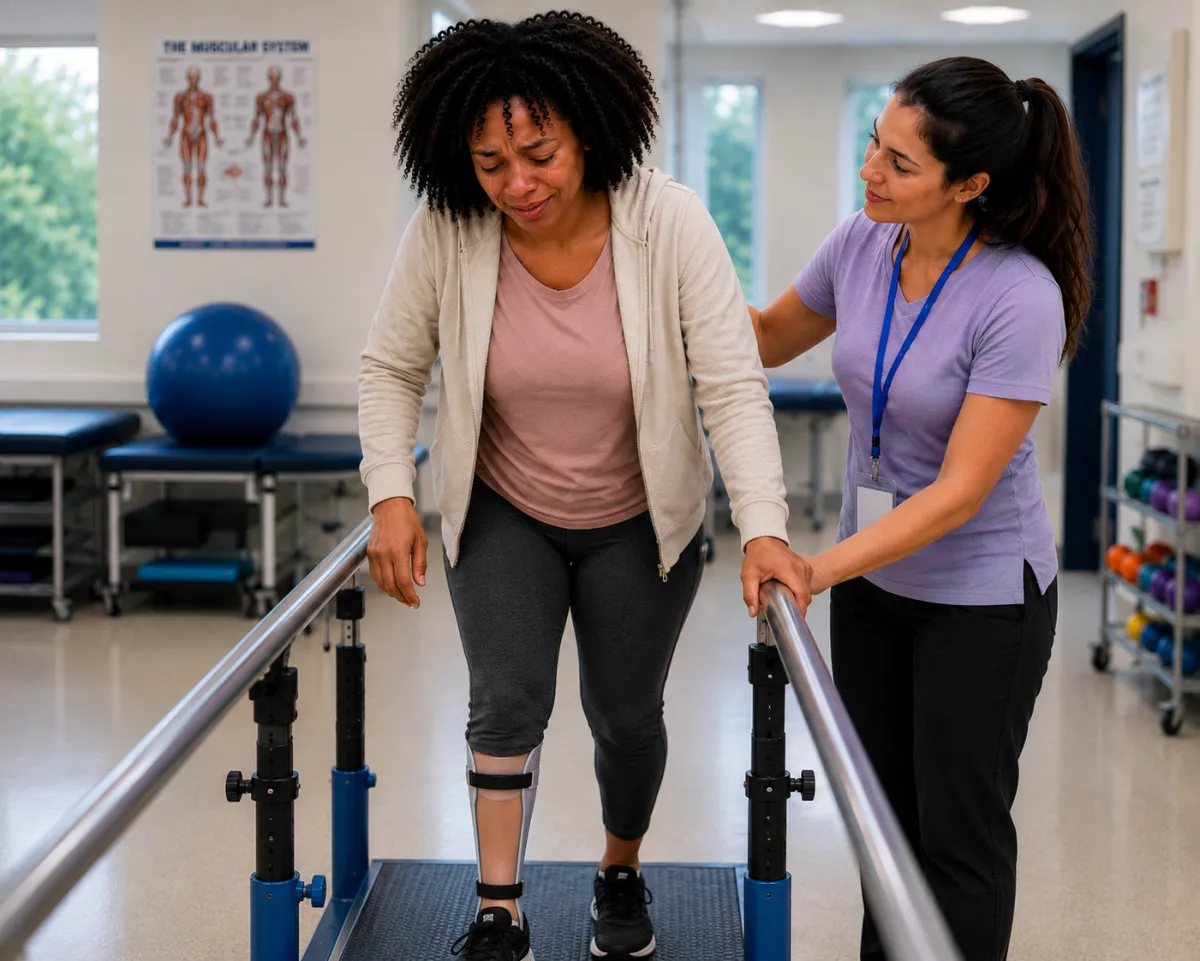
Regular physical activity is one of the most important lifestyle changes you can make to reduce your risk of stroke and help protect yourself after a previous stroke or TIA. Exercise supports cardiovascular health, can help lower blood pressure, improves blood sugar control, supports a healthy weight and reduces the harmful effects of long periods of inactivity. You do not need to become an athlete. Walking, cycling, swimming, strength training and shorter periods of movement throughout the day can all contribute to better vascular health.
After a stroke...
You hear a lot about prevention.
Take your medication.
Watch your blood pressure.
Improve your diet.
Stop smoking.
Manage your cholesterol.
And...
Exercise.
But what exactly does that mean?
Do you need to join a gym?
Should you exercise every day?
Is walking enough?
What if your stroke left you weak?
Can you exercise if your balance is poor?
What if you become tired very quickly?
And perhaps most importantly...
"Can exercise really help prevent another stroke?"
Yes.
Regular physical activity is an important part of reducing cardiovascular and stroke risk.
But after a stroke, exercise needs to match your abilities, health and stage of recovery.
✦ ✦ ✦
The Good News
You do not need extreme exercise to benefit.
You do not need to run.
You do not need expensive equipment.
You do not need to spend hours in a gym.
For adults generally, NHS guidance recommends at least:
✓ 150 minutes of moderate-intensity activity each week
or
✓ 75 minutes of vigorous-intensity activity
along with:
✓ Strengthening exercises for the major muscle groups on at least two days each week
The NHS also recommends reducing long periods spent sitting or lying down and breaking them up with movement.
But after stroke...
That number should not become another source of pressure.
If you currently manage five minutes...
Start with five minutes.
If you can manage ten...
Start with ten.
You can build from there.
✦ ✦ ✦
Why Does Exercise Help Prevent Stroke?
Stroke risk is influenced by many different factors.
Some cannot be changed.
These may include:
✓ Age
✓ Family history
✓ Genetics
✓ Previous stroke or TIA
But several important risk factors can potentially be improved.
These include:
✓ High blood pressure
✓ Physical inactivity
✓ Diabetes
✓ Excess weight
✓ Poor cardiovascular fitness
✓ Smoking
✓ Some cholesterol-related risks
Physical activity can influence several areas at once.
It can help improve cardiovascular fitness, support healthier blood pressure, help with weight management and improve the body's handling of blood sugar.
The Stroke Association specifically identifies regular physical activity as one way of staying healthy after stroke and reducing the risk of another stroke.
This makes exercise much more than something you do simply to look fitter.
It is part of protecting your cardiovascular system.
✦ ✦ ✦
Exercise and Blood Pressure
High blood pressure is one of the most important modifiable risk factors for stroke.
Persistent high pressure can damage blood vessels over time.
Regular physical activity can help support healthier blood pressure.
That does not mean exercise should replace prescribed blood-pressure medication.
If medication has been prescribed...
Take it as directed unless your healthcare professional changes the treatment.
Think of prevention as several layers working together:
Medication.
Exercise.
Diet.
Weight management where appropriate.
Smoking cessation.
Medical monitoring.
You are not choosing one instead of the others.
✦ ✦ ✦
Exercise and Blood Sugar
Diabetes is another important vascular risk factor.
Physical activity helps muscles use glucose and can improve insulin sensitivity.
That can be particularly helpful if you have:
✓ Type 2 diabetes
✓ Prediabetes
✓ Insulin resistance
Exercise also works alongside diet and weight management.
But if you take medication that can lower your blood sugar, particularly insulin or certain diabetes medicines, discuss exercise with your healthcare team.
Exercise can change your glucose requirements.
The objective is better control.
Not creating another problem by exercising without understanding how your medication and blood sugar respond.
✦ ✦ ✦
Exercise and Cholesterol
Exercise can also contribute to an overall healthier cardiovascular risk profile.
But again...
Do not treat exercise as a replacement for prescribed cholesterol-lowering medication.
If you have been prescribed a statin or another treatment after an ischaemic stroke, do not stop taking it simply because you have started exercising.
The strongest prevention strategy is usually not:
"Medication or lifestyle."
It is:
"Appropriate medication and lifestyle."
✦ ✦ ✦
Exercise and Weight
Physical activity can support weight management.
But weight loss should not become the only reason you exercise.
This matters because people often say:
"I've been walking for three weeks and I haven't lost much weight."
Then they stop.
But exercise can benefit your cardiovascular fitness even if the scales are changing slowly.
You may be:
Moving more.
Becoming fitter.
Getting stronger.
Improving stamina.
Reducing sedentary time.
Those things matter too.
Stroke prevention is not simply about becoming thinner.
✦ ✦ ✦
Is Walking Enough?
Walking is one of the most useful forms of exercise after stroke.
It is:
Simple.
Free.
Easy to measure.
Easy to increase gradually.
And for many people, accessible.
You could begin with:
5 minutes.
Then 10.
Then 15.
Then 20.
Eventually you might comfortably manage longer walks.
Brisk walking can count as moderate-intensity activity. NHS guidance notes that even a brisk 10-minute daily walk can contribute towards the recommended weekly activity target.
Walking may also help rebuild:
✓ Confidence
✓ Leg strength
✓ Endurance
✓ Independence
✓ Community mobility
But if your balance is poor or you have significant weakness...
Do not turn a cardiovascular walk into an unnecessary fall risk.
Use appropriate support and rehabilitation advice.
✦ ✦ ✦
What Does Moderate Exercise Feel Like?
Moderate activity should make your body work harder than it does at rest.
You may notice:
Your heart beating faster.
Your breathing becoming deeper.
Your body becoming warmer.
But you should generally still be able to speak.
Stroke Association guidance describes moderate aerobic exercise as activity that raises the heart rate and makes you warmer without leaving you too breathless to talk.
Examples might include:
✓ Brisk walking
✓ Cycling
✓ Swimming
✓ Dancing
✓ Certain exercise classes
✓ Some forms of gardening
But intensity is personal.
A slow walk may feel moderate or even demanding to somebody recovering from severe mobility problems.
Your body is the context.
✦ ✦ ✦
Do You Need Vigorous Exercise?
No.
You can gain substantial health benefits from moderate-intensity physical activity.
Vigorous exercise may include activities such as:
✓ Running
✓ Fast cycling
✓ Intense aerobic classes
✓ Competitive sport
But it is not compulsory.
General guidelines allow moderate activity, vigorous activity or a combination of both.
After stroke, do not assume:
"Harder must be better."
If you have been inactive for months and suddenly attempt intense exercise...
You may simply exhaust yourself or injure yourself.
Build the foundation first.
✦ ✦ ✦
Strength Training Matters Too
Stroke prevention conversations often focus almost entirely on walking.
But strength matters as well.
General NHS guidance recommends strengthening the major muscle groups at least twice each week.
Strength activities may include:
✓ Resistance-band exercises
✓ Weight training
✓ Sit-to-stands
✓ Bodyweight exercises
✓ Squats where appropriate
✓ Stair climbing
✓ Certain yoga exercises
After stroke, strengthening may also help with residual weakness.
You may need to focus specifically on:
✓ Hip strength
✓ Quadriceps
✓ Calves
✓ Core muscles
✓ Shoulder stability
✓ Grip
✓ Weaker-side control
But your exercises should suit your neurological and physical abilities.
✦ ✦ ✦
Balance Training Is Important After Stroke
Balance problems can make physical activity frightening.
You may worry about falling.
That fear can lead to less movement.
Then less movement can contribute to weakness and deconditioning.
Balance work might include:
✓ Supported standing
✓ Weight shifting
✓ Controlled stepping
✓ Sit-to-standing
✓ Tandem stance
✓ Side stepping
✓ Reaching exercises
The important word is:
Controlled.
If you currently cannot stand safely without support, repeatedly testing whether you can stand unsupported is not intelligent rehabilitation.
Use a stable surface.
Use supervision where needed.
Progress when your control improves.
✦ ✦ ✦
What If You Cannot Walk Independently?
You can still exercise.
Walking is not the definition of physical activity.
Depending on your abilities, you might use:
✓ Seated exercise
✓ Chair-based strengthening
✓ Resistance bands
✓ Arm exercises
✓ Supported standing
✓ Wheelchair-based exercise
✓ Assisted cycling equipment
✓ Physiotherapy exercises
✓ Pool-based rehabilitation where appropriate
The Stroke Association provides exercise options that can be performed in a chair, on a mat or using gym equipment, depending on the person's abilities.
Do not dismiss five minutes of appropriate seated exercise because another survivor is walking three miles.
Different stroke.
Different impairment.
Different starting point.
✦ ✦ ✦
Start Slowly
This is where motivation can become counterproductive.
You decide:
"I'm going to get fit."
So on Monday you do far too much.
Tuesday you are exhausted.
Wednesday your muscles hurt.
Thursday you are still fatigued.
By the weekend...
The new exercise programme is over.
That is useless.
The Stroke Association advises survivors beginning exercise to start slowly, find a comfortable pace and avoid overdoing it.
Consistency beats one enormous workout.
Every time.
A manageable amount that you repeat for months is far more valuable than an impressive routine you abandon after ten days.
✦ ✦ ✦
Post-Stroke Fatigue Changes the Equation
Fatigue is one of the biggest barriers to exercise after stroke.
You might walk for twenty minutes and feel fine during the walk.
Then spend the next several hours exhausted.
That may mean your current dose of activity is too high.
Experiment with:
✓ Shorter exercise periods
✓ Lower intensity
✓ More recovery
✓ Exercising earlier in the day
✓ Alternating harder and easier days
✓ Splitting exercise into several sessions
For example:
10 minutes in the morning.
10 minutes at lunchtime.
10 minutes later.
You are still accumulating activity.
You do not need to prove anything by exhausting yourself in one session.
Stroke Association information also notes that physical activity can help some people with fatigue, but activity still needs to be appropriate and safe.
✦ ✦ ✦
Sitting Less Matters Too
Imagine this:
You exercise for thirty minutes.
Then spend almost every other waking hour sitting.
That is better than doing no exercise.
But your overall activity could still improve.
The NHS recommends breaking up long periods of sitting or lying down with movement.
Try simple changes:
✓ Stand up regularly
✓ Walk around the house
✓ Take short movement breaks
✓ Use stairs where safe
✓ Walk short journeys
✓ Move while speaking on the phone
✓ Complete light household tasks
Your body benefits from movement throughout the day.
Not only from designated "workouts."
✦ ✦ ✦
Exercise Does Not Have to Look Like Exercise
This is another reason people overcomplicate things.
Physical activity can include:
Walking the dog.
Gardening.
Dancing.
Swimming.
Cycling.
Cleaning.
Playing with your children.
Walking to the shop.
Taking the stairs.
Going for a walk with a friend.
The question is not:
"Did I go to the gym?"
It is:
"Did I move enough?"
A sustainable form of movement you actually enjoy is far more useful than an exercise programme you hate.
✦ ✦ ✦
Exercise and Stroke Recovery Are Connected
For a stroke survivor, exercise can serve two purposes.
It may support long-term cardiovascular health.
And it may also support physical recovery.
Depending on your impairments, exercise may help you work on:
✓ Strength
✓ Walking
✓ Endurance
✓ Balance
✓ Coordination
✓ Functional independence
The Stroke Association encourages survivors to practise physical activities and exercises as part of continued recovery.
But prevention exercise and rehabilitation are not always identical.
A physiotherapy exercise intended to improve ankle control might not raise your heart rate much.
A brisk walk might improve cardiovascular fitness but not directly address a particular movement deficit.
You may need both.
✦ ✦ ✦
What About High-Intensity Exercise?
Some survivors eventually return to demanding exercise.
That can include:
Running.
Heavy strength training.
Fast cycling.
High-intensity interval training.
Recent research has explored higher-intensity aerobic exercise in people who are medically stable and further into stroke recovery. But that does not mean every stroke survivor should immediately begin high-intensity training.
Whether it is appropriate depends on factors such as:
✓ Cardiovascular health
✓ Blood pressure
✓ Balance
✓ Mobility
✓ Stage of recovery
✓ Medications
✓ Exercise history
✓ Medical advice
If your current challenge is walking safely across the room...
HIIT is not the priority.
✦ ✦ ✦
Exercise Should Work With Your Medication
After stroke, you may take medication for:
✓ High blood pressure
✓ High cholesterol
✓ Blood clot prevention
✓ Atrial fibrillation
✓ Diabetes
Exercise does not cancel the need for those treatments.
Do not decide:
"My blood pressure is better because I walk every day, so I can stop the tablets."
Medication changes should be discussed with the clinician managing your treatment.
Lifestyle improvements may occasionally mean treatment needs reviewing.
Excellent.
Let the appropriate professional review it.
Do not perform your own experiment.
✦ ✦ ✦
What If You Are Afraid Exercise Will Cause Another Stroke?
This fear can be powerful.
Exercise changes how your body feels.
Your heart beats faster.
You breathe harder.
You sweat.
You feel warmer.
After experiencing a stroke, those sensations may make you anxious.
You might interpret normal exercise responses as danger.
The answer is not to ignore symptoms.
But it is also not necessarily to avoid exercise forever.
If you are uncertain what level of activity is safe for you, speak with your doctor, physiotherapist or rehabilitation team.
The American Heart Association specifically advises people who have had a stroke to discuss an appropriate exercise programme with a healthcare professional.
Confidence can then be rebuilt gradually.
✦ ✦ ✦
Warning Signs During Exercise
Some symptoms should not be pushed through.
Stop exercising and seek appropriate medical help if you develop concerning symptoms such as:
✓ Chest pain
✓ Fainting
✓ Severe or unusual breathlessness
✓ New weakness
✓ New numbness
✓ Sudden facial weakness
✓ Sudden speech difficulty
✓ Sudden vision changes
✓ Severe unexpected headache
If you develop sudden signs of stroke...
Treat it as an emergency.
Do not sit down and wait to see whether the symptoms disappear.
✦ ✦ ✦
How Do You Make Exercise a Habit?
Motivation is unreliable.
Routine is much stronger.
Try attaching activity to something you already do.
For example:
After breakfast → walk.
Before your shower → strength exercises.
After lunch → short movement break.
Monday and Thursday → resistance exercises.
Saturday morning → longer walk.
You can also track:
✓ Walking time
✓ Distance
✓ Exercise sessions
✓ Strength exercises
✓ Steps
✓ How tired you felt afterwards
Tracking can show progress you might otherwise miss.
The walk that feels ordinary today may have felt impossible three months ago.
✦ ✦ ✦
Increase Gradually
Once an activity becomes easy, you can progress.
Progress might mean:
Walking slightly longer.
Walking slightly faster.
Adding another exercise.
Increasing resistance.
Completing another repetition.
Reducing the amount of support you need.
But do not change everything at once.
If you simultaneously double:
Distance.
Speed.
Resistance.
And frequency...
You will have no idea which change caused problems if your body struggles.
Progress intelligently.
✦ ✦ ✦
Choose Something You Actually Enjoy
The best exercise programme is not necessarily the most sophisticated.
It is the one you can sustain.
Perhaps you enjoy:
✓ Walking outdoors
✓ Swimming
✓ Dancing
✓ Gardening
✓ Cycling
✓ Strength training
✓ Pilates
✓ Yoga
✓ Exercise classes
✓ Sport
✓ Walking with friends
You are trying to build a habit that may last for years.
Enjoyment matters.
Do not build your prevention plan around something you hate just because somebody online insists it is "optimal."
An imperfect activity you do consistently beats the perfect activity you never do.
✦ ✦ ✦
My Perspective
After stroke, exercise can easily become another instruction.
Another item on a very long list of things you are told you must do.
Take medication.
Attend rehabilitation.
Eat differently.
Sleep properly.
Manage stress.
Exercise.
That can feel overwhelming.
But I think movement becomes more meaningful when you stop seeing it as punishment for having had a stroke.
You cannot change the event that already happened.
You cannot change your age.
You cannot change your genetics.
And you cannot control every future medical event.
But you can influence some of the environment in which your body now operates.
You can move.
Walk.
Strengthen.
Improve your fitness.
Work on your balance.
Reduce how much time you spend sitting.
And you do not have to become obsessed with exercise to do it.
You need something sustainable.
Because stroke prevention is not built from one extraordinary Tuesday.
It is built from ordinary habits repeated for years.
✦ ✦ ✦
When Should You Seek Medical Advice?
Speak with your healthcare professional before significantly increasing exercise if you:
✓ Have significant heart disease
✓ Experience chest pain
✓ Have uncontrolled blood pressure
✓ Have frequent dizziness or fainting
✓ Have serious balance problems
✓ Have significant mobility limitations
✓ Have recently experienced another neurological event
✓ Are unsure what level of activity is safe
You may benefit from advice from:
✓ Your GP
✓ Stroke physician
✓ Physiotherapist
✓ Occupational therapist
✓ Cardiac or neurological rehabilitation professionals
The Stroke Association also advises seeking professional guidance when returning to exercise after stroke.
✦ ✦ ✦
Frequently Asked Questions
Can Exercise Really Help Prevent Another Stroke?
Yes.
Regular physical activity is an important part of reducing cardiovascular risk and is recommended as part of staying healthy after stroke.
How Much Exercise Should I Do?
General NHS guidance recommends at least 150 minutes of moderate activity per week or 75 minutes of vigorous activity, plus strengthening activities on at least two days each week.
Stroke survivors may need to work towards this gradually.
Is Walking Good for Stroke Prevention?
Yes.
Brisk walking can count as moderate-intensity aerobic activity and is a practical way of increasing overall physical activity.
Can I Exercise If I Still Have Weakness?
Often yes.
Activity can frequently be adapted, but significant weakness, poor balance or mobility problems may require professional guidance.
Should I Exercise Every Day?
You can move every day, but not every session needs to be demanding.
A weekly programme can include harder exercise, strength work, lighter activity and recovery.
What If I Become Tired Very Quickly?
Reduce the duration or intensity.
Short bouts of exercise may be easier to tolerate while you gradually build endurance.
Do I Still Need Medication If I Exercise?
Possibly.
Never stop stroke-prevention medication because you have started exercising unless the clinician managing your treatment tells you to.
✦ ✦ ✦
Key Takeaways
✓ Regular physical activity can form an important part of stroke prevention.
✓ Exercise can support healthier blood pressure, blood sugar, weight and cardiovascular fitness.
✓ General adult guidance recommends around 150 minutes of moderate activity per week for people who can safely achieve it.
✓ Strengthening activity is also recommended.
✓ Walking is an effective and accessible form of exercise.
✓ Stroke survivors may need adapted or supervised activity.
✓ Start slowly rather than exhausting yourself.
✓ Reduce long periods of sitting as well as completing planned exercise.
✓ Post-stroke fatigue may require shorter sessions and additional recovery.
✓ Exercise complements rather than replaces prescribed stroke-prevention medication.
✦ ✦ ✦
Related Articles
Continue learning about reducing your risk of another stroke:
Smoking After Stroke
Mediterranean Diet After Stroke
High Blood Pressure After Stroke
Cholesterol and Stroke Risk
Weight Management After Stroke
Walking After a Stroke
Strength Training After Stroke
Fatigue After Stroke
Can You Prevent a Second Stroke?
Lifestyle Changes After Stroke
✦ ✦ ✦
About the Author
Alisia Gayle is a stroke survivor who achieved 96% neurological recovery following an ischaemic stroke.
After years of rehabilitation, she now shares practical, evidence-informed resources to help stroke survivors, carers and families better understand recovery and rebuild their lives with confidence.
Alisia is also the author of Brain Damage: My Journey to 96% Recovery, where she shares her personal stroke recovery story and the lessons she learned throughout her rehabilitation.
✦ ✦ ✦
Medical Disclaimer
This article is intended for educational purposes only and should not replace professional medical advice, diagnosis, treatment or rehabilitation guidance.
Every stroke and every recovery is different.
Exercise recommendations should be adapted to your individual medical condition, mobility, balance, cardiovascular health and stage of recovery.
If you are unsure whether exercise is safe for you, speak with your doctor, physiotherapist, stroke rehabilitation team or another appropriate healthcare professional before beginning or substantially changing an exercise programme.
Seek urgent medical attention if you develop sudden new stroke symptoms or other serious symptoms during exercise.
✦ ✦ ✦
Final Thoughts
Exercise and stroke prevention...
Does not need to mean running.
Heavy weights.
A gym.
Or pushing yourself until you are exhausted.
It can begin with something much smaller.
Standing more.
Walking for five minutes.
Taking the stairs where safe.
Doing your rehabilitation exercises.
Strengthening your legs.
Moving regularly throughout the day.
Then gradually doing a little more.
Because stroke prevention is rarely about one dramatic decision.
It is about what you repeatedly do.
Take your prescribed medication.
Manage your blood pressure.
Eat well.
Do not smoke.
And move your body.
You cannot guarantee that another stroke will never happen.
Nobody can.
But you can work on the risks that are within your control.
And regular physical activity is one of the most useful tools available to you.