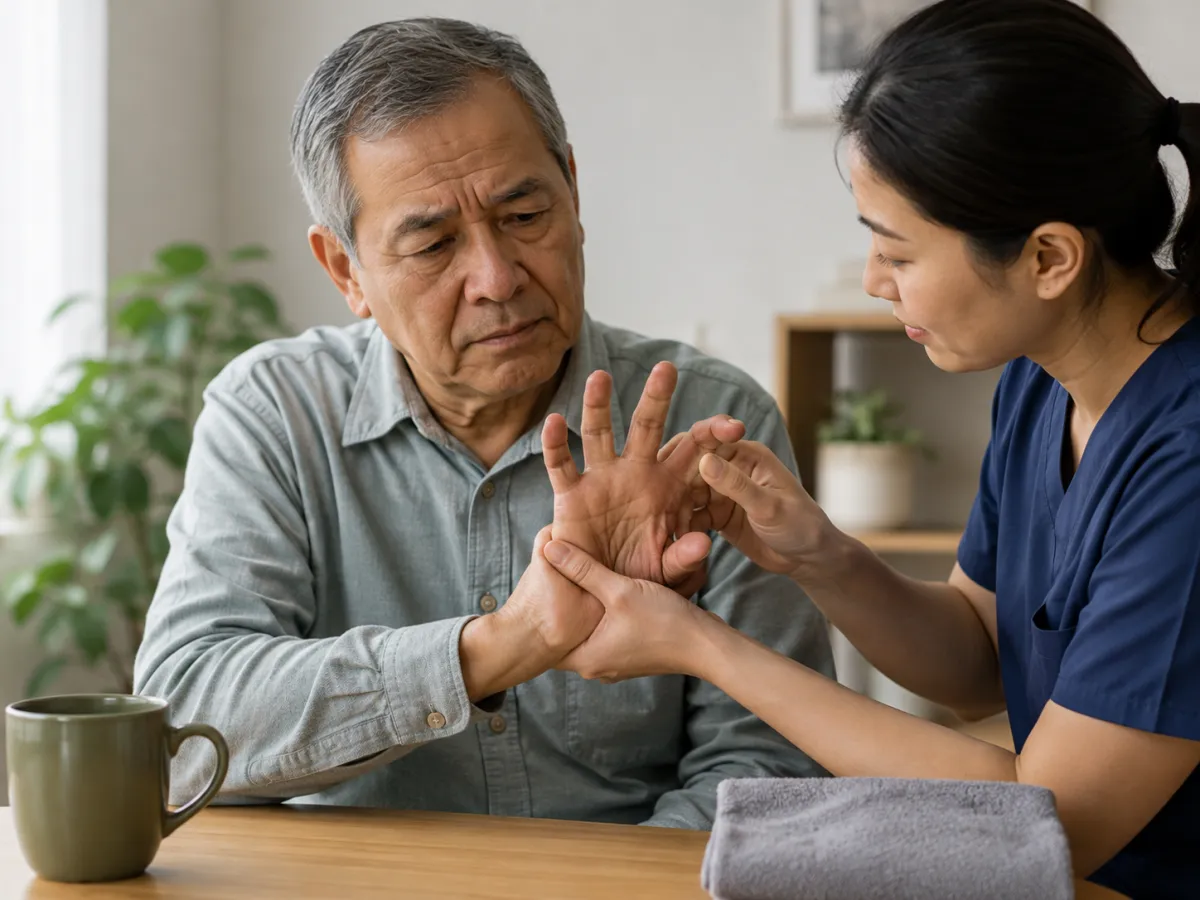
Finger stiffness after a stroke is a common problem that can make it difficult to straighten your fingers, grip objects or perform everyday tasks. It is often caused by muscle weakness, spasticity, reduced movement or joint stiffness. Learn why finger stiffness happens after a stroke, the treatments available, and what you can do to improve movement and flexibility.
After your stroke...
Your fingers won't straighten.
Making a fist is easier than opening your hand.
Holding a fork or buttoning a shirt becomes frustrating.
Or perhaps...
Your fingers feel stiff every morning.
You begin wondering...
"Why are my fingers so stiff?"
"Will they ever loosen up?"
For many stroke survivors...
Finger stiffness is a common part of recovery.
✦ ✦ ✦
The Good News
Finger stiffness often improves with the right rehabilitation.
Regular stretching, hand exercises and appropriate treatment can reduce stiffness, improve movement and help you regain independence.
Recovery may take time, but progress is possible.
✦ ✦ ✦
Why Do Fingers Become Stiff After a Stroke?
After a stroke, communication between your brain and your hand muscles changes.
This may lead to:
✓ Muscle weakness.
✓ Spasticity.
✓ Reduced movement.
✓ Joint stiffness.
✓ Swelling.
When fingers are not moved regularly, the muscles and joints gradually become less flexible.
Over time, they become increasingly stiff.
✦ ✦ ✦
Common Causes of Finger Stiffness
Spasticity
One of the most common causes is spasticity.
The muscles become overactive, causing the fingers to curl into the palm.
Opening the hand may become difficult and painful.
✦ ✦ ✦
Muscle Weakness
Weak muscles struggle to fully straighten or bend the fingers.
This limits movement and contributes to stiffness.
✦ ✦ ✦
Reduced Movement
If the fingers aren't moved regularly, the joints lose flexibility.
The longer the hand remains still, the stiffer it may become.
✦ ✦ ✦
Swelling
Fluid build-up in the hand can reduce movement and make the fingers feel tight.
Gentle movement often helps reduce swelling.
✦ ✦ ✦
Contractures
Without treatment, prolonged stiffness may lead to contractures, where the muscles and tendons shorten, making it difficult to fully straighten the fingers.
Early treatment helps reduce this risk.
✦ ✦ ✦
Symptoms of Finger Stiffness
You may notice:
✓ Difficulty straightening your fingers.
✓ Tightness in the hand.
✓ Pain when stretching.
✓ Fingers curling into the palm.
✓ Difficulty gripping objects.
✓ Reduced finger movement.
✓ Thumb tucked into the palm.
✓ Muscle spasms.
✓ Difficulty cleaning your palm.
Symptoms often become worse when you're:
✓ Tired.
✓ Cold.
✓ Stressed.
✓ Unwell.
✦ ✦ ✦
How Does Finger Stiffness Affect Everyday Life?
Stiff fingers can make simple activities much harder.
These include:
✓ Holding cutlery.
✓ Buttoning clothes.
✓ Writing.
✓ Typing.
✓ Using a phone.
✓ Brushing your teeth.
✓ Cooking.
✓ Carrying shopping.
✓ Washing your hand.
The more your fingers can move, the easier these activities usually become.
✦ ✦ ✦
Treatment Options
Treatment depends on the cause of your finger stiffness.
Many people benefit from combining several approaches.
✦ ✦ ✦
Physiotherapy
Physiotherapy focuses on:
✓ Improving movement.
✓ Maintaining flexibility.
✓ Stretching tight muscles.
✓ Strengthening weak muscles.
Regular therapy helps prevent stiffness from becoming worse.
✦ ✦ ✦
Occupational Therapy
Occupational therapists help improve hand function during everyday activities.
They may recommend:
✓ Finger exercises.
✓ Hand positioning.
✓ Adaptive equipment.
✓ Splints.
Their goal is to help you regain as much independence as possible.
✦ ✦ ✦
Stretching
Daily stretching helps:
✓ Maintain flexibility.
✓ Reduce stiffness.
✓ Improve finger movement.
Always stretch gently and never force your fingers into painful positions.
✦ ✦ ✦
Splints
Some people benefit from splints that help keep the fingers in a more natural position.
Splints may:
✓ Reduce stiffness.
✓ Improve comfort.
✓ Prevent contractures.
✓ Support stretching.
They should only be used under professional guidance.
✦ ✦ ✦
Botulinum Toxin (Botox)
If severe spasticity is causing finger stiffness, botulinum toxin (Botox) injections may help relax overactive muscles.
Botox is most effective when combined with stretching and rehabilitation.
✦ ✦ ✦
Neuroplasticity
Your brain can continue learning after a stroke through neuroplasticity.
Every attempt to move your fingers...
Every exercise...
Every stretch...
Strengthens the connections between your brain and your hand.
Recovery is built through repetition.
✦ ✦ ✦
Practical Tips
Stretch Every Day
Daily stretching helps keep your fingers flexible and reduces muscle tightness.
Consistency is more important than doing long exercise sessions.
✦ ✦ ✦
Use Your Fingers
Try to involve your affected hand during everyday activities.
Every movement helps stimulate your brain.
✦ ✦ ✦
Keep Your Hand Clean
If your fingers curl into your palm:
✓ Wash your palm daily.
✓ Dry it thoroughly.
✓ Check for redness or broken skin.
Good hand hygiene helps prevent infections.
✦ ✦ ✦
Keep Warm
Cold weather often increases finger stiffness.
Keeping your hand warm may make movement easier.
✦ ✦ ✦
Be Patient
Finger stiffness usually improves gradually rather than overnight.
Small improvements often lead to significant long-term gains.
✦ ✦ ✦
Tips for Family and Carers
If you're supporting someone with finger stiffness:
✓ Encourage daily exercises.
✓ Help with stretching if you've been shown how.
✓ Never force the fingers open.
✓ Check the palm for skin problems.
✓ Encourage safe use of the affected hand during everyday activities.
Support and consistency are powerful tools in recovery.
✦ ✦ ✦
When Should You Seek Medical Advice?
Speak with your healthcare professional if:
✓ Finger stiffness is becoming worse.
✓ Your fingers become increasingly difficult to straighten.
✓ Pain limits your rehabilitation.
✓ You develop swelling, redness or broken skin.
✓ Your fingers dig into your palm.
Seek urgent medical attention if:
✓ Your hand becomes swollen, hot or severely painful.
✓ You develop signs of infection.
✓ You suddenly develop new weakness, facial drooping or speech difficulties.
These could indicate another medical problem or another stroke.
✦ ✦ ✦
My Perspective
Stiff fingers can make everyday tasks feel impossible.
But stiffness doesn't mean your recovery has stopped.
Every stretch...
Every exercise...
Every attempt to move...
Gives your brain another opportunity to rebuild those lost connections.
Progress may be slow.
But every repetition counts.
✦ ✦ ✦
Frequently Asked Questions
Is Finger Stiffness Common After a Stroke?
Yes.
Many stroke survivors develop finger stiffness because of weakness, spasticity and reduced movement.
✦ ✦ ✦
Will My Fingers Become Flexible Again?
Many people regain significant movement with rehabilitation.
Recovery depends on the severity of the stroke, the cause of the stiffness and how consistently rehabilitation is performed.
✦ ✦ ✦
Should I Force My Fingers Straight?
No.
Forcing stiff fingers can cause pain and injury.
Always follow the stretching techniques recommended by your therapist.
✦ ✦ ✦
Can Finger Stiffness Improve Years After a Stroke?
Yes.
Because of neuroplasticity, many people continue improving finger movement months and even years after their stroke with consistent rehabilitation.
✦ ✦ ✦
Key Takeaways
✓ Finger stiffness is a common complication after a stroke.
✓ Weakness, spasticity and reduced movement are common causes.
✓ Daily stretching and hand exercises help improve flexibility.
✓ Physiotherapy and occupational therapy are important treatments.
✓ Splints and Botox may help some people with severe stiffness.
✓ Many people continue improving through consistent rehabilitation.
✦ ✦ ✦
About the Author
Alisia Gayle is a stroke survivor who achieved 96% neurological recovery following an ischaemic stroke.
After years of rehabilitation, she now shares practical, evidence-informed resources to help stroke survivors, carers and families better understand recovery and rebuild their lives with confidence.
Alisia is also the author of Brain Damage: My Journey to 96% Recovery, where she shares her personal stroke recovery story and the lessons she learned throughout her rehabilitation.
✦ ✦ ✦
Medical Disclaimer
This article is intended for educational purposes only and should not replace professional medical advice, diagnosis or treatment.
Always seek advice from your doctor, physiotherapist, occupational therapist or other healthcare professional regarding symptoms, concerns or changes in your condition.
✦ ✦ ✦
Final Thoughts
Stiff fingers today...
Don't determine what your hand will be able to do tomorrow.
Every stretch...
Every exercise...
Every small improvement...
Is helping your brain and hand work together again.
Stay consistent.
Stay hopeful.
Recovery happens one movement, one repetition and one day at a time.