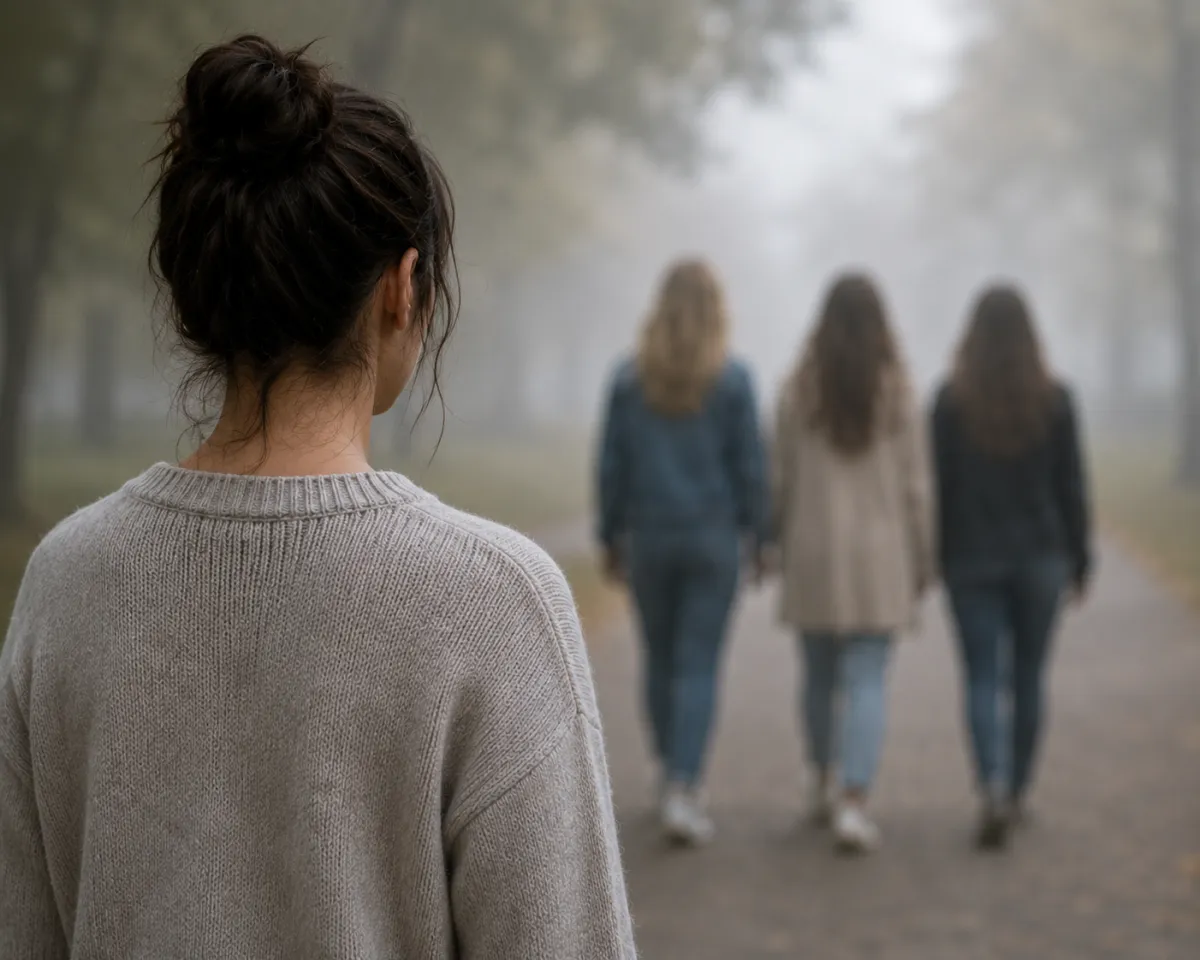
Having a stroke at a young age can change friendships in ways you never expected. While your friends may still be focused on careers, relationships, children, holidays and social lives, you may suddenly be dealing with rehabilitation, fatigue, medication, hospital appointments and fear of another stroke. Some friendships become stronger. Others become distant, awkward or disappear completely. Communication difficulties, reduced confidence and changes in what you are physically able to do can also make socialising harder. Losing friendships after a young stroke can be painful, but it can also reveal which relationships can adapt to the person you are becoming.
After your stroke...
You may expect your friends to be there.
Of course they will.
These are the people who:
Went on holiday with you.
Celebrated birthdays with you.
Spent weekends at your house.
Messaged you every day.
Knew everything about your life.
Then you have a stroke.
At first...
Your phone may be constantly busy.
Messages.
Flowers.
Visits.
"Anything you need."
"We're here for you."
Then weeks pass.
Months pass.
And things begin changing.
The messages become less frequent.
Invitations stop.
Some people seem uncomfortable around you.
Others behave as though you should be completely recovered because you look better.
Meanwhile, their lives continue.
Work.
Dating.
Children.
Parties.
Travel.
And you are still trying to rebuild yours.
You begin wondering...
"Why have my friends disappeared?"
"Did I do something wrong?"
"Do they find me depressing?"
"Why don't they understand that I still have problems?"
"Should I keep chasing people?"
"Do I need new friends now?"
Young stroke can reveal things about friendship that you may never have wanted to discover.
✦ ✦ ✦
The Good News
Not every friendship disappears after stroke.
Some become stronger.
A friend may:
✓ Drive you to appointments
✓ Sit with you during difficult days
✓ Adapt social plans around your fatigue
✓ Learn how to communicate if you have aphasia
✓ Continue inviting you even when you often decline
✓ Treat you normally without pretending nothing happened
Those friendships can become extraordinarily valuable.
And if some old friendships do fade...
That does not mean you will be socially isolated forever.
Stroke support groups, community activities, work, hobbies and new stages of life can all introduce people who understand the person you are now.
The Stroke Association notes that isolation and loneliness can affect people after stroke and that maintaining contact and social connection can help people rebuild their lives.
You may lose people.
But you can also build a different social world.
✦ ✦ ✦
Why Can Young Stroke Affect Friendships So Much?
A young stroke creates an unusual social divide.
Your friends may still be living the life you expected to be living.
Perhaps they are:
✓ Progressing professionally
✓ Getting married
✓ Having babies
✓ Travelling
✓ Buying homes
✓ Going to festivals
✓ Exercising
✓ Dating
Meanwhile, you may be discussing:
Medication.
Physiotherapy.
Neurology.
Blood pressure.
Fatigue.
Driving restrictions.
Disability.
Mortality.
Your lives can suddenly feel as though they belong to completely different age groups.
That does not automatically mean your friends are uncaring.
Sometimes they simply have no frame of reference for what has happened to you.
A stroke at 35 may be as unfamiliar to them as it was to you before you had one.
✦ ✦ ✦
The Intense Support at the Beginning Can Be Misleading
Immediately after a stroke, people often respond to the emergency.
They visit.
They message.
They ask your family for updates.
They send cards.
Then the crisis passes.
You leave hospital.
And other people's lives resume.
But your crisis may not actually be over.
This is where expectations collide.
Your friend thinks:
"She's home. She's getting better."
You think:
"I can barely get through the day."
They see discharge as the end of the emergency.
You experience it as the beginning of recovery.
Neither person may explicitly discuss this difference.
So contact gradually fades.
That can feel like abandonment.
Sometimes it is.
Sometimes it is simply a failure to understand how long stroke recovery can take.
✦ ✦ ✦
People May Assume You Are Better Because You Look Better
This is especially common among younger survivors.
You may eventually:
Walk normally.
Dress normally.
Speak normally.
Drive again.
Return to work.
From the outside...
You look like the same person.
But you may still have:
✓ Post-stroke fatigue
✓ Memory problems
✓ Reduced concentration
✓ Sensory changes
✓ Balance problems
✓ Anxiety
✓ Emotional changes
✓ Pain
These invisible effects can be difficult for friends to understand.
They may think:
"But you look completely fine."
So when you say:
"I can't come tonight. I'm exhausted."
they interpret it as:
"I don't want to come."
This misunderstanding can damage friendships.
You may need to explain that looking recovered and being completely recovered are not the same thing.
✦ ✦ ✦
Fatigue Can Destroy Your Social Life
Post-stroke fatigue can make friendship surprisingly difficult.
Before stroke...
Dinner at 8pm might be normal.
A night out might finish at 2am.
You might work all week and still socialise all weekend.
After stroke...
You may reach 6pm and feel finished.
You start declining invitations.
Again.
And again.
Eventually friends stop asking.
From their perspective:
"She never comes."
From your perspective:
"I desperately want to come, but I don't have the energy."
This is why communication matters.
Instead of disappearing, try saying:
"I still want to be included even if I sometimes have to say no."
A genuine friend may be happy to adapt.
Coffee at midday may work better than drinks at 10pm.
Friendship does not have to disappear because the timetable changes.
✦ ✦ ✦
Communication Problems Can Push Friends Away
Stroke can affect communication through conditions such as aphasia.
You may know what you want to say but struggle to find the words.
Conversations can become slow.
Phone calls become stressful.
Group conversations move too quickly.
You may stop speaking because you are embarrassed.
Friends may also feel unsure.
They do not know whether to:
Finish your sentence.
Wait.
Correct you.
Pretend they understood.
The Stroke Association notes that communication difficulties can contribute to loneliness and that friendships may sometimes fall away when communication becomes difficult or friends are uncertain about how to help.
If possible, tell friends what helps.
Perhaps you need:
✓ More time to answer
✓ One person speaking at a time
✓ Less background noise
✓ Written messages
✓ Patience
Good communication sometimes needs to be relearned on both sides.
✦ ✦ ✦
You May Be the One Who Withdraws
This deserves honesty too.
Sometimes friends do not disappear.
You disappear.
Maybe you stop answering messages.
Avoid gatherings.
Refuse photographs.
Stop returning calls.
You may feel:
Embarrassed.
Self-conscious.
Exhausted.
Different.
Perhaps you do not want friends to see you using a walking stick.
Or struggling to speak.
Or unable to do something you once did easily.
Eventually you think:
"Nobody bothers with me anymore."
But look carefully.
Did people actually abandon you?
Or did you repeatedly push them away because you did not want to be seen during recovery?
Sometimes it is both.
Understanding your own role does not mean blaming yourself.
It simply gives you something you may be able to change.
✦ ✦ ✦
Your Friends May Be Frightened
Seeing a young friend have a stroke can frighten people.
You are evidence that serious illness does not only happen in old age.
One week you were working.
Driving.
Travelling.
Living normally.
Then suddenly you were in hospital.
That can make friends confront their own vulnerability.
Some people handle this well.
Others become uncomfortable.
They may avoid asking questions.
Change the subject.
Or gradually disappear.
That reaction is about their ability to cope with illness.
Not necessarily about your worth as a friend.
You do not have to excuse poor behaviour.
But understanding it can stop you interpreting every withdrawal as:
"There must be something wrong with me."
✦ ✦ ✦
Some People Do Not Know What to Say
People often become awkward around serious illness.
They worry about saying the wrong thing.
So instead...
They say nothing.
Weeks become months.
Then they feel guilty for not contacting you.
Now contacting you feels even more awkward.
So they continue avoiding it.
This is how some friendships disappear without any argument ever occurring.
If the friendship matters to you, one simple message can sometimes break the silence.
Something like:
"I know things have been strange since the stroke, but I'd still really like to see you."
Then see what happens.
If they respond...
Perhaps there is something worth rebuilding.
If they repeatedly do not...
That tells you something too.
✦ ✦ ✦
The Wrong Kind of Positivity Can Be Infuriating
Some friends respond to stroke with relentless positivity.
"Everything happens for a reason."
"You're so lucky."
"You look amazing."
"At least you're alive."
"Just stay positive."
They may mean well.
But those statements can make you feel as though you are not allowed to acknowledge what happened.
Yes...
You survived.
And perhaps you are grateful.
But you can still be:
Angry.
Frightened.
Tired.
Sad.
Frustrated.
A good friendship does not require you to perform gratitude all the time.
Sometimes you need someone who can simply say:
"That sounds really difficult."
without immediately trying to turn your stroke into an inspirational lesson.
✦ ✦ ✦
Being Treated Like You Are Fragile Is Not Helpful Either
The opposite problem can happen.
Some friends become overprotective.
"Are you sure you should do that?"
"Should you be travelling?"
"Should you be working?"
"Do you think you should drive?"
Every decision becomes questioned.
You stop feeling like a friend.
You feel like a patient.
Concern can be kind.
Constant supervision is different.
You may need to say:
"If I need help, I'll ask."
Your stroke may have changed some abilities.
It does not automatically remove your ability to make decisions about your own life.
Friendship needs room for independence too.
✦ ✦ ✦
You May No Longer Enjoy the Same Things
Sometimes the friendship changes because you changed.
Before stroke, perhaps friendship revolved around:
Alcohol.
Late nights.
Clubs.
Sport.
Long weekends away.
Constant travelling.
After stroke...
Those things may be difficult.
Or perhaps they simply no longer interest you.
You survived a major neurological event.
Your priorities may change.
That does not make your old friends bad.
It may simply mean the activity that held the friendship together has disappeared.
Some friendships can evolve beyond that.
Others cannot.
Not every friendship is designed to last through every version of your life.
✦ ✦ ✦
Alcohol Can Change Socialising
For younger adults, social life can be heavily organised around alcohol.
Dinner becomes drinks.
Birthdays become drinks.
Friday becomes drinks.
Celebrations become drinks.
After stroke, you may reduce alcohol considerably or stop drinking completely.
Suddenly you notice how much social activity depended on it.
You may feel uncomfortable being the only person not drinking.
Or friends may stop inviting you because they assume:
"She won't enjoy it."
You can still socialise.
Suggest alternatives.
Breakfast.
Lunch.
Coffee.
Walking.
Cinema.
Day trips.
Home dinners.
The friendship needs another structure.
That may initially feel strange.
But it can also reveal whether the relationship had anything holding it together beyond alcohol.
✦ ✦ ✦
Friends May Keep Moving While Your Life Feels Paused
This can be one of the hardest parts of young stroke.
While you are recovering...
Your friend gets promoted.
Another gets married.
Someone announces a pregnancy.
Someone else buys a house.
Another posts photographs from Thailand.
You are happy for them.
And simultaneously...
You feel terrible.
Because their progress reminds you that your own life feels paused.
This can create jealousy.
Then guilt about the jealousy.
You do not need to shame yourself.
You can love someone and still find their good news painful because of what you are going through.
The important thing is what you do with those feelings.
A difficult feeling does not make you a bad friend.
✦ ✦ ✦
Some Friends May Minimise Your Stroke
You may hear:
"But you're fine now."
"You've recovered."
"That was ages ago."
This can be particularly painful when you are still dealing with invisible effects.
You do not need to repeatedly justify your medical history.
But if the friendship matters, explain what remains.
For example:
"I know I look normal, but fatigue is still a major problem."
or:
"My concentration still drops when I'm tired."
A friend who understands may adapt.
A friend who repeatedly dismisses your experience after you have explained it...
Is giving you useful information about the relationship.
✦ ✦ ✦
Do Not Chase Everyone
There is a difference between making an effort and repeatedly begging someone to participate in your life.
If you always:
Message first.
Arrange everything.
Ask when they are free.
Follow up.
Excuse cancelled plans.
Try again.
Eventually...
Pay attention.
Stroke can create a desperate desire to keep everything from your old life.
But maintaining a one-sided friendship simply because it existed before your stroke can become exhausting.
Relationships need some reciprocity.
You have limited energy.
Spend it carefully.
✦ ✦ ✦
But Do Not Test Your Friends Either
There is another trap.
You stop contacting everyone because you want to see:
"Who checks on me?"
Then months later you conclude:
"Nobody cares."
People cannot always know what you need.
Some may think you want privacy.
Others may assume you are overwhelmed.
Healthy friendship is not a secret loyalty test.
If you want contact...
Say so.
If you need practical help...
Ask.
If you want company...
Invite someone.
Then judge the response based on what actually happens rather than on whether someone correctly guessed an unspoken need.
✦ ✦ ✦
Boundaries Still Matter
Illness does not mean you have to tolerate poor friendship.
You can decide:
✓ Who gets detailed medical information
✓ Who visits you
✓ How much advice you want
✓ Whether people post about your stroke online
✓ Whether you discuss your recovery socially
✓ Which relationships you continue
Some people become intrusive after illness.
They ask deeply personal questions because they feel entitled to information.
You can say:
"I'd rather not discuss that."
Your diagnosis is not public property.
Friendship does not remove your right to privacy.
✦ ✦ ✦
Making New Friends After Young Stroke
New friendships can feel intimidating.
You may wonder:
"When do I tell them I had a stroke?"
You do not need to introduce yourself with your medical history.
You are not:
"Stroke survivor, age 37."
You are a person who happened to have experienced a stroke.
Tell people when it becomes relevant or when you want to.
New friendships may come through:
✓ Work
✓ Hobbies
✓ Exercise groups
✓ Parenting
✓ Community activities
✓ Volunteering
✓ Stroke groups
✓ Online communities
One advantage of new friendships is that these people meet the person you are now.
They are not constantly comparing you with who you were before.
✦ ✦ ✦
Other Young Stroke Survivors Can Be Different
There is something uniquely relieving about speaking to another person your age who understands.
You do not need to explain why:
Returning to work matters so much.
Losing your driving licence was devastating.
You are worried about fertility.
Your friends do not understand fatigue.
You hate being the youngest person at appointments.
Stroke support groups and peer communities may provide opportunities to meet others living with similar experiences.
But stroke friendship should not become your entire social world either.
You are more than your diagnosis.
A mixture of old friends, new friends and people who understand stroke can create a healthier balance.
✦ ✦ ✦
Loneliness Deserves Attention
There is a difference between being alone and being lonely.
You may deliberately want more time alone after stroke because social interaction is exhausting.
That can be completely fine.
But persistent unwanted isolation can affect emotional wellbeing.
The Stroke Association recognises that people may become isolated after stroke because they stop seeing friends, give up activities or experience communication and confidence difficulties.
If your world is becoming smaller and you do not want it to...
Act early.
Contact someone.
Join something.
Return to a hobby in an adapted way.
Speak with a stroke group.
Loneliness usually becomes harder to change once isolation has become your normal routine.
✦ ✦ ✦
Friendship After Returning to Work
Returning to employment can also change friendships.
Your limited energy may now be divided between:
Work.
Rehabilitation.
Family.
Sleep.
Socialising falls to the bottom of the list.
Friends may think:
"If she can work, why can't she come out?"
Because work may use almost everything you have.
This is where you may need to explain post-stroke fatigue.
Returning to work does not prove you have unlimited capacity.
Sometimes it means you have consciously decided where your limited capacity must go.
Good friends will eventually understand that.
✦ ✦ ✦
The Emotional Impact of Losing Friends
Friendship loss after stroke can feel like a second bereavement.
First...
You lose parts of your old life.
Then...
You realise some people from that life are disappearing too.
You may feel:
✓ Rejected
✓ Angry
✓ Embarrassed
✓ Abandoned
✓ Lonely
✓ Disposable
Do not minimise that.
Friendship loss hurts.
But also resist turning it into:
"Nobody can be trusted."
One person's inability to cope with your stroke does not predict every future relationship.
Some people leave.
Some stay.
Some surprise you.
And new people may eventually enter your life who never knew the pre-stroke version of you at all.
✦ ✦ ✦
My Perspective
Stroke has a way of exposing relationships.
Before serious illness, friendship can survive for years on:
Habit.
Proximity.
Shared routines.
Work.
Socialising.
Then something major happens.
And suddenly you see who can adapt.
I would not automatically condemn every friend who becomes distant.
Some people are frightened.
Some do not know what to say.
Some genuinely believe you need space.
But eventually...
Behaviour matters.
If someone wants to remain in your life, there will usually be some evidence of it.
A message.
A call.
A visit.
An invitation.
An effort.
And I would not spend stroke recovery exhausting myself chasing relationships that only survive when I do all the work.
You already have enough rehabilitation to do.
Friendship should not become another exercise where you repeatedly drag something weak across the finish line.
Keep the people who can adapt.
Communicate with people who are trying.
Let some relationships change.
And remain open to new ones.
Because your life after stroke may look different.
Your friendships may too.
✦ ✦ ✦
When Should You Seek Additional Support?
Consider speaking with your GP, stroke team or another appropriate professional if:
✓ Loneliness is becoming persistent
✓ You have withdrawn from almost everyone
✓ Social anxiety prevents you leaving home
✓ Communication problems are causing severe isolation
✓ Friendship losses are contributing to depression
✓ You no longer enjoy social contact
✓ You feel hopeless or worthless
You may also benefit from:
✓ Stroke support groups
✓ Aphasia groups
✓ Younger-survivor communities
✓ Counselling
✓ Psychological support
✓ Community activities
Isolation is not always something you should simply accept as part of stroke.
Support exists to help people reconnect.
✦ ✦ ✦
Frequently Asked Questions
Why Do Friends Disappear After a Young Stroke?
There is no single reason.
Some people feel uncomfortable around illness, some do not understand stroke recovery, some struggle with communication changes and others simply allow the friendship to drift.
Is It Normal to Lose Friends After Stroke?
It can happen.
The Stroke Association recognises that communication difficulties and reduced social activity can contribute to isolation and friendship changes after stroke.
Should I Contact Friends Who Stopped Messaging?
If the friendship matters to you, contacting them once may clarify whether the relationship has simply become awkward.
You do not have to chase someone indefinitely.
Why Do My Friends Think I Am Fully Recovered?
Many stroke effects are invisible.
If you look physically well, people may not understand fatigue, cognitive problems, anxiety or sensory changes unless you explain them.
Should I Make Friends With Other Stroke Survivors?
Peer support can be useful, particularly for younger survivors who feel isolated from people their own age.
But you do not need every friendship to revolve around stroke.
What If I Cannot Keep Up Socially Anymore?
Adapt the activity.
Shorter meetings, daytime plans, quieter venues or seeing people individually may work better than returning immediately to your previous social routine.
Can Friendship Problems Affect Mental Health?
Yes.
Persistent social isolation and loneliness can contribute to emotional distress, and depression after stroke should be taken seriously.
✦ ✦ ✦
Key Takeaways
✓ Young stroke can create a major divide between your life and the lives of your peers.
✓ Some friendships become stronger after stroke while others become distant or disappear.
✓ Looking physically recovered can cause friends to underestimate invisible stroke effects.
✓ Fatigue can make socialising difficult even when you desperately want to participate.
✓ Communication problems such as aphasia can contribute to isolation.
✓ Sometimes the survivor withdraws because of embarrassment, fatigue or reduced confidence.
✓ Friends may be frightened, awkward or unsure how to respond to serious illness.
✓ You can communicate your needs without endlessly chasing one-sided relationships.
✓ Friendship does not remove your right to boundaries and privacy.
✓ New friendships can form after stroke.
✓ Meeting other younger stroke survivors can reduce the feeling that nobody your age understands.
✓ Persistent loneliness, withdrawal or depression deserves professional attention.
✓ Your social life may change after stroke without disappearing completely.
✦ ✦ ✦
Related Articles
Continue learning about relationships and young stroke:
Stroke in Your 30s
Stroke Under 50
Young Stroke and Depression
Stroke and Loneliness
Why Friends Disappear After Stroke
Friendships After Stroke
Dating After Stroke
Parenting After Stroke
Career Changes After Young Stroke
Identity Changes After Stroke
✦ ✦ ✦
About the Author
Alisia Gayle is a stroke survivor who achieved 96% neurological recovery following an ischaemic stroke.
After years of rehabilitation, she now shares practical, evidence-informed resources to help stroke survivors, carers and families better understand recovery and rebuild their lives with confidence.
Alisia is also the author of Brain Damage: My Journey to 96% Recovery, where she shares her personal stroke recovery story and the lessons she learned throughout her rehabilitation.
✦ ✦ ✦
Medical Disclaimer
This article is intended for educational purposes only and should not replace professional medical, psychological or rehabilitation advice.
Social withdrawal, communication difficulties, fatigue, anxiety and depression can all occur after stroke and may require individual assessment and treatment.
If friendship loss or social isolation is significantly affecting your mental health, speak with your GP, stroke team, psychologist or another appropriately qualified professional.
If communication problems are making social interaction difficult, a speech and language therapist may also be able to provide strategies and support.
Seek urgent professional help if emotional distress becomes severe or you are concerned about your immediate safety.
✦ ✦ ✦
Final Thoughts
Friendships after young stroke...
Can surprise you.
Some people you expected to remain forever may disappear.
Others you barely expected anything from may quietly stay.
Some friends will understand immediately.
Others will need explanations.
Some relationships can adapt.
Some cannot.
And yes...
That can hurt.
Because when stroke happens young, you are already grieving enough.
You should not also have to wonder why people who once knew everything about your life suddenly stopped asking how you are.
But do not measure your worth by who left.
Look at who stayed.
Look at who adapted.
Look at who still invites you even when you sometimes cannot go.
Look at who listens without minimising what happened.
Look at who treats you as a person rather than a medical event.
And remain open to people you have not met yet.
Because your life after stroke is still developing.
The person you are becoming may create friendships that the person you were before the stroke could never have predicted.
You do not need dozens of people around you.
You need relationships with enough flexibility to survive change.
Enough honesty to survive difficult conversations.
And enough reciprocity that friendship does not become another exhausting part of your rehabilitation.
Some friendships will belong to the life before stroke.
Some will cross the bridge with you.
And some of the most important friendships of your life may still be ahead.