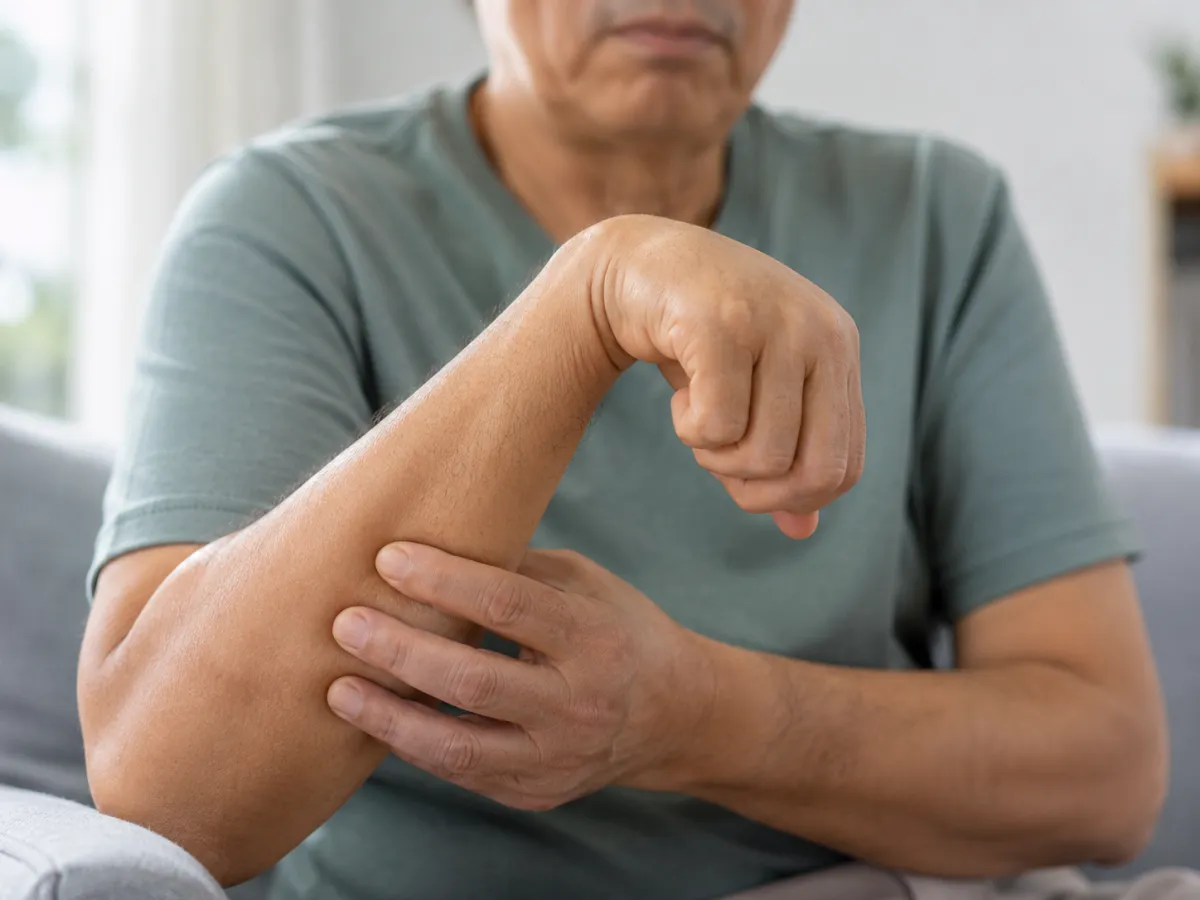
Hand spasticity after a stroke causes the muscles in your hand and fingers to become stiff, tight and difficult to control. It can make opening your hand, gripping objects and carrying out everyday activities challenging. Learn why hand spasticity develops after a stroke, the treatments available, and what you can do to improve movement and regain hand function.
After your stroke...
Your fingers slowly curl into your palm.
Your hand feels tight.
Opening it becomes almost impossible.
Simple tasks like washing your hand, holding a cup or getting dressed become frustrating.
You begin wondering...
"Why won't my hand open?"
"Will it ever get better?"
For many stroke survivors...
This is called hand spasticity.
✦ ✦ ✦
The Good News
Hand spasticity often improves with the right treatment.
While recovery is different for everyone, rehabilitation, stretching and appropriate medical treatments can reduce stiffness, improve movement and make everyday activities easier.
The sooner treatment begins, the greater the chance of preventing long-term problems.
✦ ✦ ✦
What Is Hand Spasticity?
Hand spasticity is an abnormal increase in muscle tone caused by damage to the brain after a stroke.
Normally, your brain sends balanced signals telling your muscles when to tighten and when to relax.
After a stroke, these signals become disrupted.
Instead of relaxing, the muscles remain overactive.
This causes the fingers to curl into the palm and makes the hand difficult to open.
✦ ✦ ✦
Can a Stroke Cause Hand Spasticity?
Yes.
Hand spasticity is one of the most common movement problems after a stroke.
It usually develops days, weeks or even months after the stroke rather than immediately.
It can range from mild stiffness to a tightly clenched hand that interferes with everyday life.
✦ ✦ ✦
Why Does Hand Spasticity Happen?
A stroke damages the areas of the brain responsible for controlling movement.
The messages travelling between your brain and your muscles become disrupted.
Instead of receiving balanced instructions...
The muscles receive too many signals telling them to tighten.
Over time, the muscles become increasingly stiff if they are not regularly stretched and used.
It's important to remember that the problem starts in the brain—not in the muscles themselves.
✦ ✦ ✦
Symptoms of Hand Spasticity
You may notice:
✓ Fingers curling into the palm.
✓ Difficulty opening the hand.
✓ Thumb tucked tightly into the palm.
✓ Wrist stiffness.
✓ Pain when stretching the fingers.
✓ Muscle spasms.
✓ Difficulty gripping or releasing objects.
✓ Fingernails digging into the palm.
✓ Difficulty cleaning the palm of the hand.
Symptoms often become worse when you're:
✓ Tired.
✓ Stressed.
✓ Cold.
✓ Unwell.
✦ ✦ ✦
Complications of Untreated Hand Spasticity
Without treatment, severe hand spasticity may lead to:
✓ Permanent muscle shortening (contractures).
✓ Joint stiffness.
✓ Pain.
✓ Skin breakdown.
✓ Pressure sores.
✓ Difficulty maintaining hand hygiene.
✓ Fingernails breaking the skin of the palm.
Early treatment helps reduce the risk of these complications.
✦ ✦ ✦
Treatment Options
Treatment usually combines rehabilitation with medical management.
✦ ✦ ✦
Physiotherapy
Physiotherapy aims to:
✓ Improve movement.
✓ Maintain flexibility.
✓ Reduce stiffness.
✓ Encourage normal movement patterns.
Regular stretching and movement are key parts of treatment.
✦ ✦ ✦
Occupational Therapy
Occupational therapists help improve hand function during everyday activities.
They may recommend:
✓ Hand exercises.
✓ Positioning techniques.
✓ Adaptive equipment.
✓ Splints.
Their goal is to maximise independence.
✦ ✦ ✦
Stretching
Daily stretching helps maintain joint movement and reduce muscle tightness.
Your therapist will teach you how to safely stretch your fingers, thumb and wrist.
Never force the hand open if it causes severe pain.
✦ ✦ ✦
Splints
Hand or wrist splints may help:
✓ Maintain a more comfortable position.
✓ Prevent contractures.
✓ Improve stretching.
✓ Reduce pain.
Splints should always be prescribed and monitored by a healthcare professional.
✦ ✦ ✦
Botulinum Toxin (Botox)
If spasticity is severe, your doctor may recommend botulinum toxin (Botox) injections.
Botox temporarily relaxes overactive muscles, making therapy and stretching more effective.
The effects usually last several months before repeat treatment may be needed.
✦ ✦ ✦
Functional Electrical Stimulation (FES)
In some cases, electrical stimulation may be used to activate weakened muscles and improve movement.
It is not suitable for everyone, and your rehabilitation team can advise whether it may benefit you.
✦ ✦ ✦
Neuroplasticity
Recovery is possible because of neuroplasticity.
Every attempt to open your hand...
Every stretch...
Every exercise...
Helps your brain strengthen new pathways around the damaged area.
Progress may be slow.
But your brain continues learning through repetition.
✦ ✦ ✦
Practical Tips
Stretch Every Day
Daily stretching helps reduce stiffness and maintain flexibility.
Consistency is more important than intensity.
✦ ✦ ✦
Use Your Hand Whenever Possible
Even if movement is limited, involve your affected hand in everyday activities.
Every movement helps stimulate your brain.
✦ ✦ ✦
Look After Your Palm
If your hand remains clenched:
✓ Clean and dry the palm daily.
✓ Check for redness.
✓ Check for pressure marks.
✓ Check for broken skin.
This helps prevent infection and skin problems.
✦ ✦ ✦
Stay Warm
Cold weather often makes spasticity worse.
Keeping your hand warm may reduce muscle tightness.
✦ ✦ ✦
Avoid Long Periods Without Movement
Try not to leave your hand in the same position for several hours.
Gentle movement throughout the day helps reduce stiffness.
✦ ✦ ✦
Tips for Family and Carers
If you're supporting someone with hand spasticity:
✓ Encourage daily exercises.
✓ Help with stretching if you've been trained to do so.
✓ Never force the fingers open.
✓ Keep the palm clean and dry.
✓ Encourage the use of the affected hand during everyday activities.
Your patience and encouragement can make rehabilitation easier.
✦ ✦ ✦
When Should You Seek Medical Advice?
Speak with your healthcare professional if:
✓ Your hand becomes increasingly stiff.
✓ Pain is getting worse.
✓ You cannot open the hand to clean it.
✓ Your fingers begin digging into your palm.
✓ Spasticity is interfering with daily activities.
Seek urgent medical attention if:
✓ Your hand becomes swollen, red or hot.
✓ You develop an open wound or signs of infection.
✓ You suddenly develop new weakness, facial drooping or speech difficulties.
These could indicate another medical problem or another stroke.
✦ ✦ ✦
My Perspective
A clenched hand can feel incredibly frustrating.
You know what you want your hand to do...
But it simply won't cooperate.
I've learned that recovery isn't about forcing movement.
It's about giving your brain thousands of opportunities to relearn.
Every stretch...
Every exercise...
Every attempt to open your hand...
Is another opportunity for your brain to build stronger connections.
✦ ✦ ✦
Frequently Asked Questions
Will Hand Spasticity Go Away?
Some people recover completely, while others continue to have some degree of stiffness.
Early rehabilitation and regular treatment often produce the best results.
✦ ✦ ✦
Is Hand Spasticity Permanent?
Not necessarily.
Many people improve significantly with therapy, stretching and medical treatment.
Even years after a stroke, further improvements may still be possible.
✦ ✦ ✦
Does Botox Cure Hand Spasticity?
No.
Botox temporarily relaxes overactive muscles.
It is most effective when combined with physiotherapy, stretching and regular hand exercises.
✦ ✦ ✦
Can My Hand Still Improve Years After a Stroke?
Yes.
Because of neuroplasticity, meaningful improvements can continue months or even years after a stroke when rehabilitation remains consistent.
✦ ✦ ✦
Key Takeaways
✓ Hand spasticity is caused by abnormal muscle tightness after a stroke.
✓ It often develops days, weeks or months after the stroke.
✓ Stretching, physiotherapy and occupational therapy are the main treatments.
✓ Botox and splints may help reduce severe spasticity.
✓ Daily movement helps prevent stiffness and supports recovery.
✓ Many people continue improving long after their stroke through consistent rehabilitation.
✦ ✦ ✦
About the Author
Alisia Gayle is a stroke survivor who achieved 96% neurological recovery following an ischaemic stroke.
After years of rehabilitation, she now shares practical, evidence-informed resources to help stroke survivors, carers and families better understand recovery and rebuild their lives with confidence.
Alisia is also the author of Brain Damage: My Journey to 96% Recovery, where she shares her personal stroke recovery story and the lessons she learned throughout her rehabilitation.
✦ ✦ ✦
Medical Disclaimer
This article is intended for educational purposes only and should not replace professional medical advice, diagnosis or treatment.
Always seek advice from your doctor, physiotherapist, occupational therapist or other healthcare professional regarding symptoms, concerns or changes in your condition.
✦ ✦ ✦
Final Thoughts
A clenched hand today...
Doesn't mean it will stay that way forever.
Every stretch...
Every exercise...
Every small improvement...
Is another opportunity for your brain to relearn.
Stay patient.
Keep practising.
Recovery happens one movement, one repetition and one day at a time.