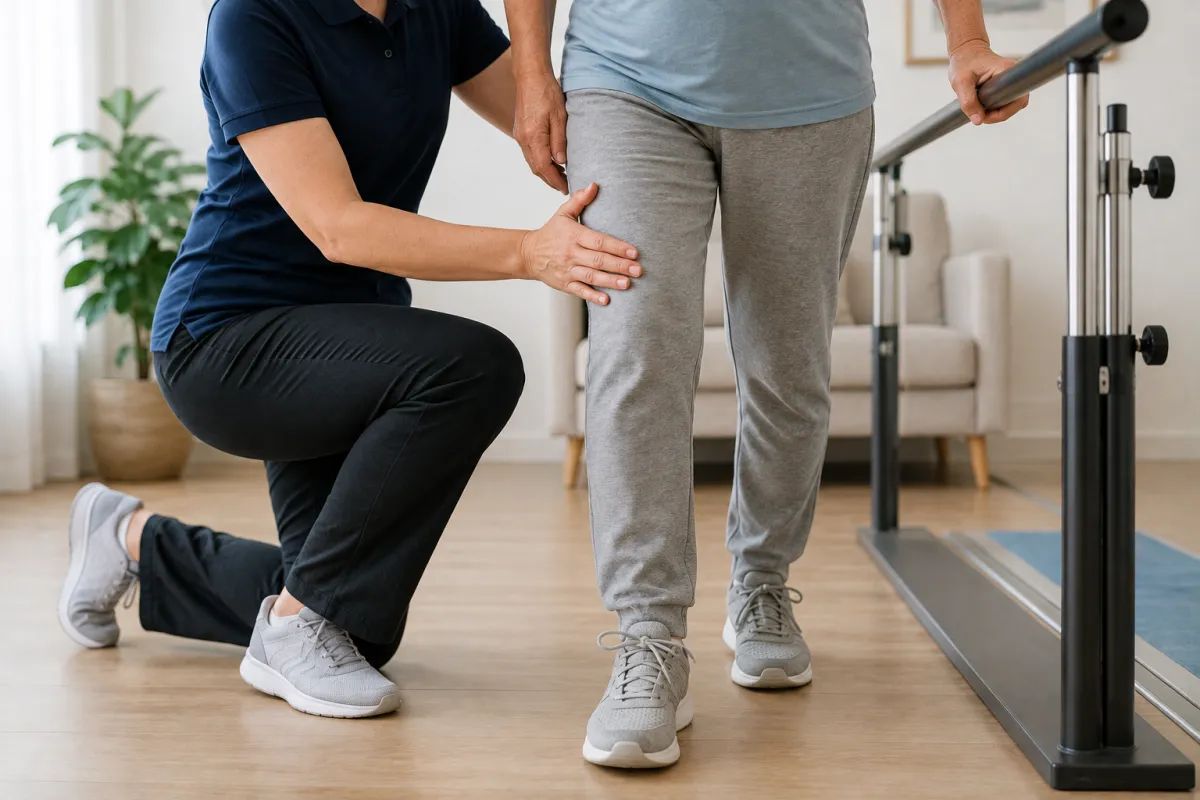
Leg weakness after a stroke can make standing, walking and everyday activities more difficult. Learn why it happens, what it feels like, and how rehabilitation can help you regain strength, balance and confidence.
You Want Your Leg to Move...
You know exactly what you want your leg to do.
Stand.
Step.
Walk.
But your leg doesn't always respond the way you expect.
Instead...
✓ It feels heavy.
✓ It tires quickly.
✓ It may buckle without warning.
✓ Climbing stairs feels exhausting.
✓ Walking takes far more effort than it used to.
Leg weakness is one of the most common challenges after a stroke.
The good news is that strength often improves with rehabilitation, and many people continue making progress long after leaving hospital.
✦ ✦ ✦
The Good News
Many people regain significant strength after a stroke—and I am one of them.
Recovery doesn't usually happen overnight.
It happens through hundreds of small improvements.
One exercise.
One step.
One day at a time.
✦ ✦ ✦
What Is Leg Weakness After a Stroke?
Leg weakness occurs when the muscles of the leg receive weaker or disrupted signals from the brain following a stroke.
The muscles themselves are often healthy.
The problem is that the brain is no longer communicating with them as efficiently as before.
As a result, standing, walking and controlling movement become much harder.
Depending on which area of the brain has been affected, weakness may involve the entire leg or only certain muscle groups.
✦ ✦ ✦
Can a Stroke Cause Leg Weakness?
Yes.
Leg weakness is one of the most common physical effects of stroke.
A stroke damages the areas of the brain responsible for controlling movement.
When communication between the brain and the leg muscles is disrupted, the muscles may become difficult to activate.
This can affect:
✓ Standing.
✓ Walking.
✓ Climbing stairs.
✓ Getting in and out of chairs.
✓ Balance.
✓ Endurance.
Some people experience mild weakness, while others may initially be unable to move their leg at all.
✦ ✦ ✦
What Causes Leg Weakness After a Stroke?
Several factors may contribute.
Muscle Weakness
Reduced signals from the brain make it harder for muscles to contract normally.
Reduced Motor Control
The brain may struggle to activate muscles in the correct sequence.
Spasticity
Tight muscles can limit movement and make the leg feel stiff or difficult to control.
Reduced Sensation
Changes in sensation can affect balance and make it harder to judge where the leg is during movement.
Fatigue
Post-stroke fatigue can make weakness feel much worse, particularly later in the day.
✦ ✦ ✦
Symptoms of Leg Weakness
Symptoms vary from person to person but commonly include:
✓ Difficulty standing.
✓ Difficulty walking.
✓ Feeling that the leg is heavy.
✓ Reduced balance.
✓ The knee giving way.
✓ Difficulty climbing stairs.
✓ Slower walking.
✓ Reduced endurance.
✓ Needing to use walking aids.
Some people notice weakness all the time.
Others find it becomes much more noticeable when they are tired.
✦ ✦ ✦
How Does Leg Weakness Affect Walking?
Walking requires dozens of muscles to work together in perfect timing.
After a stroke, weakness can change the way you move.
You may notice:
Slower Walking
Walking speed often decreases because the leg cannot generate the same power as before.
✦ ✦ ✦
Shorter Steps
Weakness often causes shorter, slower steps.
✦ ✦ ✦
Poor Balance
The weaker leg may struggle to support your body weight safely.
✦ ✦ ✦
Increased Fatigue
Walking requires much more effort, making everyday activities exhausting.
Over time, these changes can affect confidence and independence if they are not addressed through rehabilitation.
✦ ✦ ✦
Can Leg Weakness Improve?
Yes.
Many stroke survivors regain significant strength.
Recovery depends on:
✓ The size and location of the stroke.
✓ The severity of weakness.
✓ Rehabilitation.
✓ Daily practice.
✓ Time.
One of the most encouraging aspects of stroke recovery is neuroplasticity.
The brain can continue forming and strengthening new pathways for months—and often years—after a stroke.
✦ ✦ ✦
How Is Leg Weakness Assessed?
Your physiotherapist or rehabilitation team may assess:
✓ Muscle strength.
✓ Walking pattern.
✓ Balance.
✓ Joint movement.
✓ Muscle tone.
✓ Functional mobility.
✓ Ability to transfer safely.
These assessments help identify which muscles need the greatest attention during rehabilitation.
✦ ✦ ✦
Treatment Options
Most people benefit from combining several rehabilitation approaches.
✦ ✦ ✦
Physiotherapy
Physiotherapy is usually the foundation of recovery.
Treatment may include:
✓ Strengthening exercises.
✓ Balance training.
✓ Walking practice.
✓ Functional activities.
✓ Sit-to-stand practice.
✓ Stair training.
Every repetition provides another opportunity for the brain to strengthen movement pathways.
✦ ✦ ✦
Strength Training
Targeted strengthening exercises help improve muscle activation and endurance.
Exercises may include:
✓ Sit-to-stands.
✓ Step-ups.
✓ Squats (when appropriate).
✓ Resistance exercises.
✓ Leg presses.
Strength training should always be appropriate for your stage of recovery.
✦ ✦ ✦
Walking Practice
Walking is one of the best ways to retrain the brain.
Regular practice helps improve:
✓ Coordination.
✓ Balance.
✓ Endurance.
✓ Confidence.
Quality of movement is often more important than speed.
✦ ✦ ✦
Balance Training
Improving balance reduces the risk of falls and helps rebuild confidence.
Exercises may involve:
✓ Weight shifting.
✓ Standing exercises.
✓ Single-leg activities (where appropriate).
✓ Dynamic balance tasks.
✦ ✦ ✦
Home Exercise Programme
Recovery continues long after therapy sessions finish.
Daily home exercises reinforce the work completed during rehabilitation.
Consistency is far more important than perfection.
✦ ✦ ✦
Practical Tips
Small adjustments can make daily life easier.
Wear Supportive Footwear
Choose shoes that provide stability and good grip.
✦ ✦ ✦
Pace Yourself
Avoid trying to do everything at once.
Taking regular breaks often allows you to achieve more overall.
✦ ✦ ✦
Keep Moving
Avoid spending long periods sitting where possible.
Regular movement helps prevent stiffness and maintains strength.
✦ ✦ ✦
Focus on Quality
Controlled movement is usually more beneficial than rushing through exercises.
✦ ✦ ✦
When Should You Seek Medical Advice?
Speak with your healthcare professional if:
✓ Your weakness suddenly becomes worse.
✓ You experience repeated falls.
✓ You develop new weakness.
✓ Pain limits your movement.
✓ Walking becomes significantly more difficult.
✓ You notice increasing stiffness.
Sudden changes should always be assessed promptly.
✦ ✦ ✦
My Perspective
I remember how frustrating leg weakness felt.
Simple tasks suddenly required planning.
Standing up.
Walking across a room.
Climbing a few stairs.
Everything took more effort than it ever had before.
Some days it felt as though nothing was improving.
But recovery wasn't measured by one big breakthrough.
It was measured by tiny improvements that slowly added up.
One stronger step.
One extra repetition.
One more metre walked.
Looking back now, those small victories were building something much bigger.
If your leg feels weak today, don't underestimate what consistent practice can achieve over time.
✦ ✦ ✦
Frequently Asked Questions
Can leg weakness recover after a stroke?
Yes. Many people regain significant strength through rehabilitation, although recovery varies for everyone.
✦ ✦ ✦
Is walking good for leg weakness?
Yes. Walking provides valuable practice for the brain and muscles, provided it is safe and appropriate for your level of recovery.
✦ ✦ ✦
Why does my leg feel heavy after a stroke?
A heavy feeling is common after stroke and may be caused by weakness, changes in muscle activation, spasticity or fatigue.
✦ ✦ ✦
Can recovery continue years after a stroke?
Yes. The brain continues adapting through neuroplasticity, and meaningful improvements remain possible even years after a stroke.
✦ ✦ ✦
Key Takeaways
✓ Leg weakness is one of the most common effects of stroke.
✓ It happens because communication between the brain and muscles has been disrupted.
✓ Physiotherapy and regular exercise remain the cornerstone of recovery.
✓ Walking and strength training both help improve mobility.
✓ Recovery often continues through neuroplasticity.
✓ Small improvements build into meaningful progress over time.
✦ ✦ ✦
About the Author
Alisia Gayle is a stroke survivor who achieved 96% neurological recovery following an ischaemic stroke.
After years of rehabilitation, she now shares practical, evidence-informed resources to help stroke survivors, carers and families better understand recovery and rebuild their lives with confidence.
Alisia is also the author of Brain Damage: My Journey to 96% Recovery, where she shares her personal stroke recovery story and the lessons she learned throughout her rehabilitation.
✦ ✦ ✦
Medical Disclaimer
This article is intended for educational purposes only and should not replace professional medical advice, diagnosis or treatment.
Always seek advice from your doctor, physiotherapist or rehabilitation team regarding symptoms, concerns or changes in your condition.
✦ ✦ ✦
Final Thoughts
Leg weakness changes the way you move.
But it doesn't have to define what you're capable of achieving.
Every exercise you complete...
Every safe step you take...
Every improvement you notice...
Is another opportunity for your brain to learn.
Recovery rarely happens all at once.
It happens one step at a time.