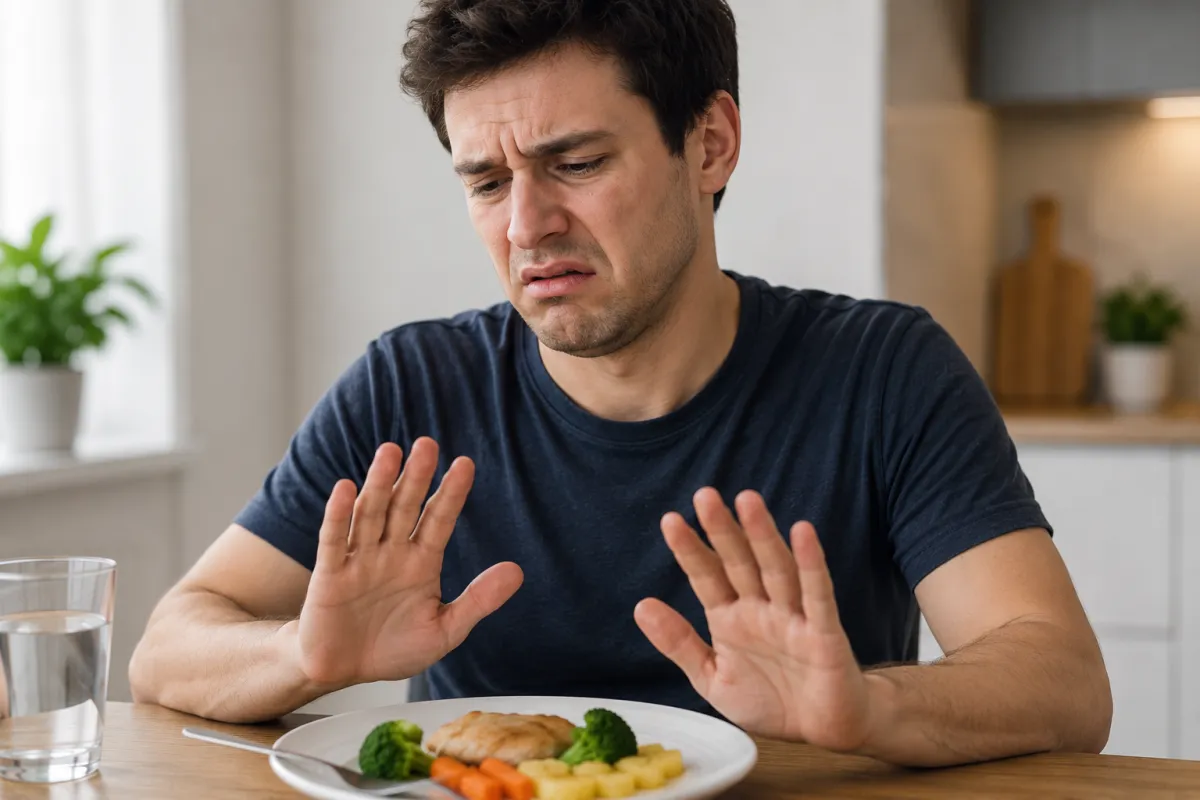
Loss of appetite after a stroke is more common than many people realise. You may simply stop feeling hungry, find that food no longer interests you, become full after only a few mouthfuls, or discover that the effort involved in preparing and eating a meal feels exhausting. Swallowing problems, fatigue, changes in taste or smell, medication, low mood and the physical effects of stroke can all contribute. The important thing is not to ignore persistent appetite loss, particularly if you are losing weight, becoming weaker or struggling to drink enough. The Stroke Association specifically notes that a smaller appetite, fatigue and swallowing difficulties can lead people to eat less and lose weight after stroke.
Have you found yourself looking at a plate of food and simply not wanting it?
Do you get halfway through a meal and feel as though you cannot manage another mouthful?
Perhaps eating used to be automatic, but now deciding what to eat, preparing it, cutting it up and actually finishing the meal feels like another rehabilitation exercise.
Or perhaps your family keeps telling you that you need to eat, while you genuinely don't feel hungry.
Appetite changes can easily be overlooked after a stroke because everyone is understandably focused on walking, speech, movement and other obvious aspects of recovery.
But eating matters too.
Your body is recovering from a major neurological injury. Rehabilitation itself demands energy. If you consistently eat too little, you may not get enough calories, protein, vitamins and minerals to support your general health and rehabilitation.
✦ ✦ ✦
The Good News
A poor appetite after stroke does not necessarily mean that something is seriously wrong, and it does not automatically mean that you will struggle with eating permanently.
Sometimes appetite improves as the acute effects of stroke settle, your energy increases, medication changes, swallowing becomes easier or food begins to feel enjoyable again.
There are also practical ways of getting more nutrition without forcing yourself through enormous meals.
For many people, the goal is not:
"I must eat three large meals every day."
A much more realistic goal may be:
"How can I make every mouthful count while my appetite is poor?"
That change in approach can make eating feel far more manageable.
✦ ✦ ✦
Why Can You Lose Your Appetite After a Stroke?
There is rarely one universal explanation.
Several stroke-related problems can overlap.
1. Stroke Fatigue Can Make Eating Feel Like Work
Post-stroke fatigue can be profound.
Eating may look like a passive activity, but it involves far more than putting food into your mouth.
You may need to:
sit upright for the meal
concentrate
use cutlery
coordinate your hand and arm
chew
control food inside your mouth
swallow repeatedly
communicate with someone helping you
stay alert throughout the meal.
If you are already exhausted, finishing an entire plate can simply feel like too much.
This is why somebody can technically be capable of eating but still consume very little.
Fatigue is recognised as one of the factors that can contribute to reduced food intake after stroke.
2. Swallowing Problems Can Reduce the Desire to Eat
Dysphagia means difficulty swallowing, and it is common after stroke.
Imagine having to concentrate on every swallow.
You may worry about:
Eventually, eating can become associated with anxiety rather than pleasure.
Some people also need modified food textures or thickened drinks following assessment by a speech and language therapist.
Although these modifications can make swallowing safer, adjusting to an unfamiliar texture can affect enjoyment of meals.
If swallowing difficulties make it hard to consume enough food, weight loss and inadequate nutrient intake can follow.
3. Your Taste or Smell May Have Changed
Stroke can affect how food tastes or smells.
Something you previously loved may suddenly taste strange, bland, bitter or simply different.
And appetite is not driven by the stomach alone.
The smell, appearance, taste and expectation of food all contribute to wanting to eat.
When those signals change, your enthusiasm for food can change with them.
4. Low Mood Can Affect Appetite
Life after stroke can change dramatically in a very short period.
You may be dealing with loss of independence, changes in relationships, financial concerns, physical disability and uncertainty about your future.
Emotional changes can affect eating.
Some people eat more when they are distressed.
Others lose interest in food altogether.
If persistent low mood is accompanying your appetite loss, tell your GP or stroke team rather than treating the eating problem in isolation.
5. Medication May Play a Part
After stroke, many people suddenly have several new medications.
Some medicines can cause side effects such as:
nausea
altered taste
dry mouth
indigestion
stomach upset
constipation.
Any of these can make eating less appealing.
Do not stop prescribed medication because you suspect it is affecting your appetite.
Instead, discuss it with your GP, pharmacist or stroke team. There may be alternative medicines, different timings or other ways of managing side effects.
6. Eating May Have Become Physically Difficult
You do not need dysphagia for eating to become challenging.
Weakness, poor coordination, tremor, visual problems or difficulty using one hand can turn a simple meal into a lengthy task.
Even opening a packet, cutting meat or getting food onto a fork can become frustrating.
By the time the food reaches you, you may already be tired.
An occupational therapist may be able to suggest equipment or techniques that make meals easier.
7. You May Get Full Very Quickly
Some people find they can manage only small quantities at a time.
If this is happening, forcing a huge plate of food in front of yourself may actually make eating less appealing.
Smaller portions eaten more frequently can sometimes be much easier to manage.
✦ ✦ ✦
Signs That You May Not Be Eating Enough
It can be difficult to recognise inadequate nutrition immediately.
Look for changes such as:
✓ unintentional weight loss
✓ clothes becoming noticeably looser
✓ increasing weakness
✓ reduced energy
✓ struggling to complete rehabilitation exercises
✓ eating significantly smaller portions than before
✓ regularly skipping meals
✓ taking an unusually long time to finish meals
✓ becoming dehydrated
✓ relying almost entirely on drinks or a very limited range of foods.
Dysphagia can make it difficult to obtain adequate nutrition and hydration and can contribute to weight loss and nutritional deficiencies.
You do not need to wait until somebody looks visibly underweight before asking for help.
✦ ✦ ✦
How Can You Eat More When You Have No Appetite?
The answer usually isn't to put an enormous plate in front of yourself and force it down.
Try making eating easier.
Eat Little and Often
If three large meals feel impossible, consider smaller meals and snacks spread throughout the day.
For example:
breakfast
mid-morning snack
small lunch
afternoon snack
dinner
evening snack.
Small, frequent high-energy and high-protein meals or snacks are commonly recommended when poor appetite makes it difficult to meet nutritional needs.
Make Each Mouthful Count
When appetite is limited, filling yourself with large quantities of foods that provide very little energy or protein may not be helpful.
Depending on your individual dietary needs, you might incorporate foods such as:
yoghurt
eggs
cheese
avocado
nut butters
full-fat milk
oily fish
beans and lentils
fortified porridge
nourishing soups.
If you have diabetes, kidney disease, heart disease, high cholesterol or other medical conditions that affect your diet, speak to a dietitian rather than dramatically changing what you eat yourself.
Eat When Your Appetite Is Best
There is no rule saying your largest meal must be dinner.
If you are hungriest at 10 a.m., use that window.
If fatigue becomes severe later in the day, consider having your more substantial meal earlier.
Work with your body rather than against it.
Don't Exhaust Yourself Preparing the Meal
If cooking consumes all your available energy, there may be nothing left for eating.
Consider:
✓ preparing food in batches
✓ using healthy ready-prepared options
✓ asking family to help
✓ freezing individual portions
✓ using pre-cut ingredients
✓ sitting down while preparing food where safe.
Conserving energy is not laziness.
You are deciding where limited energy is most useful.
Make Food Appealing
When appetite is poor, presentation can matter.
A huge beige plate of food may feel overwhelming.
A smaller colourful portion can be much easier to approach.
Experiment with herbs, spices, sauces and different temperatures if these are medically and swallowing-safe for you.
If your sense of taste has changed, you may discover that foods you previously ignored now appeal to you more.
✦ ✦ ✦
What If You Also Have Dysphagia?
This is where you need to be particularly careful.
If you have been given specific swallowing recommendations by a speech and language therapist, follow them.
Do not independently switch from thickened fluids to thin liquids or from modified-texture food to ordinary food simply because you prefer it.
People with dysphagia may require specific food textures or drink consistencies for safety.
General safe-eating advice for people with swallowing problems can include sitting upright, minimising distractions, taking small mouthfuls, chewing thoroughly and swallowing before taking the next bite, but your own speech and language therapist's recommendations take priority.
If modified food is making your appetite worse, tell your speech and language therapist and dietitian.
The answer should not be to stop eating.
The team may be able to help you find foods that are both safe and more enjoyable.
✦ ✦ ✦
Don't Forget Fluids
Poor appetite sometimes comes with reduced thirst or reduced drinking.
Dehydration can make you feel worse and may contribute to:
tiredness
dizziness
headache
constipation
confusion
dark urine
dry mouth.
If you have swallowing problems, your drinks may need to be modified according to your swallowing assessment.
Nutrition and hydration both need attention after stroke.
✦ ✦ ✦
When Should You Ask for Medical Help?
Speak to your GP, stroke team or another appropriate healthcare professional if:
✓ your appetite remains significantly reduced
✓ you are unintentionally losing weight
✓ you are becoming noticeably weaker
✓ you struggle to drink enough
✓ eating causes coughing or choking
✓ your voice sounds wet or gurgly after swallowing
✓ food regularly becomes stuck
✓ meals are taking an exceptionally long time
✓ you have repeated chest infections
✓ you feel persistently nauseous
✓ low mood is affecting your desire to eat
✓ you cannot maintain adequate nutrition.
Seek urgent medical help if someone is choking and cannot breathe, speak or cough effectively.
New or worsening swallowing difficulties should also be medically assessed rather than simply managed at home.
Depending on the problem, your care may involve a GP, dietitian, speech and language therapist, occupational therapist, pharmacist or stroke specialist.
✦ ✦ ✦
My Perspective
After a stroke, rehabilitation can become dominated by the visible goals.
Walking.
Moving your arm.
Speaking.
Getting dressed.
Becoming independent again.
But your body needs enough fuel to attempt all of those things.
At the same time, I think we need to acknowledge something that is often missed: even eating can become another job after stroke.
When so many previously automatic tasks suddenly require concentration and effort, somebody telling you to "just eat more" is not particularly useful.
The better question is:
What is making eating difficult?
Is it fatigue?
Swallowing?
Mood?
Taste?
Physical difficulty?
Medication?
Fear?
Once you understand the barrier, you have something concrete to work on.
Recovery already asks enough of you. Food should support that recovery rather than become another daily battle.
✦ ✦ ✦
Frequently Asked Questions
Is loss of appetite normal after a stroke?
It can happen after stroke. The Stroke Association notes that some people experience a smaller appetite and may eat less because of problems including fatigue and swallowing difficulty.
Persistent or severe appetite loss should still be discussed with a healthcare professional.
Can loss of appetite cause weight loss after stroke?
Yes. If you consistently consume less energy than your body needs, you can lose weight. Reduced intake associated with swallowing problems can also contribute to inadequate nutrition.
Should I force myself to eat?
Forcing yourself through very large meals may be counterproductive.
Small, frequent, nutrient-dense meals and snacks are often easier when appetite is poor.
If you are unable to eat enough despite trying this, seek professional advice.
Can stroke medication affect appetite?
Medication side effects can sometimes affect eating indirectly through nausea, digestive symptoms, dry mouth or changes in taste.
Never stop prescribed medication without medical advice. Ask your doctor or pharmacist whether your medication could be contributing.
Who should I speak to?
Depending on the cause, useful professionals may include:
If swallowing is part of the problem, a speech and language therapist is particularly important.
Will my appetite come back?
It may.
Appetite can improve as fatigue settles, swallowing improves, your routine becomes easier or other underlying problems are treated.
There is no single recovery timeline, however, so continuing appetite loss should not simply be ignored while waiting for it to resolve.
✦ ✦ ✦
Key Takeaways
✓ Loss of appetite can happen after stroke.
✓ Fatigue, dysphagia, emotional changes, altered taste, medication and physical difficulty eating can all contribute.
✓ Small meals and frequent nourishing snacks may be easier than three large meals.
✓ Make the food you can manage nutritionally worthwhile.
✓ Eat during the part of the day when your energy and appetite are strongest.
✓ Swallowing recommendations from your speech and language therapist should always take priority over general dietary advice.
✓ Persistent weight loss, dehydration, weakness or swallowing problems deserve professional assessment.
✓ Identifying why you are not eating is often more useful than simply telling yourself that you need to eat more.
✦ ✦ ✦
The Bottom Line
Losing your appetite after stroke can seem minor compared with learning to walk, use an arm or communicate again.
It isn't.
Nutrition and hydration form part of the foundation that allows you to participate in recovery.
If a full plate feels impossible, don't make the plate the battle.
Start smaller.
Eat more frequently.
Use the times when your energy is best.
Make the food you do eat count.
And most importantly, investigate the reason your appetite has changed.
Sometimes the solution is relatively simple.
Sometimes you need help from a dietitian, speech and language therapist or doctor.
Either way, persistent appetite loss deserves attention rather than being dismissed as another thing you simply have to live with after stroke.
✦ ✦ ✦
Related Articles
Weight Loss After a Stroke
Malnutrition After a Stroke
Dysphagia After a Stroke
Foods That Are Easier to Swallow After Stroke
Can Swallowing Recover After Stroke?
✦ ✦ ✦
About the Author
Alisia Gayle is a stroke survivor and author of Brain Damage: My Journey to 96% Recovery.
Her work combines lived experience with practical, evidence-informed information designed to help stroke survivors and their families better understand the realities of recovery.
✦ ✦ ✦
Medical Disclaimer
This article is for general educational and informational purposes only and is not a substitute for individual medical advice, diagnosis or treatment.
Stroke recovery and swallowing ability vary considerably between individuals. If you have difficulty swallowing, unexplained weight loss, dehydration, persistent loss of appetite or concerns about your nutritional intake, speak to an appropriate healthcare professional.
Always follow the individual eating, drinking and texture recommendations provided by your stroke team, speech and language therapist or dietitian.
✦ ✦ ✦
Final Thoughts
After a stroke, people may celebrate when you stand, walk or move your hand.
Nobody is likely to celebrate when you finish lunch.
But sometimes that quiet, ordinary act is part of recovery too.
If eating has become difficult, don't judge yourself by how easily you did it before your stroke.
Find the barrier.
Make the task easier.
Get help where you need it.
And give your recovering body the best chance you can to do the enormous amount of work you are asking of it.