Mirror therapy after a stroke is a rehabilitation technique that uses a mirror to create the illusion that your affected arm or hand is moving normally. This visual feedback helps stimulate the brain and may improve movement, reduce pain and support recovery through neuroplasticity. Learn how mirror therapy works, who it may help, and how to use it safely.
After your stroke...
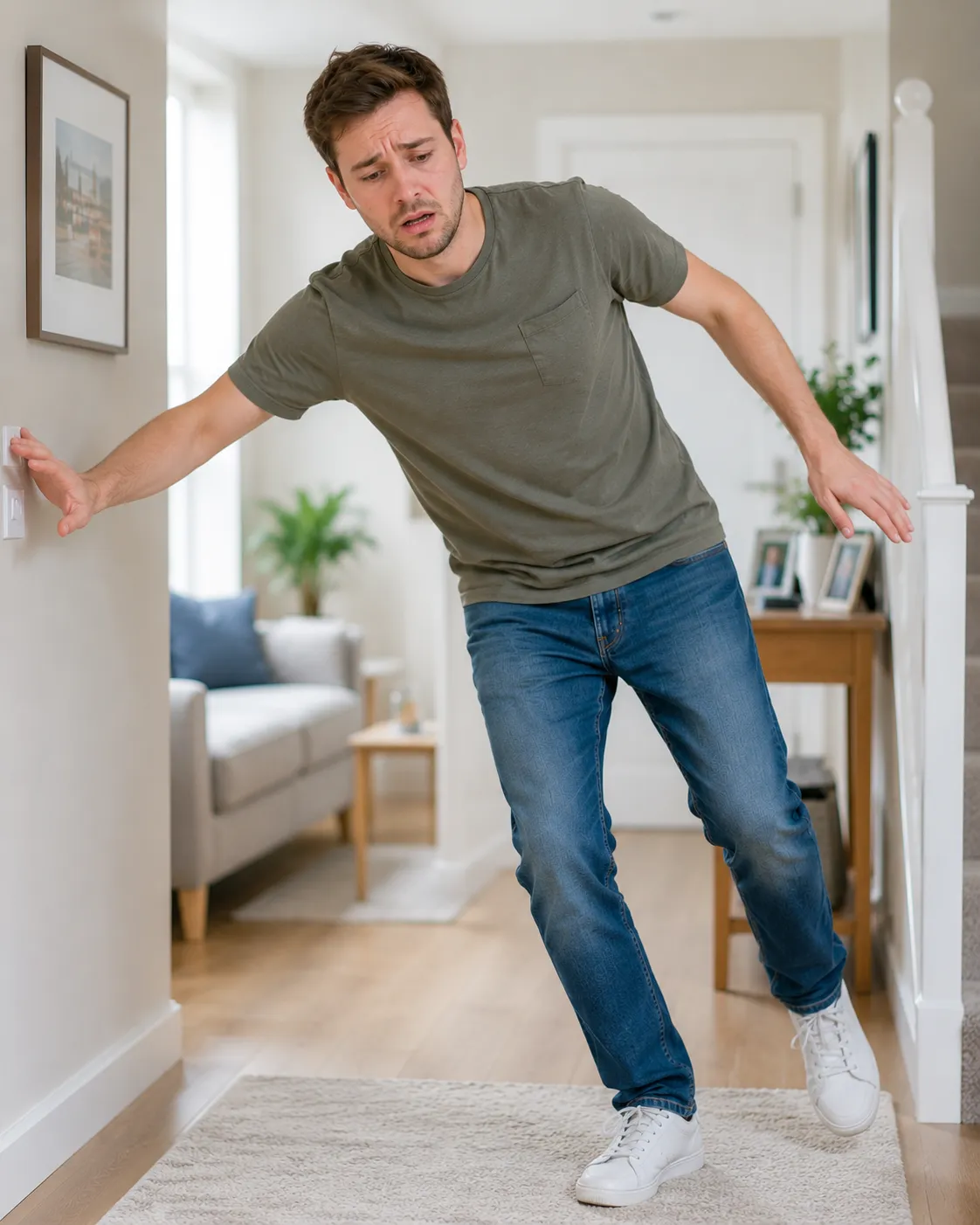
Your hand won't move the way you want.
Your arm feels disconnected.
Simple movements seem impossible.
Then someone places a mirror beside your hand.
As you watch the reflection...
It looks as though your affected hand is moving normally.
You begin wondering...
"Can looking in a mirror really help my brain recover?"
The answer is...
For many stroke survivors...
Yes, it can.
✦ ✦ ✦
The Good News
Mirror therapy is a simple, inexpensive rehabilitation technique that may improve movement, reduce pain and help your brain rebuild movement pathways.
Many stroke survivors include mirror therapy alongside their physiotherapy and occupational therapy programmes.
✦ ✦ ✦
What Is Mirror Therapy?
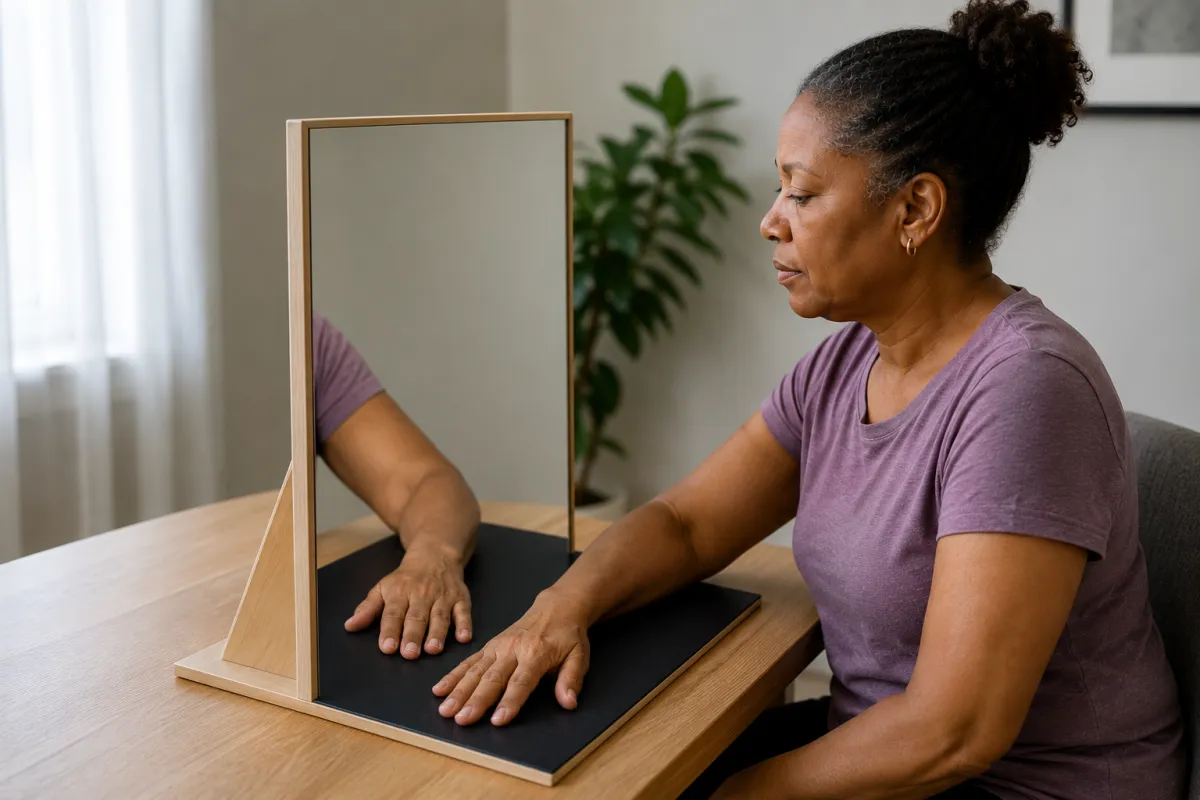
Mirror therapy uses a mirror placed beside your unaffected arm.
The affected arm is hidden behind the mirror.
When you move your stronger hand, the reflection creates the illusion that your affected hand is moving normally.
Your brain sees what appears to be your affected hand opening, closing and moving smoothly.
This visual feedback helps stimulate areas of the brain involved in movement.
✦ ✦ ✦
How Does Mirror Therapy Work?
After a stroke, communication between the brain and the affected arm becomes disrupted.
Mirror therapy provides powerful visual feedback.
When your brain sees the reflected hand moving normally, it may activate movement areas even if your affected hand cannot yet perform the movement.
Over time, repeated practice may strengthen new neural pathways through neuroplasticity.
✦ ✦ ✦
Who Can Benefit From Mirror Therapy?
Mirror therapy may benefit people who have:
✓ Arm weakness.
✓ Hand weakness.
✓ Reduced hand coordination.
✓ Difficulty opening the hand.
✓ Limited finger movement.
✓ Painful hand or arm.
✓ Phantom movement sensations.
It may be used during the early stages of rehabilitation as well as months or years after a stroke.
Your rehabilitation team can advise whether it is suitable for you.
✦ ✦ ✦
What Does Mirror Therapy Involve?
A mirror is placed vertically on a table.
Your:
✓ Stronger arm sits in front of the mirror.
✓ Affected arm sits behind the mirror.
When you look into the mirror...
You only see the reflection of your stronger hand.
You then perform slow, controlled movements such as:
✓ Opening and closing your hand.
✓ Straightening your fingers.
✓ Touching each finger to your thumb.
✓ Turning your palm over.
✓ Making a fist.
✓ Lifting and lowering your wrist.
Your brain interprets the reflection as your affected hand moving.
✦ ✦ ✦
Potential Benefits
Some stroke survivors experience improvements in:
✓ Hand movement.
✓ Finger control.
✓ Coordination.
✓ Arm awareness.
✓ Grip function.
✓ Pain.
✓ Confidence using the affected arm.
Results vary from person to person, and mirror therapy works best when combined with a wider rehabilitation programme.
✦ ✦ ✦
Treatment Options
Mirror therapy is usually combined with other rehabilitation approaches.
✦ ✦ ✦
Physiotherapy
Physiotherapists may use mirror therapy alongside exercises that improve:
✓ Strength.
✓ Coordination.
✓ Balance.
✓ Arm movement.
Combining treatments often produces better results than relying on one technique alone.
✦ ✦ ✦
Occupational Therapy
Occupational therapists often combine mirror therapy with functional activities such as:
✓ Picking up objects.
✓ Reaching.
✓ Grasping.
✓ Everyday hand tasks.
The aim is to transfer improvements into daily life.
✦ ✦ ✦
Task-Specific Practice
After mirror therapy, practising real-life tasks helps reinforce the new movement patterns your brain is learning.
✦ ✦ ✦
Neuroplasticity
Mirror therapy works because of neuroplasticity.
Every session...
Every repetition...
Every movement you observe...
Provides your brain with another opportunity to reorganise and strengthen its movement pathways.
Consistency is essential.
✦ ✦ ✦
Practical Tips
Practise Little and Often
Ten to twenty minutes each day is often more beneficial than occasional long sessions.
Consistency helps your brain learn.
✦ ✦ ✦
Move Slowly
Perform slow, controlled movements.
Focus on quality rather than speed.
✦ ✦ ✦
Concentrate on the Reflection
Imagine the reflected hand is your affected hand.
The stronger the illusion, the more effective the therapy may be.
✦ ✦ ✦
Combine It With Other Exercises
Mirror therapy works best when used alongside your physiotherapy and occupational therapy programme.
✦ ✦ ✦
Stay Patient
Progress may be gradual.
Small improvements often lead to larger gains over time.
✦ ✦ ✦
Tips for Family and Carers
If you're supporting someone using mirror therapy:
✓ Help position the mirror correctly.
✓ Encourage regular practice.
✓ Keep sessions calm and free from distractions.
✓ Celebrate small improvements.
✓ Support other rehabilitation exercises alongside mirror therapy.
Consistency and encouragement make a real difference.
✦ ✦ ✦
When Should You Seek Medical Advice?
Speak with your healthcare professional if:
✓ You're unsure whether mirror therapy is appropriate.
✓ You experience increasing pain during exercises.
✓ You become frustrated or distressed during therapy.
✓ Your movement continues to decline.
Seek urgent medical attention immediately if:
✓ You suddenly develop new weakness.
✓ You experience facial drooping.
✓ Your speech becomes slurred.
✓ You develop sudden confusion or vision changes.
These could be signs of another stroke.
✦ ✦ ✦
My Perspective
Mirror therapy may seem surprisingly simple.
Looking into a mirror doesn't feel like rehabilitation.
Yet your brain doesn't just respond to movement...
It also responds to what it sees.
Every session...
Every reflection...
Every repetition...
Gives your brain another opportunity to rebuild the connections that control your hand and arm.
✦ ✦ ✦
Frequently Asked Questions
Does Mirror Therapy Really Work?
Research suggests mirror therapy can improve arm and hand function in some stroke survivors, particularly when combined with other rehabilitation exercises.
✦ ✦ ✦
How Long Should Mirror Therapy Sessions Last?
Many rehabilitation programmes recommend around 10 to 20 minutes, once or twice a day, although your therapist may advise a different schedule based on your needs.
✦ ✦ ✦
Can I Do Mirror Therapy at Home?
Yes.
Once you've been shown the correct technique by your healthcare professional, mirror therapy can often be continued safely at home.
✦ ✦ ✦
Can Mirror Therapy Help Years After a Stroke?
Yes.
Because the brain remains capable of neuroplasticity, some people continue benefiting from mirror therapy months or even years after their stroke.
✦ ✦ ✦
Key Takeaways
✓ Mirror therapy is a simple rehabilitation technique that uses visual feedback.
✓ It helps stimulate the brain through neuroplasticity.
✓ It may improve hand movement, coordination and arm function.
✓ Mirror therapy works best alongside physiotherapy and occupational therapy.
✓ Regular, consistent practice is important.
✓ Many stroke survivors continue improving long after their stroke.
✦ ✦ ✦
Related Articles
Continue learning about hand and arm recovery with these helpful guides:
Arm Weakness After a Stroke – Learn why your arm feels weak and how rehabilitation can help rebuild strength.
Hand Coordination After a Stroke – Discover exercises to improve smooth, controlled hand movements.
Fine Motor Skills After a Stroke – Learn how to regain precision for writing, dressing and everyday tasks.
Why Can't I Open My Hand After a Stroke? – Understand why your hand remains clenched and what treatments can help.
Neuroplasticity After Stroke: How Your Brain Rewires Itself – Discover how repetition helps your brain rebuild movement pathways.
✦ ✦ ✦
About the Author
Alisia Gayle is a stroke survivor who achieved 96% neurological recovery following an ischaemic stroke.
After years of rehabilitation, she now shares practical, evidence-informed resources to help stroke survivors, carers and families better understand recovery and rebuild their lives with confidence.
Alisia is also the author of Brain Damage: My Journey to 96% Recovery, where she shares her personal stroke recovery story and the lessons she learned throughout her rehabilitation.
✦ ✦ ✦
Medical Disclaimer
This article is intended for educational purposes only and should not replace professional medical advice, diagnosis or treatment.
Always seek advice from your doctor, physiotherapist, occupational therapist or other healthcare professional regarding symptoms, concerns or changes in your condition before starting a new rehabilitation programme.
✦ ✦ ✦
Final Thoughts
Recovery doesn't always require complicated equipment.
Sometimes...
A simple mirror...
Combined with patience and repetition...
Can help your brain rediscover movements you thought were lost.
Keep practising.
Keep believing.
Recovery happens one reflection, one repetition and one day at a time.