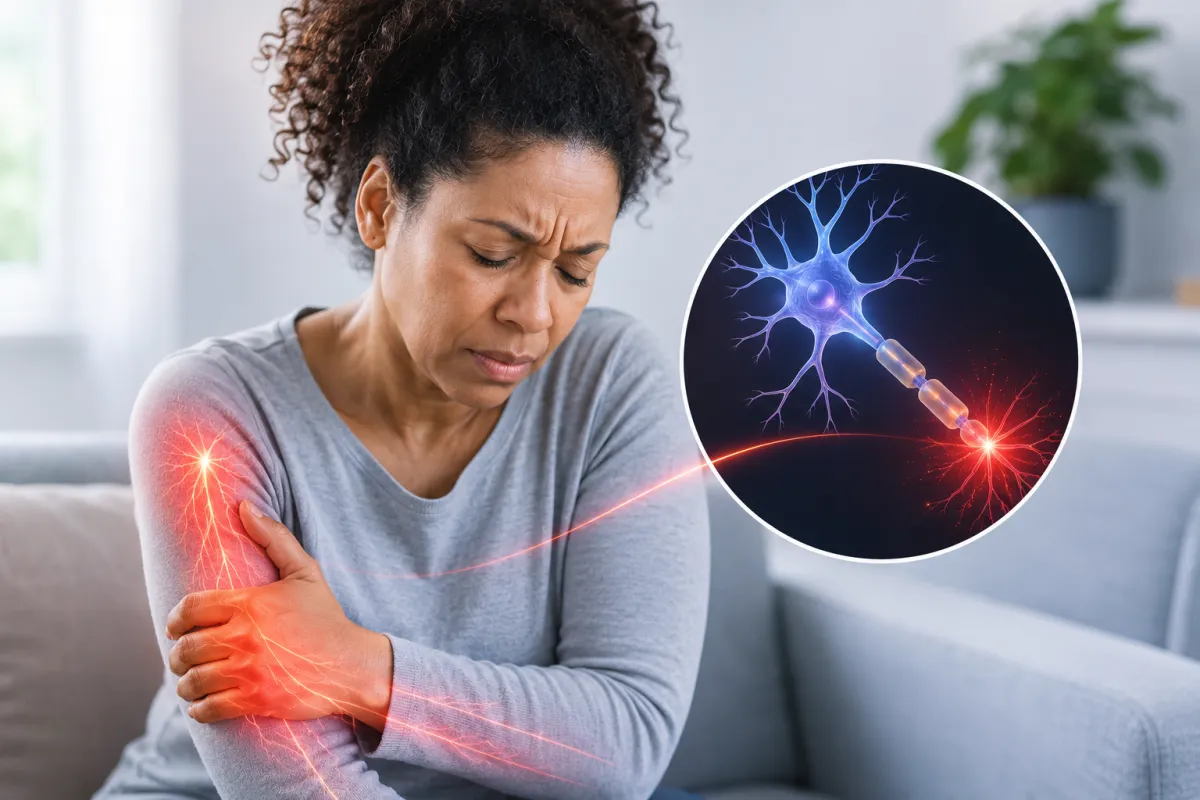
Nerve pain after a stroke is caused by damage to the brain's sensory pathways rather than an injury to the muscles, joints or skin. It can feel like burning, stabbing, tingling or electric shock-like pain and may develop weeks or months after a stroke. Learn why nerve pain happens, how it is diagnosed, and the treatments that may help you manage your symptoms.
After your stroke...
Your arm burns.
Your leg tingles.
A light touch suddenly feels painful.
Or perhaps...
You experience sharp, electric shock-like sensations that seem to come from nowhere.
You begin wondering...
"Why am I in pain when nothing looks injured?"
For some stroke survivors...
This is nerve pain.
✦ ✦ ✦
The Good News
Although nerve pain can be challenging, it can often be managed successfully.
Many people find that medication, rehabilitation and simple lifestyle changes reduce symptoms and improve their quality of life.
Early diagnosis is important because nerve pain is treated differently from other types of pain.
✦ ✦ ✦
What Is Nerve Pain?
Nerve pain, also called neuropathic pain, occurs when the nervous system becomes damaged or sends abnormal pain signals.
After a stroke, the injury is within the brain itself.
Instead of processing normal sensations correctly, the brain may interpret them as pain.
Unlike muscle pain...
Nerve pain is caused by changes in the nervous system rather than damage to muscles or joints.
✦ ✦ ✦
Can a Stroke Cause Nerve Pain?
Yes.
A stroke can damage the areas of the brain responsible for processing sensation.
When these pathways are disrupted, normal signals from the body may become distorted.
As a result, sensations that shouldn't hurt may become painful.
This type of pain is often called central post-stroke pain (CPSP).
✦ ✦ ✦
Why Does Nerve Pain Happen?
Normally, nerves send accurate messages from your body to your brain.
After a stroke...
Those messages may become confused.
Your brain may misinterpret:
✓ Light touch.
✓ Warmth.
✓ Cold.
✓ Pressure.
✓ Clothing touching your skin.
As painful sensations.
The pain is real.
But it originates in the brain rather than the affected body part.
✦ ✦ ✦
Symptoms of Nerve Pain
Symptoms vary widely.
You may experience:
✓ Burning pain.
✓ Sharp stabbing pain.
✓ Electric shock sensations.
✓ Tingling.
✓ Pins and needles.
✓ Aching pain.
✓ Numbness combined with pain.
✓ Increased sensitivity to touch.
✓ Pain triggered by cold temperatures.
Symptoms often affect:
✓ The arm.
✓ The hand.
✓ The leg.
✓ The foot.
✓ The face.
✓ One side of the body affected by the stroke.
For some people, the pain comes and goes.
For others, it is constant.
✦ ✦ ✦
What Can Make Nerve Pain Worse?
Many stroke survivors notice symptoms become worse with:
✓ Fatigue.
✓ Stress.
✓ Anxiety.
✓ Poor sleep.
✓ Cold weather.
✓ Light touch.
✓ Emotional distress.
Recognising your triggers can help you manage flare-ups more effectively.
✦ ✦ ✦
How Is Nerve Pain Diagnosed?
There isn't a single test for nerve pain.
Your healthcare professional will usually:
✓ Review your stroke history.
✓ Ask about your symptoms.
✓ Examine sensation.
✓ Rule out other causes of pain.
An accurate diagnosis is important because nerve pain requires different treatment from muscle or joint pain.
✦ ✦ ✦
Treatment Options
Treatment often involves a combination of approaches.
✦ ✦ ✦
Medication
Standard painkillers such as paracetamol or ibuprofen often do not work well for nerve pain.
Your doctor may recommend medications commonly used to treat neuropathic pain, including:
✓ Certain antidepressants.
✓ Certain anti-seizure (antiepileptic) medications.
The best treatment depends on your individual symptoms and medical history.
✦ ✦ ✦
Physiotherapy
Although physiotherapy does not directly treat nerve pain, maintaining movement helps prevent stiffness, improve function and support overall recovery.
✦ ✦ ✦
Occupational Therapy
Occupational therapists can recommend practical strategies and equipment that make everyday activities easier and more comfortable.
✦ ✦ ✦
Pain Management Programmes
Some people benefit from specialist pain clinics that combine medical treatment, education and psychological support to help manage long-term pain.
✦ ✦ ✦
Lifestyle Changes
Simple lifestyle habits may help reduce flare-ups.
These include:
✓ Getting enough sleep.
✓ Managing stress.
✓ Staying physically active within your limits.
✓ Keeping warm if cold triggers symptoms.
✓ Following your rehabilitation programme.
✦ ✦ ✦
Practical Tips
Keep a Pain Diary
Record:
✓ When the pain occurs.
✓ How severe it feels.
✓ Possible triggers.
✓ What helps relieve it.
This information can help guide your treatment.
✦ ✦ ✦
Stay Active
Gentle movement helps maintain flexibility and supports your overall recovery.
Avoid avoiding movement because of fear of pain.
✦ ✦ ✦
Prioritise Sleep
Poor sleep often makes nerve pain feel worse.
Aim for a regular bedtime routine and good sleep habits.
✦ ✦ ✦
Reduce Stress
Stress can increase pain sensitivity.
Relaxation techniques, mindfulness or breathing exercises may help reduce flare-ups.
✦ ✦ ✦
Ask for Support
Persistent pain can affect your mood and confidence.
Talk to your healthcare team if your pain is affecting your daily life.
You don't have to manage it alone.
✦ ✦ ✦
Tips for Family and Carers
If you're supporting someone with nerve pain:
✓ Understand that the pain is real, even if nothing looks wrong.
✓ Encourage them to follow their treatment plan.
✓ Help identify pain triggers.
✓ Support gentle physical activity.
✓ Be patient during pain flare-ups.
Feeling understood can make living with chronic pain much easier.
✦ ✦ ✦
When Should You Seek Medical Advice?
Speak with your healthcare professional if:
✓ Nerve pain develops after your stroke.
✓ Pain interferes with sleep or daily activities.
✓ Current treatment isn't helping.
✓ Symptoms become more severe.
✓ You notice new weakness or changes in sensation.
Seek emergency medical attention immediately if pain is accompanied by:
✓ New facial drooping.
✓ Arm weakness.
✓ Difficulty speaking.
✓ Sudden confusion.
✓ Vision changes.
These may be signs of another stroke.
✦ ✦ ✦
My Perspective
Nerve pain can be one of the most frustrating complications after a stroke.
Other people can't see it.
Scans may not explain it.
But that doesn't make it any less real.
With the right treatment...
The right support...
And time...
Many people find ways to reduce the pain and regain control of their lives.
✦ ✦ ✦
Frequently Asked Questions
Is Nerve Pain Common After a Stroke?
Not everyone experiences nerve pain, but it is a recognised complication of stroke, particularly when sensory areas of the brain have been affected.
✦ ✦ ✦
Can Nerve Pain Start Months After a Stroke?
Yes.
Many people develop nerve pain weeks or months after their stroke.
Delayed onset is common.
✦ ✦ ✦
Why Don't Ordinary Painkillers Work?
Because nerve pain is caused by changes in the nervous system rather than injured muscles or joints, standard painkillers are often less effective.
✦ ✦ ✦
Can Nerve Pain Improve?
Yes.
Many people experience improvement with the right medication, rehabilitation and self-management strategies.
Although some people continue to have symptoms, they often become easier to manage over time.
✦ ✦ ✦
Key Takeaways
✓ Nerve pain after a stroke is caused by changes in the brain's sensory pathways.
✓ It often feels like burning, stabbing, tingling or electric shock-like pain.
✓ Symptoms may begin weeks or months after a stroke.
✓ Nerve pain is treated differently from muscle or joint pain.
✓ Medication, rehabilitation and lifestyle changes can all help manage symptoms.
✓ Many people find their pain becomes more manageable with the right support.
✦ ✦ ✦
About the Author
Alisia Gayle is a stroke survivor who achieved 96% neurological recovery following an ischaemic stroke.
After years of rehabilitation, she now shares practical, evidence-informed resources to help stroke survivors, carers and families better understand recovery and rebuild their lives with confidence.
Alisia is also the author of Brain Damage: My Journey to 96% Recovery, where she shares her personal stroke recovery story and the lessons she learned throughout her rehabilitation.
✦ ✦ ✦
Medical Disclaimer
This article is intended for educational purposes only and should not replace professional medical advice, diagnosis or treatment.
Always seek advice from your doctor or other healthcare professional regarding symptoms, concerns or changes in your condition.
Never stop or change prescribed medication without medical guidance.
✦ ✦ ✦
Final Thoughts
Nerve pain can feel unpredictable.
Some days are easier.
Some days are harder.
But every treatment...
Every coping strategy...
Every step forward...
Helps you regain control.
Be patient with yourself.
Keep asking for help when you need it.
Recovery isn't just about healing—it's about learning to live well as your brain continues to adapt.