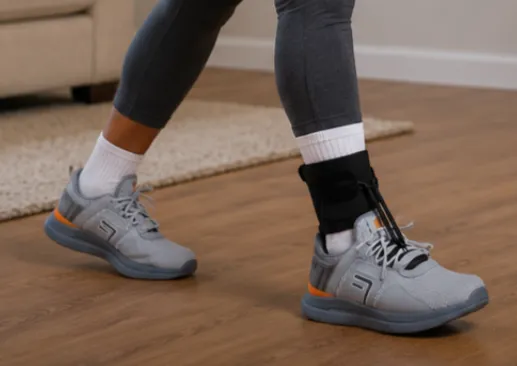
Foot drop after stroke can make walking difficult and increase the risk of falls. Learn the causes, symptoms, treatment options and how recovery is possible through rehabilitation
You know exactly what your brain wants your foot to do.
Lift.
Step.
Walk.
But your foot doesn't seem to get the message.
Instead…
✓ Your toes drag across the floor.
✓ You catch your foot on carpets.
✓ You trip more often.
✓ You may even hear people say you're "slapping" your foot as you walk.
This is called foot drop, and it is one of the most common movement problems after a stroke.
✦ ✦ ✦
The Good News
Many people improve significantly with rehabilitation and I am one of them.
There are several treatments that can make walking safer, easier and more confident.
Recovery doesn't happen overnight.
It happens through hundreds of small improvements.
One exercise.
One step.
One day at a time.
✦ ✦ ✦
What Is Foot Drop?
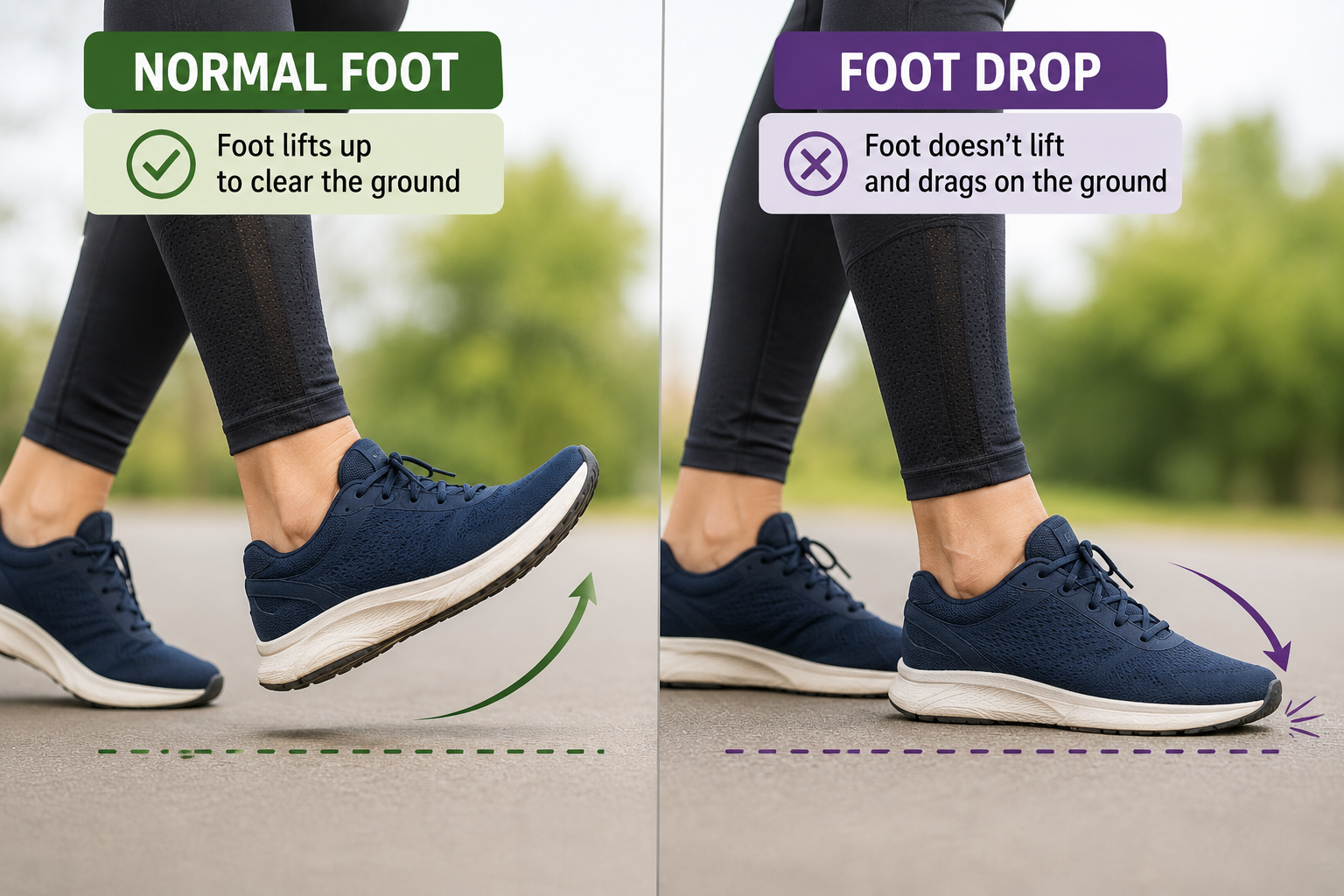
Foot drop is the inability or difficulty lifting the front part of your foot (your toes) towards your shin.
Normally, muscles at the front of your lower leg lift your foot every time you take a step.
After a stroke, these muscles may become weak because the signals travelling from the brain have been disrupted.
Although the muscles themselves may still be healthy, they are no longer receiving clear instructions.
As a result, your toes may drag across the ground while walking.
Walking becomes slower.
Less efficient.
And the risk of tripping or falling increases.
✦ ✦ ✦
Can a Stroke Cause Foot Drop?
Yes.
Stroke is one of the most common causes of foot drop.
The stroke doesn't damage your foot itself.
Instead, it interrupts the communication between your brain and the muscles responsible for lifting your foot.
Think of it like a telephone line.
Your brain knows exactly what it wants your foot to do…
…but the message doesn't always get through clearly.
The result is weakness, poor coordination and difficulty lifting the front of your foot during walking.
✦ ✦ ✦
What Causes Foot Drop After a Stroke?
Weakness
Spasticity
Poor motor control
Reduced sensation
✦ ✦ ✦
How Does Foot Drop Affect Walking?
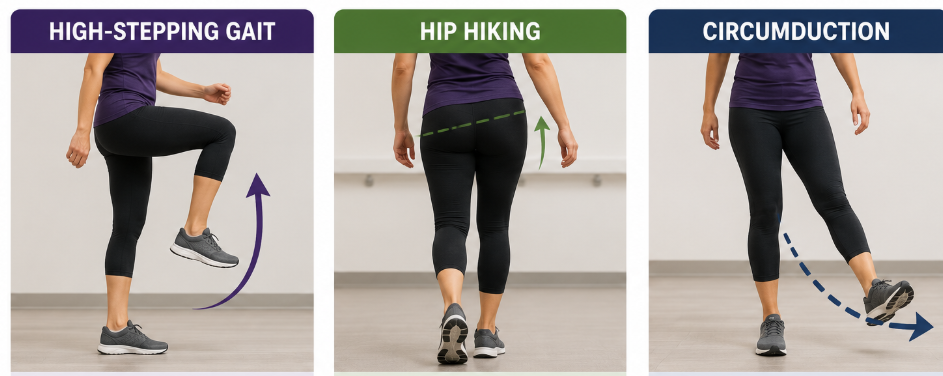
Because the foot doesn't lift normally, your body naturally develops compensatory movements to avoid tripping.
These movements help you keep walking…
…but they often come at a cost.
✦ ✦ ✦
High-Stepping Gait
Instead of lifting just your foot, you lift your entire knee much higher than normal to clear your toes.
Although this helps prevent tripping, it uses much more energy than a normal walking pattern.
✦ ✦ ✦
Hip Hiking
Rather than lifting your foot, you raise one side of your pelvis to help swing your leg forwards.
Over time, this can place extra strain on your hip and lower back.
✦ ✦ ✦
Circumduction
Instead of moving your leg straight ahead, it swings outwards in a semicircle before coming back in.
This often develops automatically as your body searches for another way to move safely.
✦ ✦ ✦
These movements are incredibly common after stroke.
They are your body's way of adapting.
However, because they are less efficient, they can increase fatigue and sometimes contribute to pain in the hip, knee or lower back.
✦ ✦ ✦
How Is Foot Drop Diagnosed?
A physiotherapist or rehabilitation specialist will usually assess:
✓ Muscle strength.
✓ Walking pattern.
✓ Balance.
✓ Muscle tone.
✓ Joint movement.
✓ Sensation.
✓ Functional mobility.
Simply watching you walk often provides valuable information about how your foot behaves during each step.
Sometimes additional assessments are carried out to determine whether weakness, spasticity or reduced sensation is having the greatest impact on your walking.
✦ ✦ ✦
Treatment Options
Most stroke survivors benefit from a combination of treatments rather than relying on just one.
The goal is not simply to lift the foot.
The goal is to improve safety, confidence and independence.
✦ ✦ ✦
Physiotherapy
Physiotherapy remains the cornerstone of foot drop rehabilitation.
Exercises may focus on:
✓ Strengthening the muscles that lift the foot.
✓ Improving balance.
✓ Stretching tight calf muscles.
✓ Walking practice.
✓ Functional movement training.
Every repetition gives your brain another opportunity to strengthen the pathways controlling movement.
Progress often comes from consistent practice, rather than difficult exercises.
✦ ✦ ✦
Ankle Foot Orthosis (AFO)
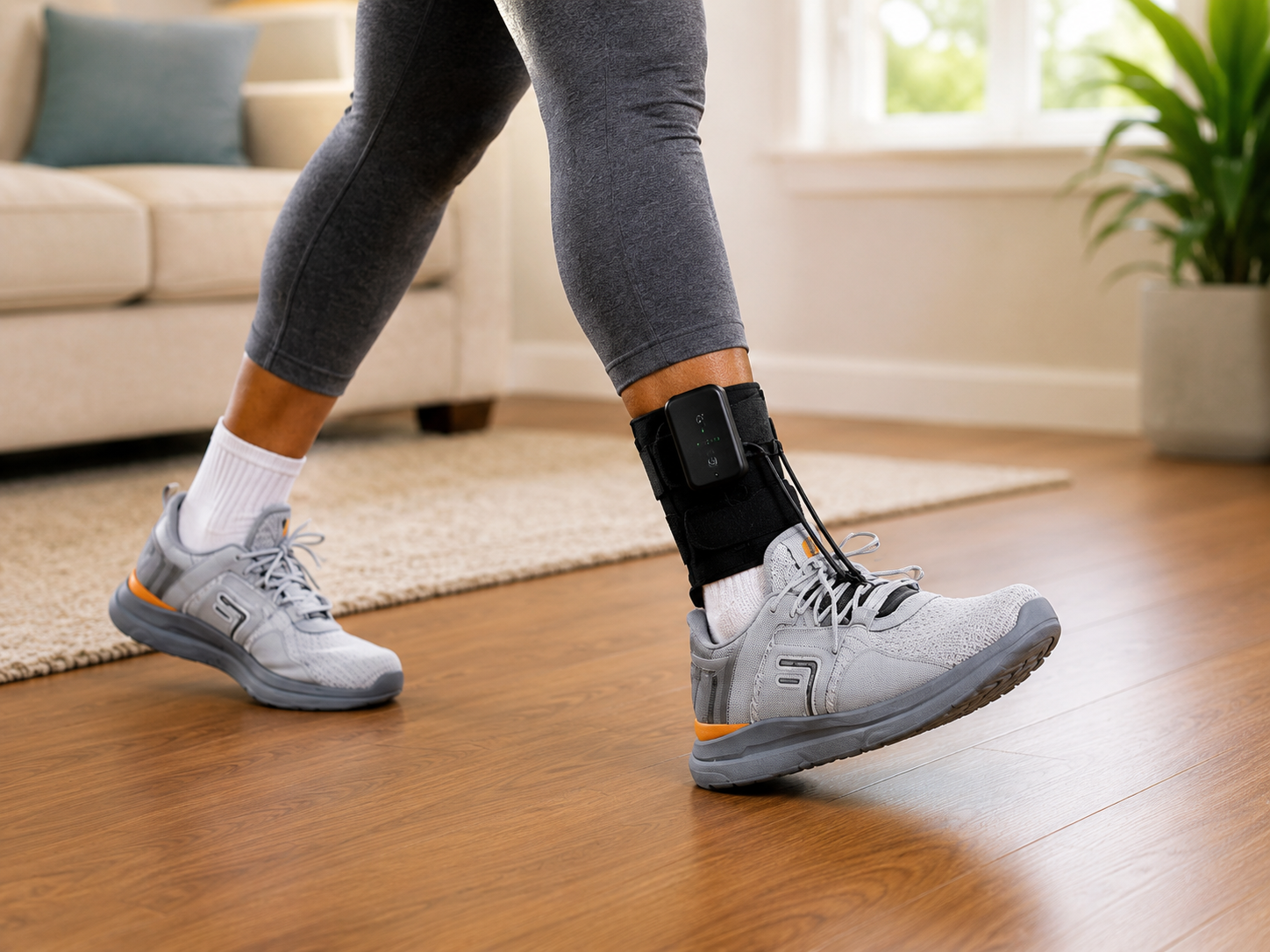
An Ankle Foot Orthosis (AFO) is a lightweight brace worn around the lower leg and foot.
It helps hold the foot in a better position during walking, making it easier to clear the ground.
An AFO may help:
✓ Lift the toes.
✓ Reduce trips.
✓ Improve walking efficiency.
✓ Increase confidence.
✓ Reduce the risk of falls.
Some people only need an AFO during the early stages of recovery, while others benefit from wearing one long term.
Both situations are completely normal.
✦ ✦ ✦
Functional Electrical Stimulation (FES)
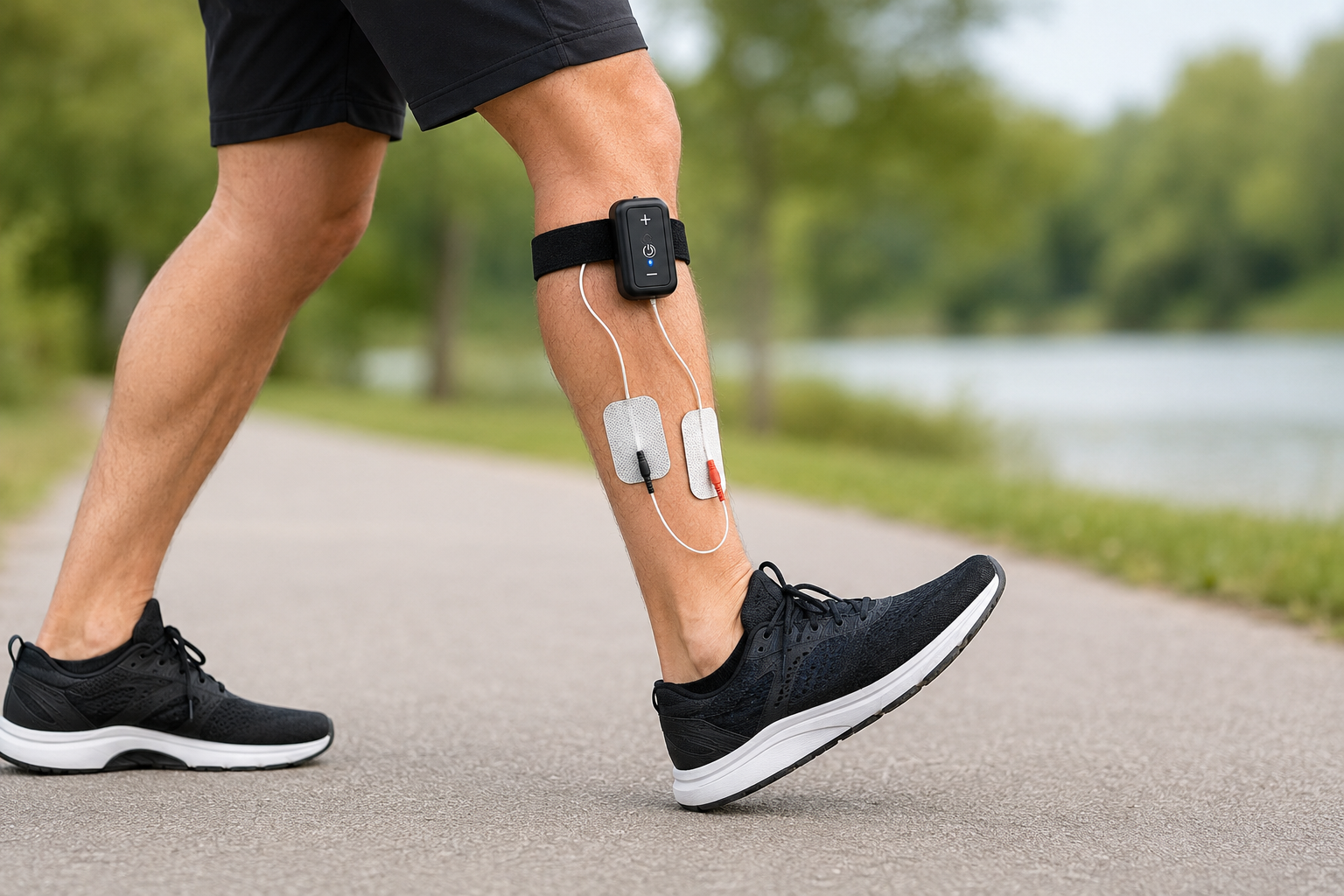
Functional Electrical Stimulation (FES) uses small electrical impulses to activate the muscles that lift the foot while you walk.
For suitable candidates, FES may:
✓ Improve walking speed.
✓ Reduce trips.
✓ Encourage a more natural walking pattern.
Your rehabilitation team can advise whether FES is appropriate for you.
✦ ✦ ✦
Stretching
Regular stretching helps reduce calf muscle tightness and maintain ankle movement.
This becomes particularly important if spasticity develops.
Maintaining flexibility can make walking more comfortable and may improve the effectiveness of other rehabilitation exercises.
✦ ✦ ✦
Home Exercise Programme
Recovery doesn't only happen during therapy sessions.
The greatest improvements usually come from what happens between appointments.
Daily home exercises reinforce what your brain is learning and help build stronger movement patterns over time.
Consistency is far more important than perfection.
Ten minutes every day is often more valuable than one long session each week.
✦ ✦ ✦
Practical Tips
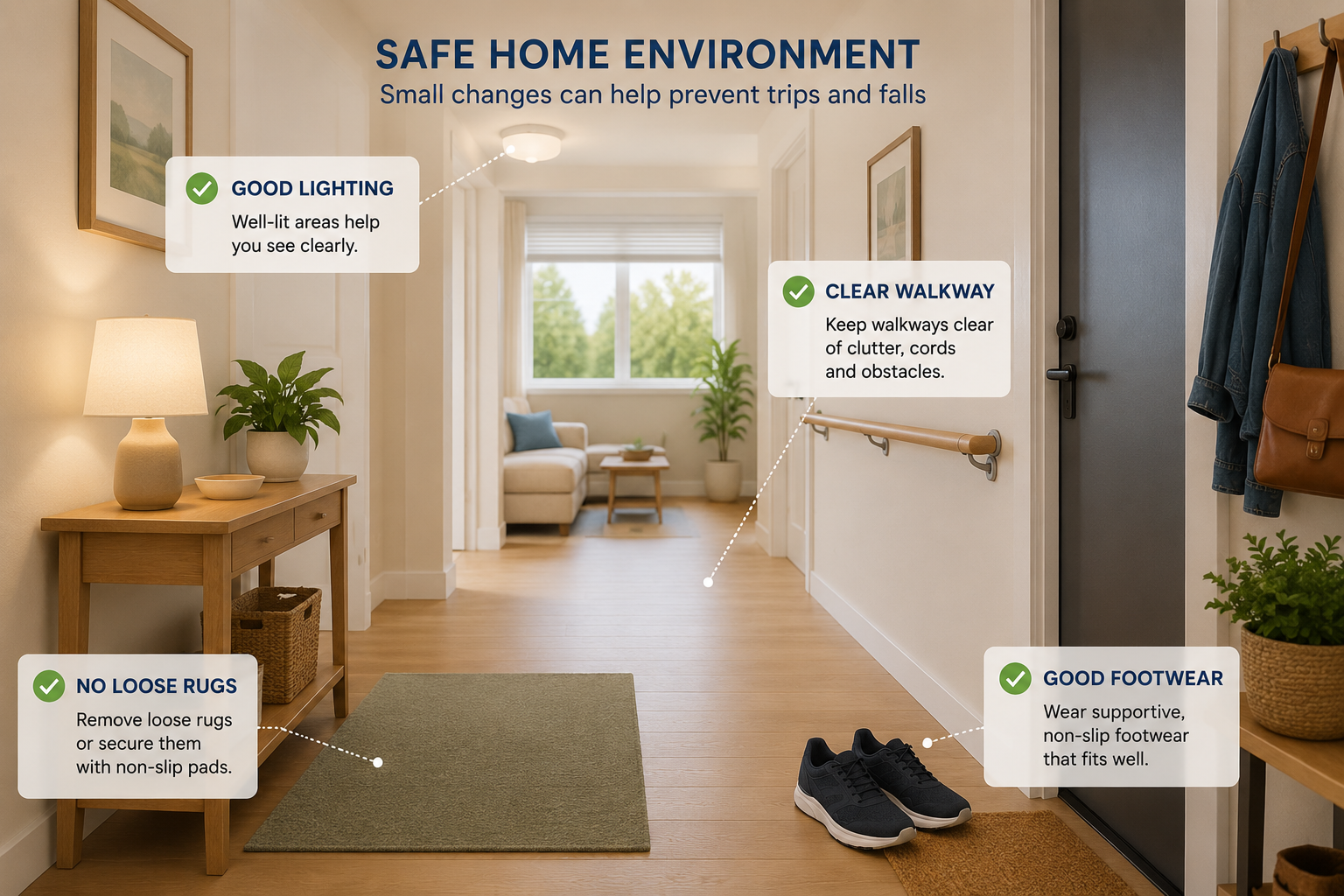
Small changes can make walking safer and more comfortable.
Wear Supportive Shoes
Choose supportive footwear that fits well and provides good stability.
Avoid loose slippers or worn shoes that increase your risk of tripping.
✦ ✦ ✦
Remove Trip Hazards
Keep walkways free from:
✓ Loose rugs.
✓ Electrical cables.
✓ Clutter.
✓ Small obstacles.
A safer home reduces the likelihood of falls.
✦ ✦ ✦
Slow Down
Many falls occur because people rush.
Taking slower, more controlled steps often improves both safety and confidence.
✦ ✦ ✦
Practise Every Day
Short, regular walking practice is usually more effective than occasional long sessions.
Recovery comes through repetition.
✦ ✦ ✦
Manage Fatigue
Foot drop often becomes more noticeable when you're tired.
If possible, plan your most demanding activities for the times of day when your energy levels are highest.
Listening to your body isn't giving up.
It's part of successful rehabilitation.
✦ ✦ ✦
When Should You Seek Medical Advice?
Speak with your healthcare professional if:
✓ Your walking suddenly becomes worse.
✓ You experience repeated falls.
✓ New weakness develops.
✓ Your AFO becomes uncomfortable.
✓ You develop foot or ankle pain.
✓ You notice increasing stiffness.
Prompt assessment allows treatment to be adjusted before problems become more serious.
✦ ✦ ✦
Frequently Asked Questions
Can foot drop recover after a stroke?
Yes.
Many people experience meaningful improvement with rehabilitation, including myself.
Recovery varies depending on the severity of the stroke, the level of weakness, the amount of rehabilitation and individual circumstances.
Even years after a stroke, further improvement may still be possible through neuroplasticity and continued practice.
✦ ✦ ✦
Is Walking Good for Foot Drop?
Yes.
Walking provides valuable practice for the brain and helps reinforce the movement patterns needed for everyday mobility.
However, walking should always be as safe as possible.
Your physiotherapist may recommend walking with an AFO, Functional Electrical Stimulation (FES) or another mobility aid while recovery continues.
✦ ✦ ✦
Will I Always Need an AFO?
Not necessarily.
Some people wear an Ankle Foot Orthosis (AFO) temporarily while strength and control improve.
Others benefit from wearing one long term to improve safety and confidence.
Using an AFO is not a sign that recovery has failed.
For many people, it allows them to walk further, more safely and with greater independence.
✦ ✦ ✦
Can Recovery Continue Years After a Stroke?
Yes.
The brain remains capable of adapting throughout life.
Many stroke survivors continue making meaningful improvements months and even years after their stroke.
Although recovery often slows over time, it does not necessarily stop.
Consistent practice continues to give the brain opportunities to strengthen existing pathways and develop new ones.
✦ ✦ ✦
Key Takeaways
✓ Foot drop is common after stroke.
✓ It happens because communication between the brain and muscles has been disrupted.
✓ Physiotherapy, AFOs and FES can all help improve walking.
✓ Daily practice supports neuroplasticity.
✓ Recovery often continues for months and years.
About the Author
Alisia Gayle is a stroke survivor who achieved 96% neurological recovery following an ischaemic stroke.
After years of rehabilitation, she now shares practical, evidence-informed resources to help stroke survivors, carers and families better understand recovery and rebuild their lives with confidence.
Alisia is also the author of Brain Damage: My Journey to 96% Recovery, where she shares her personal stroke recovery story and the lessons she learned throughout her rehabilitation.
✦ ✦ ✦
Medical Disclaimer
This article is intended for educational purposes only and should not replace professional medical advice, diagnosis or treatment.
Always seek advice from your doctor, physiotherapist or rehabilitation team regarding symptoms, concerns or changes in your condition.
Final Thoughts
Foot drop changes the way you walk.
But it doesn't have to define where you can go.
Every safe step you practise...
Every exercise you repeat...
Every small improvement...
Is another opportunity for your brain to learn.
Recovery rarely happens all at once.
It happens one step at a time.