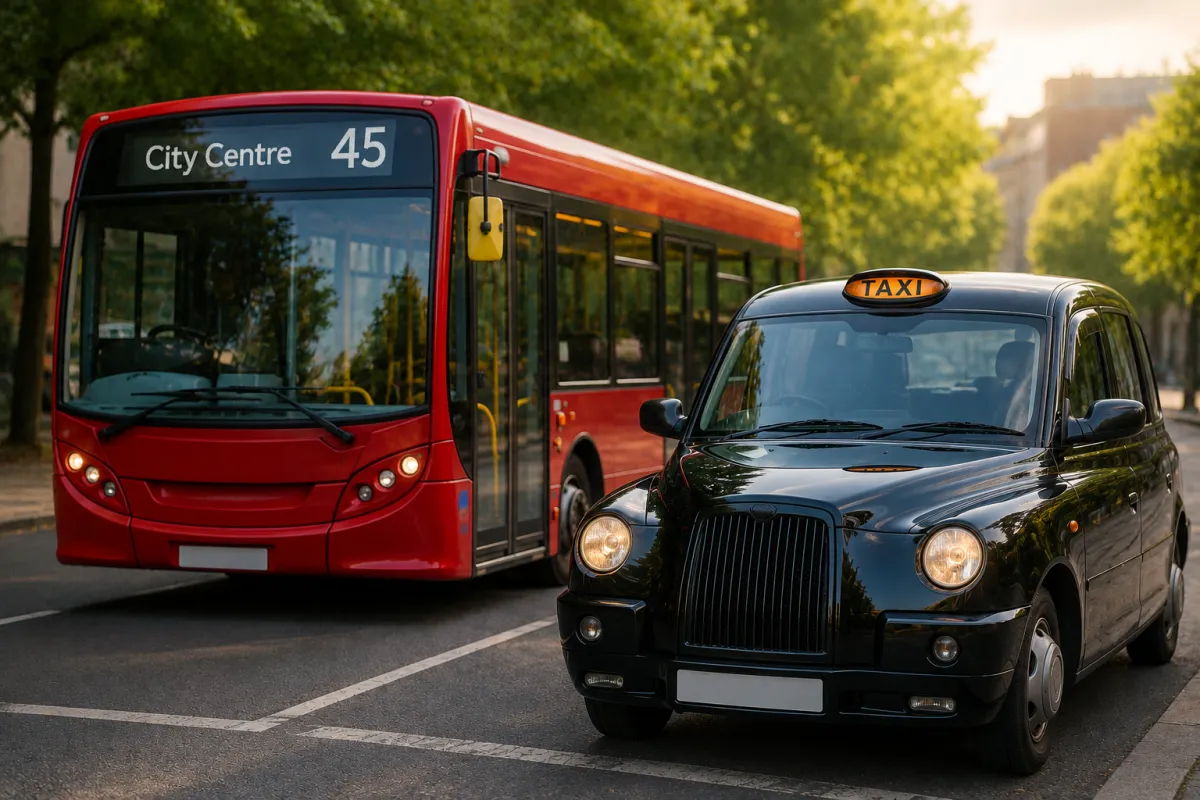
Using public transport after a stroke can be an important step towards rebuilding independence, but buses, trains and underground systems may feel completely different during recovery. Walking to stops, standing on moving vehicles, navigating crowded stations, processing announcements and managing fatigue can all create difficulties that were never an issue before. With preparation, pacing, appropriate assistance and gradual practice, many stroke survivors can become increasingly confident using public transport again.
After your stroke...
You may suddenly realise how much independence depends on getting from one place to another.
Before your stroke, catching a bus may have been automatic.
You checked the time.
Walked to the stop.
Got on.
Found a seat.
Got off.
Done.
A train journey may have required almost no thought.
But after a stroke...
The same journey can feel like an expedition.
You begin wondering...
"What if I cannot walk quickly enough?"
"What if the bus moves before I sit down?"
"What if there are no seats?"
"What if I fall?"
"What if I get confused at the station?"
"What if I miss my stop?"
"What if I become exhausted halfway through the journey?"
"What happens if nobody helps me?"
These are reasonable concerns.
Public transport requires far more physical and cognitive ability than many people realise.
But needing to approach it differently does not mean you have lost your independence permanently.
✦ ✦ ✦
The Good News
Public transport can become manageable again.
You may need to start differently than before.
Shorter journeys.
Quieter times.
Familiar routes.
More planning.
More time.
Perhaps assistance at first.
But each successful journey can help rebuild confidence.
You learn where you need extra time.
Which stations are easier.
How long you can comfortably travel.
Which situations trigger fatigue.
Eventually, what initially felt overwhelming may become another ordinary part of life again.
✦ ✦ ✦
Why Can Public Transport Be Difficult After Stroke?
Public transport combines several demands at once.
You may need to:
✓ Walk to a station or bus stop
✓ Stand and wait
✓ Climb steps
✓ Maintain your balance
✓ Read signs
✓ Listen to announcements
✓ Remember your route
✓ Process unfamiliar information
✓ Navigate crowds
✓ Carry belongings
✓ React quickly
✓ Manage unexpected changes
Before stroke, your brain may have coordinated these things without conscious effort.
After stroke, each part can demand more attention.
That can make even a short journey surprisingly exhausting.
✦ ✦ ✦
Fatigue Can Make a Simple Journey Feel Huge
Post-stroke fatigue can affect both physical and mental stamina.
You might leave home feeling fine.
Walk ten minutes to the station.
Wait on the platform.
Find your train.
Travel twenty minutes.
Walk to your destination.
Then suddenly realise...
You are exhausted.
And you still have to get home.
This is why you should consider the whole journey, not simply the time spent on the bus or train.
Your energy is also being used by:
Walking.
Standing.
Finding platforms.
Concentrating.
Noise.
Crowds.
Planning.
Waiting.
Unexpected delays.
If a journey drains most of your energy, you may need to shorten it, build in rest or gradually increase your travel tolerance.
✦ ✦ ✦
Start With Familiar Journeys
Your first independent journey after stroke is probably not the time to explore a complicated transport network.
Choose somewhere familiar.
Perhaps:
✓ Your local shops
✓ A nearby medical appointment
✓ A friend's home
✓ A route you regularly used before your stroke
Familiar journeys reduce uncertainty.
You may already know:
Which stop you need.
How long the journey takes.
Where to change.
What the station looks like.
Where the exits are.
This leaves more mental energy available for managing your balance, fatigue and surroundings.
✦ ✦ ✦
Travel at Quieter Times Initially
Rush hour can be difficult for anyone.
After stroke, it may be overwhelming.
Busy periods can involve:
✓ Packed platforms
✓ Crowded carriages
✓ Limited seating
✓ People moving quickly
✓ Noise
✓ Queues
✓ Less personal space
✓ Greater pressure to move quickly
If possible, begin travelling outside peak times.
A quiet train at 11am may feel completely different from the same journey at 8am.
There is no benefit in choosing the hardest possible conditions simply to prove you can manage them.
Build your capacity first.
✦ ✦ ✦
Balance on Buses Can Be Difficult
Buses are particularly challenging if your balance has been affected.
They:
Accelerate.
Brake.
Turn.
Move unexpectedly.
And drivers may begin moving before you are seated.
If you need extra time, do not feel pressured into rushing.
Use handrails.
Sit down as soon as possible.
If appropriate, tell the driver that you need a moment to sit before they move.
Try to avoid standing on a moving bus if your balance is unreliable.
A fall could seriously affect your recovery.
Safety matters more than appearing independent.
✦ ✦ ✦
What If There Are No Seats?
Standing for long periods can be difficult after stroke.
You may have:
✓ Leg weakness
✓ Poor balance
✓ Fatigue
✓ Dizziness
✓ Reduced endurance
✓ Pain
The difficulty is that your disability may not be obvious.
People may look at you and assume you are perfectly able to stand.
If you need a seat, ask.
You do not have to explain your entire medical history.
A simple:
"Would you mind if I sat down? I have a medical condition."
May be enough.
Priority seating exists for people who need it.
Invisible disability is still disability.
✦ ✦ ✦
Using a Walking Stick or Mobility Aid
If you currently use:
✓ A walking stick
✓ Crutches
✓ A walking frame
✓ Another mobility aid
Plan how you will manage it during travel.
Think about:
Getting onto the vehicle.
Finding somewhere to sit.
Storing or holding the aid safely.
Standing again before leaving.
Navigating crowded spaces.
Do not stop using a mobility aid simply because you feel self-conscious on public transport.
If it makes the journey safer, use it.
Independence does not mean refusing equipment.
It means using whatever allows you to function safely.
✦ ✦ ✦
Stations Can Be More Exhausting Than the Train
Large stations can involve far more walking than expected.
You may need to navigate:
Long corridors.
Stairs.
Escalators.
Bridges.
Platforms.
Ticket barriers.
Interchanges.
A five-minute train journey might involve twenty minutes of walking.
Before travelling, consider checking:
✓ Whether lifts are available
✓ Whether the station is step-free
✓ How far platforms are from entrances
✓ Whether you need to change platforms
✓ Whether assistance is available
A route that looks simple on a map may be physically demanding in reality.
✦ ✦ ✦
Stairs and Escalators After Stroke
Stairs may remain difficult if you have:
✓ Leg weakness
✓ Foot drop
✓ Balance problems
✓ Reduced coordination
✓ Fear of falling
Escalators can introduce another challenge because you must step onto a moving surface and then step off at the correct time.
There is no rule saying you must use them.
If a lift is available and safer, use the lift.
If stairs are manageable but tiring, take your time.
Do not allow people rushing behind you to dictate your speed.
Your safety comes first.
✦ ✦ ✦
Crowds Can Cause Visual and Cognitive Overload
Some stroke survivors discover that busy environments are more difficult than expected.
A crowded station contains enormous amounts of information.
People moving in different directions.
Signs.
Announcements.
Advertising screens.
Lights.
Trains arriving.
Barriers.
Luggage.
Noise.
Your brain has to decide what deserves attention.
If your visual processing, attention or concentration has been affected, this can become overwhelming.
You might experience:
✓ Headaches
✓ Dizziness
✓ Confusion
✓ Anxiety
✓ Irritability
✓ Extreme fatigue
✓ Difficulty finding your way
If this happens, reduce the complexity where possible.
Travel at quieter times.
Pause somewhere safe.
Give yourself longer.
Do not force yourself to move at everyone else's speed.
✦ ✦ ✦
Memory Problems Can Make Travel Stressful
After stroke, you may worry about forgetting:
Which train to take.
Where to change.
Which stop comes next.
What platform you need.
Where you are supposed to get off.
Do not rely entirely on memory.
Use external support.
For example:
✓ Save the journey on your phone
✓ Take screenshots
✓ Write down the stops
✓ Set an alarm before your destination
✓ Use journey-planning apps
✓ Keep important addresses written down
✓ Ask staff for confirmation
This is not a sign that you are incapable of travelling.
It is sensible preparation.
Plenty of experienced travellers use exactly the same tools.
✦ ✦ ✦
What If You Have Aphasia?
Aphasia can make public transport more intimidating.
You may know exactly where you need to go but struggle to ask a question.
You might find it difficult to:
✓ Explain your destination
✓ Understand a rapid announcement
✓ Ask for assistance
✓ Respond when staff speak quickly
✓ Read complicated information
Preparation can help.
Consider keeping important information written on your phone or on a card.
For example:
Your destination.
Your route.
An emergency contact.
A short explanation that you have communication difficulties following a stroke.
If someone does not understand you immediately, that does not mean you should stop trying to travel independently.
Communication may simply need to happen differently.
✦ ✦ ✦
What If You Miss Your Stop?
Missing a stop can feel frightening after stroke because you may interpret it as evidence that your memory or concentration has failed.
But people miss stops every day.
The important thing is having a plan.
If you miss your stop:
Do not panic.
Get off safely at the next appropriate stop.
Check your journey.
Ask staff if necessary.
Then travel back.
You might also reduce the chance of it happening by:
✓ Setting an alarm
✓ Following the route on your phone
✓ Sitting where you can see information displays
✓ Asking someone to alert you
One mistake does not prove you cannot travel independently.
✦ ✦ ✦
Allow Much More Time Than You Think You Need
Rushing is one of the easiest ways to make travelling harder.
If your train leaves in five minutes and you still need to:
Walk through the station.
Find the platform.
Use a lift.
Navigate barriers.
You may become stressed and unsafe.
Leave earlier.
Build in extra time.
If you arrive twenty minutes early...
Good.
You can sit down.
Rest.
Check your platform.
Gather yourself.
There is no prize for arriving at the train just as the doors close.
✦ ✦ ✦
Carry Less Where Possible
Heavy bags can affect balance and fatigue.
Even carrying something that once felt easy may now change:
✓ Your walking pattern
✓ Your posture
✓ Your balance
✓ Your endurance
Consider:
✓ A lightweight backpack
✓ A small wheeled bag
✓ Carrying only essentials
✓ Having heavier items delivered
✓ Asking someone else to carry luggage on longer journeys
Saving energy on unnecessary physical work means more energy remains available for the journey itself.
✦ ✦ ✦
Plan Somewhere to Sit
Do not wait until you are completely exhausted before resting.
If your journey involves several stages, identify opportunities to sit.
Perhaps:
At the station.
On the platform.
In a café.
At your destination.
Think of rest as part of the journey rather than something you are forced to do when things go wrong.
Pacing works better when it is planned.
✦ ✦ ✦
Travelling Alone for the First Time
Your first solo journey may feel like a significant milestone.
You may have already travelled several times with:
A partner.
Friend.
Carer.
Family member.
Then comes the first journey alone.
You may feel anxious before leaving.
That does not mean you are not ready.
If you have already demonstrated that you can manage the route safely, try gradually reducing support.
Perhaps begin with:
A short familiar journey.
During daylight.
Outside rush hour.
To somewhere where another person will meet you.
Each successful journey builds evidence.
"I got there."
"I handled the station."
"I found the correct train."
"I got home."
Confidence grows from these experiences.
✦ ✦ ✦
Public Transport Can Help Rebuild Independence
Losing the ability to drive after stroke can feel particularly restrictive.
You may suddenly rely on other people for:
Medical appointments.
Shopping.
Socialising.
Work.
Family activities.
Public transport can offer another route back to independence.
That may be especially important while you are temporarily unable to drive or if you ultimately decide not to return to driving.
Being able to get somewhere without arranging a lift can change how independent you feel.
It gives you more control over your own time.
✦ ✦ ✦
What If Public Transport Makes You Anxious?
Anxiety can appear before the journey even begins.
You may imagine:
Falling.
Getting lost.
Having another stroke.
Being stranded.
Not finding a toilet.
Becoming exhausted.
Nobody helping.
These fears can cause you to avoid travelling.
But complete avoidance can make the journey feel increasingly intimidating.
If you are medically safe to travel, gradual exposure may help.
Start with one stop.
Then two.
A familiar station.
A short train ride.
A journey with someone.
Then perhaps the same journey alone.
Your goal is not to eliminate every nervous feeling before travelling.
It is to build enough confidence to travel safely despite some uncertainty.
✦ ✦ ✦
What If You Suddenly Become Exhausted?
Have a backup plan.
Before leaving, consider:
"What will I do if I cannot manage the journey home?"
Options might include:
✓ Calling someone
✓ Taking a taxi
✓ Stopping somewhere to rest
✓ Changing to a simpler route
✓ Ending the journey early
Having a backup does not mean you expect to fail.
It reduces anxiety because you know you are not trapped.
If severe fatigue regularly leaves you unable to complete journeys safely, discuss this with your rehabilitation or healthcare team.
You may need to build your stamina more gradually.
✦ ✦ ✦
Accessible Travel Assistance
Depending on where you live and which transport network you use, assistance may be available.
This can include help with:
✓ Navigating stations
✓ Boarding trains
✓ Using ramps
✓ Managing luggage
✓ Changing services
✓ Reaching the correct platform
Do not automatically assume these services are only for people with obvious physical disabilities.
Stroke effects can involve mobility, vision, cognition and communication.
If you need assistance, investigate what is available before travelling.
Some services need to be arranged in advance.
Others may be available on the day.
Check directly with the transport provider because arrangements differ between networks and can change.
✦ ✦ ✦
Build Up to Longer Journeys
A three-hour train journey is very different from taking a bus ten minutes down the road.
Longer journeys may involve:
✓ More sitting
✓ More walking
✓ Transfers
✓ Luggage
✓ Toilets
✓ Food and medication
✓ Greater fatigue
✓ Delays
Build your experience gradually.
You might progress from:
A ten-minute local journey.
To thirty minutes.
To an hour.
Then longer journeys.
Learn how your body responds.
Knowing your current limits allows you to plan rather than guess.
✦ ✦ ✦
What About Travelling for Work?
Commuting can consume a surprising amount of energy.
You may technically be capable of working for several hours.
But if getting to work requires:
A twenty-minute walk.
Two trains.
A busy interchange.
Another walk.
You may arrive already fatigued.
This is particularly important when planning a return to work.
Ask yourself:
"Can I manage the commute and the working day?"
Not simply:
"Can I do my job?"
Possible adjustments might include:
✓ Working from home some days
✓ Travelling outside peak times
✓ Shorter working days
✓ Reduced office attendance
✓ A phased return
The commute should be included when assessing whether work is currently sustainable.
✦ ✦ ✦
Do Not Let Embarrassment Make the Journey Harder
You might feel embarrassed about:
Walking slowly.
Using a stick.
Asking for a seat.
Taking a lift instead of the stairs.
Needing assistance.
Stopping to rest.
Forget the embarrassment.
Nobody on the platform is responsible for protecting your recovery.
You are.
If moving more slowly keeps you safe, move slowly.
If sitting prevents a fall, sit.
If asking for assistance gets you safely onto the train, ask.
Independence is not pretending you do not need anything.
It is learning what allows you to manage your life successfully.
✦ ✦ ✦
My Perspective
Public transport is easy to underestimate.
Before a stroke, you may think:
"It's only a train."
"It's only a bus."
But there is nothing simple about it when your brain and body are still recovering.
You have to navigate.
Walk.
Balance.
Process information.
Remember.
React.
Manage crowds.
Protect your energy.
Then repeat the whole process to come home.
That can be a huge neurological and physical workload.
So if your first journey feels exhausting...
That does not automatically mean you cannot use public transport.
It may simply mean you need to approach it differently.
Start small.
Give yourself time.
Learn your limits.
Use assistance.
Sit down.
Plan.
And gradually build.
Every journey you successfully complete can return another piece of independence that the stroke temporarily took away.
✦ ✦ ✦
When Should You Seek Additional Advice?
Speak with your healthcare or rehabilitation team if public transport is difficult because of significant:
✓ Balance problems
✓ Falls
✓ Dizziness
✓ Severe fatigue
✓ Visual problems
✓ Cognitive difficulties
✓ Communication problems
✓ Mobility limitations
✓ Anxiety
An occupational therapist may be particularly useful in helping you assess practical everyday activities and identify strategies for becoming more independent.
If you experience sudden new stroke-like symptoms while travelling, seek emergency medical assistance rather than assuming the symptoms are simply fatigue or anxiety.
✦ ✦ ✦
Frequently Asked Questions
Is It Normal to Struggle With Public Transport After a Stroke?
Yes.
Public transport requires physical stamina, balance, concentration, memory and the ability to process busy environments.
These abilities may all be affected after stroke.
Should I Travel Alone?
This depends on your current abilities.
You may initially benefit from travelling with someone before attempting familiar journeys independently.
What If I Cannot Stand on a Bus?
Try to sit whenever possible.
Use priority seating if you need it and ask for a seat if necessary.
Why Do Train Stations Make Me So Tired?
Large stations can involve significant walking, noise, crowds, signs, stairs and constant visual processing.
The mental workload can contribute significantly to post-stroke fatigue.
What If I Get Lost?
Carry your route on your phone or in writing.
Ask staff for help.
Start with familiar journeys and allow extra time.
Can I Ask for Assistance Even if My Disability Is Invisible?
Yes.
Needing assistance is not determined by whether strangers can immediately see your disability.
Check what assistance your transport provider offers.
Will Public Transport Become Easier?
For many people, it can.
As recovery progresses and you become familiar with your limits and strategies, journeys may require less conscious effort.
✦ ✦ ✦
Key Takeaways
✓ Public transport can be physically and mentally demanding after stroke.
✓ Fatigue may come from the whole journey, not simply the time spent travelling.
✓ Begin with short, familiar routes.
✓ Travel outside busy periods where possible.
✓ Use seats, lifts, handrails and mobility aids when needed.
✓ Do not allow embarrassment to make your journey less safe.
✓ Memory aids and journey-planning apps can help.
✓ Large stations may create cognitive and visual overload.
✓ Allow significantly more time than you used to.
✓ Accessible travel assistance may be available.
✓ Have a backup plan in case fatigue becomes overwhelming.
✓ Build gradually towards longer journeys.
✓ Consider the demands of your commute when returning to work.
✓ Successful journeys can be an important part of rebuilding independence after stroke.
✦ ✦ ✦
Related Articles
Continue learning about independence and travel after stroke:
Anxiety About Driving After Stroke
Driving After a Stroke
Loss of Independence After Stroke
Travelling After a Stroke
Walking Outside After Stroke
Fatigue After Stroke
Balance Problems After a Stroke
Fear of Falling After Stroke
Returning to Work After a Stroke
Confidence After Stroke
✦ ✦ ✦
About the Author
Alisia Gayle is a stroke survivor who achieved 96% neurological recovery following an ischaemic stroke.
After years of rehabilitation, she now shares practical, evidence-informed resources to help stroke survivors, carers and families better understand recovery and rebuild their lives with confidence.
Alisia is also the author of Brain Damage: My Journey to 96% Recovery, where she shares her personal stroke recovery story and the lessons she learned throughout her rehabilitation.
✦ ✦ ✦
Medical Disclaimer
This article is intended for educational purposes only and should not replace professional medical advice, diagnosis or rehabilitation guidance.
Every stroke and every recovery is different.
Always seek advice from your doctor, stroke rehabilitation team, occupational therapist or another appropriate healthcare professional if mobility, fatigue, balance, vision, cognition or other symptoms are affecting your ability to travel safely.
Public transport accessibility arrangements vary between locations and providers. Check directly with your transport provider for current assistance and accessibility information.
If you develop sudden symptoms suggesting another stroke, seek emergency medical assistance immediately.
✦ ✦ ✦
Final Thoughts
Public transport after a stroke...
May no longer feel simple.
A bus can test your balance.
A station can test your stamina.
A crowded train can overwhelm your brain.
A journey you once completed without thinking may suddenly require planning from beginning to end.
That can be frustrating.
But do not underestimate what each successful journey represents.
You walked to the stop.
You found the right platform.
You got on.
You managed the crowds.
You found your way.
You got home.
That is independence returning.
Perhaps slowly.
Perhaps differently.
But returning nonetheless.
Give yourself more time.
Travel when it is quieter.
Sit when you need to.
Ask for help.
Use the lift.
Carry less.
Plan your route.
Rest before you are exhausted.
And build one journey at a time.
Because recovery is not only about what happens in a clinic.
Sometimes recovery looks like standing at a bus stop...
Getting onto a train...
And realising that the world is becoming accessible to you again.