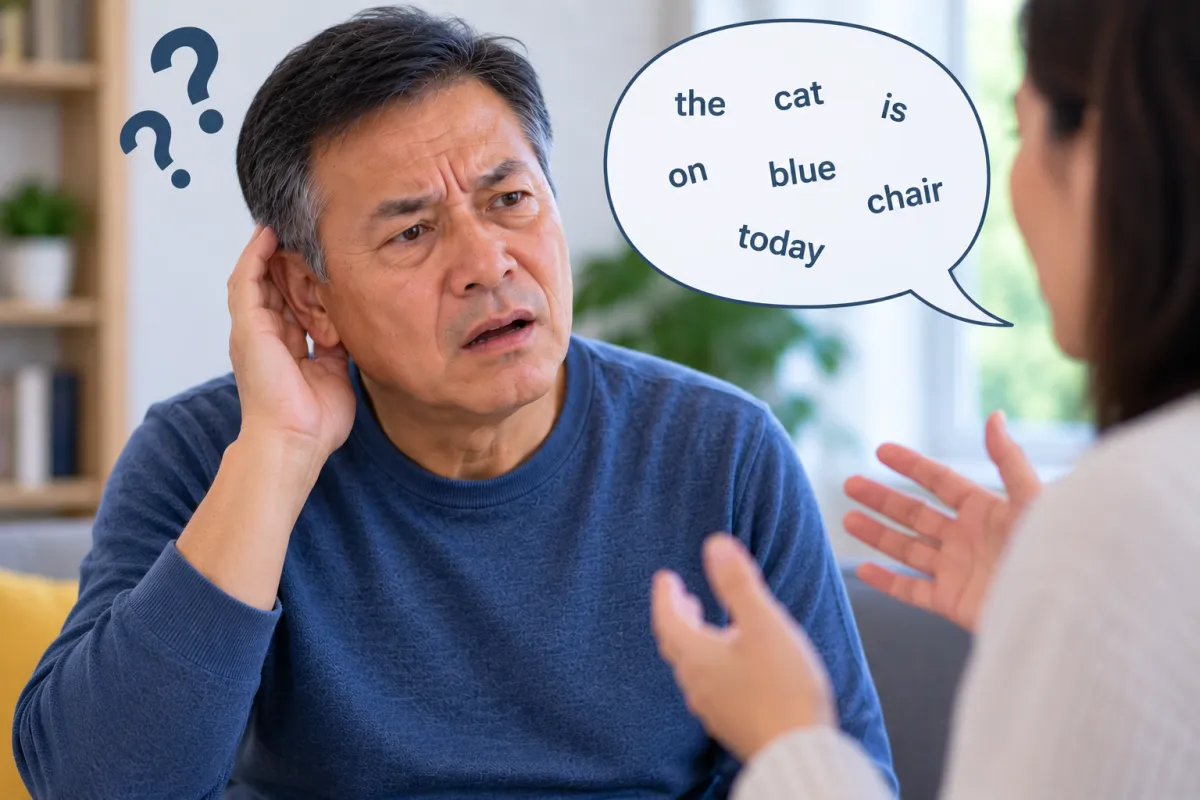
Receptive aphasia can be one of the most confusing consequences of a stroke. A person may hear someone speaking, but the words no longer seem to make sense. Conversations can become overwhelming, frustrating and frightening for both the stroke survivor and their family. Learn why receptive aphasia happens after a stroke, what symptoms to expect and whether recovery is possible.
After your stroke...
People are talking to you.
You can hear their voices.
But something isn't right.
The words seem jumbled.
Perhaps they sound unfamiliar.
Or maybe you understand parts of the conversation but miss important details.
You begin wondering...
"Why can't I understand people anymore?"
Or your family may wonder...
"Why do they seem confused by what I'm saying?"
The good news is...
Receptive aphasia often improves over time, and many people continue making progress for months and even years after their stroke.
✦ ✦ ✦
The Good News
The brain has an incredible ability to adapt.
Although understanding language may feel impossible at first, recovery is often possible.
Many people gradually improve their ability to:
✓ Understand speech.
✓ Follow conversations.
✓ Read.
✓ Process information.
✓ Communicate with others.
Progress is often slow, but meaningful improvements can continue long after the initial stroke.
✦ ✦ ✦
What Is Receptive Aphasia?
Receptive aphasia is a language disorder that affects a person's ability to understand spoken and sometimes written language.
It is sometimes called Wernicke's aphasia.
The problem is not with hearing.
The ears work normally.
Instead, the stroke has affected the brain's ability to process and interpret language.
✦ ✦ ✦
What Causes Receptive Aphasia?
Receptive aphasia usually occurs when a stroke damages language areas in the left side of the brain, particularly areas around the temporal lobe.
This damage disrupts the brain's ability to:
✓ Understand words.
✓ Attach meaning to language.
✓ Process complex sentences.
✓ Interpret written information.
The severity depends on the size and location of the stroke.
✦ ✦ ✦
What Does Receptive Aphasia Feel Like?
People often describe it as:
✓ Hearing words but not understanding them.
✓ Feeling as though everyone is speaking a foreign language.
✓ Understanding some words but missing others.
✓ Becoming overwhelmed in busy conversations.
✓ Feeling confused or mentally exhausted.
For many people, it can feel frightening and isolating.
✦ ✦ ✦
Common Symptoms of Receptive Aphasia
Symptoms may include:
✓ Difficulty understanding spoken language.
✓ Difficulty following instructions.
✓ Problems understanding long conversations.
✓ Difficulty reading.
✓ Responding in ways that do not match the conversation.
✓ Saying words that do not make sense.
✓ Becoming frustrated during communication.
Symptoms vary considerably from person to person.
✦ ✦ ✦
Why Might Speech Still Sound Fluent?
One of the confusing aspects of receptive aphasia is that some people continue to speak fluently.
However, speech may contain:
✓ Incorrect words.
✓ Made-up words.
✓ Sentences that do not make sense.
✓ Responses unrelated to the question.
This happens because understanding and monitoring language have both been affected.
✦ ✦ ✦
Can Someone With Receptive Aphasia Realise They Have It?
Sometimes.
Some people are aware that they are struggling.
Others may have reduced awareness of their communication difficulties.
This can occasionally lead to frustration or misunderstandings with family members.
✦ ✦ ✦
Reading Difficulties
Many people with receptive aphasia also experience problems understanding written information.
You may notice:
✓ Difficulty reading books.
✓ Difficulty understanding text messages.
✓ Problems following written instructions.
✓ Feeling overwhelmed by large amounts of text.
Reading recovery often improves alongside spoken language recovery.
✦ ✦ ✦
Emotional Impact
Receptive aphasia can have a significant emotional impact.
Many people experience:
✓ Frustration.
✓ Anxiety.
✓ Isolation.
✓ Embarrassment.
✓ Loss of confidence.
Family members may also feel distressed because communication suddenly becomes much more difficult.
These reactions are completely understandable.
✦ ✦ ✦
Can Receptive Aphasia Improve?
Yes.
Many people make meaningful improvements.
Recovery depends on:
✓ The size and location of the stroke.
✓ Access to speech and language therapy.
✓ Opportunities for communication practice.
✓ General health.
✓ Family support.
The greatest improvements often occur during the first few months, but recovery can continue for years.
✦ ✦ ✦
What Can Help Recovery?
Speech and Language Therapy
Speech and language therapy is one of the most important treatments.
Therapy may focus on:
✓ Improving understanding.
✓ Word comprehension.
✓ Reading skills.
✓ Communication strategies.
Practising Communication
Regular exposure to language helps encourage neuroplasticity.
Reducing Distractions
Understanding often becomes easier in quieter environments.
Using Visual Supports
Pictures, gestures and written keywords can improve understanding.
Family Involvement
Supportive communication from family members often plays a vital role.
✦ ✦ ✦
How Family Members Can Help
Helpful strategies include:
✓ Speak slowly.
✓ Use short sentences.
✓ Give one instruction at a time.
✓ Reduce background noise.
✓ Use gestures and facial expressions.
✓ Check understanding.
✓ Repeat information when necessary.
✓ Be patient.
Remember...
The person is not ignoring you.
Their brain is struggling to process language.
✦ ✦ ✦
Things to Avoid
Try not to:
✗ Raise your voice.
✗ Speak too quickly.
✗ Give multiple instructions at once.
✗ Finish every sentence for them.
✗ Become visibly frustrated.
Communication difficulties are symptoms of the stroke, not a lack of effort.
✦ ✦ ✦
Will They Ever Understand Normally Again?
Recovery varies considerably.
Some people recover much of their understanding.
Others continue to experience long-term difficulties.
However, many people develop effective communication strategies and continue to lead meaningful lives.
Never assume that recovery has stopped too early.
✦ ✦ ✦
When Should You Seek Medical Advice?
Arrange an appointment with your healthcare professional if:
✓ Communication difficulties are worsening.
✓ You are becoming increasingly withdrawn.
✓ Mood problems develop.
✓ Reading difficulties are significantly affecting daily life.
Seek urgent medical attention if language problems suddenly worsen, as this may indicate another stroke.
✦ ✦ ✦
My Perspective
After a stroke...
Not understanding language can feel incredibly frightening.
Imagine living in a world where conversations suddenly become confusing.
Where words no longer carry the meaning they once did.
It's exhausting.
Frustrating.
And often deeply isolating.
But receptive aphasia does not mean recovery is impossible.
The brain can continue adapting and healing for far longer than many people realise.
Small improvements can gradually become meaningful changes.
✦ ✦ ✦
Frequently Asked Questions
Is receptive aphasia the same as hearing loss?
No.
Hearing is usually normal.
The difficulty lies in the brain's ability to understand language.
✦ ✦ ✦
Why does everyone sound confusing?
Because the stroke has affected language processing areas of the brain.
Words may no longer be interpreted normally.
✦ ✦ ✦
Can receptive aphasia improve?
Yes.
Many people continue making improvements for months and years.
✦ ✦ ✦
Will speech therapy help?
For many people, yes.
Speech and language therapy often plays a major role in recovery.
✦ ✦ ✦
Why do busy environments make it worse?
Background noise increases the amount of information the brain must process, making understanding much more difficult.
✦ ✦ ✦
Key Takeaways
✓ Receptive aphasia affects understanding of spoken and sometimes written language.
✓ Hearing is usually normal.
✓ Conversations may feel confusing or overwhelming.
✓ Reading difficulties commonly occur alongside receptive aphasia.
✓ Speech and language therapy can help improve communication.
✓ Recovery may continue for months and years after stroke.
✦ ✦ ✦
Related Articles
Continue learning about communication difficulties after stroke with these helpful guides:
Severe Aphasia After a Stroke – Learn about more significant communication difficulties and recovery.
Expressive Aphasia After a Stroke – Understand why speaking becomes difficult despite understanding language.
How Family Can Communicate With Someone Who Has Aphasia – Practical communication strategies for carers.
Reading Problems After a Stroke – Learn why reading may become difficult after brain injury.
Writing Problems (Agraphia) After a Stroke – Discover why writing ability can change after stroke.
✦ ✦ ✦
Final Thoughts
After a stroke...
Receptive aphasia can make the world feel confusing.
Conversations that once felt effortless may suddenly become exhausting.
But remember...
The brain is remarkably adaptable.
Understanding can improve.
Communication can improve.
And people often continue making progress long after the stroke itself.
Be patient.
Celebrate small improvements.
And never underestimate the power of support, repetition and time in helping the brain recover.