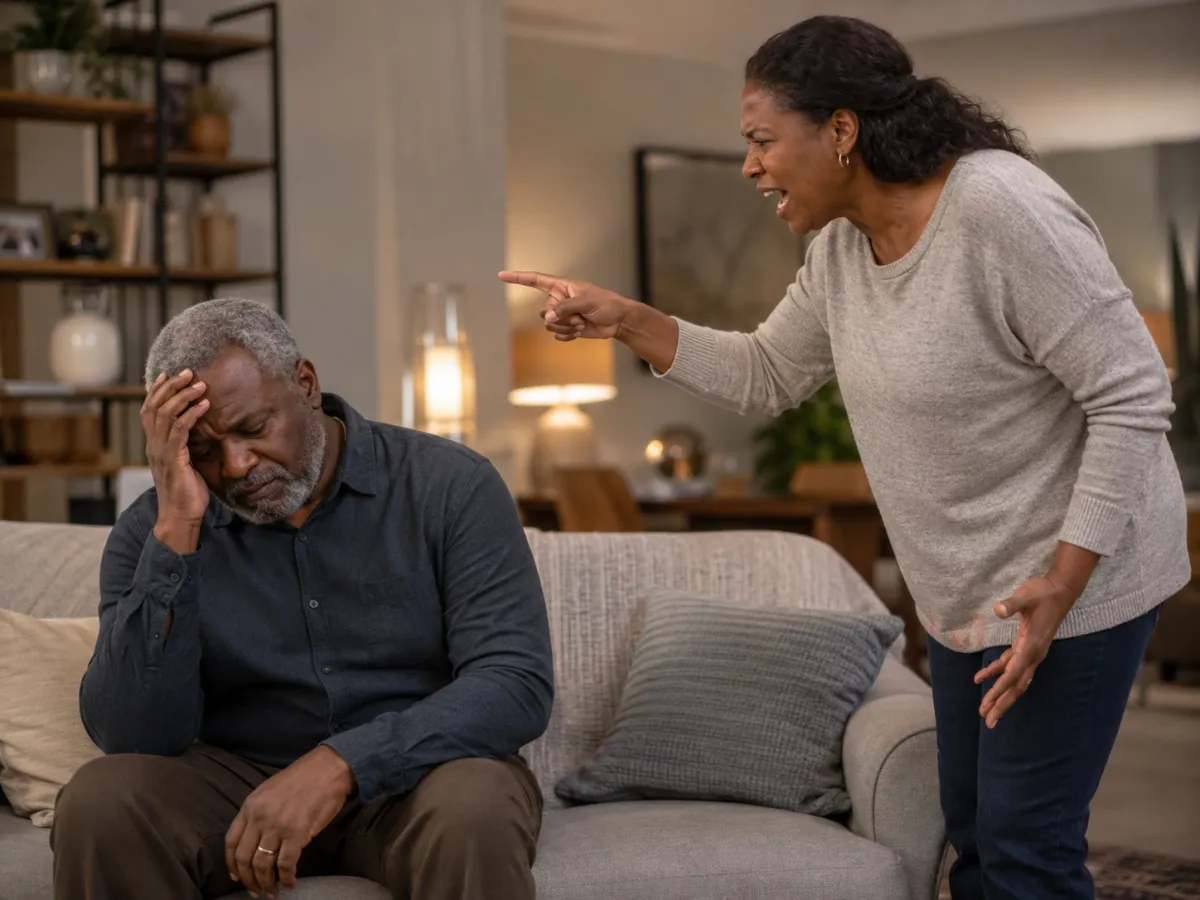
Caring for someone after a stroke can involve love, loyalty and commitment, but it can also create exhaustion, frustration and resentment. A partner, relative or friend may suddenly become responsible for personal care, appointments, medication, finances, housework and emotional support while trying to manage their own life. These feelings do not automatically make someone a bad caregiver, but resentment that is ignored can damage both the caregiver and the stroke survivor. Learn why caregiver resentment develops, how to recognise it and what can help before the relationship reaches breaking point.
Caregiving Can Change a Relationship Overnight
A stroke does not happen only to the person whose brain has been injured.
Its consequences can spread throughout an entire household.
One day, two people may be partners, parents, siblings or friends with relatively established roles.
Then a stroke occurs.
Suddenly, one person may need help with:
Washing
Dressing
Toileting
Walking
Eating
Medication
Transport
Hospital appointments
Rehabilitation exercises
Communication
Finances
Housework
Parenting
Emotional regulation
Making decisions
The other person may become a caregiver without ever consciously choosing that role.
The Stroke Association recognises that changes in roles and the demands of caring following stroke can place significant strain on relationships.
This transition can be particularly difficult when the caregiver is also a spouse or partner.
The relationship can begin to feel less like an equal partnership and more like a patient-and-carer arrangement.
That change can create resentment on both sides.
✦ ✦ ✦
The Good News
Resentment does not automatically mean that a caregiver has stopped loving the person they support.
It can be a warning sign that something about the caregiving arrangement is no longer sustainable.
Caregiver burnout can develop gradually from prolonged physical, mental and emotional demands, and frustration, resentment and emotional withdrawal can occur alongside it.
Recognising resentment early gives families an opportunity to change how care is organised before the relationship deteriorates further.
Sometimes the solution is additional practical help.
Sometimes it is respite.
Sometimes responsibilities need to be redistributed.
Sometimes the caregiver needs psychological support.
And sometimes the stroke survivor needs more rehabilitation or external assistance so that one person is not expected to carry everything.
The goal should not be to force someone to tolerate unlimited caregiving.
It should be to create a situation in which both people can live with dignity.
Why Does Caregiver Resentment Develop?
Resentment usually develops when someone repeatedly gives more than they feel able to give while believing that they have little control over the situation.
After stroke, that imbalance can become enormous.
A caregiver may be managing responsibilities that previously belonged to two people.
They may also be frightened about the future.
They may wonder:
Will my partner ever recover?
Will I have to do this permanently?
Can I continue working?
How will we manage financially?
Will we ever travel again?
Will our relationship ever feel normal?
Will I ever have time to myself again?
These questions can exist alongside genuine love.
Human emotions are rarely neat enough for someone to feel only gratitude, compassion and patience.
A caregiver may love someone deeply and still hate what has happened to their life.
The Loss of Freedom Can Create Resentment
Before the stroke, a caregiver may have been able to leave the house without planning.
They may have worked, travelled, exercised, socialised or spent time alone whenever they wanted.
After stroke, even leaving the house for several hours may require organising:
Freedom that once seemed ordinary can disappear.
Over time, the caregiver may begin to think:
“Everyone else can simply leave the house. Why can't I?”
Or:
“My entire life now revolves around somebody else's needs.”
Those thoughts can be uncomfortable to admit.
But denying them does not make them disappear.
The Caregiver May Be Grieving Too
Stroke survivors understandably grieve what they have lost.
Caregivers may be grieving as well.
They may miss:
The person they love is still alive, which can make this grief difficult to discuss.
There may be no socially recognised moment when someone says:
“You have lost something too.”
Yet the caregiver may be mourning an entire version of life that disappeared on the day of the stroke.
The Stroke Association notes that stroke can cause major changes within relationships and family roles, while carers can experience complex emotions connected with loss and change.
When One Person Becomes Responsible for Everything
Caregiver resentment can grow rapidly when one person becomes responsible for nearly every part of family life.
They may suddenly be:
This workload may continue for months or years.
And unlike employment, caregiving may not have a finishing time.
There may be no evening when the caregiver officially clocks off.
The person needing assistance may still need help at 2 a.m.
That can slowly erode patience.
Sleep Deprivation Can Change Behaviour
Caregiving becomes considerably harder when sleep is disrupted.
A stroke survivor may need help during the night because of:
Toileting
Pain
Anxiety
Mobility problems
Medication
Confusion
Sleep disturbances
Risk of falling
Repeated sleep disruption can affect concentration, emotional regulation and the ability to cope with stress.
A caregiver who once responded patiently may become irritable or short-tempered.
That does not mean every instance of poor behaviour should be excused.
But exhaustion can help explain why a caregiver's ability to cope may deteriorate.
Financial Pressure Can Intensify Resentment
Stroke can change household finances dramatically.
The survivor may be unable to work.
The caregiver may reduce their hours or leave employment entirely.
Meanwhile, additional expenses may appear:
Transport
Private therapy
Equipment
Home adaptations
Medication
Childcare
Mobility aids
Increased heating costs
Paid care
Money problems can affect almost every part of a relationship.
The caregiver may feel trapped because leaving work is financially impossible.
Or they may feel trapped because continuing to work while providing care is physically impossible.
Financial pressure does not create resentment in every family, but it can intensify an already difficult situation.
The Caregiver May Feel Invisible
After a stroke, almost everyone understandably asks about the survivor.
“How are they doing?”
“Are they walking yet?”
“Has their speech improved?”
“What did the consultant say?”
Meanwhile, the caregiver may be standing beside them exhausted.
Few people ask:
“How are you coping?”
The caregiver may receive praise for being strong while privately feeling that they are falling apart.
American Heart Association caregiver resources emphasise the need for caregivers to protect their own physical and emotional wellbeing because caring for someone with a serious condition can become overwhelming.
Being constantly described as “amazing” or “strong” can even become uncomfortable when what someone actually needs is practical help.
Resentment Can Develop When Help Is Offered but Never Arrives
Immediately after a stroke, relatives and friends may say:
“Anything you need.”
“Just call me.”
“We're here for you.”
Then life moves on.
Weeks later, the caregiver may still be doing everything.
Promises of support may disappear.
The caregiver can start thinking:
“Why am I the only person whose life had to change?”
This can cause resentment not only towards the survivor, but towards siblings, relatives, friends or adult children who appear to have returned to their normal lives.
Sometimes the caregiver's anger is directed at the wrong person simply because the stroke survivor is the person physically present.
Resentment Can Appear When the Survivor Is Becoming More Independent
This may sound strange, but caregiving can become an identity.
For months, one person may control:
Medication
Appointments
Food
Transport
Finances
Rehabilitation
Daily schedules
As the survivor recovers, they may want control back.
They may say:
“I can do that myself.”
“I don't need you to come with me.”
“I want to drive again.”
“I'll manage my own medication.”
Most caregivers welcome recovery.
But psychologically, changing roles again can be complicated.
A caregiver may have become accustomed to being responsible.
They may worry that the survivor is taking unnecessary risks.
What looks like controlling behaviour may sometimes originate from fear.
However, recovery should include restoring independence wherever it is safe and realistic.
The aim of rehabilitation is not to create permanent dependency.
NICE stroke rehabilitation guidance emphasises involving stroke survivors actively in decisions and rehabilitation goals.
When Resentment Turns Into Anger
Resentment that remains unspoken can accumulate.
The caregiver may begin reacting disproportionately to small things.
A request for a drink may trigger irritation.
A forgotten appointment may provoke an argument.
A slow walk to the bathroom may become a source of impatience.
The underlying issue may not be that particular event.
It may be months of exhaustion underneath it.
Warning signs can include:
Frequent snapping
Sarcasm
Constant criticism
Avoiding the survivor
Feeling angry when asked for help
Complaining repeatedly about caregiving
Fantasising about escaping
Feeling emotionally numb
Losing empathy
Resenting rehabilitation appointments
Becoming irritated by physical limitations
Feeling that the survivor is deliberately difficult
These signs deserve attention.
They should not simply be dismissed as part of caregiving.
Caregiver Burnout and Resentment Are Not Exactly the Same
The terms are sometimes used interchangeably, but they are different.
Burnout describes severe physical, emotional and mental exhaustion caused by prolonged stress.
Resentment is an emotional response that can develop when someone feels overburdened, unappreciated, trapped or treated unfairly.
A person can experience one without the other.
However, they frequently overlap.
Caregiver burnout can include frustration, hopelessness and emotional withdrawal.
Someone experiencing burnout may need more than a weekend off.
The entire caregiving arrangement may need to change.
Stroke Survivors Can Also Become Resentful
Resentment is not exclusive to caregivers.
The stroke survivor may resent:
Losing independence
Having to ask for help
Being supervised
Losing privacy
Being told what to do
Being spoken for
Having decisions made without them
Being treated like a child
Feeling indebted to the caregiver
Imagine having to ask someone to help you shower when you previously managed an entire household independently.
Or needing permission to do something you once did without thinking.
That can create humiliation and anger.
The survivor may direct some of that anger towards the caregiver.
Then a cycle develops.
The caregiver feels unappreciated.
The survivor feels controlled.
The caregiver becomes more frustrated.
The survivor becomes more defensive.
Eventually, both people feel misunderstood.
Do Not Infantilise a Stroke Survivor
Physical disability does not automatically mean cognitive impairment.
Communication difficulty does not mean someone cannot think.
Needing assistance does not remove adulthood.
A caregiver may unintentionally begin speaking to the survivor as though they were a child.
For example:
“You can't do that.”
“Sit down.”
“Don't touch that.”
“I've already told you.”
Sometimes safety genuinely requires intervention.
But whenever possible, adults should retain control over decisions affecting their own lives.
A healthier approach may be:
“What part of this would you like to do yourself?”
Or:
“Would you like help, or would you rather try first?”
Independence is not merely convenient.
It is part of identity.
Caregiving Should Not Mean Doing Everything for Someone
Helping someone recover and doing everything for them are not the same thing.
In some circumstances, constantly stepping in can unintentionally reduce opportunities for the survivor to practise skills.
The American Heart Association has highlighted the importance of encouraging appropriate activity and independence rather than automatically doing everything for a stroke survivor.
If someone can safely:
allowing them to participate can support independence while reducing the caregiver's workload.
The exact level of independence will depend on the person's abilities and professional advice.
Saying “I Need Help” Is Not Failure
Many caregivers wait far too long before asking for help.
They may believe:
“They are my husband. I should be able to manage.”
“She is my mother. This is my responsibility.”
“Nobody else knows how to care for him properly.”
“I promised I would look after her.”
But one person cannot realistically replace an entire multidisciplinary care system indefinitely.
Depending on the survivor's needs, support may involve:
Asking for assistance is not abandoning the stroke survivor.
It may be what allows caregiving to remain sustainable.
Be Specific When Asking Family for Help
“Can someone help me?” is easy for people to ignore.
Specific requests are harder to misunderstand.
For example:
“Can you stay with Dad from 1 p.m. until 4 p.m. on Saturday?”
“Can you take Mum to physiotherapy on Thursday?”
“Can you cook dinner twice this week?”
“Can you manage her prescriptions this month?”
“Can you sit with him while I go to the gym?”
Concrete tasks turn vague goodwill into actual support.
Schedule Time When You Are Not a Caregiver
A caregiver still needs an identity outside caring.
That may include:
Work
Exercise
Friends
Hobbies
Reading
Walking
Faith
Shopping
Sport
Travel
Time alone
Sleep
This is not selfish.
A caregiving arrangement that requires one person to erase their entire identity is unlikely to remain healthy indefinitely.
The American Heart Association advises caregivers to think of long-term caregiving as something requiring pacing rather than throwing themselves into an unsustainable caregiving “frenzy” that can lead to burnout.
Respite Care Can Protect the Relationship
Respite simply means somebody else temporarily provides care.
It might last:
A few hours
An afternoon
Overnight
A weekend
Several days
This allows the primary caregiver to rest or do something unrelated to caregiving.
For some people, even several predictable hours each week can make a substantial difference.
The important point is that breaks should ideally happen before the caregiver reaches breaking point.
Talk About Resentment Before It Explodes
A caregiver does not need to say:
“You have ruined my life.”
That is unlikely to produce a constructive conversation.
Instead, describe the actual problem.
For example:
“I am struggling with how much care I am providing and I don't think our current arrangement is sustainable.”
Or:
“I love you, but I am exhausted and we need more help.”
Or:
“I don't want to reach the point where I become angry every time you need something. We need to change how we're managing this.”
These conversations may be uncomfortable.
But an uncomfortable conversation is usually preferable to months of silent resentment followed by an explosion.
The Stroke Survivor Should Not Be Made to Feel Guilty for Surviving
There is an important boundary here.
Caregiver resentment may be understandable.
Weaponising caregiving against the survivor is not.
Statements such as:
“You should be grateful I haven't left.”
“Look what you've done to my life.”
“Everything is because of you.”
“I have to do everything because you're useless.”
can cause enormous emotional harm.
The survivor did not choose to have a stroke.
They may already be coping with grief, disability, fear and loss of independence.
Caregiver exhaustion deserves support.
It does not justify cruelty.
Resentment Does Not Excuse Abuse
There is a line between being exhausted and being abusive.
Caregiver stress should never be used to excuse:
Physical violence
Threats
Humiliation
Withholding food
Withholding medication
Deliberately refusing necessary personal care
Financial exploitation
Preventing reasonable contact with others
Intimidation
Sexual coercion
Persistent verbal abuse
Deliberately leaving someone unsafe
A caregiver who feels that they might lose control needs support urgently.
Likewise, a stroke survivor who feels frightened or unsafe around the person caring for them should tell someone.
That might include a healthcare professional, social worker, trusted relative or safeguarding service.
What If the Caregiver Says, “I Never Chose This”?
There may be truth in that statement.
Most family caregivers did not apply for the role.
Stroke imposed it.
Acknowledging that fact may actually be healthier than pretending otherwise.
But there are two separate truths:
The caregiver did not choose the stroke.
Neither did the survivor.
Blaming each other therefore solves very little.
The useful question becomes:
How do we build a life that does not require either person to sacrifice everything?
What If the Survivor Can Do More Than They Currently Do?
This needs careful handling.
Some stroke survivors genuinely require extensive assistance.
Others may have developed habits of relying on someone because help is always available.
Rehabilitation professionals can help determine which activities someone can reasonably and safely perform independently.
Where appropriate, encouraging independence may benefit both people.
The survivor gains confidence and autonomy.
The caregiver gains time and reduces their workload.
But this should never become:
“You can do it yourself, so I'm not helping you.”
The aim is supported independence, not punishment.
What If the Caregiver Refuses Outside Help?
This can happen too.
A caregiver may complain constantly about being overwhelmed while simultaneously refusing anyone else's involvement.
They may believe:
Nobody else will do it properly.
The survivor only trusts them.
Asking for help looks weak.
Paid carers are intrusive.
Family members are unreliable.
They must remain in control.
If so, part of resolving the resentment may involve the caregiver relinquishing some control.
You cannot repeatedly insist that nobody else is capable of helping and simultaneously resent being the only person providing care.
Those positions eventually become incompatible.
Protect the Relationship From Becoming Only About Stroke
When possible, there should still be moments when neither person is primarily patient nor caregiver.
That may mean:
Watching a film
Having coffee together
Listening to music
Sitting outside
Talking about something unrelated to rehabilitation
Celebrating birthdays
Going for an accessible meal
Laughing
Spending time with children
Planning something enjoyable
Recovery can easily dominate every conversation.
“How far did you walk?”
“Did you do your exercises?”
“Did you take your medication?”
“What did the therapist say?”
Those things matter.
But relationships need more than clinical management.
Couples May Need Relationship Support
Stroke can change:
Roles
Communication
Finances
Parenting
Sex
Independence
Confidence
Future plans
Expecting a relationship to absorb all of those changes without difficulty is unrealistic.
Some couples may benefit from counselling or psychological support, particularly when communication has deteriorated.
This does not mean the relationship is failing.
It means something enormous happened to it.
When Should a Caregiver Speak to a Professional?
Consider seeking professional support if caregiving is causing:
Persistent anger
Depression
Severe anxiety
Constant exhaustion
Frequent arguments
Loss of interest in normal activities
Sleep problems
Social isolation
Feeling trapped
Emotional numbness
Thoughts of abandoning the person without arranging safe care
Fear that you might hurt the person
Reliance on alcohol or other substances to cope
Carers can experience significant emotional stress, anxiety, low mood and exhaustion, all of which can contribute to burnout.
You do not need to wait until a crisis develops before asking for support.
My Perspective
One of the uncomfortable truths about stroke is that love does not magically remove exhaustion.
A person can love you and still become tired of caring for you.
A person can be loyal and still miss their old life.
A person can be grateful that you survived and still resent how radically their own life changed.
Pretending those contradictions do not exist does not protect a relationship.
It simply forces difficult emotions underground.
But there is another truth that matters just as much.
The stroke survivor should not become the emotional punching bag for everything the caregiver has lost.
You are already living with the consequences of an injury you did not choose.
Being dependent on someone does not mean that you owe them your dignity.
Healthy caregiving requires compassion in both directions.
The survivor should recognise the enormous amount of work another person may be doing.
The caregiver should recognise that the person receiving help may hate needing it even more than they hate providing it.
The strongest families are not necessarily the ones in which nobody becomes resentful.
They are the ones that recognise when the arrangement is becoming unhealthy and change it.
Frequently Asked Questions
Is it normal for caregivers to resent the person they care for?
It can happen.
Long-term caregiving can involve substantial physical, emotional, financial and social pressure, and resentment may develop when someone feels overwhelmed, trapped or unsupported.
The important issue is what happens next.
Recognising resentment and changing the caregiving arrangement is healthier than allowing resentment to grow unchecked.
Does resentment mean my caregiver does not love me?
Not necessarily.
People can experience conflicting emotions.
Someone may love you while also feeling exhausted, frustrated or grieving the life they had before your stroke.
Look at the overall pattern of behaviour rather than one emotional statement.
Can caregiver burnout cause anger?
Yes.
Burnout can involve profound emotional and physical exhaustion, frustration and emotional withdrawal.
Persistent anger should be taken seriously, particularly if the caregiver feels close to losing control.
Should I feel guilty that someone has to care for me?
You can appreciate someone's support without accepting responsibility for having had a stroke.
Gratitude and guilt are not the same thing.
Where possible, participate in your rehabilitation and regain as much independence as you safely can.
But needing care does not make you a burden or give another person permission to mistreat you.
What if my partner constantly reminds me of everything they do for me?
Occasionally expressing exhaustion is different from repeatedly using caregiving to shame or control you.
If every disagreement ends with a list of everything your partner does for you, the relationship may need outside support.
How can I reduce the pressure on my caregiver?
Depending on your abilities, you may be able to:
Take responsibility for tasks you can safely manage.
Follow agreed rehabilitation programmes.
Organise some appointments yourself.
Use mobility or adaptive equipment.
Accept help from other people.
Encourage your caregiver to take breaks.
Discuss what support the household actually needs.
Your rehabilitation team can help identify tasks you may be able to resume independently.
Is it wrong for a caregiver to want time away?
No.
A caregiver remains an individual with their own needs, friendships and interests.
Regular time away may help make long-term caregiving more sustainable.
What if nobody else will help?
Tell healthcare and social-care professionals that the current arrangement is becoming unsustainable.
Do not wait until the primary caregiver completely burns out.
Ask specifically about community support, carers' assessments, respite and other services available where you live.
Can resentment destroy a marriage after stroke?
It can contribute to serious relationship problems if it is allowed to become chronic.
However, resentment itself does not determine the outcome.
Communication, practical support, redistribution of responsibilities and professional help can change the situation considerably.
What if I am frightened of my caregiver?
Take that seriously.
Caregiver stress does not justify abuse, intimidation or neglect.
Tell someone you trust and speak to an appropriate healthcare, social-care or safeguarding professional.
If you are in immediate danger, seek emergency assistance.
Key Takeaways
Caregiver resentment can develop when long-term care creates exhaustion, loss of freedom, financial pressure and major changes in family roles.
Resentment does not automatically mean that a caregiver has stopped loving the stroke survivor.
Caregiver burnout and resentment often overlap but are not identical.
Stroke survivors can also resent dependency, supervision and loss of privacy.
Recovery should encourage safe independence wherever possible.
One person should not automatically be expected to carry every aspect of long-term care.
Specific requests for help are often more effective than vague appeals.
Regular breaks and respite can help make caregiving more sustainable.
Caregiver stress never excuses humiliation, neglect or abuse.
Professional support should be sought before exhaustion reaches crisis point.
The Bottom Line
Stroke can change two lives overnight.
The survivor may lose mobility, independence, work, confidence and the life they expected to have.
The caregiver may simultaneously lose freedom, sleep, income, spontaneity and the relationship they previously knew.
Both experiences matter.
Resentment becomes dangerous when nobody is allowed to acknowledge it.
A caregiver should be able to say:
“I cannot continue doing this alone.”
And a stroke survivor should be able to say:
“I need help, but I still deserve respect.”
Those two statements can exist together.
The solution is not deciding whose life has been affected more.
It is building a caregiving arrangement that does not slowly destroy either person.
Related Articles
Relationships After Stroke
Marriage After Stroke
Personality Changes After Stroke
Depression After Stroke
Family Dynamics After Stroke
About the Author
Alisia Gayle is a stroke survivor and the author of an award-winning stroke recovery memoir.
After experiencing a major ischaemic stroke and rebuilding her mobility, independence and confidence, she created this website to give stroke survivors and their families honest, practical and hopeful information about recovery.
Her articles combine lived experience with evidence-based information to help survivors understand what may be happening and feel less alone during recovery.
Medical Disclaimer
This article provides general information and personal insight. It is not a substitute for individual medical, psychological, safeguarding or social-care advice.
Stroke affects every person and family differently. Speak to your GP, stroke team, social worker or another qualified professional if caregiving pressures are causing significant distress, anger, anxiety, depression or relationship difficulties.
If you are being harmed, threatened, neglected or feel unsafe, seek appropriate safeguarding or emergency assistance.
Final Thoughts
Caregiver resentment is uncomfortable to talk about because it conflicts with the story people like to tell about caregiving.
The expected story is unconditional patience.
Reality can be considerably messier.
Caregiving can contain love and anger.
Devotion and exhaustion.
Gratitude and grief.
Hope and resentment.
Acknowledging that complexity does not weaken a family.
Sometimes it is what saves one.
The caregiver needs permission to remain a person rather than becoming nothing more than a source of care.
And the stroke survivor needs to remain a person rather than becoming nothing more than somebody who needs care.
When both are recognised, the relationship has a far better chance of surviving what stroke changed.