Returning to exercise after a stroke when you are young can feel very different from simply learning to move again. You may want to get back to running, weight training, football, cycling, swimming, gym classes or the level of fitness you had before your stroke. Exercise can support cardiovascular health, strength, balance, confidence and overall wellbeing after stroke, but returning safely may require a gradual progression because your balance, coordination, endurance, blood pressure response and affected-side control may not yet match how fit you feel. Being young can support ambitious recovery goals, but youth alone does not make you ready for high-intensity exercise. (stroke.org.uk)
After your stroke...
You may have one question that nobody around you seems to understand.
"When can I train properly again?"
Perhaps before your stroke you:
Ran.
Lifted weights.
Played football.
Went hiking.
Cycled.
Swam.
Did CrossFit.
Played competitive sport.
Or simply loved feeling physically strong.
Then suddenly...
Your exercise programme becomes:
Sit to stand.
Heel raises.
Supported balance.
Walking down a corridor.
You appreciate rehabilitation.
But part of you is thinking:
"I am thirty-five years old. I don't just want to walk around the house. I want my fitness back."
That ambition is understandable.
And for many younger stroke survivors...
Basic independence is not the final destination.
It is the starting point.
✦ ✦ ✦
The Good News
Exercise can play an important role after stroke.
The Stroke Association encourages stroke survivors to become physically active and notes benefits for fitness, strength, confidence and general health. (stroke.org.uk)
NICE stroke rehabilitation guidance also supports helping people participate in physical activity as part of rehabilitation and longer-term recovery. (nice.org.uk)
So the question is usually not:
"Should stroke survivors exercise?"
It is:
"What exercise is appropriate for me now, and how do I progress safely?"
That might eventually include:
✓ Running
✓ Gym training
✓ Resistance exercise
✓ Cycling
✓ Swimming
✓ Sports
✓ Circuit training
✓ Higher-intensity cardiovascular work
You do not necessarily have to remain permanently at beginner rehabilitation level because you once had a stroke.
Your exercise should progress as your capabilities progress.
✦ ✦ ✦
Rehabilitation Exercise and Fitness Training Are Not the Same Thing
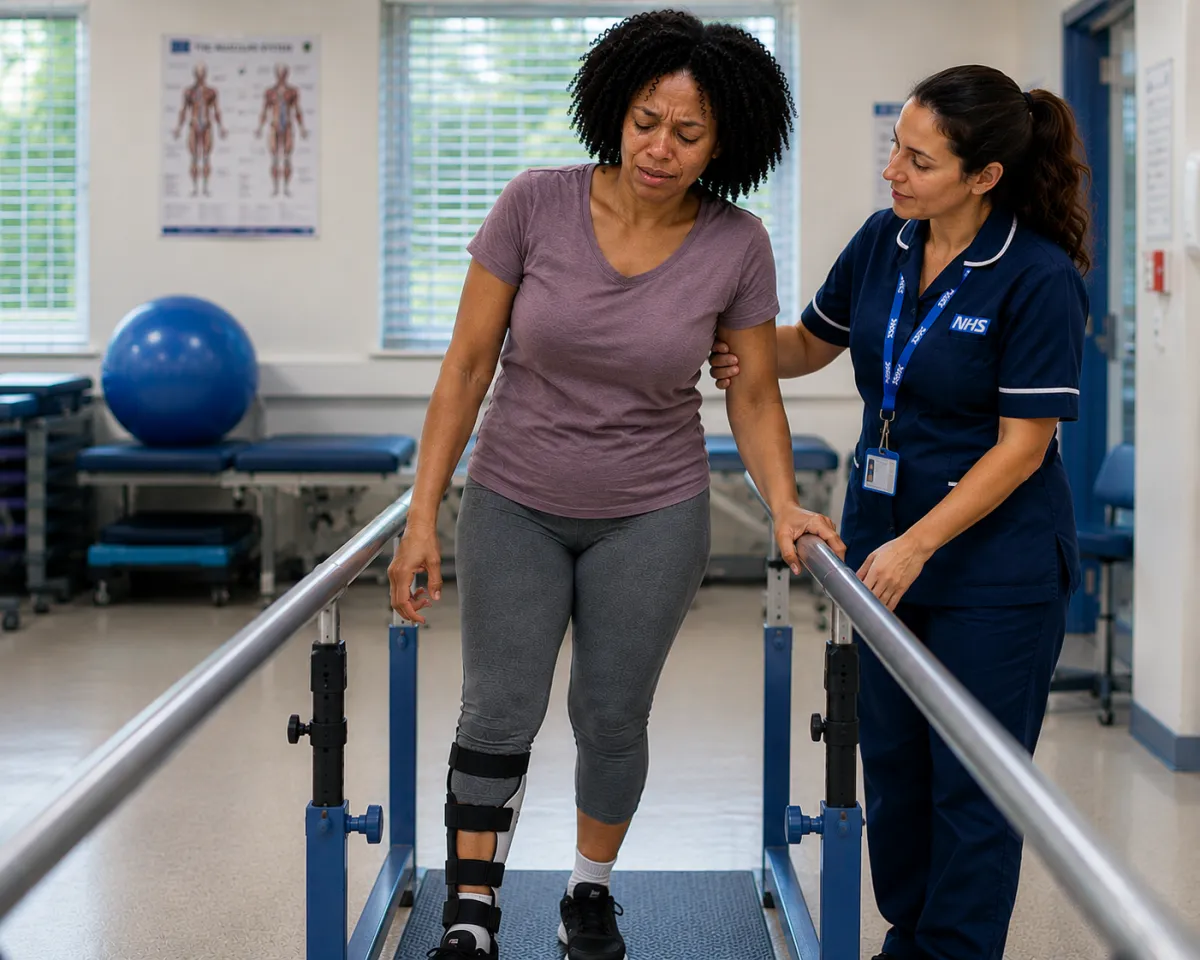
Early rehabilitation often focuses on restoring basic function.
You may work on:
✓ Standing
✓ Walking
✓ Transfers
✓ Reaching
✓ Balance
✓ Foot clearance
✓ Arm control
✓ Coordination
Later, your goals may become completely different.
You want to:
Run five kilometres.
Squat with weight.
Return to tennis.
Cycle twenty miles.
Lift in the gym.
Play football.
Those goals require more than simply repeating early rehabilitation exercises forever.
At some point, rehabilitation may need to transition toward physical conditioning.
Strength.
Speed.
Power.
Endurance.
Agility.
Higher-level balance.
Your programme should reflect where you are going.
Not only where you started.
✦ ✦ ✦
Get Your Medical Situation Clear First
Before returning to demanding exercise, understand why you had the stroke.
This matters because the safest approach may differ if your stroke was associated with:
✓ Severe hypertension
✓ A heart condition
✓ Atrial fibrillation
✓ Arterial dissection
✓ A vascular abnormality
✓ A clotting disorder
✓ Significant cardiac disease
✓ Another underlying medical problem
Your stroke may be neurologically stable while another condition still requires management.
That does not necessarily mean you cannot exercise.
It means exercise decisions should take the underlying diagnosis into account.
If you are unsure whether strenuous exercise is appropriate, ask your stroke specialist, GP or physiotherapist before suddenly returning to maximum-intensity training.
✦ ✦ ✦
Do Not Judge Readiness by Age
Being 30 or 40 can create a dangerous assumption.
"I am young, so I should be fine."
Age does not tell you whether:
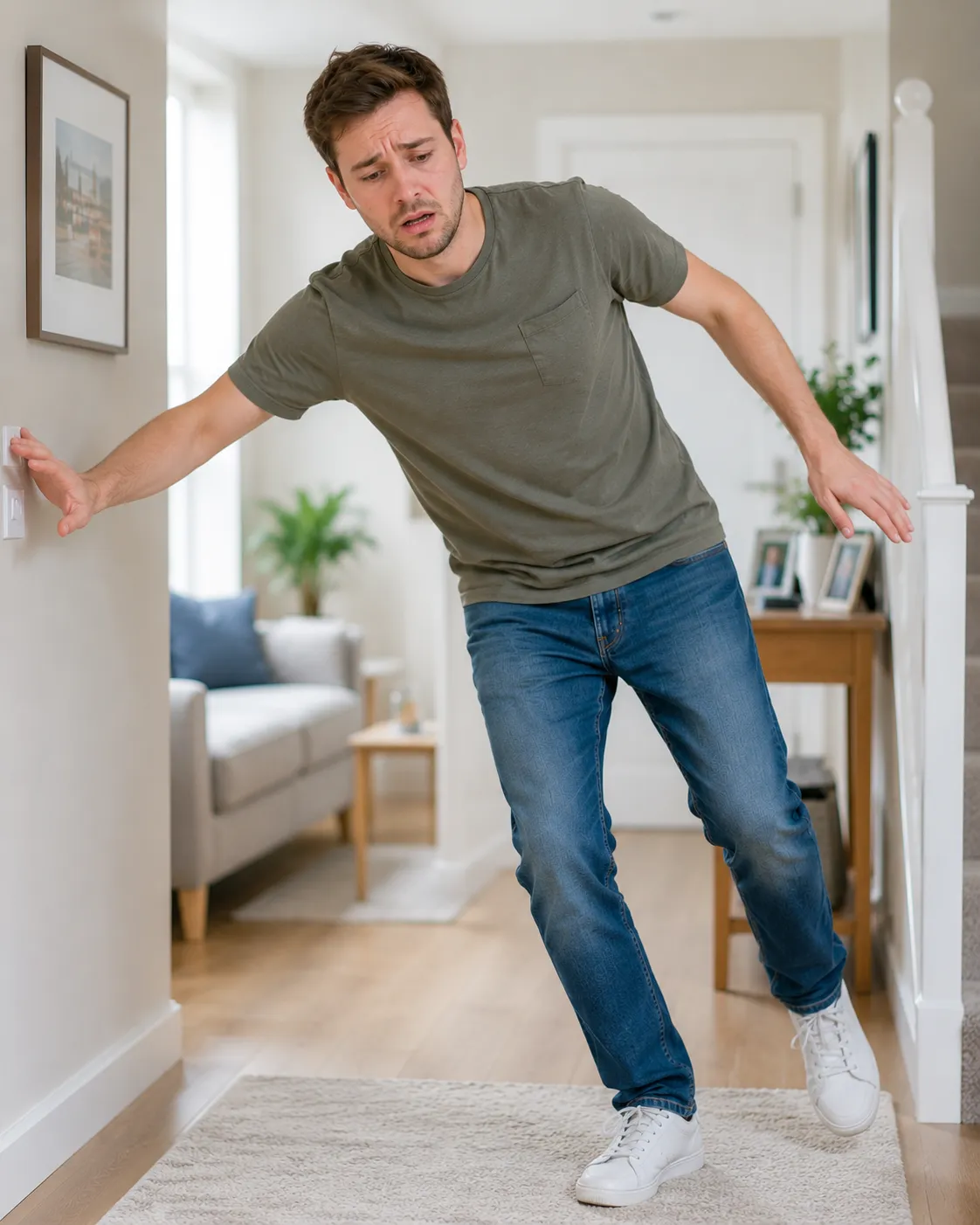
Your balance has recovered.
Your affected foot clears properly.
Your blood pressure is controlled.
Your shoulder is stable.
Your heart rhythm is normal.
Your reaction time is sufficient.
Your affected leg can absorb impact safely.
Those things matter.
A younger survivor may be physically strong and still have subtle neurological deficits.
That combination can actually encourage you to attempt movements faster than your nervous system is ready to control.
You may have the strength to generate force...
Without yet having the coordination to manage it.
✦ ✦ ✦
Start With What You Can Control
Before thinking about maximum speed or maximum weight, look at movement quality.
Can you:
Walk without repeatedly catching one foot?
Stand on each leg safely?
Control your knee during a squat?
Step down from a stair without collapsing inward?
Use both arms appropriately?
Recover your balance after a small disturbance?
Move without significant pain?
You do not need perfect symmetry before progressing.
Many people never become perfectly symmetrical.
But obvious uncontrolled movement deserves attention.
Increasing intensity on top of poor control can reinforce compensations.
Build capacity.
Then challenge it.
✦ ✦ ✦
Walking Is Not a Beginner Exercise to Abandon
If your goal is running, it may be tempting to think walking no longer matters.
It does.
Walking provides an opportunity to work on:
✓ Endurance
✓ Rhythm
✓ Foot clearance
✓ Weight transfer
✓ Hip control
✓ Cardiovascular fitness
✓ Confidence
The Stroke Association encourages walking as one accessible way of becoming more active after stroke. (stroke.org.uk)
You can progress walking by changing:
Speed.
Distance.
Terrain.
Incline.
Duration.
Walking may eventually become:
Brisk walking.
Hill walking.
Intervals.
Then possibly jogging.
Do not underestimate the value of mastering the stage before the one you want.
✦ ✦ ✦
When Can You Start Running?
There is no universal post-stroke date when running suddenly becomes safe.
Readiness depends more on function than the calendar.
A physiotherapist may consider things such as:
✓ Walking quality
✓ Balance
✓ Lower-limb strength
✓ Foot clearance
✓ Cardiovascular tolerance
✓ Joint control
✓ Ability to respond to changes in surface
✓ Whether an orthosis is still required
Some survivors return to running.
Others may need adaptations.
And some may decide that running is not the best exercise for their particular impairments.
If running is an important goal, say so.
Do not allow your rehabilitation programme to stop automatically at:
"Independent walking achieved."
For a young athlete, that may be nowhere near the actual goal.
✦ ✦ ✦
Build Running in Stages
A return-to-running progression might involve:
Walking comfortably.
Then brisk walking.
Then short faster intervals.
Then short periods of jogging.
Then alternating walking and jogging.
Then gradually increasing continuous running.
The exact progression needs to fit your ability.
What you should avoid is:
No running for twelve months.
Then suddenly attempting your old 10K pace.
Your cardiovascular fitness may have changed.
Your coordination may have changed.
Your affected leg may fatigue differently.
Give your nervous system time to adapt to impact and speed again.
Progression beats proving a point.
✦ ✦ ✦
Strength Training After Stroke
Resistance exercise can be extremely useful after stroke.
It may help improve:
✓ Muscle strength
✓ Functional ability
✓ Confidence
✓ Bone loading
✓ Physical independence
✓ Exercise capacity
Stroke rehabilitation programmes commonly include strengthening exercises, and NHS rehabilitation resources include progressive lower- and upper-limb strengthening work. (northerncarealliance.nhs.uk)
If you previously lifted weights, you may eventually return to resistance training.
But do not assume your old numbers remain appropriate immediately.
Begin with movement quality and manageable resistance.
Then progressively overload.
Just like any training programme.
✦ ✦ ✦
You Are Allowed to Get Strong
Some stroke survivors become afraid of effort.
They worry that lifting something heavy will somehow cause another stroke.
That fear can lead to years of unnecessary physical deconditioning.
Appropriately prescribed strength training is not inherently forbidden after stroke.
The important considerations are:
✓ Your medical stability
✓ Blood pressure
✓ Technique
✓ Breathing
✓ Balance
✓ Exercise intensity
✓ Individual cardiovascular conditions
If your medical team has cleared you for progressive exercise, strength is a legitimate rehabilitation goal.
You do not have to remain physically fragile forever.
✦ ✦ ✦
Avoid Holding Your Breath During Heavy Lifts
When lifting heavy loads, people sometimes hold their breath and strain.
This can produce substantial temporary changes in blood pressure.
If you have hypertension or another cardiovascular concern, technique matters.
Learn to:
✓ Breathe through the movement
✓ Avoid unnecessary maximal straining
✓ Build load progressively
✓ Use good form
✓ Stop if you develop concerning symptoms
That does not mean you must lift tiny weights forever.
It means you should train intelligently.
If you want to return to very heavy lifting, discuss your individual situation with an appropriate healthcare or exercise professional.
✦ ✦ ✦
Train the Affected Side
After stroke, the stronger side can become very good at compensating.
Squat?
The stronger leg does more.
Stand up?
The stronger leg pushes harder.
Climb stairs?
The stronger leg takes over.
This can make you look functionally competent while the affected side remains undertrained.
Depending on your ability, exercises may eventually include:
✓ Split squats
✓ Step-ups
✓ Step-downs
✓ Single-leg balance
✓ Heel raises
✓ Supported single-leg strengthening
✓ Resistance-band work
✓ Hip strengthening
The specific exercise matters less than whether the affected side is genuinely participating.
Do not automatically let the stronger side do every difficult task.
✦ ✦ ✦
Balance Should Become More Challenging Too
If your goal is sport, standing still with both feet on the floor is not enough.
Sport may require:
Turning.
Changing direction.
Looking away while moving.
Reacting quickly.
Stepping onto uneven surfaces.
Recovering from perturbations.
Balance training can therefore become progressively more challenging.
For example:
Stable surface.
Narrower stance.
Single-leg work.
Movement while balancing.
Directional stepping.
More dynamic tasks.
Do this safely.
Falls are not an acceptable measure of training intensity.
Challenge should increase while unnecessary risk remains controlled.
✦ ✦ ✦
What About the Gym?
The gym can actually be a useful environment because exercises can often be adjusted precisely.
Machines may provide extra stability.
Free weights may challenge balance and coordination more.
Neither is automatically better.
You might begin with:
✓ Stationary cycling
✓ Treadmill walking
✓ Seated resistance machines
✓ Supported squats
✓ Cable exercises
✓ Light dumbbells
Then progress as control improves.
Tell a trainer about your stroke if they need to know for safety and programming.
But also remember:
A general personal trainer is not automatically a neurological rehabilitation specialist.
If you have significant impairments, input from a neurophysiotherapist or appropriately trained exercise professional may be valuable.
✦ ✦ ✦
Cardiovascular Exercise Matters
Stroke recovery is not only about strengthening the weak side.
Cardiovascular fitness matters too.
After months of inactivity, you may become significantly deconditioned.
Activities might include:
✓ Walking
✓ Stationary cycling
✓ Swimming where safe
✓ Cross trainer
✓ Rowing where appropriate
✓ Exercise classes
✓ Jogging
✓ Sport
For adults aged 19 to 64, general NHS guidance recommends aiming toward at least 150 minutes of moderate activity or 75 minutes of vigorous activity per week, alongside strengthening activity on at least two days. (nhs.uk)
But after stroke...
That is a destination for many people.
Not necessarily your starting prescription.
✦ ✦ ✦
Moderate Versus Vigorous Exercise
Moderate exercise usually means you are working harder, breathing faster and becoming warmer but can still talk.
Vigorous exercise is harder.
Conversation becomes more difficult.
Your breathing is significantly increased.
A young survivor may want to jump immediately into vigorous training.
But start with a level your body can tolerate.
Then build.
Recent research has explored higher-intensity interval training in selected stroke survivors and suggests that appropriately supervised higher-intensity exercise may improve cardiovascular fitness. (heart.org)
That does not mean every stroke survivor should start sprint intervals tomorrow.
Higher intensity should come after adequate screening and progression.
✦ ✦ ✦
Heart Rate May Not Tell the Whole Story
Many people use a smartwatch to guide exercise.
That can be useful.
But heart-rate numbers need context.
Certain medications can affect heart rate.
Fitness levels vary.
Autonomic responses may differ.
So do not become obsessed with reaching a particular number just because an app generated it.
You can also use perceived exertion.
Ask:
How hard am I working?
Can I speak?
Does my movement remain controlled?
Am I becoming unusually dizzy?
How quickly do I recover?
Technology can support training.
It should not overrule symptoms or medical advice.
✦ ✦ ✦
Post-Stroke Fatigue Changes Training
This is one of the biggest differences between:
"I am unfit."
and:
"I am recovering from stroke."
You may perform well during exercise...
Then collapse with fatigue later.
That delayed response matters.
Track:
✓ How you feel during training
✓ How you feel two hours later
✓ How you feel that evening
✓ How you feel the next day
If every gym session removes your ability to function for the following day, your programme may be too demanding.
Training should challenge you.
It should not repeatedly destroy your ability to live the rest of your life.
Progress volume gradually.
✦ ✦ ✦
Do Not Confuse Effort With Neurological Deterioration
Exercise naturally causes:
Faster breathing.
Sweating.
Muscle fatigue.
Higher heart rate.
Those are expected.
But sudden neurological symptoms are different.
Stop and seek urgent medical assessment for symptoms such as:
✓ New facial weakness
✓ New one-sided weakness
✓ Sudden speech difficulty
✓ Sudden severe visual disturbance
✓ Sudden major loss of coordination
✓ Severe new neurological symptoms
Do not tell yourself:
"I probably just trained too hard."
New stroke-like symptoms require emergency assessment.
Being in a gym does not make them less serious.
✦ ✦ ✦
Exercise With High Blood Pressure
If high blood pressure contributed to your stroke, exercise remains valuable.
Regular physical activity can support cardiovascular health and blood-pressure management.
But uncontrolled severe hypertension deserves medical attention before you start pushing maximal intensity.
Do not use exercise as an alternative to prescribed treatment.
Training.
Medication.
Diet.
Weight management where appropriate.
Reduced smoking and alcohol exposure.
can all form parts of the same prevention strategy.
Your fitness programme should support your cardiovascular management.
Not compete with it.
✦ ✦ ✦
What About Swimming?
Swimming can be excellent cardiovascular exercise.
But after stroke, think about:
✓ Balance getting into the pool
✓ Ability to use both sides
✓ Fatigue
✓ Coordination
✓ Seizure history
✓ Ability to recognise distress
✓ Whether supervision is appropriate
Do not return alone to open-water swimming simply because you were previously a strong swimmer.
Water removes the safety margin you have on land.
Start in an appropriate supervised environment until you know how your post-stroke body behaves.
Confidence should be earned.
Not assumed from your pre-stroke ability.
✦ ✦ ✦
Cycling Can Require More Than Leg Strength
Stationary cycling may be easier to reintroduce because balance demands are lower.
Road cycling requires much more.
You need:
✓ Balance
✓ Reaction time
✓ Vision
✓ Coordination
✓ Judgement
✓ Safe braking
✓ Ability to respond to traffic
If those abilities have been affected, indoor cycling may initially make more sense.
Do not equate:
"I can pedal"
with:
"I am safe to cycle through traffic."
The cardiovascular task and the road-safety task are not the same thing.
✦ ✦ ✦
Returning to Team Sport
Football, rugby, basketball and other sports add another layer.
Now you need:
Speed.
Reaction.
Agility.
Decision-making.
Contact in some sports.
Unpredictable movement.
If you want to return, rehabilitation may need to include:
✓ Direction changes
✓ Acceleration
✓ Deceleration
✓ Dynamic balance
✓ Sport-specific skills
✓ Reaction training
Do not stop your progression at generic strengthening if the actual goal is competitive sport.
Tell your physiotherapist what you want.
Good rehabilitation should be built around meaningful goals.
NICE specifically emphasises involving stroke survivors in setting rehabilitation goals. (nice.org.uk)
✦ ✦ ✦
Fear Can Become the Final Barrier
Sometimes your body is ready before your confidence is.
You stand at the treadmill.
You know you can jog.
But your brain says:
"What if something happens?"
This fear is understandable.
A stroke can destroy the assumption that your body is safe.
Progressive exposure can help.
Walk.
Walk faster.
Jog for thirty seconds.
Recover.
Try again.
Gather evidence.
Confidence often returns after your body repeatedly demonstrates:
"I can do this."
Not before.
You do not need zero fear to progress.
You need enough confidence to take the next appropriate step.
✦ ✦ ✦
Do Not Compare Yourself With Your Pre-Stroke Personal Best
This can destroy motivation.
Before your stroke:
You ran 10K in 45 minutes.
You squatted 100kg.
You trained six days per week.
Now?
You are slower.
Weaker.
Less coordinated.
That can feel devastating.
But your first target is not your old personal best.
Your target is progress from where you are now.
Perhaps:
Five minutes becomes ten.
A bodyweight squat becomes weighted.
Two kilometres becomes three.
Supported balance becomes unsupported.
Those gains count.
Your old numbers can become long-term goals if appropriate.
They should not become daily evidence that you are failing.
✦ ✦ ✦
Recovery Does Not Have to Stop at "Normal"
Young stroke survivors sometimes encounter very low expectations.
You can walk independently.
Therefore:
"You're doing brilliantly."
Maybe you are.
But perhaps your actual goal is:
Running.
Hiking mountains.
Playing sport.
Lifting weights.
Returning to physically demanding work.
You are allowed to want more.
Once basic independence is achieved, rehabilitation can become performance-oriented where appropriate.
That may involve:
✓ Progressive strength
✓ Power
✓ Endurance
✓ Speed
✓ Agility
✓ Advanced balance
✓ Sport-specific practice
Survival is not necessarily your final rehabilitation goal.
Function can keep evolving.
✦ ✦ ✦
My Perspective
When you have a stroke young, being told to "take it easy" forever can become almost as limiting as the stroke itself.
Caution has a place.
Especially early on.
But permanent fear does not automatically protect you.
If you are medically stable and your rehabilitation team agrees that you can progress...
Progress.
Get stronger.
Walk further.
Challenge your balance.
Return to the gym.
Build cardiovascular fitness.
Work toward running if that matters to you.
Your stroke should influence how you train.
It does not necessarily have to dictate that you never train hard again.
The goal is not recklessness.
And it is not fragility.
It is progressive competence.
Know your medical risks.
Respect neurological deficits.
Build capacity.
Then keep raising the ceiling.
✦ ✦ ✦
When Should You Seek Professional Advice?
Speak with your doctor, stroke team or physiotherapist before significantly increasing exercise intensity if:
✓ Your stroke was recent
✓ You have uncontrolled high blood pressure
✓ You have significant heart disease
✓ You have unexplained chest symptoms
✓ You experience fainting or significant dizziness
✓ Your stroke involved an arterial or vascular condition requiring specific restrictions
✓ You have seizures that are not controlled
✓ You have substantial balance impairment
✓ You are unsure whether vigorous exercise is appropriate
Seek emergency medical attention for new sudden neurological symptoms.
Do not try to exercise through them.
✦ ✦ ✦
Frequently Asked Questions
Can Young Stroke Survivors Return to the Gym?
Many can.
The appropriate starting point depends on medical stability, strength, balance, coordination and previous exercise experience.
Can I Lift Weights After Stroke?
Resistance exercise can form part of post-stroke training.
The load and progression should reflect your medical situation and movement control.
Can I Run After a Stroke?
Some stroke survivors return to running.
Readiness depends on factors such as walking ability, balance, strength, cardiovascular tolerance and lower-limb control.
How Much Exercise Should I Eventually Aim For?
General NHS guidance for adults aged 19 to 64 recommends at least 150 minutes of moderate activity or 75 minutes of vigorous activity each week, plus strengthening work on at least two days. (nhs.uk)
Your post-stroke programme may need to build gradually toward those levels.
Can Exercise Cause Another Stroke?
Appropriate physical activity is generally encouraged after stroke.
However, individual conditions such as uncontrolled hypertension or certain cardiovascular problems may require specific advice before vigorous exercise.
What If My Affected Side Becomes More Tired?
This may indicate that the workload is exposing remaining weakness or coordination deficits.
Reduce the task if your movement becomes unsafe and discuss persistent problems with your physiotherapist.
Is High-Intensity Exercise Possible After Stroke?
It can be for selected, medically stable stroke survivors.
Research has increasingly examined higher-intensity training, but progression should be appropriate to your health and functional ability. (heart.org)
✦ ✦ ✦
Key Takeaways
✓ Being young does not automatically make you ready for intense exercise after stroke.
✓ Exercise can support strength, cardiovascular fitness, confidence and overall recovery.
✓ Your programme should progress beyond basic rehabilitation when your goals require it.
✓ Understand the cause of your stroke before returning to very demanding exercise.
✓ Running readiness depends on function rather than a fixed number of months.
✓ Strength training can be appropriate after stroke.
✓ Train the affected side rather than allowing the stronger side to compensate constantly.
✓ Balance training should become progressively more challenging as you improve.
✓ Cardiovascular exercise should be increased gradually.
✓ Post-stroke fatigue may affect how much training you can tolerate.
✓ Stationary cycling, gym work and controlled environments may provide useful stepping stones toward higher-level activity.
✓ Sudden neurological symptoms during exercise require emergency assessment.
✓ Do not compare every session with your pre-stroke personal best.
✓ Young stroke rehabilitation can legitimately aim for running, sport, strength and high-level fitness — not just basic independence.
✦ ✦ ✦
Related Articles
Continue learning about exercise and young stroke:
Stroke in Your 30s
Stroke Under 50
Walking After a Stroke
Running After Stroke
Strength Training After Stroke
Balance Problems After Stroke
Muscle Weakness After Stroke
Gait Training After Stroke
Fatigue After Stroke
Returning to Sport After Stroke
✦ ✦ ✦
About the Author
Alisia Gayle is a stroke survivor who achieved 96% neurological recovery following an ischaemic stroke.
After years of rehabilitation, she now shares practical, evidence-informed resources to help stroke survivors, carers and families better understand recovery and rebuild their lives with confidence.
Alisia is also the author of Brain Damage: My Journey to 96% Recovery, where she shares her personal stroke recovery story and the lessons she learned throughout her rehabilitation.
✦ ✦ ✦
Medical Disclaimer
This article is intended for educational purposes only and should not replace professional medical, physiotherapy or exercise advice.
Exercise recommendations after stroke vary according to the type and cause of stroke, cardiovascular health, blood pressure, neurological impairments, balance, medication, seizure history and individual fitness.
Before returning to vigorous exercise, heavy resistance training or competitive sport, seek appropriate professional advice if you have unresolved medical concerns or significant neurological impairments.
Stop exercising and seek emergency medical attention if you develop new or sudden symptoms suggesting another stroke.
✦ ✦ ✦
Final Thoughts
Returning to exercise when you are young...
Can become one of the most powerful parts of recovery.
Because eventually you may stop asking:
"Can I walk safely?"
And start asking:
"Can I run?"
"Can I lift?"
"Can I play sport again?"
"How strong can I become?"
Those are valid rehabilitation questions.
You do not have to spend the rest of your life exercising as though you are permanently fragile.
But you also do not need to prove your recovery by jumping straight back into your old training programme.
Build it.
Walking.
Strength.
Balance.
Endurance.
Speed.
Power.
Sport.
One layer at a time.
Pay attention to the affected side.
Respect fatigue.
Control your risk factors.
Know when symptoms require medical attention.
And increase the challenge when your body demonstrates that it is ready.
Your pre-stroke fitness may give you something useful to aim toward.
But do not allow it to become the only measure of success.
Perhaps your first post-stroke run is slower than anything you would once have called a run.
It still counts.
Perhaps your first gym session uses a fraction of your old weight.
It still counts.
Perhaps you need months of work before you can do something that once felt effortless.
It still counts.
Because after a young stroke...
Exercise is not only about recreating the athlete or active person you were before.
It is about discovering how much physical capacity you can build from where you are now.
And for many survivors...
That ceiling may be much higher than it first appeared.