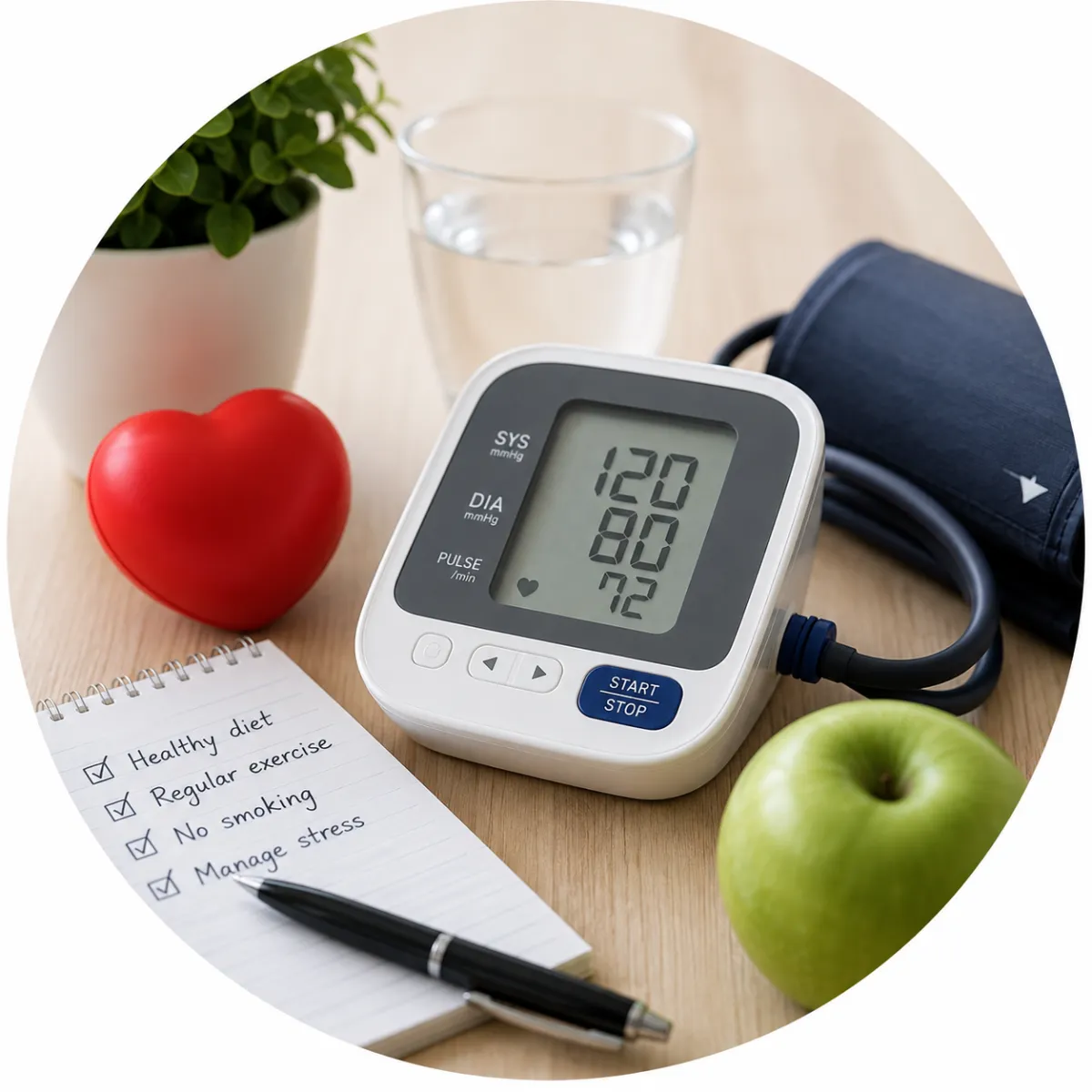
Eating too much salt can raise blood pressure, and high blood pressure is one of the biggest modifiable risk factors for stroke. After a stroke, reducing excess salt can therefore become an important part of protecting your cardiovascular health and lowering the risk of another event. You do not need to eliminate salt completely, but understanding where it hides in everyday foods and learning how to reduce it gradually can make a meaningful difference.
After your stroke...
You may suddenly hear a lot about blood pressure.
Your doctor checks it.
Your nurse checks it.
You may be given medication.
And then someone tells you:
"Watch your salt."
You begin wondering...
"How much salt is too much?"
"Do I have to stop adding salt completely?"
"What about sea salt?"
"What about Himalayan salt?"
"Is salt really that important?"
"Can eating less salt actually lower my blood pressure?"
These are sensible questions.
Because salt is something many of us eat every day without really thinking about it.
And much of the salt in our diet is not even the salt we personally add.
It is already inside the food.
✦ ✦ ✦
The Good News
Reducing salt does not mean eating bland food for the rest of your life.
Nor does it mean obsessively counting every grain.
For most adults in the UK, the NHS recommends no more than 6g of salt per day, roughly one level teaspoon in total from all sources.
That includes:
✓ Salt already in packaged food
✓ Salt added during cooking
✓ Salt added at the table
✓ Salt in sauces and condiments
✓ Salt in restaurant and takeaway meals
You may be surprised to discover that the salt shaker is often not the biggest problem.
A large proportion of the salt people eat is already present in commercially prepared food.
So reducing your intake often means making different choices rather than simply eating tasteless meals.
✦ ✦ ✦
Why Does Salt Affect Blood Pressure?
Salt contains sodium.
Your body needs some sodium for normal functions such as fluid balance and nerve activity.
But consistently eating too much sodium can contribute to higher blood pressure in many people.
High salt intake is associated with raised blood pressure, also known as hypertension.
One reason involves fluid balance.
When the body retains more sodium, it can also retain more water.
More fluid circulating through the bloodstream can increase pressure on the walls of the blood vessels.
Over time, persistently elevated blood pressure can damage blood vessels and increase cardiovascular risk.
That matters enormously after stroke.
✦ ✦ ✦
Why Is Blood Pressure So Important After Stroke?
High blood pressure is one of the most important risk factors for stroke.
The Stroke Association identifies eating too much salt as one lifestyle factor that can contribute to high blood pressure.
Persistently high blood pressure can place strain on arteries throughout the body, including those supplying the brain.
It may contribute to:
✓ Damage to blood vessel walls
✓ Atherosclerosis
✓ Increased risk of vessel blockage
✓ Increased risk of vessel rupture
Both ischaemic and haemorrhagic strokes are related to blood vessel health.
This is why controlling blood pressure after a stroke is not simply about achieving a good number on a machine.
It is about protecting your brain.
✦ ✦ ✦
How Much Salt Should You Have?
Current NHS guidance recommends that adults have no more than 6g of salt per day.
That is roughly:
One level teaspoon in total.
But there is an important catch.
That does not mean you can add one teaspoon of salt to your food every day.
The 6g includes everything already contained in what you eat.
For example, salt may already be present in:
Bread.
Breakfast cereal.
Cheese.
Soup.
Sauces.
Processed meat.
Ready meals.
Even foods that do not taste particularly salty may contain significant amounts.
So your visible salt intake may only represent part of the total.
✦ ✦ ✦
Salt and Sodium Are Not Exactly the Same Thing
Food labels can sometimes be confusing because you may see either:
"Salt"
or:
"Sodium."
They are related but they are not identical measurements.
Salt is sodium chloride.
The sodium component is the part most closely associated with the effect on blood pressure.
Most UK food labels now list salt directly, which makes comparison easier.
The useful habit is simple:
When comparing similar products, choose the one with less salt.
You do not need to become a chemist.
You simply need to read the label.
✦ ✦ ✦
Where Does Most Salt Come From?
Many people think:
"I don't add much salt, so I must have a low-salt diet."
Not necessarily.
A lot of dietary salt comes from processed and prepared foods.
Common sources include:
✓ Ready meals
✓ Processed meat
✓ Bacon
✓ Sausages
✓ Ham
✓ Salami
✓ Crisps
✓ Instant noodles
✓ Stock cubes
✓ Gravy granules
✓ Cooking sauces
✓ Soy sauce
✓ Bottled sauces
✓ Takeaways
✓ Processed soups
✓ Cheese
✓ Some breakfast cereals
✓ Bread
Some of these foods can be perfectly reasonable occasionally.
The problem is how quickly they accumulate.
A salty breakfast.
A sandwich at lunch.
A ready meal for dinner.
A few snacks.
You may exceed the recommended limit without ever touching the salt shaker.
✦ ✦ ✦
Processed Meat Can Be Particularly Salty
Processed meats are often major sources of salt.
These include:
✓ Bacon
✓ Ham
✓ Sausages
✓ Salami
✓ Pepperoni
✓ Corned beef
✓ Some deli meats
Salt is frequently used for flavouring and preservation.
That means a meal containing several processed foods can contain substantial salt before you add anything yourself.
Try replacing some processed meat meals with:
✓ Fresh chicken
✓ Fish
✓ Eggs
✓ Beans
✓ Lentils
✓ Chickpeas
✓ Fresh lean meat
You do not have to change everything overnight.
Gradual substitution works.
✦ ✦ ✦
Sauces Can Add Salt Very Quickly
Sauces are another easy place to underestimate salt.
Examples include:
✓ Soy sauce
✓ Ketchup
✓ Barbecue sauce
✓ Bottled marinades
✓ Curry sauces
✓ Pasta sauces
✓ Gravy
✓ Stock
A meal that looks healthy may become surprisingly salty after several sauces are added.
You can reduce this by:
✓ Using smaller amounts
✓ Comparing labels
✓ Choosing reduced-salt versions
✓ Making simple sauces yourself
✓ Using herbs and spices instead
You do not have to remove flavour.
You need to change where the flavour comes from.
✦ ✦ ✦
Does Sea Salt Count?
Yes.
Sea salt is still salt.
Rock salt is still salt.
Pink Himalayan salt is still salt.
Fancy packaging does not change the basic fact that these products contain sodium.
Some may contain tiny amounts of other minerals, but that does not make them harmless for blood pressure when consumed in large quantities.
Do not fall for the idea that:
"Natural salt doesn't count."
It does.
If your objective is reducing sodium intake, changing from ordinary table salt to expensive pink salt while using the same amount achieves very little.
✦ ✦ ✦
What About Low-Sodium Salt Substitutes?
Some salt substitutes replace part of the sodium with potassium.
This can reduce sodium intake.
However, they are not suitable for everybody.
People with certain conditions, particularly some kidney problems, or people taking certain medications may need to be cautious with extra potassium.
The Stroke Association has highlighted reduced-sodium salt products as one possible way of lowering sodium intake, but individual medical circumstances still matter.
Before using potassium-based salt substitutes regularly, check with your doctor, pharmacist or dietitian if you:
✓ Have kidney disease
✓ Have been told to restrict potassium
✓ Take medication affecting potassium levels
✓ Have complex heart problems
Changing one mineral for another is not always automatically safe.
✦ ✦ ✦
Does Everyone Respond to Salt the Same Way?
No.
Some people are more sensitive to the blood-pressure effects of salt than others.
Your response may be influenced by:
✓ Age
✓ Genetics
✓ Existing hypertension
✓ Kidney function
✓ Body weight
✓ Other health conditions
But this does not make salt reduction irrelevant.
At a population level, reducing excess salt intake lowers the burden of high blood pressure.
After stroke, you generally do not need to discover whether you personally are "salt sensitive" before making sensible dietary changes.
Avoiding excessive salt is a reasonable part of cardiovascular risk reduction.
✦ ✦ ✦
Can Reducing Salt Lower Blood Pressure?
For many people, yes.
Reducing excess dietary salt can help lower blood pressure, particularly where blood pressure is already elevated.
But the effect varies.
Do not expect one low-salt dinner to transform your blood pressure overnight.
Think in terms of habits.
What happens when you consistently:
Choose lower-salt foods.
Cook differently.
Reduce processed foods.
Use less salt over weeks and months.
That is what matters.
✦ ✦ ✦
Salt Reduction Does Not Replace Blood Pressure Medication
This is important.
Suppose you change your diet and your blood pressure improves.
Excellent.
That does not mean you should stop medication yourself.
Blood pressure treatment after stroke may be an important part of secondary prevention.
Medication changes should be made by your healthcare professional.
Do not think:
"My blood pressure is normal now, so I don't need the tablets."
The tablets may be part of the reason your blood pressure is normal.
Lifestyle changes and medication can work together.
They are not necessarily alternatives.
✦ ✦ ✦
What If Your Blood Pressure Is Already Low?
Not every stroke survivor has high blood pressure.
Some people naturally have relatively low readings.
Others may experience low blood pressure because of:
✓ Medication
✓ Dehydration
✓ Illness
✓ Weight loss
✓ Other medical conditions
If your blood pressure is consistently low or you experience symptoms such as:
✓ Dizziness
✓ Fainting
✓ Weakness
✓ Blurred vision
✓ Feeling light-headed when standing
speak to your healthcare professional.
Do not aggressively restrict salt simply because you have read that salt is "bad."
Your individual circumstances matter.
The goal is appropriate cardiovascular management.
Not blindly pursuing the lowest possible blood-pressure reading.
✦ ✦ ✦
How to Read Food Labels
Food labels can make reducing salt much easier.
Instead of asking:
"Is this food healthy?"
Compare two versions of the same product.
For example:
Two soups.
Two breads.
Two sauces.
Two breakfast cereals.
Look at the amount of salt per 100g.
The traffic-light system used on many UK products can also help.
Red generally indicates a high amount.
Amber indicates a medium amount.
Green indicates a lower amount.
You do not need every item in your kitchen to have a green label.
But if several components of the same meal are red for salt, the total can quickly become excessive.
✦ ✦ ✦
Stop Automatically Adding Salt
Many people salt their food before tasting it.
That is habit.
Not necessity.
Try tasting first.
Then decide whether anything is actually missing.
Over time, your taste buds can adjust to less salty food.
At first, meals may seem less intense.
After several weeks, foods you previously considered normal may begin tasting extremely salty.
Your palate adapts.
Give it time.
✦ ✦ ✦
Use Herbs and Spices Instead
Reducing salt does not mean sacrificing flavour.
Try:
✓ Garlic
✓ Ginger
✓ Black pepper
✓ Chilli
✓ Paprika
✓ Cumin
✓ Turmeric
✓ Thyme
✓ Rosemary
✓ Basil
✓ Coriander
✓ Parsley
✓ Lemon juice
✓ Lime juice
✓ Vinegar
These ingredients can create very strong flavours without requiring large amounts of salt.
This is especially useful if you are accustomed to highly seasoned food.
The solution is not bland food.
The solution is smarter seasoning.
✦ ✦ ✦
Be Careful With Stock Cubes
Stock cubes can contain a surprising amount of salt.
You might add:
A stock cube.
Then seasoning.
Then a sauce.
Then processed meat.
The salt accumulates.
Try:
✓ Lower-salt stock
✓ Using only part of a cube
✓ Homemade stock
✓ Herbs and spices
✓ Garlic and onions for flavour
Small changes can significantly reduce the salt content of an entire meal.
✦ ✦ ✦
What About Takeaways?
Takeaway food can be particularly difficult because you usually do not know exactly how much salt has been added.
Meals from restaurants and takeaways may contain substantial sodium.
That does not mean you can never have one.
But if you eat takeaway food several times each week, it can become one of your biggest sources of salt.
Try:
✓ Eating takeaways less often
✓ Choosing simpler dishes
✓ Avoiding heavily salted sauces
✓ Asking for sauces separately
✓ Avoiding adding extra salt at home
Think about your overall pattern.
One meal does not define your diet.
Repeated habits do.
✦ ✦ ✦
What About Bread?
Bread surprises people.
It may not taste particularly salty.
But because many people eat it regularly, it can contribute significantly to overall salt intake.
You do not necessarily need to stop eating bread.
Compare brands.
Some contain less salt than others.
The same applies to:
✓ Cereals
✓ Crackers
✓ Wraps
✓ Bagels
✓ Other everyday staples
Frequent foods deserve attention because small differences repeated every day can add up.
✦ ✦ ✦
Can Eating More Potassium Help?
Foods naturally rich in potassium can be part of a healthy balanced diet.
Examples include:
✓ Bananas
✓ Potatoes
✓ Beans
✓ Lentils
✓ Vegetables
✓ Some fruits
Potassium plays an important role in fluid balance and cardiovascular function.
However, more is not always better.
People with kidney disease or certain medical conditions may need to limit potassium.
So obtain individual advice if you have been told your potassium levels need monitoring.
Do not start supplements without medical advice.
Food-based approaches are usually very different from taking concentrated potassium products.
✦ ✦ ✦
Salt and the Mediterranean Diet
A Mediterranean-style diet can naturally help reduce excess salt when it is based on:
✓ Vegetables
✓ Fruit
✓ Beans
✓ Lentils
✓ Wholegrains
✓ Fish
✓ Nuts
✓ Seeds
✓ Fresh ingredients
But Mediterranean eating is not automatically low in salt.
Foods such as:
Olives.
Cheese.
Cured meat.
Salted nuts.
Some breads.
can still contain significant sodium.
So the label "Mediterranean" does not make unlimited salt harmless.
The overall pattern still matters.
✦ ✦ ✦
What Does a Lower-Salt Day Look Like?
Breakfast
Porridge with berries and natural yoghurt instead of a highly processed breakfast.
Lunch
Chicken and salad in a lower-salt wholegrain wrap.
Snack
Fruit and unsalted nuts instead of crisps.
Dinner
Fresh fish, potatoes and vegetables seasoned with garlic, lemon, herbs and black pepper.
You do not need specialist foods.
Often you simply need fewer processed ingredients.
✦ ✦ ✦
Do You Need to Cut Salt Overnight?
No.
If your current diet is extremely salty, gradual change may be easier to maintain.
Week one:
Stop adding salt at the table.
Week two:
Change your stock cubes.
Week three:
Compare breads and sauces.
Week four:
Reduce processed meat.
Week five:
Reduce takeaway frequency.
This approach may be much more sustainable than throwing everything out of the kitchen and eating miserable food for three days before giving up.
Long-term habits beat dramatic short-term changes.
✦ ✦ ✦
Check Your Blood Pressure Properly
If you are monitoring your blood pressure at home, consistency matters.
Follow the instructions given with your validated monitor and any advice from your healthcare team.
Try not to judge your health from one isolated reading.
Blood pressure can fluctuate.
Your healthcare professional may be more interested in patterns across several readings.
If your readings are persistently high, unexpectedly low or significantly different from your usual pattern, seek medical advice.
Do not simply add or remove medication yourself based on one home measurement.
✦ ✦ ✦
The Emotional Side of Changing Your Diet
Food is not just nutrition.
It is:
Culture.
Family.
Comfort.
Routine.
Celebration.
Memory.
Being told to change your diet after stroke can therefore feel like another thing being taken away.
You may think:
"I've already been through enough."
That reaction is understandable.
But reducing salt does not require giving up your identity or eating completely different food.
Most dishes can be adapted.
You can keep the chilli.
The garlic.
The herbs.
The ginger.
The spices.
The lemon.
The flavour.
You are reducing excess sodium.
Not deleting enjoyment.
✦ ✦ ✦
My Perspective
After a stroke, you can become overwhelmed by lists of things you are apparently no longer supposed to do.
Don't smoke.
Don't drink too much.
Reduce salt.
Lose weight.
Exercise.
Take medication.
Manage stress.
It can feel relentless.
That is why I think diet changes need to be practical.
Telling someone:
"Never eat salt again"
is useless.
You need to understand where the biggest sources actually are.
Maybe the problem is not the tiny pinch you put in homemade vegetables.
Maybe it is the bacon at breakfast, soup at lunch, crisps in the afternoon and takeaway in the evening.
Look at the entire day.
Then attack the obvious sources first.
You do not need dietary perfection.
You need a pattern that genuinely reduces your risk and that you can actually live with.
After stroke, every sensible improvement to your cardiovascular health matters.
Salt reduction is one of those improvements.
✦ ✦ ✦
When Should You Seek Medical Advice?
Speak with your doctor, nurse, pharmacist or dietitian if:
✓ Your blood pressure remains consistently high
✓ Your blood pressure becomes unusually low
✓ You experience dizziness or fainting
✓ You are unsure whether your medication is lowering your blood pressure too much
✓ You have kidney disease
✓ You are considering potassium-based salt substitutes
✓ You have been given specific sodium or potassium restrictions
✓ You are uncertain about your personal blood-pressure target
Seek urgent medical attention for new stroke symptoms such as sudden facial weakness, arm weakness or speech problems.
Dietary changes should support your medical care.
Not replace it.
✦ ✦ ✦
Frequently Asked Questions
Can Salt Really Raise Blood Pressure?
Yes.
High salt intake is associated with raised blood pressure, and reducing excess salt can help lower blood pressure in many people.
How Much Salt Should I Have Each Day?
The NHS recommends that adults consume no more than 6g of salt per day, roughly one level teaspoon from all food and added salt combined.
Is Sea Salt Healthier Than Table Salt?
Not in a way that makes it safe to consume freely.
Sea salt still contains sodium and still counts towards your overall salt intake.
Should I Stop Adding Salt Completely?
Reducing added salt can help, particularly if your overall diet is already high in sodium.
But the bigger issue may be salt hidden in processed foods.
Can Lowering Salt Prevent Another Stroke?
Reducing excess salt may help lower blood pressure, which is an important stroke risk factor.
But preventing another stroke also depends on other factors such as medication, cholesterol, smoking, diabetes and the underlying cause of your stroke.
Are Low-Sodium Salt Substitutes Safe?
Not for everybody.
Some contain potassium and may be unsuitable for people with certain kidney conditions or those taking particular medications.
Ask a healthcare professional if you are unsure.
✦ ✦ ✦
Key Takeaways
✓ Eating too much salt can contribute to high blood pressure.
✓ High blood pressure is a major modifiable risk factor for stroke.
✓ UK guidance recommends no more than 6g of salt per day for adults.
✓ The 6g includes salt already contained in food.
✓ Processed foods, sauces, stock, processed meats and takeaways can contain large amounts of salt.
✓ Sea salt and Himalayan salt still contain sodium.
✓ Herbs, spices, citrus and garlic can replace some of the flavour lost by reducing salt.
✓ Salt reduction may help lower blood pressure but does not replace prescribed medication.
✓ Potassium-based salt substitutes are not suitable for everyone.
✓ Small, sustainable dietary changes are more useful than extreme restrictions that you cannot maintain.
✦ ✦ ✦
Related Articles
Continue learning about nutrition and stroke prevention:
Mediterranean Diet After Stroke
Smoking After Stroke
High Blood Pressure After Stroke
Cholesterol After Stroke
Preventing a Second Stroke
Healthy Eating After Stroke
Weight Loss After Stroke
Exercise and Stroke Prevention
Alcohol After Stroke
Diabetes and Stroke Risk
✦ ✦ ✦
About the Author
Alisia Gayle is a stroke survivor who achieved 96% neurological recovery following an ischaemic stroke.
After years of rehabilitation, she now shares practical, evidence-informed resources to help stroke survivors, carers and families better understand recovery and rebuild their lives with confidence.
Alisia is also the author of Brain Damage: My Journey to 96% Recovery, where she shares her personal stroke recovery story and the lessons she learned throughout her rehabilitation.
✦ ✦ ✦
Medical Disclaimer
This article is intended for educational purposes only and should not replace professional medical, nutritional or dietary advice.
Blood pressure targets, medication requirements and dietary recommendations vary between individuals.
If you have high or low blood pressure, kidney disease, heart disease or another medical condition, speak with your doctor, nurse, pharmacist or registered dietitian before making major changes to your sodium or potassium intake.
Never stop or change prescribed blood-pressure medication without professional advice.
✦ ✦ ✦
Final Thoughts
Salt can seem insignificant.
A pinch here.
A sauce there.
A takeaway.
A few slices of processed meat.
But repeated every day...
It adds up.
And after a stroke, controlling blood pressure becomes one of the most important things you can do for your vascular health.
You do not need tasteless food.
You do not need dietary perfection.
And you do not need to fear every grain of salt.
Start with the biggest sources.
Read labels.
Reduce processed foods.
Use herbs and spices.
Taste food before automatically adding salt.
Monitor your blood pressure as advised.
Take your medication as prescribed.
And remember...
Stroke prevention is rarely about one dramatic decision.
It is usually about dozens of ordinary decisions repeated consistently.
Reducing excess salt can be one of them.