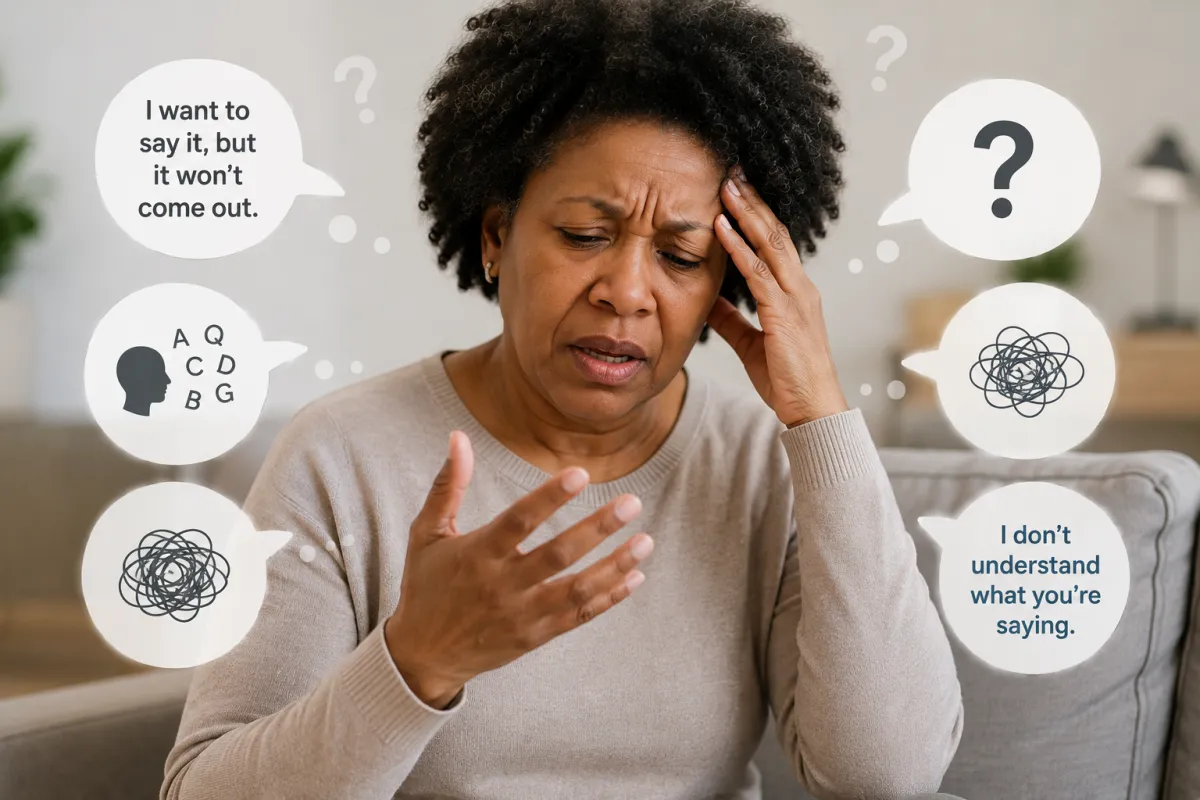
Severe aphasia is one of the most devastating and frustrating consequences of stroke. It can make speaking, understanding language, reading and writing extremely difficult, leaving many stroke survivors feeling trapped inside their own minds. Family members may also struggle, wondering whether their loved one understands them or if communication will ever improve. Learn why severe aphasia happens after a stroke, what recovery may look like and how communication can still remain possible.
After your stroke...
Words suddenly disappear.
You know what you want to say.
But the words won't come out.
Or perhaps...
People speak to you, but their sentences no longer make sense.
You may feel frightened.
Confused.
Isolated.
You begin wondering...
"Will I ever be able to communicate again?"
Or your family may wonder...
"Can they still understand us?"
The good news is...
Even severe aphasia can improve, and many people continue making meaningful progress long after their stroke.
✦ ✦ ✦
The Good News
The brain has an incredible ability to adapt after injury.
Although severe aphasia can be life-changing, recovery is possible.
Many people improve their ability to:
✓ Understand language.
✓ Speak.
✓ Read.
✓ Write.
✓ Communicate in other ways.
Progress may be slow, but improvements can continue for months and even years after a stroke.
Communication is often still possible, even when speech is severely affected.
✦ ✦ ✦
What Is Aphasia?
Aphasia is a language disorder caused by damage to areas of the brain responsible for communication.
It affects language—not intelligence.
A person with aphasia has not lost their thoughts, personality or emotions.
They simply have difficulty accessing or expressing language.
Aphasia may affect:
✓ Speaking.
✓ Understanding.
✓ Reading.
✓ Writing.
Some people experience mild difficulties.
Others develop severe aphasia.
✦ ✦ ✦
What Is Severe Aphasia?
Severe aphasia occurs when language difficulties are extensive.
A person may:
✓ Be unable to speak.
✓ Only say a few words.
✓ Have difficulty understanding speech.
✓ Struggle to read or write.
✓ Become easily overwhelmed by conversation.
Communication can become extremely frustrating.
However, severe aphasia affects each person differently.
✦ ✦ ✦
Types of Severe Aphasia
Global Aphasia
This is one of the most severe forms of aphasia.
People may experience major difficulties with both:
✓ Understanding language.
✓ Producing speech.
Communication may be very limited initially.
Severe Expressive Aphasia
The person understands much more than they can say.
They may know exactly what they want to communicate but be unable to produce the words.
Severe Receptive Aphasia
Speech may remain fluent, but understanding language becomes extremely difficult.
Words may sound confusing or meaningless.
✦ ✦ ✦
Can Someone With Severe Aphasia Still Understand?
Often, yes.
This is extremely important.
Some people with severe aphasia understand far more than they can express.
Never assume someone cannot understand simply because they cannot speak.
Speak respectfully.
Include them in conversations.
Continue talking to them as an adult.
✦ ✦ ✦
Emotional Effects of Severe Aphasia
Severe aphasia can feel devastating.
Many people experience:
✓ Frustration.
✓ Anger.
✓ Isolation.
✓ Embarrassment.
✓ Anxiety.
✓ Depression.
Imagine knowing exactly what you want to say but being unable to communicate it.
The emotional impact can be enormous.
Family members may also experience grief and helplessness.
✦ ✦ ✦
Can Severe Aphasia Improve?
Yes.
Many people experience improvements over time.
Recovery depends on:
✓ The size and location of the stroke.
✓ Age and general health.
✓ Access to speech therapy.
✓ Family support.
✓ Opportunities to practise communication.
The greatest improvements often occur during the first months, but recovery can continue for years.
✦ ✦ ✦
What Can Help Recovery?
Speech and Language Therapy
Speech therapy is one of the most important treatments for aphasia.
Therapy may focus on:
✓ Word finding.
✓ Understanding language.
✓ Reading.
✓ Writing.
✓ Alternative communication methods.
Repetition and Practice
Regular communication practice helps encourage neuroplasticity.
Communication Aids
Some people benefit from:
✓ Picture boards.
✓ Communication books.
✓ Tablets and apps.
✓ Writing tools.
Family Involvement
Supportive family communication can make a significant difference.
✦ ✦ ✦
How to Communicate With Someone Who Has Severe Aphasia
Helpful strategies include:
✓ Speak slowly.
✓ Use simple sentences.
✓ Give extra time to respond.
✓ Reduce background noise.
✓ Use gestures and facial expressions.
✓ Ask yes-or-no questions when appropriate.
✓ Write key words down.
✓ Avoid correcting every mistake.
Most importantly...
Be patient.
✦ ✦ ✦
Things to Avoid
Try not to:
✗ Finish every sentence.
✗ Speak to them like a child.
✗ Pretend to understand if you do not.
✗ Rush conversations.
✗ Exclude them from discussions.
Aphasia affects communication, not intelligence.
✦ ✦ ✦
Will They Ever Speak Normally Again?
This varies greatly.
Some people make remarkable recoveries.
Others continue to have long-term communication difficulties.
Recovery does not always mean returning to exactly how things were before.
Many people learn new ways to communicate and continue leading meaningful lives.
✦ ✦ ✦
When Should You Seek Medical Advice?
Arrange an appointment with your healthcare professional if:
✓ Communication suddenly worsens.
✓ You are becoming increasingly withdrawn.
✓ Mood problems develop.
✓ You are struggling to cope emotionally.
Early support can make a significant difference.
Seek urgent medical attention if language difficulties suddenly worsen, as this could indicate another stroke.
✦ ✦ ✦
My Perspective
After a stroke...
Communication problems can feel incredibly isolating.
Words are how we connect with other people.
How we express ourselves.
How we share our personalities.
Losing language can feel like losing part of yourself.
But severe aphasia does not mean that hope is gone.
People often understand much more than others realise.
And meaningful improvements can continue long after the stroke itself.
Never underestimate the brain's ability to adapt.
✦ ✦ ✦
Frequently Asked Questions
Does severe aphasia mean someone has lost their intelligence?
No.
Aphasia affects language, not intelligence.
Many people still think and feel exactly as they did before the stroke.
✦ ✦ ✦
Can severe aphasia improve?
Yes.
Many people continue improving for months and years after stroke.
✦ ✦ ✦
Can someone with aphasia understand me?
Often, yes.
Never assume a person cannot understand simply because they cannot speak.
✦ ✦ ✦
How can I help someone with severe aphasia?
Be patient, speak simply, use gestures and give them plenty of time to respond.
✦ ✦ ✦
Will speech therapy help?
For many people, yes.
Speech and language therapy often plays an important role in recovery.
✦ ✦ ✦
Key Takeaways
✓ Severe aphasia affects communication, not intelligence.
✓ People may struggle with speaking, understanding, reading and writing.
✓ Many people understand more than they can express.
✓ Communication can remain possible using different strategies.
✓ Meaningful recovery may continue for years.
✓ Patience and family support are extremely important.
✦ ✦ ✦
Related Articles
Continue learning about communication difficulties after stroke with these helpful guides:
Aphasia After a Stroke – Learn about the different types of aphasia and what recovery may look like.
How Family Can Communicate With Someone Who Has Aphasia – Practical tips for supporting communication.
Difficulty Finding Words After a Stroke – Understand why word-finding problems occur.
Reading Problems After a Stroke – Learn why reading may become difficult after brain injury.
Writing Problems (Agraphia) After a Stroke – Discover why writing ability can change after stroke.
✦ ✦ ✦
About the Author
Alisia Gayle is a stroke survivor who achieved 96% neurological recovery following an ischaemic stroke.
After years of rehabilitation, she now shares practical, evidence-informed resources to help stroke survivors, carers and families better understand recovery and rebuild their lives with confidence.
Alisia is also the author of Brain Damage: My Journey to 96% Recovery, where she shares her personal stroke recovery story and the lessons she learned throughout her rehabilitation.
✦ ✦ ✦
Medical Disclaimer
This article is intended for educational purposes only and should not replace professional medical advice, diagnosis or treatment.
Always seek advice from your doctor, speech and language therapist or other qualified healthcare professional regarding communication difficulties following a stroke.
✦ ✦ ✦
Final Thoughts
After a stroke...
Severe aphasia can feel frightening.
For the survivor.
And for the people who love them.
But communication is about far more than words alone.
Facial expressions.
Gestures.
Writing.
Pictures.
Touch.
Patience.
Connection can still happen.
And recovery is often possible.
Never assume that improvement has stopped.
Never assume that someone with aphasia has nothing to say.
Sometimes...
The words are still there.
They simply need time and support to find their way out again.