

MOBILITY & PHYSICAL RECOVERY

Sitting Balance After a Stroke.

A calmer, easier-to-scan guide to why sitting balance can change after stroke, what may help, and when to seek professional advice.

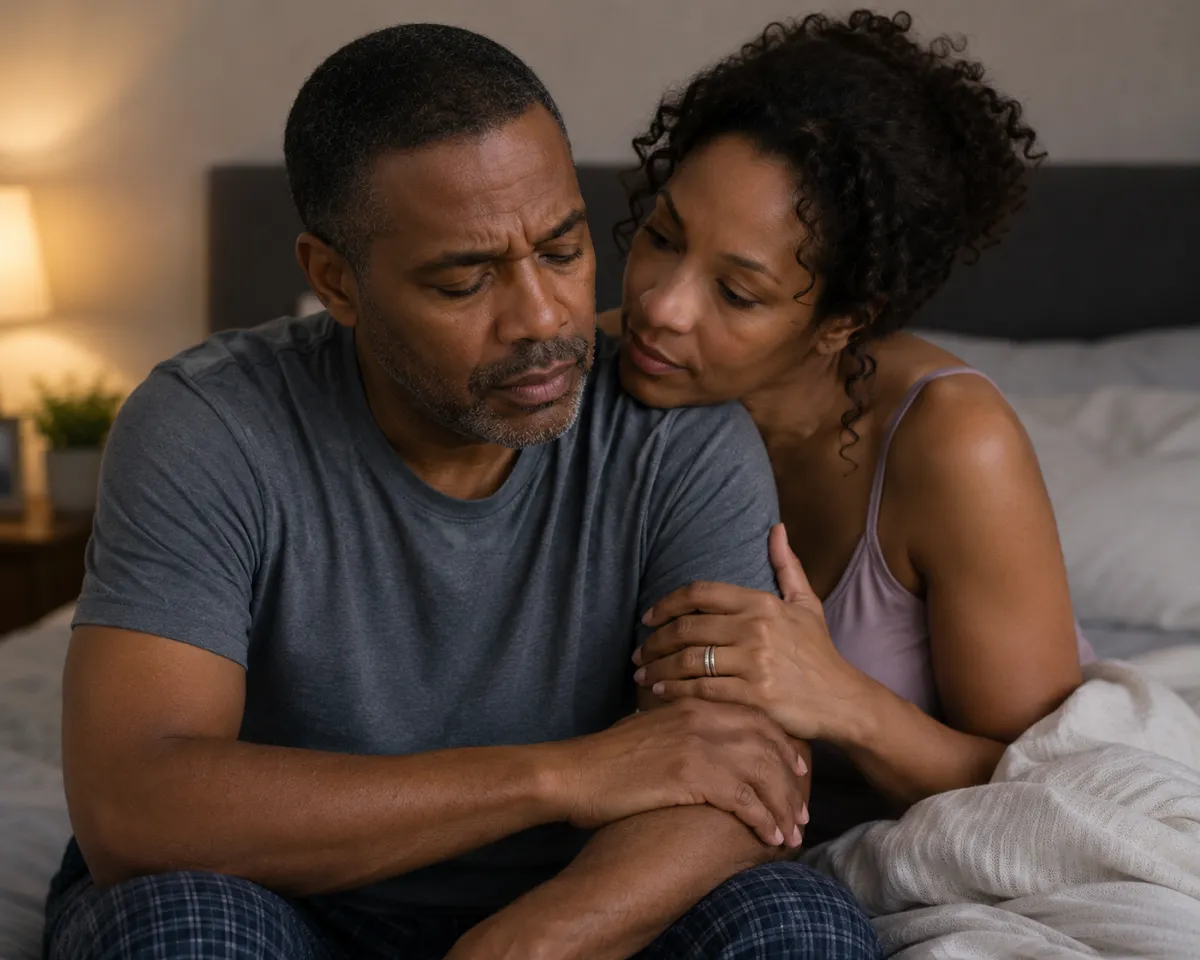
Sexual Problems After a Stroke

Sexual Problems After a Stroke

July 06, 20266 min read

Changes in sexual function are common after a stroke, but many people feel too embarrassed to talk about them. Learn why stroke can affect intimacy, the physical and emotional changes you may experience, and how many couples regain a satisfying sex life with time, communication and support.

After a stroke...

Most people ask about walking.

Talking.

Driving.

Returning to work.

Very few people ask about sex.

Not because it isn't important.

Because it feels uncomfortable to talk about.

You may be wondering...

"Is it normal to feel different?"

"Will I ever enjoy sex again?"

"Is it even safe?"

These are incredibly common questions.

And you're not alone in asking them.

✦ ✦ ✦

The Good News

Many stroke survivors continue to enjoy a healthy and fulfilling sex life.

It may take time.

It may require patience.

It may look a little different than before.

But intimacy and closeness are still possible for many people after a stroke.

✦ ✦ ✦

Can a Stroke Affect Your Sex Life?

Yes.

A stroke can affect both physical and emotional aspects of sexual activity.

Some people notice only small changes.

Others experience more significant challenges.

Every recovery journey is different.

✦ ✦ ✦

Why Does It Happen?

Several factors may contribute.

Physical Changes

Weakness.

Poor balance.

Spasticity.

Pain.

Fatigue.

Reduced sensation.

These can all make sexual activity more difficult or less comfortable.

✦ ✦ ✦

Fatigue

Stroke fatigue is one of the biggest challenges many survivors face.

Even enjoyable activities may feel exhausting.

Many couples find intimacy is easier when planned for a time of day when energy levels are highest.

✦ ✦ ✦

Changes in Sensation

Some people experience reduced sensation on one side of the body.

Others become more sensitive to touch.

These changes may affect comfort, arousal and sexual enjoyment.

✦ ✦ ✦

Emotional Changes

A stroke can affect:

✓ Confidence.

✓ Self-esteem.

✓ Mood.

✓ Anxiety.

✓ Depression.

Feeling less confident about your body or your abilities is extremely common.

✦ ✦ ✦

Medication

Some medications may reduce sexual desire or contribute to erectile dysfunction or vaginal dryness.

If you notice changes after starting medication, discuss them with your doctor.

Never stop prescribed medication without medical advice.

✦ ✦ ✦

Is It Safe to Have Sex After a Stroke?

For most people...

Yes.

Once you are medically stable and your doctor has no concerns, sexual activity is generally considered safe.

Sex places a similar demand on the heart as climbing one or two flights of stairs.

If you have concerns about your heart or blood pressure, ask your healthcare professional for individual advice.

✦ ✦ ✦

Common Sexual Problems After Stroke

People may experience:

✓ Reduced sexual desire.

✓ Difficulty becoming aroused.

✓ Erectile dysfunction.

✓ Vaginal dryness.

✓ Difficulty reaching orgasm.

✓ Fatigue during intimacy.

✓ Pain or discomfort.

✓ Anxiety about having another stroke.

Not everyone experiences these problems.

Some notice no changes at all.

✦ ✦ ✦

Emotional Intimacy Matters Too

Intimacy isn't only about sex.

Holding hands.

Hugging.

Kissing.

Laughing together.

Talking openly.

These moments often help rebuild confidence and strengthen relationships while physical recovery continues.

✦ ✦ ✦

Practical Tips

Talk Openly

Honest communication helps both partners understand how each other feels.

Many couples discover they share the same worries.

✦ ✦ ✦

Take Your Time

There is no deadline for returning to sexual activity.

Move at a pace that feels comfortable for both of you.

✦ ✦ ✦

Choose the Right Time

Many stroke survivors have more energy earlier in the day.

Planning intimacy when fatigue is lowest may help.

✦ ✦ ✦

Experiment With Comfortable Positions

Weakness, pain or balance problems may make some positions uncomfortable.

Trying different positions can improve comfort and confidence.

✦ ✦ ✦

Don't Focus Only on Performance

Physical intimacy is about connection, affection and closeness—not simply sexual performance.

Reducing pressure often makes intimacy more enjoyable.

✦ ✦ ✦

When Should You Seek Medical Advice?

Speak with your healthcare professional if:

✓ Sexual problems are causing distress.

✓ You develop pain during sexual activity.

✓ You experience erectile dysfunction that persists.

✓ Vaginal dryness causes discomfort.

✓ Medication may be affecting your sex life.

✓ Anxiety is preventing intimacy.

Help is available.

You do not need to struggle in silence.

✦ ✦ ✦

My Perspective

One thing stroke teaches you is that recovery affects every part of life.

Not just walking.

Not just speaking.

Relationships change too.

It's normal to feel uncertain.

To feel nervous.

To wonder whether things will ever feel the same again.

Open conversations, patience and kindness—both towards yourself and your partner—can make an enormous difference.

Recovery includes rebuilding confidence as well as rebuilding movement.

✦ ✦ ✦

Frequently Asked Questions

Will My Sex Drive Return?

For many people, yes.

Others experience lasting changes.

Recovery depends on physical health, emotional wellbeing, medication and many other individual factors.

✦ ✦ ✦

Can Stroke Cause Erectile Dysfunction?

Yes.

Stroke can affect the brain signals involved in sexual function, and some medications may also contribute.

Treatment options are available.

✦ ✦ ✦

Can Women Experience Sexual Problems After a Stroke?

Absolutely.

Women may experience reduced desire, vaginal dryness, pain during sex or difficulty reaching orgasm.

These issues are common and treatable.

✦ ✦ ✦

Is It Embarrassing to Talk to My Doctor?

Many people feel embarrassed.

However, healthcare professionals discuss these concerns regularly.

Sexual health is an important part of overall recovery.

✦ ✦ ✦

Key Takeaways

✓ Sexual problems after stroke are common.

✓ Physical, emotional and medication-related factors may all contribute.

✓ Most people can safely return to sexual activity once medically stable.

✓ Communication with your partner is one of the most important parts of recovery.

✓ Help is available if sexual problems continue.

✓ Intimacy is about connection as well as sex.

✦ ✦ ✦

About the Author

Alisia Gayle is a stroke survivor who achieved 96% neurological recovery following an ischaemic stroke.

After years of rehabilitation, she now shares practical, evidence-informed resources to help stroke survivors, carers and families better understand recovery and rebuild their lives with confidence.

Alisia is also the author of Brain Damage: My Journey to 96% Recovery, where she shares her personal stroke recovery story and the lessons she learned throughout her rehabilitation.

✦ ✦ ✦

Medical Disclaimer

This article is intended for educational purposes only and should not replace professional medical advice, diagnosis or treatment.

Always seek advice from your doctor or healthcare professional regarding symptoms, concerns or changes in your condition.

✦ ✦ ✦

Final Thoughts

A stroke may change many parts of life.

But it doesn't take away your need for love...

Connection...

Affection...

Or intimacy.

Give yourself time.

Talk openly.

Be patient with yourself and your partner.

Recovery isn't only about rebuilding your body.

It's also about rebuilding the relationships that matter most—one conversation at a time.

blog author avatar
Stroke Survivor and Author
Back to Blog

What you’ll learn

Why sitting balance can be affected after a stroke

Common problems people notice day to day

Simple rehabilitation approaches that may help

When changes in balance need medical attention

Why sitting balance matters

Sitting balance is often one of the foundations for standing, walking and everyday activities. After a stroke, some people find it difficult to sit upright without support, lean to one side, or feel unsteady when reaching.

The good news

Sitting balance often improves with rehabilitation, practice and time. Even small improvements can support confidence and independence.

Why can balance change after a stroke?

A stroke may affect several systems that help you stay upright, including strength, coordination, sensation, body awareness and balance control.

Strength

Trunk muscles may become weaker or slower to respond.

Coordination

Movements may feel less automatic or less controlled.

Sensation

You may have less feedback about where your body is in space.

Confidence

Fear of falling can make movement feel harder.

Common sitting problems after a stroke

  • Leaning to one side

  • Difficulty sitting upright without support

  • Feeling unstable when reaching

  • Falling or drifting backwards

  • Increased fatigue during longer periods of sitting

Some people may also experience pusher syndrome, where they actively push towards their weaker side. This should be assessed by a rehabilitation professional.

What May Help

Physiotherapy and occupational therapy often work on trunk control, weight shifting, posture, coordination and everyday activities.

Examples of exercises

  • Sitting unsupported for short periods

  • Gentle reaching tasks

  • Weight shifting from side to side

  • Trunk strengthening

  • Practising on different safe surfaces when appropriate

Keep it individual

Exercises should be matched to your own abilities and professional advice.

More detail: posture and positioning

Helpful strategies may include keeping both feet supported, maintaining an upright posture, and using supportive cushions when recommended.

More detail: fatigue and balance

Balance can become worse when you are tired. Regular rest periods and shorter practice sessions may help.

More detail: tips for family and carers

Encourage safe practice, avoid unexpected pulling or pushing, and help maintain good posture while celebrating small improvements.

When should you seek medical advice?

Arrange an appointment with a healthcare professional if sitting balance is worsening, falls are occurring, new weakness develops, or balance problems are significantly affecting daily activities.

Seek urgent medical attention for sudden new weakness, new speech difficulties, sudden confusion or sudden vision changes.

Key takeaways

Sitting balance is commonly affected after stroke.

Weakness, sensation and body awareness can all contribute.

Good sitting balance supports everyday activity and later mobility.

Recovery can continue over months and years.

Frequently asked questions

Is poor sitting balance common after a stroke?

Yes. Many stroke survivors experience difficulty with sitting balance, particularly during earlier stages of recovery.

Will my sitting balance improve?

Many people improve through rehabilitation, ongoing recovery and repeated practice.

Can exercises help?

Targeted exercises can help improve trunk control, balance and confidence when they are appropriate for the individual.

About Alisia

Alisia Gayle is a stroke survivor who achieved 96% neurological recovery following an ischaemic stroke.

After years of rehabilitation, she now shares practical, evidence-informed resources to help stroke survivors, carers and families better understand recovery and rebuild their lives with confidence.

Alisia is also the author of Brain Damage: My Journey to 96% Recovery, where she shares her personal stroke recovery story and the lessons she learned throughout her rehabilitation.

Next articles

Medical disclaimer

This article is intended for educational purposes only and should not replace professional medical advice, diagnosis or treatment.

Always seek advice from your doctor, physiotherapist or rehabilitation team regarding symptoms, concerns or changes in your condition.

Alisia Gayle is a stroke survivor, author, and advocate whose life was transformed in a single, ordinary day.

Contact us

800 1234 5678

FOLLOW US

Copyright 2026. Alisia Gayle | Stroke Recovery Through Lived Experience. All Rights Reserved.