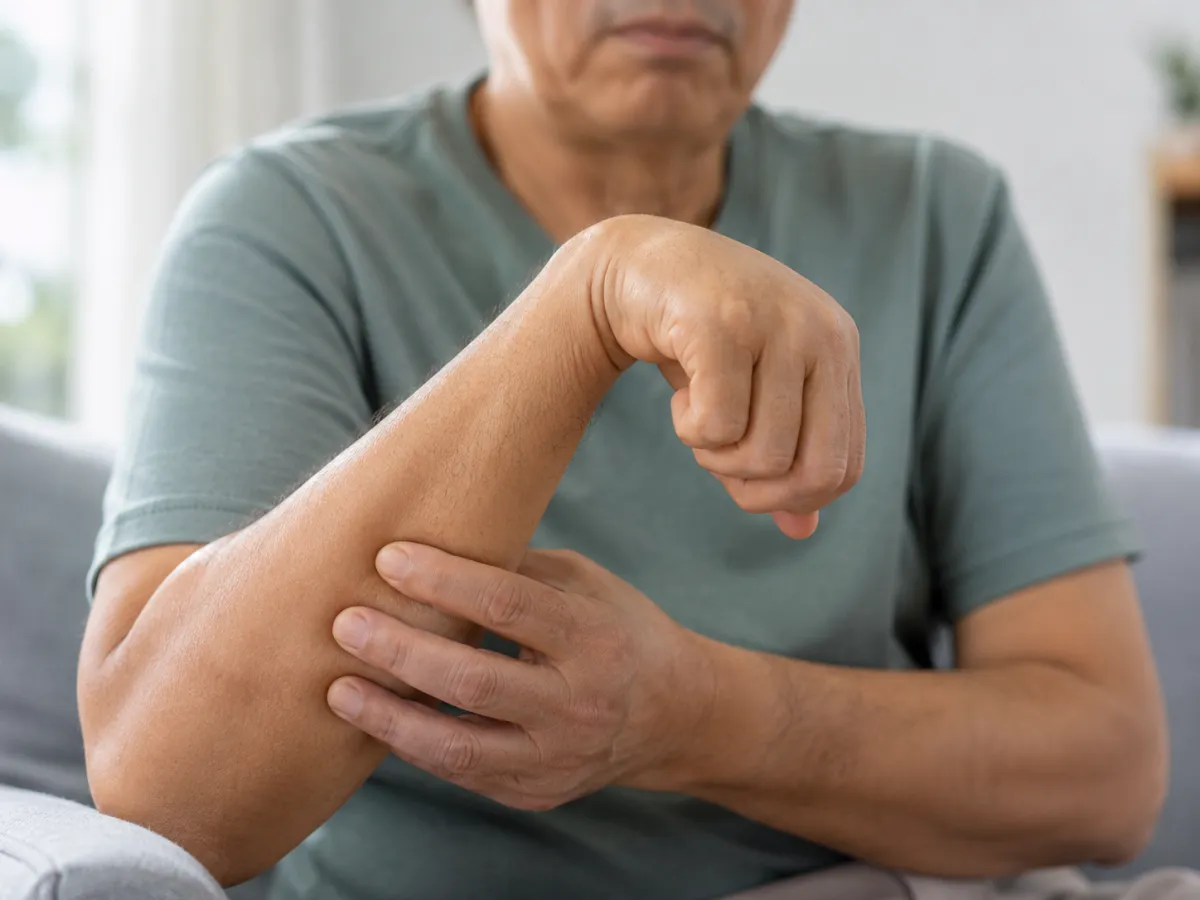
Spasticity after stroke can make muscles feel tight, stiff and difficult to control. It happens when stroke damage disrupts the signals between the brain and muscles, causing some muscles to remain overactive or contract when you do not want them to. Spasticity can affect the arm, hand, leg or foot and may interfere with walking, dressing, washing, sleeping and other everyday activities. Physiotherapy, regular movement, stretching, splints, medication and treatments such as botulinum toxin may all form part of management.
✦ ✦ ✦
You Want Your Arm or Leg to Relax…
But it won't.
You want to open your hand.
Stretch your fingers.
Straighten your elbow.
Take a comfortable step.
But instead…
✓ Your muscles tighten unexpectedly.
✓ Your hand curls into a fist.
✓ Your arm bends without you trying.
✓ Your leg feels stiff while walking.
This is called spasticity, and it is a common complication after stroke.
It can be frustrating because you may know exactly what movement you want to make, yet your muscles seem determined to do something completely different.
You are trying to straighten your arm.
Your elbow wants to bend.
You are trying to open your fingers.
Your hand wants to close.
You are trying to place your foot normally.
Your ankle pulls into another position.
Spasticity can make recovery feel as though you are fighting against your own body.
Understanding why this happens can make it easier to work with your rehabilitation team and find strategies that improve movement, comfort and independence.
✦ ✦ ✦
The Good News
Many people improve significantly with rehabilitation.
There are several treatments that can reduce muscle tightness, maintain flexibility and make everyday movement easier.
The right treatment depends on which muscles are affected, how severe the spasticity is and what you want to achieve.
For one person, the goal may be opening the hand enough to clean the palm.
For another, it may be improving the position of the foot while walking.
Someone else may simply want to reduce painful spasms so they can sleep comfortably.
Recovery doesn't happen overnight.
It often happens through hundreds of small improvements.
One stretch.
One movement.
One repetition.
One day at a time.
✦ ✦ ✦
What Is Spasticity?
Spasticity is an abnormal increase in muscle tone that can develop after damage to the brain or nervous system.
Normally, your brain constantly sends and receives signals that help muscles tighten when needed and relax when they are not needed.
Most of this happens without you thinking about it.
After a stroke, those signals can become disrupted.
Instead of smoothly relaxing when they should, certain muscles may remain overactive.
This can make them feel:
✓ Tight.
✓ Stiff.
✓ Resistant to movement.
✓ Difficult to control.
The faster somebody tries to move a spastic muscle, the stronger that resistance may sometimes feel.
Spasticity is not simply a muscle becoming "too strong."
The underlying problem begins with altered control from the nervous system.
✦ ✦ ✦
Can a Stroke Cause Spasticity?
Yes.
Spasticity is a recognised effect of stroke.
It develops because stroke can interrupt communication between areas of the brain involved in movement and the nerves controlling your muscles.
Without the usual balance of signals from the brain, some muscles may become overactive.
Not everyone develops spasticity after a stroke.
Some survivors experience none at all.
Others have mild tightness affecting only a few movements.
Some develop more significant spasticity that interferes with walking, hand function, personal care or comfort.
The pattern also varies depending on which part of the brain was affected.
✦ ✦ ✦
What Causes Spasticity After a Stroke?
Several neurological and physical changes can contribute.
✦ ✦ ✦
Damage to Motor Pathways
Stroke can damage pathways responsible for controlling voluntary movement.
These pathways help your brain send instructions to muscles throughout your body.
When those signals are disrupted, muscle activity may become poorly controlled.
Instead of contracting and relaxing smoothly, some muscles may stay active for too long.
✦ ✦ ✦
Loss of Inhibitory Control
Your brain does not only tell muscles when to contract.
It also helps prevent excessive muscle activity.
After stroke, some of this inhibitory control can be lost.
As a result, signals within the nervous system may trigger stronger muscle contractions than necessary.
This contributes to the stiffness and resistance associated with spasticity.
✦ ✦ ✦
Changes in the Muscles and Joints
Spasticity begins with changes in the nervous system, but muscles and joints can also change over time.
If an arm, hand or leg remains in the same position for long periods, muscles and other soft tissues may gradually shorten.
Joints can lose range of movement.
This can create additional stiffness on top of the original neurological spasticity.
That is one reason maintaining movement and appropriate positioning can be so important.
✦ ✦ ✦
Reduced Movement
After stroke, weakness may mean that an affected limb is moved much less frequently.
An arm may remain bent against the body.
A hand may stay closed.
An ankle may remain pointed downward.
Long periods without movement can contribute to stiffness and loss of flexibility.
Regular appropriate movement helps maintain joint range and gives your rehabilitation team opportunities to work on better movement patterns.
✦ ✦ ✦
Common Symptoms of Spasticity
Symptoms vary depending on which muscles are affected.
You may notice:
✓ Muscle tightness.
✓ Stiff joints.
✓ Difficulty opening the hand.
✓ Fingers curling into the palm.
✓ A bent elbow.
✓ The wrist pulling into a flexed position.
✓ The foot pointing downward.
✓ Toes curling.
✓ Difficulty placing the heel down while walking.
✓ Muscle spasms.
✓ Sudden involuntary movements.
✓ Pain or discomfort.
✓ Reduced range of motion.
✓ Difficulty moving an affected limb smoothly.
Some people experience only mild stiffness.
Others find that spasticity significantly interferes with daily life.
✦ ✦ ✦
Where Does Spasticity Usually Affect the Body?
Spasticity can occur in different muscle groups.
In the arm, it may cause:
✓ The shoulder to pull inward.
✓ The elbow to remain bent.
✓ The wrist to curl.
✓ The hand to close into a fist.
✓ The thumb to pull into the palm.
In the leg, it may cause:
✓ The knee to become stiff.
✓ The hip to move differently.
✓ The ankle to point downward.
✓ The foot to turn inward.
✓ The toes to curl.
These patterns can interfere with reaching, grasping, standing and walking.
✦ ✦ ✦
How Does Spasticity Affect Daily Life?
Spasticity can affect far more than how your arm or leg looks.
It may make everyday activities such as:
✓ Getting dressed.
✓ Washing.
✓ Cleaning the palm of your hand.
✓ Cutting food.
✓ Walking.
✓ Putting on shoes.
✓ Climbing stairs.
✓ Getting into bed.
✓ Sleeping comfortably.
more difficult.
A tightly closed hand can make cleaning the palm and trimming fingernails harder.
A stiff elbow can make putting on a sleeve difficult.
A tight ankle can alter the way your foot lands while walking.
For some people, the biggest problem is not movement at all.
It is pain.
For others, spasticity may make personal care more difficult for both the survivor and the person helping them.
The impact matters more than simply how much muscle tone is present.
✦ ✦ ✦
Can Spasticity Improve?
Yes.
Spasticity can improve, although recovery varies greatly between individuals.
Your progress may depend on factors including:
✓ The location and severity of your stroke.
✓ Which muscles are affected.
✓ How much voluntary movement you have.
✓ Whether joints remain flexible.
✓ How consistently rehabilitation is performed.
✓ Whether complications such as contractures develop.
✓ Which treatments are appropriate for you.
Some survivors experience substantial reductions in stiffness.
Others continue to have spasticity but learn to manage it effectively.
The goal is not always to eliminate every trace of muscle tone.
Sometimes the priority is improving function, comfort, hygiene or positioning.
✦ ✦ ✦
Can Spasticity Sometimes Be Useful?
This may sound strange, but sometimes increased muscle tone can temporarily help a person perform a movement.
For example, stiffness in the leg may occasionally help someone support their body weight when significant weakness is also present.
That does not mean spasticity is desirable.
It means treatment needs to be individualised.
Simply removing as much muscle tone as possible is not always the best objective.
Your rehabilitation team should consider what the spasticity is doing, what problems it causes and what would happen if that muscle activity were reduced.
✦ ✦ ✦
How Is Spasticity Diagnosed?
A healthcare professional may assess:
✓ Muscle tone.
✓ Joint range of motion.
✓ Muscle strength.
✓ Voluntary movement.
✓ Walking pattern.
✓ Hand function.
✓ Balance.
✓ Pain.
✓ Positioning.
✓ Daily activities.
They may also ask what you want to improve.
This matters.
A treatment plan should not simply focus on reducing a measurement of muscle tone.
It should address a meaningful problem.
For example:
"I want to open my hand enough to wash it."
"I want my foot to sit more comfortably in my shoe."
"I want to walk without my toes catching."
"I want the spasms to stop waking me at night."
Specific goals make treatment more useful.
✦ ✦ ✦
Treatment Options
Most people benefit from a combination of approaches.
Treatment may aim to:
✓ Maintain flexibility.
✓ Improve positioning.
✓ Reduce pain.
✓ Make personal care easier.
✓ Improve walking.
✓ Improve hand or arm function.
✓ Prevent contractures.
✓ Reduce involuntary spasms.
The best combination depends on your individual needs.
✦ ✦ ✦
Physiotherapy
Physiotherapy is often a major part of managing post-stroke spasticity.
Treatment may include:
✓ Stretching.
✓ Strengthening.
✓ Active movement.
✓ Balance exercises.
✓ Walking practice.
✓ Positioning.
✓ Functional movement training.
Your physiotherapist may also examine how spasticity interacts with weakness.
This distinction matters because not every movement problem is caused by spasticity.
Sometimes weakness, poor balance, reduced sensation or impaired coordination may be contributing just as much.
✦ ✦ ✦
Stretching
Regular stretching can help maintain muscle length and joint flexibility.
Stretching should generally be controlled rather than aggressive.
Forcing a tight limb as hard as possible is not better rehabilitation.
Your physiotherapist can show you:
✓ Which muscles need stretching.
✓ How far to move.
✓ How long to hold the position.
✓ How frequently to repeat it.
✓ Whether somebody else should help.
Consistency is usually more useful than occasional extreme stretching.
✦ ✦ ✦
Positioning
How you position your arm or leg during the day may matter.
If your hand remains tightly closed or your elbow stays bent for hours, that position can become increasingly difficult to change.
Your rehabilitation team may advise ways of supporting the affected limb when:
✓ Sitting.
✓ Lying down.
✓ Sleeping.
✓ Using a wheelchair.
✓ Standing.
Good positioning may improve comfort and help protect joints and soft tissues.
✦ ✦ ✦
Splints and Braces
Some stroke survivors benefit from splints, braces or orthoses.
These may be used to:
✓ Support a joint.
✓ Maintain alignment.
✓ Improve positioning.
✓ Assist walking.
✓ Reduce the risk of shortening in certain tissues.
Examples include wrist or hand splints and ankle-foot orthoses.
These devices should be properly assessed and fitted.
An inappropriate brace or splint can cause discomfort, pressure problems or interfere with useful movement.
✦ ✦ ✦
Botulinum Toxin Injections
Botulinum toxin, often referred to by the brand name Botox, may be used when spasticity is concentrated in specific muscles.
The injection temporarily reduces excessive activity in the targeted muscle.
For example, it might be considered when:
✓ The fingers remain tightly curled.
✓ The elbow is strongly flexed.
✓ The ankle or foot is pulled into an unwanted position.
Botulinum toxin is usually not a complete treatment by itself.
It is often most useful when combined with rehabilitation, stretching, splinting or functional practice during the period when muscle activity has been reduced.
The goal should be clear before treatment begins.
✦ ✦ ✦
Oral Medication
Some people with more widespread spasticity may be prescribed medication designed to reduce muscle overactivity.
These medicines can have side effects, including drowsiness or weakness in some people.
That means the potential benefits and disadvantages need to be considered carefully.
Your doctor can decide whether medication is appropriate based on the extent of your spasticity, symptoms and overall health.
Never change or stop prescribed medication without medical advice.
✦ ✦ ✦
Home Exercise Programme
Recovery doesn't happen only during appointments.
What you repeatedly practise between therapy sessions matters too.
A home programme may include:
✓ Stretching.
✓ Active movement.
✓ Strengthening.
✓ Positioning.
✓ Walking practice.
✓ Functional activities.
But your home programme should be designed around your impairment.
Randomly performing exercises you find online can waste time or reinforce poor movement patterns.
Quality matters.
So does repetition.
The aim is not to do the largest possible number of exercises.
The aim is to repeatedly practise the right movements.
✦ ✦ ✦
Practical Tips
Small daily habits can make managing spasticity easier.
✦ ✦ ✦
Keep Moving
Gentle regular movement can help maintain flexibility and joint range.
Try not to leave an affected arm or leg completely still for long periods when safe movement is possible.
Movement can include both therapy exercises and ordinary activities.
Repeatedly reaching.
Standing.
Walking.
Opening and closing the hand if possible.
Using the affected limb during everyday tasks where appropriate.
The more relevant the movement is to your life, the more meaningful rehabilitation can become.
✦ ✦ ✦
Stretch Regularly
Your rehabilitation team may recommend daily stretching.
Follow the technique they have shown you.
Stretching should not become a battle between you and your muscles.
Slow, controlled movement is usually more sensible than forcing a joint rapidly.
If stretching causes substantial pain, speak to your therapist.
✦ ✦ ✦
Pace Yourself
Spasticity can sometimes feel more noticeable when you are:
✓ Tired.
✓ Stressed.
✓ Unwell.
✓ In pain.
✓ Trying to move too quickly.
Post-stroke fatigue can also make controlling movement harder.
Spread demanding activities throughout your day and take breaks when needed.
Recovery is not improved by exhausting yourself unnecessarily.
✦ ✦ ✦
Look for Triggers
If your spasticity suddenly seems worse, consider whether something else has changed.
Pain, infection, constipation, poor positioning, skin irritation or other physical problems can sometimes increase muscle overactivity.
A sudden change deserves attention rather than automatically assuming your stroke recovery is reversing.
✦ ✦ ✦
Follow Your Therapy Programme
The exercises prescribed by your rehabilitation team should have a purpose.
Ask what each exercise is trying to achieve.
Is it improving range?
Strength?
Control?
Walking?
Hand opening?
Understanding the objective can make rehabilitation feel less like endless repetition and more like a targeted programme.
Consistent practice gives your nervous system repeated opportunities to learn and adapt.
✦ ✦ ✦
What Is a Contracture?
Spasticity and contracture are not the same thing.
Spasticity is caused by abnormal muscle activity from the nervous system.
A contracture develops when muscles, tendons or other tissues become shortened and the joint loses its ability to move through its normal range.
Long-standing spasticity can contribute to contracture, particularly if a limb remains in one position for long periods.
Once a fixed contracture develops, simply relaxing the muscle may not restore full movement.
This is one reason early management of positioning and range of motion matters.
✦ ✦ ✦
When Should You Seek Medical Advice?
Speak with your healthcare professional if:
✓ Muscle tightness suddenly becomes significantly worse.
✓ You develop increasing pain.
✓ A joint becomes increasingly difficult to move.
✓ Your hand becomes difficult to open for cleaning.
✓ Your foot becomes difficult to position inside your shoe.
✓ Spasticity interferes with washing or dressing.
✓ Spasticity is affecting your walking.
✓ You develop skin problems because of positioning.
✓ Spasms repeatedly disturb your sleep.
✓ You notice new weakness or neurological symptoms.
New neurological symptoms should not automatically be blamed on your previous stroke.
If you suddenly develop symptoms suggestive of another stroke, such as new facial weakness, arm weakness or speech difficulty, seek emergency medical help immediately.
✦ ✦ ✦
My Perspective
I remember how frustrating muscle tightness could be.
Sometimes it felt as though my arm had a mind of its own.
You know exactly what you are asking your body to do.
But your body does something else.
Simple movements require patience.
Stretching becomes part of your daily routine.
Some days the stiffness seems better.
Other days it can feel as though it has returned for no obvious reason.
One thing I learned during recovery was that there wasn't one magical exercise that suddenly fixed everything.
Progress came from consistency.
Doing the movements.
Repeating them.
Working on the weaknesses.
Paying attention to what my body was doing.
And continuing even when the improvement was too small to notice from one day to the next.
That is one of the hardest parts of stroke rehabilitation.
You can work for weeks and feel as though nothing has changed.
Then one day you realise a movement is easier than it used to be.
Progress often arrives quietly.
✦ ✦ ✦
Frequently Asked Questions
✦ ✦ ✦
Can Spasticity Go Away After a Stroke?
Spasticity can improve significantly after stroke.
Some people experience only temporary problems, while others continue to manage some degree of muscle tightness longer term.
The amount of recovery varies between individuals.
Treatment can also make spasticity considerably easier to manage even when it does not disappear completely.
✦ ✦ ✦
Is Spasticity Painful?
It can be.
Some people experience pain, muscle cramps or discomfort when tight muscles are moved or stretched.
Others experience significant stiffness without much pain.
If spasticity becomes painful, tell your rehabilitation team because treatment may need to be adjusted.
✦ ✦ ✦
Does Stretching Help Spasticity?
Stretching can help maintain muscle length, joint range and flexibility.
It is usually used as part of a wider rehabilitation programme rather than as the only treatment.
Your physiotherapist can recommend the safest technique for the muscles affected.
✦ ✦ ✦
Can Spasticity Get Worse?
It can become more difficult to manage, particularly if joints lose movement or muscles and soft tissues shorten.
Spasticity can also temporarily appear worse when you are tired, stressed, in pain or unwell.
A substantial or sudden change should be discussed with a healthcare professional.
✦ ✦ ✦
Can Botox Cure Spasticity?
Botulinum toxin does not cure the neurological damage caused by stroke.
It temporarily reduces overactivity in specific muscles.
That window may make stretching, positioning, movement training or personal care easier.
It is generally used as part of a broader rehabilitation plan.
✦ ✦ ✦
Why Does My Hand Keep Closing After Stroke?
Muscles that bend the wrist and fingers can become overactive after stroke.
This may cause the fingers to curl into the palm even when you are trying to open them.
Weakness in the muscles that open the hand may also contribute.
A therapist can assess whether spasticity, weakness, contracture or a combination of these factors is limiting hand opening.
✦ ✦ ✦
Key Takeaways
✓ Spasticity happens when stroke disrupts normal communication between the brain and muscles.
✓ It can affect the arm, hand, leg or foot.
✓ Spasticity is not simply muscle weakness or ordinary stiffness.
✓ Physiotherapy, positioning, stretching and regular movement are important parts of management.
✓ Splints and braces may help selected stroke survivors.
✓ Botulinum toxin can reduce overactivity in specific muscles.
✓ Medication may be considered for some people with more widespread spasticity.
✓ Treatment should focus on meaningful goals such as walking, comfort, hygiene or hand function.
✓ Long-standing stiffness can contribute to contractures.
✓ Consistent rehabilitation can continue producing improvements long after the initial stroke.
✦ ✦ ✦
The Bottom Line
Spasticity after stroke can make it feel as though your muscles are working against you.
You try to relax.
They tighten.
You try to straighten your arm.
It bends.
You try to place your foot normally.
The muscles pull it somewhere else.
But spasticity is not something you simply have to accept without treatment.
There are ways to manage it.
The first step is understanding exactly which muscles are affected and what problems the spasticity is causing.
Then treatment can become targeted.
Stretching.
Movement.
Positioning.
Physiotherapy.
Splints.
Medication.
Botulinum toxin where appropriate.
The goal is not necessarily to make every muscle completely relaxed.
The goal is to help your body move, function and feel as comfortable as possible.
✦ ✦ ✦
Related Articles
Arm Weakness After a Stroke
Hand and Finger Stiffness After a Stroke
Muscle Spasms After a Stroke
Foot Drop After a Stroke
Leg Weakness After a Stroke
✦ ✦ ✦
Final Thoughts
Spasticity may make movement feel harder today.
But it doesn't mean tomorrow can't be different.
Every stretch you complete…
Every exercise you practise…
Every movement you repeat…
Gives your brain and body another opportunity to work together.
Recovery rarely happens all at once.
Sometimes it is the hand opening slightly further.
The elbow relaxing a little more.
The foot landing differently.
The step feeling smoother.
Those changes may seem small when they happen.
But small changes repeated over time can transform what you are able to do.
Recovery happens one movement at a time.