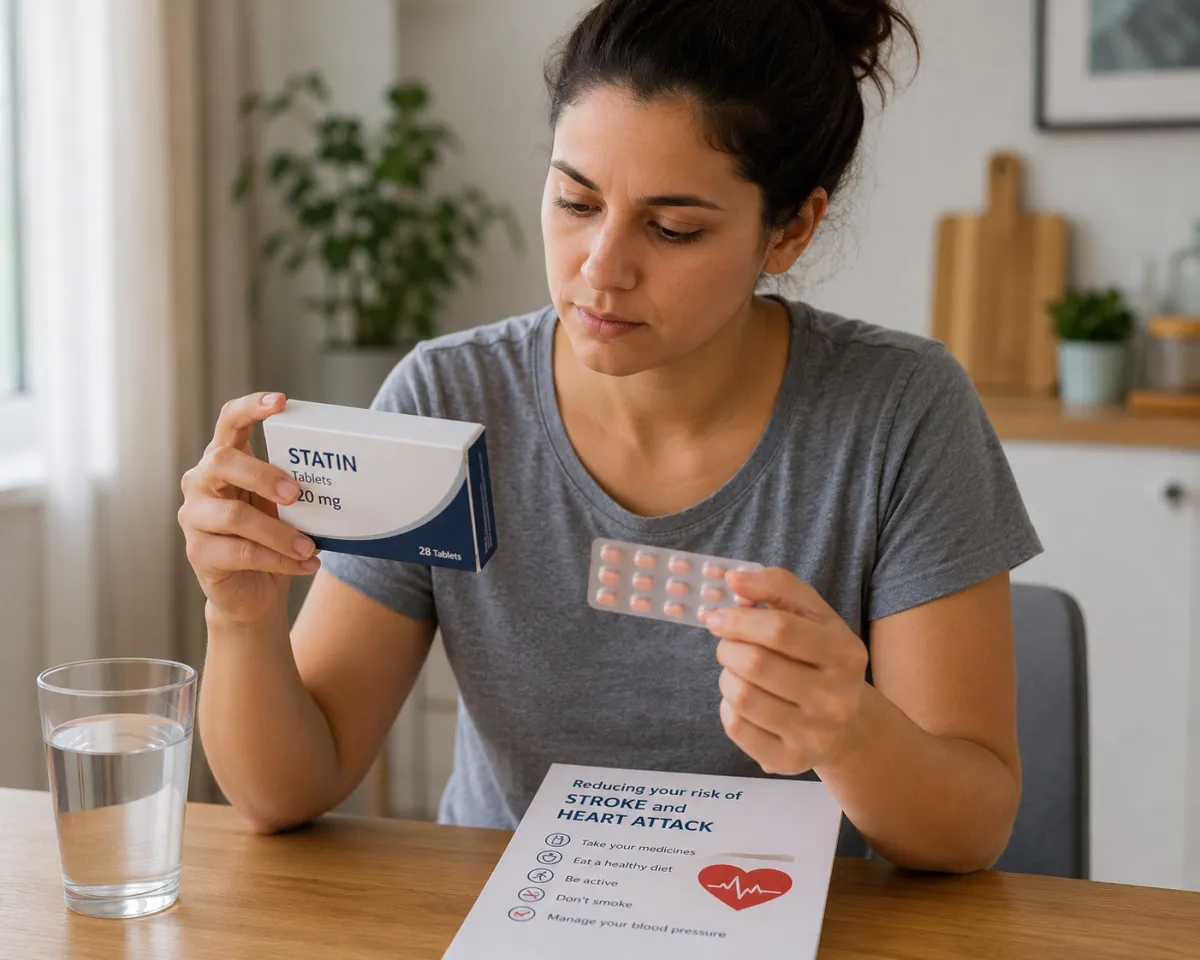
Statins are commonly prescribed after an ischaemic stroke or transient ischaemic attack (TIA) to help reduce the risk of another stroke or heart attack. Although they are known for lowering cholesterol, they also reduce inflammation and help stabilise fatty plaques inside the arteries, making them less likely to rupture and form blood clots. Learn why statins are prescribed after a stroke, how they work, possible side effects and why taking them as prescribed is an important part of stroke prevention.
After your stroke...
You leave hospital with several new medications.
One of them is a statin.
Perhaps you've never had high cholesterol.
Maybe you've always eaten well.
You begin wondering...
"Why do I need a cholesterol tablet after my stroke?"
Or perhaps...
You're concerned about possible side effects.
The good news is...
Statins are one of the most effective medications for reducing your risk of another stroke.
✦ ✦ ✦
The Good News
For many stroke survivors, statins significantly reduce the risk of another stroke and other cardiovascular problems.
Their benefits go beyond simply lowering cholesterol.
They also help protect your arteries, reduce inflammation and make blood vessels healthier.
When taken alongside healthy lifestyle choices and other prescribed medications, statins play an important role in protecting your brain and heart.
✦ ✦ ✦
What Are Statins?
Statins are medicines that reduce the amount of cholesterol produced by your liver.
They lower levels of low-density lipoprotein (LDL), often called "bad" cholesterol.
High levels of LDL cholesterol can contribute to fatty deposits, known as plaques, building up inside your arteries.
Over time, these plaques can narrow blood vessels or rupture, leading to the formation of blood clots.
By lowering cholesterol and stabilising plaques, statins help reduce the risk of another stroke.
✦ ✦ ✦
Why Are Statins Prescribed After a Stroke?
Most ischaemic strokes occur when a blood clot blocks blood flow to part of the brain.
One common cause is a build-up of fatty plaques inside the arteries.
Statins help reduce the risk of future strokes by:
✓ Lowering LDL cholesterol.
✓ Reducing inflammation inside blood vessels.
✓ Stabilising fatty plaques.
✓ Improving blood vessel function.
✓ Making plaques less likely to rupture.
Together, these effects make another stroke less likely.
✦ ✦ ✦
Do I Need a Statin If My Cholesterol Is Normal?
Possibly.
Many people are surprised to learn that statins are often prescribed even when cholesterol levels are normal.
That's because their protective effects extend beyond lowering cholesterol.
They also:
✓ Help stabilise plaques.
✓ Reduce inflammation.
✓ Protect the lining of blood vessels.
✓ Lower the risk of future cardiovascular events.
Your doctor will consider your overall stroke risk, not just your cholesterol level.
✦ ✦ ✦
Who Is Usually Prescribed Statins?
Statins are commonly recommended for people who have had:
✓ An ischaemic stroke.
✓ A transient ischaemic attack (TIA).
✓ High cholesterol.
✓ Coronary heart disease.
✓ Peripheral arterial disease.
✓ Diabetes.
Many people continue taking statins long term to reduce their future cardiovascular risk.
✦ ✦ ✦
Are Statins Used After Every Stroke?
Not always.
Statins are most commonly prescribed after an ischaemic stroke or TIA.
They may not always be recommended after a haemorrhagic stroke, where bleeding occurs inside the brain.
Your stroke specialist will consider the cause of your stroke, your overall health and the balance of benefits and risks before recommending treatment.
✦ ✦ ✦
Benefits of Statins
Taking statins as prescribed can:
✓ Reduce the risk of another stroke.
✓ Lower the risk of heart attack.
✓ Slow the progression of artery disease.
✓ Improve long-term cardiovascular health.
✓ Help protect blood vessels throughout the body.
The greatest benefit comes from taking your medication consistently over time.
✦ ✦ ✦
Possible Side Effects
Most people take statins without any significant problems.
Possible side effects include:
✓ Muscle aches.
✓ Mild muscle weakness.
✓ Headache.
✓ Joint pain.
✓ Indigestion.
✓ Feeling sick.
✓ Tiredness.
Many side effects are mild and often improve after the first few weeks.
Never stop taking your statin without speaking to your healthcare professional.
✦ ✦ ✦
Rare but Serious Side Effects
Although uncommon, seek medical advice promptly if you develop:
✓ Severe muscle pain.
✓ Significant muscle weakness.
✓ Dark-coloured urine.
✓ Yellowing of the skin or eyes.
✓ Severe unexplained abdominal pain.
These symptoms may indicate a rare complication that requires urgent assessment.
✦ ✦ ✦
Tips for Taking Statins
To get the greatest benefit from your medication:
✓ Take your statin exactly as prescribed.
✓ Do not stop treatment without medical advice.
✓ Attend follow-up appointments.
✓ Report troublesome side effects.
✓ Continue eating a heart-healthy diet.
✓ Stay physically active where possible.
Medication and healthy lifestyle choices work best together.
✦ ✦ ✦
When Should You Seek Medical Advice?
Arrange an appointment with your healthcare professional if:
✓ You develop persistent muscle aches.
✓ You experience troublesome side effects.
✓ You are concerned about your medication.
✓ You miss several doses.
✓ You want to stop taking your statin.
Seek urgent medical attention if you experience:
✓ Severe muscle pain.
✓ Sudden muscle weakness.
✓ Dark urine.
✓ Yellowing of your skin or eyes.
✓ Severe unexplained illness.
Early assessment can help identify rare complications quickly.
✦ ✦ ✦
My Perspective
After a stroke...
It's easy to focus on rehabilitation exercises and physical recovery.
But preventing another stroke is just as important.
Sometimes the smallest tablet...
Can make one of the biggest differences.
Taking your medication every day may not feel exciting.
But it's one of the simplest ways to protect the recovery you've worked so hard to achieve.
✦ ✦ ✦
Frequently Asked Questions
Will I need to take statins forever?
Many people continue taking statins long term because they provide ongoing protection against future strokes and heart disease.
Your doctor will review your treatment regularly.
✦ ✦ ✦
Can statins reverse blocked arteries?
Not completely.
However, they can slow the build-up of fatty plaques, reduce inflammation and make plaques more stable, lowering the risk of future blood clots.
✦ ✦ ✦
Are statins safe?
Yes.
For most people, statins are very safe.
Serious side effects are uncommon, and the benefits of preventing another stroke usually outweigh the risks.
✦ ✦ ✦
Can I drink alcohol while taking statins?
Small amounts of alcohol are usually acceptable for most people.
However, excessive alcohol intake can increase the risk of liver problems.
Ask your healthcare professional if you are unsure.
✦ ✦ ✦
What happens if I miss a dose?
Take it as soon as you remember unless it is nearly time for your next dose.
Do not take two doses together unless your healthcare professional advises you to.
✦ ✦ ✦
Key Takeaways
✓ Statins help reduce the risk of another stroke and heart attack.
✓ They do more than lower cholesterol by reducing inflammation and stabilising artery plaques.
✓ Many people are prescribed statins even if their cholesterol is normal.
✓ Most people take statins safely with few side effects.
✓ Never stop taking your statin without speaking to your healthcare professional.
✓ Taking your medication consistently is one of the most effective ways to protect your long-term recovery.
✦ ✦ ✦
Related Articles
Continue learning about stroke prevention with these helpful guides:
Blood Thinners After a Stroke – Learn how blood-thinning medications help reduce the risk of another stroke.
Aspirin After a Stroke – Understand when aspirin is prescribed and how it helps prevent blood clots.
Preventing Another Stroke – Discover practical lifestyle changes and treatments that help reduce your future stroke risk.
High Blood Pressure After a Stroke – Learn why controlling blood pressure is the most important step in preventing another stroke.
Cholesterol After a Stroke – Understand how cholesterol affects stroke risk and how to manage it.
✦ ✦ ✦
About the Author
Alisia Gayle is a stroke survivor who achieved 96% neurological recovery following an ischaemic stroke.
After years of rehabilitation, she now shares practical, evidence-informed resources to help stroke survivors, carers and families better understand recovery and rebuild their lives with confidence.
Alisia is also the author of Brain Damage: My Journey to 96% Recovery, where she shares her personal stroke recovery story and the lessons she learned throughout her rehabilitation.
✦ ✦ ✦
Medical Disclaimer
This article is intended for educational purposes only and should not replace professional medical advice, diagnosis or treatment.
Always seek advice from your doctor or other qualified healthcare professional regarding medications, cholesterol management or concerns following a stroke.
✦ ✦ ✦
Final Thoughts
After a stroke...
Recovery is about more than rehabilitation.
It's also about protecting your future.
Every statin you take...
Every healthy meal...
Every walk...
Every follow-up appointment...
Helps reduce your risk of another stroke.
The small decisions you make each day can have a lasting impact on your brain health and help protect the recovery you've worked so hard to achieve.