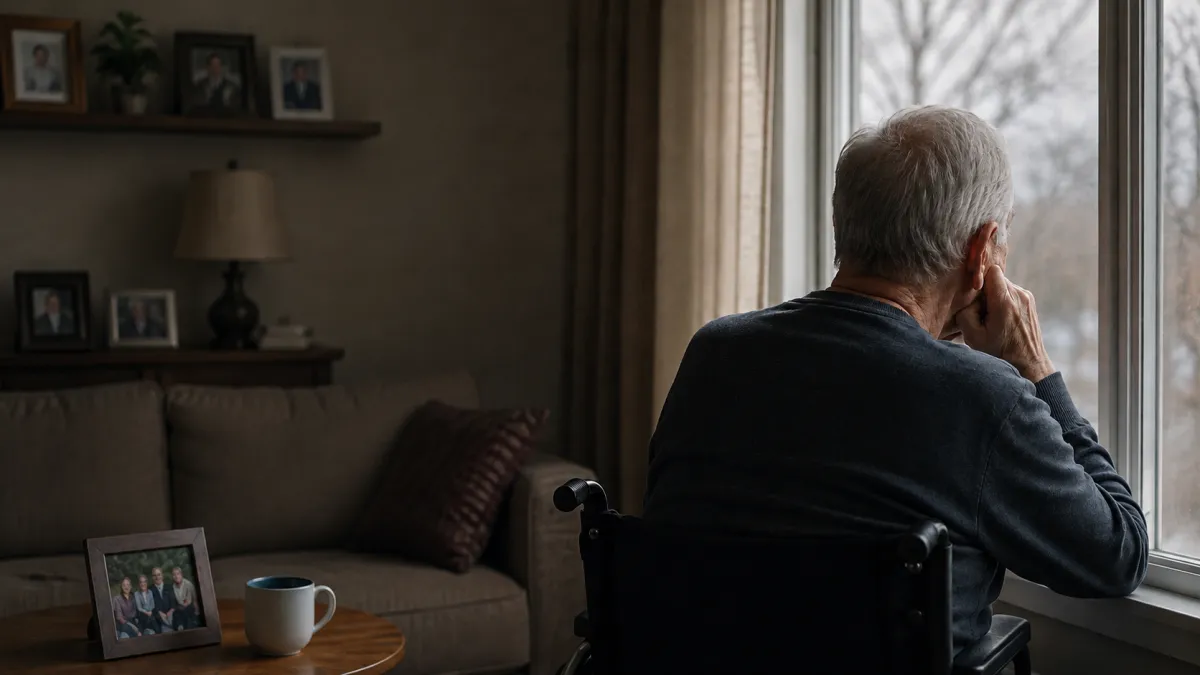
Loneliness after stroke can be profound. Your relationships may change, friends may disappear, work and social activities may stop, and even the people closest to you may struggle to understand what you are experiencing. You can also feel lonely while surrounded by family because stroke can separate you from the life and identity you had before. Learn why loneliness is common after stroke, how isolation can affect recovery and practical ways to rebuild meaningful connection.
After Stroke, Your World Can Suddenly Become Much Smaller
Before your stroke, you may have moved through life without thinking much about how many everyday interactions kept you connected to other people.
You went to work.
You spoke to colleagues.
You visited shops.
You met friends.
You took children to school.
You attended appointments, exercised, travelled, drove or simply left the house whenever you wanted.
Then stroke happens.
Your world may suddenly shrink to:
People who were once part of your everyday life may gradually disappear from it.
At first, you may be too focused on survival and rehabilitation to notice.
Then the intensity of the early recovery period begins to settle.
The visitors become less frequent.
People return to work.
Friends continue with their lives.
And you may suddenly realise just how isolated you have become.
✦ ✦ ✦
The Good News
Loneliness after stroke can be painful, but it does not have to become permanent.
Your social life may not immediately return to what it was before.
In some cases, it may never look exactly the same.
But meaningful connection can be rebuilt.
Sometimes this means repairing existing relationships.
Sometimes it means changing how you socialise.
And sometimes it means accepting that certain relationships have ended and gradually creating new ones.
The aim is not necessarily to surround yourself with large numbers of people.
You need meaningful connection.
One reliable friend can sometimes provide more genuine companionship than twenty people who occasionally send messages but are never really present.
Why Is Loneliness Common After Stroke?
Stroke can disrupt almost every route through which people normally maintain social contact.
You may experience:
Each problem can make socialising harder.
Several occurring together can make it feel almost impossible.
Someone who previously travelled independently may now need another person to take them somewhere.
Someone who enjoyed restaurants may find noise overwhelming.
Someone who loved conversation may now struggle to find words.
Someone who worked full-time may suddenly lose daily contact with dozens of colleagues.
Loneliness is therefore not simply an emotional reaction.
Your entire social structure may have changed.
You Can Feel Lonely Even When You Are Not Alone
Loneliness and being physically alone are not the same thing.
You may live with:
A spouse
A partner
Children
Parents
Carers
Other relatives
and still feel deeply lonely.
People may help you dress, prepare meals or attend appointments.
But practical care does not automatically create emotional connection.
You may feel that everybody is talking about:
Your medication
Your walking
Your appointments
Your blood pressure
Your exercises
Your progress
while nobody is really talking to you.
You can become a patient inside your own home.
That can be profoundly isolating.
Losing Your Independence Can Increase Isolation
Before your stroke, you may have decided spontaneously to leave the house.
After stroke, even a simple outing may require planning.
You may need to consider:
Who will drive you
Whether the building is accessible
How far you must walk
Whether there is somewhere to sit
How tired you will become
Whether you can use the toilet independently
Whether noise will overwhelm you
Whether you can get home when you need to
When every social activity requires negotiation, staying home can become easier.
Initially, this may feel safer.
Over time, your world can become increasingly restricted.
The less you go out, the less confident you may feel about going out.
This can create a cycle:
Isolation reduces confidence.
Lower confidence makes socialising harder.
Reduced socialising increases isolation.
Breaking that cycle often requires starting very small.
Stroke Fatigue Can Make You Withdraw
You may genuinely want company but simply lack the energy for it.
Stroke fatigue can make conversation exhausting.
A visitor who stays for three hours may believe they are keeping you company.
You may spend the entire visit trying to stay awake, follow the conversation and appear engaged.
Afterwards, you may need hours or even a day to recover.
Eventually, you may start refusing visitors.
Friends may interpret this as:
“She doesn't want to see us anymore.”
But what you may actually mean is:
“I want to see you, but I cannot manage three hours of conversation.”
That distinction matters.
Sometimes social isolation can be reduced simply by changing the format of contact.
A thirty-minute visit may work where a three-hour visit does not.
Communication Problems Can Be Extremely Isolating
Communication connects us to other people.
Stroke can interfere with that connection.
You may experience:
Aphasia
Dysarthria
Word-finding difficulties
Slower processing
Problems following group conversations
Difficulty reading or writing
Problems understanding complex language
You may know exactly what you want to say but be unable to say it quickly.
By the time you find the words, the conversation may have moved on.
People may interrupt.
They may finish your sentences.
They may answer on your behalf.
Some may start directing questions towards the person sitting beside you instead of towards you.
You may eventually stop trying to participate.
Communication difficulty does not mean that you have nothing to say.
It means you may need a different pace or method of communication.
Losing Work Can Mean Losing a Community
Returning to work is often discussed in financial terms.
But employment also provides social structure.
You may have spent more waking hours with colleagues than with some members of your family.
Work provided:
Then suddenly that disappears.
Your colleagues continue working.
Projects continue without you.
People are promoted.
New employees arrive.
You may receive supportive messages initially, but those messages may become less frequent as your absence continues.
This can make you feel forgotten.
You are not only losing a salary or career temporarily.
You may also be losing an entire social environment.
Friends May Gradually Disappear
One of the hardest parts of stroke recovery can be discovering that some friendships do not survive illness.
During the early weeks, people may visit and send messages.
Then contact declines.
There can be many reasons.
Some people do not know what to say.
Some assume you need space.
Some struggle with illness or disability.
Some wrongly believe that because you look better, everything has returned to normal.
Others may simply have been better companions during the easier parts of life than during the difficult ones.
Whatever the reason, the effect on you can still be painful.
You may wonder:
“Why did everyone disappear when I needed them most?”
That question can become particularly painful when you see those same people continuing to socialise with each other.
Social Media Can Make Loneliness Worse
Social media can connect you with people when leaving home is difficult.
But it can also intensify loneliness.
You may see:
Their lives appear to be moving forward while yours seems to have stopped.
Social media rarely shows the full reality of someone else's life.
But that does not necessarily reduce the emotional impact.
If scrolling repeatedly leaves you feeling worse, consider limiting how much time you spend watching other people's lives.
Use social media deliberately.
Look for connection rather than comparison.
Your Identity May Have Changed
Loneliness after stroke is not always about missing other people.
Sometimes you miss yourself.
You may miss:
The person who could drive anywhere
The person who worked
The person who travelled
The person who exercised
The person who organised everyone else
The person people depended upon
The person who could speak without thinking about every word
The person who did not need help
People around you may still see you as the same person.
Internally, you may feel completely different.
That gap can produce a form of loneliness that is difficult to explain.
You may think:
“Nobody understands what it feels like to wake up inside a life that looks familiar but no longer feels like mine.”
This is one reason talking with other stroke survivors can be powerful.
Sometimes you need to speak with someone who does not require a long explanation.
Family Members May Not Fully Understand
Your family may genuinely love you.
That does not guarantee that they understand stroke.
They may say:
“But you're doing so well.”
“You look completely normal.”
“You should get out more.”
“You just need to stay positive.”
They may mean to encourage you.
But when you are struggling with fatigue, cognitive difficulties or fear, these comments can make you feel even more alone.
You may stop explaining because explaining requires too much energy.
Then the people around you know even less about what you are experiencing.
Communication matters.
Where possible, tell close family members what is difficult rather than expecting them to recognise invisible symptoms automatically.
Your Partner Cannot Be Your Entire Social World
After stroke, you may become heavily dependent on your spouse or partner.
They may become:
This can place enormous pressure on one relationship.
Your partner cannot realistically replace:
Rebuilding connection outside your immediate household can therefore benefit both of you.
Independence does not necessarily mean doing everything alone.
It can mean gradually rebuilding a life that is wider than one relationship.
Do Not Wait Until You Feel Completely Recovered to Socialise
This is an easy trap.
You may think:
“I'll see everyone when I'm walking properly.”
Or:
“I'll go out once my speech improves.”
Or:
“I'll start living again when I feel like myself.”
Recovery can take months or years.
Some effects may remain.
Waiting until you are completely recovered can mean postponing life indefinitely.
Instead, ask:
“What version of socialising can I manage now?”
That might be:
Twenty minutes with one friend
Sitting in the garden together
A short café visit
A video call
Watching a film with someone
A short walk
Having someone visit your home
Sending voice notes
Attending a small support group
Start with what your current brain and body can tolerate.
Make Socialising Easier, Not More Impressive
Your first outings after stroke do not need to prove anything.
Choose situations that reduce unnecessary difficulty.
You might:
Meet one person at a time
Following one conversation is often easier than participating in a large group.
Choose quiet places
Background noise can make concentration and communication more difficult.
Stay close to home
Shorter journeys preserve energy for the social interaction itself.
Set a finishing time
Knowing that a visit will last thirty or sixty minutes can make it feel manageable.
Arrange your own exit where possible
Being able to leave when fatigue appears can reduce anxiety.
Rest beforehand
Do not use all your energy preparing for the outing.
Avoid stacking activities
One social event may be enough for that day.
The aim is connection.
You do not need to demonstrate how recovered you are.
Keep Accepting Invitations Even If You Sometimes Say No
After several declined invitations, people may stop asking.
They may assume they are bothering you.
If you still want to be included, tell them.
You might say:
“Please keep inviting me. I won't always be able to come, but I still like being asked.”
That simple sentence can prevent accidental isolation.
An invitation gives you choice.
Being quietly removed from people's plans does not.
Reach Out Instead of Always Waiting
This can feel unfair.
You may think:
“I'm the one who had the stroke. Why should I be the one chasing everyone?”
You should not have to maintain every relationship alone.
But there is a difference between chasing people who repeatedly make no effort and contacting someone you genuinely value.
Some people may be waiting because they do not know whether you want company.
A simple message can reopen the door.
You might write:
“I've been keeping things quiet while recovering, but I'd really like to see you. Could we have a short coffee sometime?”
Then observe what happens.
Healthy relationships usually contain effort from both sides.
Consider Stroke Support Groups
A stroke support group can provide something family and old friends sometimes cannot.
Recognition.
You may meet people who immediately understand:
Fatigue
Fear of another stroke
Communication difficulties
Mobility problems
Losing work
Changes in relationships
Feeling different despite looking well
The frustration of slow recovery
You do not have to explain every detail.
That can be relieving.
Support groups are not right for everyone.
Some people find them invaluable.
Others prefer individual friendships or online communities.
Try different forms of connection and keep what genuinely helps.
Online Communities Can Be Valuable Too
If mobility, transport or fatigue makes face-to-face contact difficult, online communities can provide companionship.
You may find:
Stroke does not need to become your entire identity.
Sometimes talking to other survivors is exactly what you need.
At other times, you may want to discuss books, gardening, football, parenting, films or anything except stroke.
Both forms of connection matter.
Consider Activities That Give You Repeated Contact
Friendship often develops through repeated exposure.
You see someone regularly.
Conversation gradually becomes easier.
Familiarity develops.
Instead of focusing only on “making friends,” consider joining something where you naturally see the same people repeatedly.
Possibilities may include:
Choose activities that match your current abilities.
You do not need to recreate your previous social life exactly.
You are building another one.
Volunteering Can Restore Connection and Purpose
When you are ready, volunteering can offer more than social contact.
It can restore a sense of usefulness.
After months of being the person receiving help, contributing something to other people can feel significant.
Volunteering may provide:
Routine
Social interaction
Confidence
Structure
New skills
A sense of contribution
Start small.
An activity that exhausts you is unlikely to remain sustainable.
Loneliness Can Become a Mental Health Concern
Occasional loneliness is part of being human.
Persistent isolation after stroke deserves attention.
It may contribute to or occur alongside:
If you notice that you are increasingly withdrawing from everyone, speak to your GP, stroke team or another healthcare professional.
You should also seek professional support if loneliness is accompanied by persistent sadness, severe anxiety or thoughts that life is no longer worth living.
You do not need to reach a crisis before asking for help.
What If You Prefer Being Alone?
Not everybody needs a large social life.
Some people genuinely enjoy solitude.
There is an important difference between solitude and loneliness.
Solitude is:
“I am alone and comfortable with it.”
Loneliness is:
“I want meaningful connection and do not have enough of it.”
Do not allow other people to decide that your social life is inadequate simply because it is smaller than theirs.
If you are content, connected in the ways that matter to you and not withdrawing because of fear or depression, a quiet life is not automatically a problem.
Be Careful Not to Accept Poor Treatment Because You Are Lonely
Loneliness can lower your standards.
When your social world has become small, you may hold onto relationships that are:
because losing another person feels unbearable.
But company and healthy connection are not the same thing.
Being surrounded by people who make you feel small can be lonelier than being physically alone.
You do not need to tolerate poor treatment simply because your circumstances have changed.
Rebuilding Confidence Takes Practice
Your first social interactions may feel strange.
You may be self-conscious about:
Your walking
Your hand
Your speech
Eating
Memory
Facial weakness
Using a walking aid
Wearing an orthosis
Needing help
You may assume everybody is watching you.
Usually, people are thinking about themselves far more than they are analysing you.
Confidence often returns through exposure rather than waiting.
The more ordinary interactions you successfully complete, the less extraordinary they begin to feel.
My Perspective
Loneliness can be one of the quietest consequences of stroke.
People can see a walking problem.
They can hear a speech problem.
They can watch you struggle to use your hand.
They cannot always see what it feels like when your world becomes smaller.
One of the strange things about recovery is that people often assume improvement should automatically make you feel better.
Your walking improves.
Your speech improves.
You become more independent.
Yet emotionally, you may only then begin processing what happened.
By that point, many of the people who surrounded you during the crisis may have returned to their own lives.
You may discover that rebuilding your social world requires the same kind of patience as rebuilding movement.
Some relationships will return.
Some will not.
Some new people may enter your life precisely because your circumstances have changed.
Do not measure the quality of your life by how many people surround you.
Measure it by whether the people who are there allow you to be yourself.
Frequently Asked Questions
Is loneliness common after stroke?
Yes.
Stroke can reduce mobility, employment, independence and participation in social activities.
Fatigue, communication problems, anxiety and changes in friendships can also increase isolation.
Why do I feel lonely even though I have family around me?
Being physically surrounded by people does not guarantee emotional connection.
You may feel that people understand your practical needs but not what you are experiencing emotionally.
You may also miss the independence, identity and relationships you had before your stroke.
Why have my friends stopped contacting me?
There can be many reasons.
Some people do not know what to say.
Some may wrongly assume you want privacy or that you have fully recovered.
Others may find illness uncomfortable or may simply fail to make the effort required to maintain the friendship.
Where the relationship matters to you, one honest conversation can clarify what is happening.
Should I force myself to socialise?
You do not need to force yourself into situations that overwhelm you.
But complete avoidance can make social confidence harder to rebuild.
Start with manageable interactions and gradually increase them as your confidence and stamina improve.
Can online friendships help with loneliness after stroke?
Yes.
Online communities can provide useful connection, especially when fatigue or mobility problems make travelling difficult.
However, they do not have to replace face-to-face relationships entirely if in-person contact is something you want and can manage.
What if I no longer enjoy being around my old friends?
Stroke can change your priorities, energy and interests.
Some friendships may no longer fit your life.
However, give yourself time before assuming every changed relationship needs to end.
You may still be adjusting to your new circumstances.
How can I meet new people after stroke?
Consider activities that create repeated contact, such as:
Stroke groups
Rehabilitation classes
Community groups
Volunteering
Book clubs
Exercise classes
Creative activities
Parenting groups
Faith communities
Choose something you actually enjoy rather than attending purely to make friends.
When should I seek professional help for loneliness?
Speak to a healthcare professional if isolation is accompanied by persistent sadness, anxiety, hopelessness, loss of interest in life or increasing withdrawal.
Loneliness can occur alongside depression and other emotional difficulties after stroke.
Key Takeaways
Loneliness is common after stroke because work, mobility, friendships, independence and everyday routines may all change.
You can feel lonely even when you live with other people.
Stroke fatigue and communication difficulties can make socialising much harder.
Losing work may also mean losing an important social community.
Friends sometimes withdraw because they do not understand stroke or do not know how to respond.
Socialising can be adapted through shorter visits, quieter places and smaller groups.
Tell trusted friends to keep inviting you even when you sometimes decline.
Stroke support groups and online communities can provide valuable understanding.
A small number of meaningful relationships may be more valuable than a large but superficial social network.
Persistent loneliness or withdrawal should be discussed with a healthcare professional.
The Bottom Line
Stroke can make your world smaller without you noticing it happening.
Work disappears.
Friends become less visible.
Driving stops.
Social activities become difficult.
And eventually you may realise that days are passing without meaningful contact outside your immediate household.
Do not assume that this is simply your new life.
Connection can be rebuilt.
Start small.
Contact one person.
Accept one manageable invitation.
Try one new group.
Find ways of socialising that work with the brain and body you have now rather than waiting indefinitely for everything to return to exactly how it was.
Your social life may change after stroke.
It does not have to disappear.
Related Articles
Friendships After Stroke: Why Relationships Change and How to Cope
Why Friends Disappear After Stroke
Depression After Stroke
Social Isolation After Stroke
Personality Changes After Stroke
Final Thoughts
Loneliness after stroke can make you believe that everyone else's life continued while yours stopped.
In some ways, it did.
People returned to work.
Friends continued making plans.
Families returned to their routines.
Meanwhile, you were learning how to live inside a body and brain that suddenly behaved differently.
But recovery is not only about rebuilding physical ability.
It is also about rebuilding a life you want to participate in.
That may involve old friends.
It may involve new friends.
It may involve smaller gatherings, quieter activities or completely different communities.
Do not chase connection simply so that you can say you are no longer alone.
Look for people with whom you can stop performing recovery.
The right people may not fully understand everything stroke has changed.
But they will usually be willing to listen, adjust and continue showing up.