Having a stroke in your twenties can feel almost impossible to understand. Stroke is strongly associated with older age, yet it can occur at any age — including during your twenties. Causes in younger adults can include high blood pressure, diabetes and smoking, but doctors may also investigate artery dissection, heart abnormalities, blood-clotting disorders, pregnancy-related complications and other less common causes. Recovery at this age can bring unique challenges involving university, early careers, dating, relationships, fertility, finances and rebuilding independence at a point when life was supposed to be opening up rather than suddenly becoming restricted.
After your stroke...
You may hear the diagnosis and immediately think:
"That can't be right."
You're twenty-two.
Twenty-five.
Twenty-eight.
Maybe you were at university.
Starting your first serious job.
Travelling.
Dating.
Building a career.
Planning your future.
Perhaps you went to the gym.
Maybe you rarely visited a doctor.
Then suddenly...
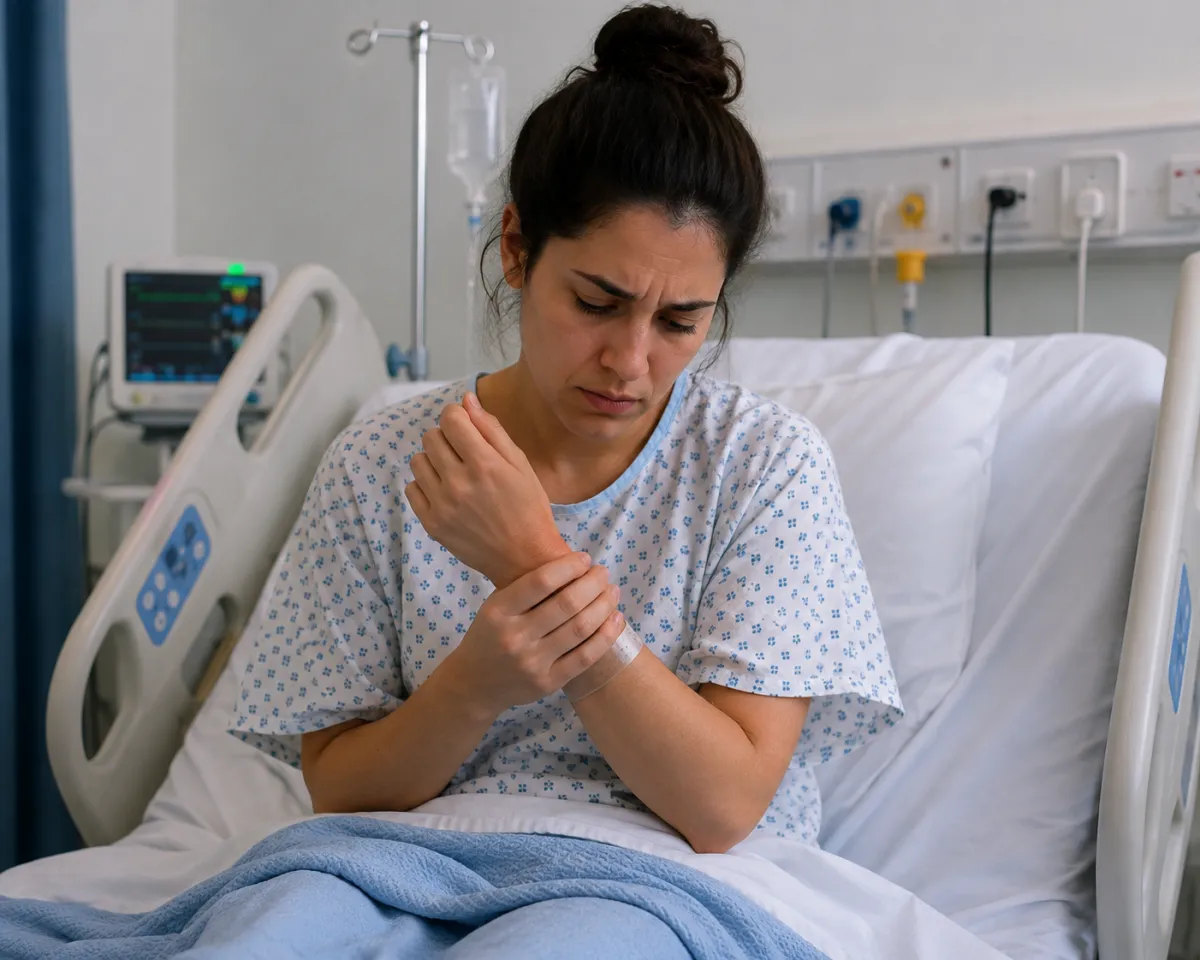
You are lying in a hospital bed being told that part of your brain has been damaged by a stroke.
You begin wondering...
"How can someone my age have a stroke?"
"Why did nobody recognise it?"
"Will I recover completely?"
"Could it happen again?"
"Can I still have children?"
"Will I ever get my old life back?"
Having a stroke in your twenties can feel incredibly isolating.
But young stroke is real.
Stroke can happen at any age.
✦ ✦ ✦
The Good News
A stroke in your twenties does not mean your future is over.
You may have a long period of life ahead in which rehabilitation, adaptation and continued recovery are possible.
You may work on:
✓ Walking
✓ Running
✓ Hand function
✓ Balance
✓ Speech
✓ Vision
✓ Memory
✓ Concentration
✓ Fatigue
✓ Returning to education
✓ Returning to work
✓ Driving
✓ Independent living
Research into young stroke commonly includes people considerably older than their twenties — often everyone below 50 or 55 — but it demonstrates an important point: stroke is not exclusively a disease of old age. UK research estimates that up to around 10% of strokes occur in people under 55.
Your age does not guarantee complete recovery.
But neither does having a stroke at 25 mean the rest of your life has been decided.
✦ ✦ ✦
Why Can You Have a Stroke in Your 20s?
A stroke happens because blood flow to part of the brain is interrupted or because bleeding occurs in or around the brain.
An ischaemic stroke usually occurs when a blood vessel supplying the brain becomes blocked.
A haemorrhagic stroke involves bleeding.
The mechanism is fundamentally the same whether you are 25 or 75.
What may differ is the reason it happened.
Doctors investigating a younger stroke survivor may consider:
✓ High blood pressure
✓ Diabetes
✓ High cholesterol
✓ Smoking
✓ Heart abnormalities
✓ Artery dissection
✓ Blood-clotting disorders
✓ Pregnancy-related complications
✓ Certain medications
✓ Other medical conditions
Sometimes, despite extensive investigation, no definite cause is identified.
That uncertainty can be incredibly frustrating.
But inventing an explanation because doctors have not found one is not useful.
✦ ✦ ✦
You Can Have Traditional Risk Factors at 25
Young age does not make you immune from ordinary cardiovascular risk factors.
The NHS identifies conditions and factors including high blood pressure, diabetes, irregular heart rhythm and lifestyle factors as contributors to stroke risk.
You can be young and still have:
✓ High blood pressure
✓ Diabetes
✓ High cholesterol
✓ Obesity
✓ A smoking history
✓ Low physical activity
Some of these cause few or no obvious symptoms.
You may look healthy.
Feel healthy.
Go to work every day.
And still have an underlying cardiovascular risk.
That is why the investigation should be based on evidence rather than assumptions about what a twenty-something "should" have.
✦ ✦ ✦
Artery Dissection and Young Stroke
One condition particularly associated with stroke in younger adults is cervical artery dissection.
A dissection occurs when a tear develops within the wall of an artery in the neck, commonly involving the carotid or vertebral arteries.
Blood can enter the arterial wall.
The vessel may narrow.
A clot may form.
That clot can then interfere with blood supply to the brain.
NHS clinical guidance describes cervical artery dissection as uncommon in the overall population but an important cause of ischaemic stroke in younger people.
A dissection may sometimes occur after:
✓ Neck injury
✓ Relatively minor trauma
✓ Sudden neck movement
or it may happen spontaneously.
Sometimes no obvious trigger is ever identified.
If dissection is suspected, specialised imaging of the arteries may be required.
✦ ✦ ✦
Heart Problems Can Cause Stroke in Your 20s
A stroke does not always originate in the brain or neck arteries.
A clot can form elsewhere and travel to the brain.
The heart is one possible source.
Depending on your circumstances, doctors may investigate using:
✓ An ECG
✓ Longer-duration heart monitoring
✓ An echocardiogram
✓ Other cardiac investigations
They may be looking for:
✓ Abnormal heart rhythms
✓ Structural abnormalities
✓ Valve problems
✓ Other potential sources of embolism
The purpose is not to run every cardiac test available simply because you are young.
The purpose is to work out which investigations make sense given the pattern of your stroke.
Finding the underlying mechanism can directly affect the medication or treatment used to reduce future risk.
✦ ✦ ✦
What About a PFO?
Young stroke survivors often encounter the term patent foramen ovale, or PFO.
A PFO is a small opening between the upper chambers of the heart that remains after birth.
Many people have one without experiencing any symptoms.
So finding one after stroke does not automatically prove:
"We found the cause."
Doctors need to consider whether the PFO is likely to have been relevant or whether it is simply an incidental finding.
That assessment may depend on:
✓ Your age
✓ Stroke imaging
✓ Other potential causes
✓ Other cardiovascular risks
✓ Characteristics of the PFO
Treatment decisions should therefore be individualised.
Do not assume that every young person with a PFO needs the same intervention.
✦ ✦ ✦
Blood-Clotting Conditions
A stroke in your twenties may also prompt questions about abnormal clotting.
Some inherited or acquired medical conditions can increase the tendency to form blood clots.
Your stroke specialist may consider testing depending on factors such as:
✓ Previous blood clots
✓ Family history
✓ Pregnancy history
✓ Other autoimmune or medical conditions
✓ Stroke pattern
✓ Whether another cause has already been identified
But this is another area where internet searching can become destructive.
You may discover dozens of rare clotting conditions and convince yourself you have several of them.
Testing should be medically directed.
Rare does not become likely simply because it appears on Google.
✦ ✦ ✦
Women in Their 20s May Have Additional Factors to Consider
Young women may have stroke-related questions involving:
✓ Pregnancy
✓ The postnatal period
✓ Pre-eclampsia
✓ Hormonal contraception
✓ Migraine
The NHS lists pregnancy with pre-eclampsia, the period shortly after having a baby, migraine and use of the combined contraceptive pill among factors associated with increased stroke risk.
That does not mean that every woman taking the combined pill is at high risk of stroke.
Nor does it mean contraception caused your stroke simply because you were taking it.
Your individual circumstances need to be assessed.
After a stroke, discuss future contraceptive choices and pregnancy planning with your doctor rather than simply restarting previous medication without review.
✦ ✦ ✦
Pregnancy After a Stroke
Having a stroke in your twenties may immediately raise questions about future children.
"Can I still get pregnant?"
"Will pregnancy cause another stroke?"
"Can I take my medication while pregnant?"
There is no universal answer.
Your individual risk depends heavily on:
✓ Why the stroke happened
✓ Whether you have a clotting condition
✓ Your blood pressure
✓ Heart problems
✓ Your medication
✓ Other medical conditions
Some medications used after stroke also require specialist consideration before pregnancy.
So if you are considering pregnancy, discuss it with your medical team in advance where possible.
Planning is much safer than stopping medication yourself after discovering you are pregnant.
✦ ✦ ✦
What If No Cause Is Found?
This happens.
After:
MRI.
CT.
Blood tests.
Heart monitoring.
Heart scans.
Artery imaging.
You may still hear:
"We don't know exactly why."
An unexplained ischaemic stroke may be described as cryptogenic.
For someone in their twenties, that uncertainty can be maddening.
You want a villain.
Something you can remove.
A clear explanation.
But medicine does not always provide one.
No identified cause does not mean:
"Nothing caused it."
It means the investigations have not established a definite cause.
Your doctors may still recommend medication and risk-factor management based on what they do know.
Follow that plan rather than creating your own theory.
✦ ✦ ✦
Diagnosis Can Be Harder When You Are Young
This is one of the biggest concerns around young stroke.
Stroke is still widely associated with older people.
So when a 24-year-old suddenly develops:
Weakness.
Dizziness.
Speech difficulty.
Vision problems.
Numbness.
Severe headache.
The first thought may not always be stroke.
Even you may dismiss the possibility.
You think:
"I'm too young."
But stroke can happen at any age, and urgent recognition matters because stroke requires emergency hospital treatment.
Remember FAST:
Face weakness.
Arm weakness.
Speech problems.
Time to call 999.
Age should never be used to rule out sudden neurological symptoms.
✦ ✦ ✦
University After Stroke
A stroke in your early twenties may interrupt education rather than employment.
Perhaps you were:
At university.
Doing an apprenticeship.
Completing professional training.
Studying for exams.
Now you may struggle with:
✓ Concentration
✓ Reading
✓ Memory
✓ Fatigue
✓ Writing
✓ Screen use
✓ Travelling to campus
✓ Long lectures
You may need adjustments.
These might involve:
✓ Reduced course load
✓ Additional examination time
✓ Rest breaks
✓ Recorded lectures
✓ Flexible deadlines
✓ Accessible accommodation
✓ Assistive technology
Do not judge your neurological recovery by whether you can immediately return to a full academic workload.
A recovering brain may require a different pace.
✦ ✦ ✦
Starting a Career After Stroke
Your twenties are often when you begin proving yourself professionally.
Then suddenly you may need to explain:
A long absence.
Reduced hours.
Medical appointments.
Fatigue.
A disability.
That can feel brutally unfair.
You may worry:
"Who will employ me now?"
But a stroke does not erase your:
Qualifications.
Skills.
Ambition.
Intelligence.
Experience.
You may require adjustments or a gradual return.
Stroke Association guidance recognises that the effects of stroke can affect working life and that younger survivors may need support around employment.
Your career may take a different route.
Different does not automatically mean finished.
✦ ✦ ✦
Financial Pressure Can Hit Hard
A stroke at 26 may happen before you have built any financial cushion.
You might have:
✓ Student debt
✓ Rent
✓ A new mortgage
✓ Little savings
✓ No income-protection policy
✓ A job with limited sick pay
Suddenly you are expected to recover while worrying about money.
That stress is real.
Speak early with:
✓ Your employer
✓ University
✓ Benefits advisers
✓ Citizens Advice
✓ Relevant support organisations
if your income has been affected.
Do not wait until bills have already become unmanageable before investigating support.
✦ ✦ ✦
Dating After Stroke in Your 20s
Stroke can seriously affect confidence around dating.
You may wonder:
"When do I tell someone?"
"Will they think I'm damaged?"
"What if I walk differently?"
"What if my hand shakes?"
"What if sex has changed?"
You are not required to introduce yourself with your medical history.
Your stroke is part of your life.
It is not your entire identity.
Stroke can affect relationships and intimacy, but practical support and communication can help people rebuild that part of life.
You decide when and how much you want to disclose.
The right person is not doing you a favour by accepting that you survived a stroke.
✦ ✦ ✦
Friendships Can Feel Different
Your friends may be worrying about:
Dating.
Jobs.
Festivals.
Travel.
Weekend plans.
You may be worrying about:
Fatigue.
Physiotherapy.
Medication.
Neurology appointments.
Another stroke.
That difference can create distance.
Some friends will understand.
Some will try but get it wrong.
Some may disappear.
And some may expect you to return to your old life far sooner than your brain is ready.
Stroke has wider effects on social life and important relationships, not just physical health.
You may need new boundaries.
You may also benefit from meeting other younger stroke survivors who do not need the situation explained from the beginning.
✦ ✦ ✦
Losing Independence at 25
This can be devastating.
One week you are completely independent.
The next you may need help:
Showering.
Getting dressed.
Cooking.
Driving.
Shopping.
Walking outside.
Managing medication.
That reversal can be difficult when independence was only recently established.
Your parents may suddenly become carers again.
A partner may take over practical responsibilities.
You may feel as though adulthood has been taken away from you.
But needing temporary help is not the same as permanently losing independence.
Rehabilitation is often about gradually reclaiming tasks.
One by one.
✦ ✦ ✦
"You're Young — You'll Be Fine"
People often mean this as reassurance.
But it can become dismissive.
Young age does not guarantee a mild stroke.
It does not guarantee:
Full movement.
Normal speech.
No fatigue.
Perfect cognition.
Complete recovery.
Stroke severity, location, complications, treatment and rehabilitation all matter.
Someone in their twenties can have significant permanent disability.
So if people tell you:
"You're young, you'll bounce back,"
remember that recovery deserves actual rehabilitation.
Not slogans.
✦ ✦ ✦
But Recovery Can Continue
Recovery may change over time.
Early improvements can be dramatic.
Later improvements may be smaller and more specific.
Perhaps initially you were learning to stand.
Later you are working on:
✓ Running
✓ Fine hand movements
✓ Complex balance
✓ Cognitive endurance
✓ Driving
✓ Returning to university
✓ Returning to work
Those higher-level goals matter.
Being independent enough to leave hospital is not necessarily the endpoint for somebody trying to rebuild life at 27.
Your rehabilitation goals can evolve as your ability improves.
✦ ✦ ✦
The Fear of Another Stroke at 25
This can be psychologically brutal.
You may think:
"If I had one at 25, what happens at 30?"
Then every sensation becomes suspicious.
A headache.
A numb finger.
A forgotten word.
A dizzy spell.
Some awareness is important.
But living in constant neurological surveillance can consume your life.
A better approach is understanding:
✓ The suspected cause of your stroke
✓ Your medication
✓ Your individual risk factors
✓ Your emergency symptoms
✓ Your usual residual symptoms
Then work on what is modifiable.
Knowledge will not eliminate every fear.
But it can give the fear boundaries.
✦ ✦ ✦
Do Not Neglect Prevention Because You Are Young
This is critical.
You recover.
You return to work.
You start feeling normal.
Then medication begins to feel unnecessary.
You think:
"I'm only 27."
That is exactly when complacency can creep in.
If you have been prescribed:
✓ Antiplatelet medication
✓ Anticoagulation
✓ Statins
✓ Blood-pressure medication
✓ Diabetes treatment
take it according to medical advice.
Address:
Smoking.
Blood pressure.
Cholesterol.
Diabetes.
Physical inactivity.
Other identified risks.
Your young age is not a substitute for secondary prevention.
✦ ✦ ✦
Emotional Impact
A stroke in your twenties can create grief for a life that had barely begun.
You may grieve:
Your body.
Your confidence.
Your career trajectory.
Your independence.
Your social life.
Your plans.
You may feel:
✓ Angry
✓ Frightened
✓ Isolated
✓ Embarrassed
✓ Jealous
✓ Uncertain about the future
Relationship and social disruption are recognised consequences of stroke, especially when roles and expectations suddenly change.
You do not have to pretend that surviving automatically makes everything feel positive.
Recovery can contain gratitude and anger at exactly the same time.
✦ ✦ ✦
My Perspective
A stroke in your twenties violates almost every assumption you probably had about age and illness.
You are supposed to be beginning things.
Not recovering from brain damage.
You are supposed to be building independence.
Not asking someone to help you shower.
You are supposed to be thinking about careers, relationships and holidays.
Not whether another blood clot could reach your brain.
That is what makes young stroke uniquely disruptive.
But your life is not finished because the timeline changed.
Investigate the cause properly.
Take prevention seriously.
Do the rehabilitation.
Build your independence back task by task.
Return to education or work at a sustainable pace.
And do not allow other people's expectations of what a stroke survivor looks like to limit you.
You may be twenty-five with a brain injury.
Both things can be true.
And you may still have decades in which to build a life that is much bigger than what happened to you.
✦ ✦ ✦
When Should You Seek Medical Advice?
Seek emergency medical attention for new sudden:
✓ Facial weakness
✓ Arm or leg weakness
✓ Speech problems
✓ Numbness
✓ Vision changes
✓ Severe unexplained headache
✓ Sudden loss of balance or coordination
Call 999 for suspected stroke symptoms even if they improve or disappear.
Also speak with your stroke team if:
✓ You still do not understand your stroke cause
✓ You are planning pregnancy
✓ You are unsure about contraception
✓ You are considering stopping medication
✓ Symptoms are worsening
✓ Fatigue is preventing normal life
✓ You are struggling emotionally
Your age should never be used as a reason to dismiss a legitimate neurological concern.
✦ ✦ ✦
Frequently Asked Questions
Can You Really Have a Stroke in Your 20s?
Yes.
Stroke can happen at any age, although it remains much more common later in life.
What Causes Stroke in Your 20s?
Possible causes include traditional vascular risk factors, artery dissection, heart conditions, abnormal clotting and other medical conditions.
Sometimes no definite cause is found.
Is Artery Dissection Important in Young Stroke?
Yes.
Cervical artery dissection is an important cause of ischaemic stroke in younger adults.
Can the Contraceptive Pill Increase Stroke Risk?
The NHS lists the combined contraceptive pill among factors associated with increased stroke risk. Individual risk varies, so contraception after stroke should be discussed with a healthcare professional.
Does Being in Your 20s Mean You Will Fully Recover?
No.
Young age does not guarantee complete recovery.
Stroke severity, location, treatment and rehabilitation all matter.
Can I Return to University or Work?
Many young survivors do, although some need a gradual return, reduced hours or adjustments.
Can I Have Children After Stroke?
Many stroke survivors can have children, but individual pregnancy risk and medication safety should be discussed with your medical team before conception where possible.
✦ ✦ ✦
Key Takeaways
✓ Stroke can happen in your twenties.
✓ Young age should never be used to dismiss sudden neurological symptoms.
✓ Traditional risk factors such as hypertension, diabetes and smoking can still matter.
✓ Cervical artery dissection is an important cause of stroke in younger adults.
✓ Heart abnormalities and clotting conditions may sometimes require investigation.
✓ Women may need individual advice regarding contraception, pregnancy and the postnatal period.
✓ Some strokes remain unexplained despite extensive investigation.
✓ A stroke in your twenties can disrupt education, early careers, finances, dating and independence.
✓ Young age does not guarantee full recovery.
✓ Rehabilitation goals may progress beyond basic independence to work, study, driving and higher-level physical abilities.
✓ Secondary stroke prevention still matters even when you feel completely recovered.
✓ A stroke in your twenties changes your life, but it does not automatically determine the rest of it.
✦ ✦ ✦
Related Articles
Continue learning about stroke in younger adults:
Stroke Under 50
Stroke in Your 30s
Stroke in Your 40s
Why Do Young People Have Strokes?
Artery Dissection and Stroke
PFO and Stroke
Dating After Stroke
Returning to Work After a Stroke
Fear of Another Stroke
Driving After a Stroke
✦ ✦ ✦
About the Author
Alisia Gayle is a stroke survivor who achieved 96% neurological recovery following an ischaemic stroke.
After years of rehabilitation, she now shares practical, evidence-informed resources to help stroke survivors, carers and families better understand recovery and rebuild their lives with confidence.
Alisia is also the author of Brain Damage: My Journey to 96% Recovery, where she shares her personal stroke recovery story and the lessons she learned throughout her rehabilitation.
✦ ✦ ✦
Medical Disclaimer
This article is intended for educational purposes only and should not replace professional medical advice, diagnosis or treatment.
Stroke in younger adults can have many possible causes, and appropriate investigations depend on the individual circumstances of the stroke.
Always discuss your diagnosis, investigations, medication, contraception, pregnancy plans and secondary-prevention strategy with your doctor, neurologist or stroke team.
Do not stop prescribed medication because you are young, feel healthy or have recovered well.
Seek emergency medical attention immediately for any new or sudden symptoms of stroke.
✦ ✦ ✦
Final Thoughts
A stroke in your twenties...
Can feel completely out of place.
You may have thought serious illness belonged decades in the future.
Instead, it arrived while you were still deciding what you wanted your future to look like.
That is frightening.
But the stroke does not get automatic ownership of everything that comes next.
Find out why it happened where possible.
Understand your medication.
Protect your cardiovascular health.
Take rehabilitation seriously.
Return to university.
Return to work.
Date.
Travel.
Build relationships.
Relearn independence.
Change direction if you need to.
And set goals that go far beyond merely surviving.
Because being twenty-something after a stroke does not mean spending the rest of your twenties living like a patient.
You experienced a serious neurological event.
You need to respect what happened.
But you are still allowed to build a life.
A career.
Relationships.
Independence.
Ambition.
A future.
The stroke became part of your story earlier than anyone expected.
It does not have to become the whole story.