Having a stroke in your 30s can feel almost impossible to understand. You may be working, raising children, building a career, planning a family or simply assuming serious neurological illness belongs much later in life. But stroke can happen at any age. In younger adults, doctors may investigate both traditional vascular risk factors and causes that are particularly relevant in younger people, including arterial dissection, heart abnormalities, blood-clotting disorders, pregnancy-related factors and some underlying medical conditions. Recovery can be substantial, but the emotional, financial and practical consequences of having a stroke so early in life can be enormous.
After your stroke...
You may hear the same sentence repeatedly.
"But you're so young."
Perhaps you have said it yourself.
You are 31.
You exercise.
You work.
You have young children.
Maybe you have never taken regular medication.
Perhaps nobody considered you "unhealthy."
And suddenly...
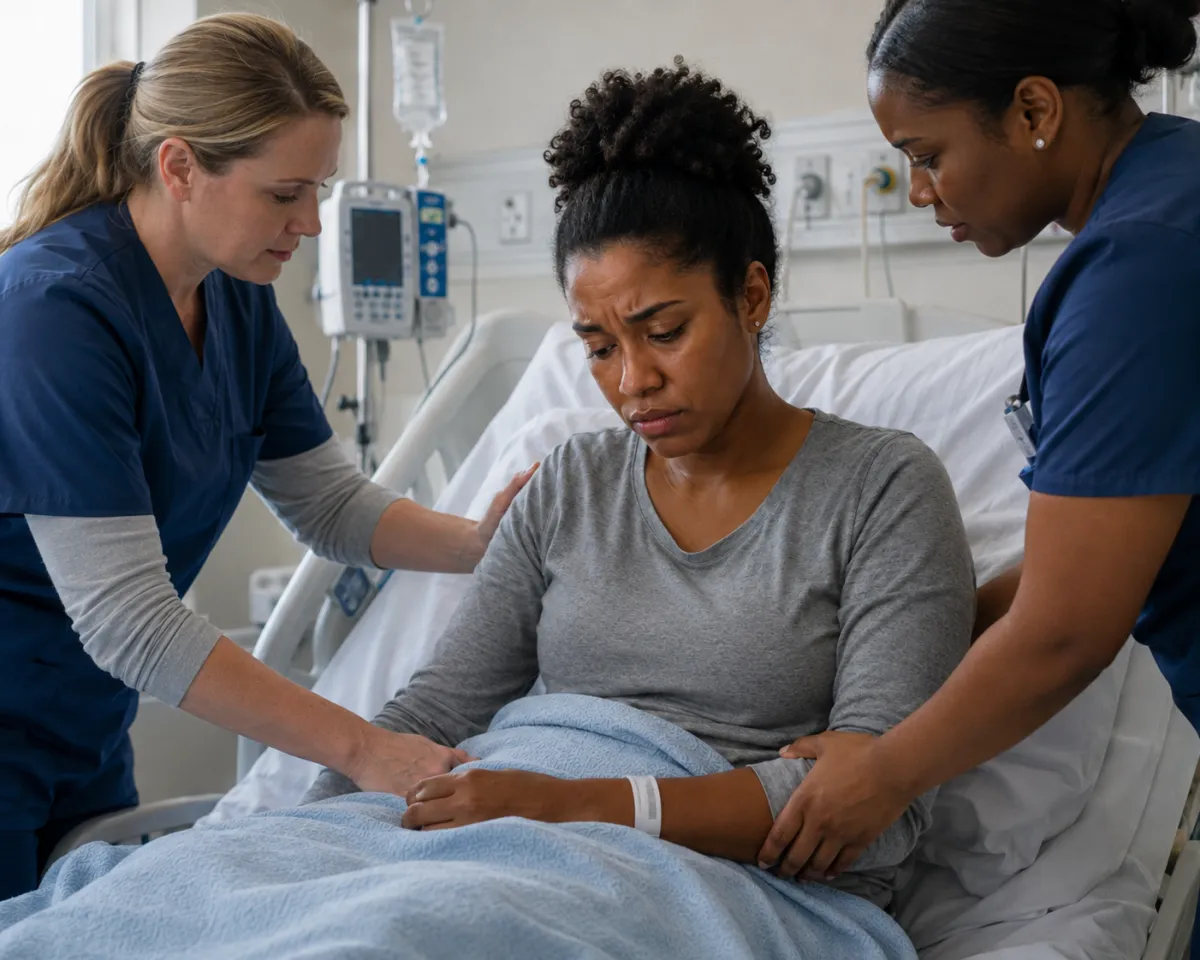
You are lying in a stroke unit surrounded by people decades older than you.
You begin wondering...
"How could I have had a stroke in my 30s?"
"Did the doctors miss something?"
"Will it happen again?"
"Can I still have children?"
"Can I return to my career?"
"Will I recover completely?"
"What does the rest of my life look like now?"
A stroke in your 30s can challenge almost everything you believed about your health and your future.
But young stroke is real.
And you are not the only person experiencing it.
✦ ✦ ✦
The Good News
Being young can give you important advantages during rehabilitation.
You may have:
✓ Fewer age-related medical conditions
✓ Greater physical reserves
✓ Decades of life ahead in which further adaptation can occur
✓ Strong motivation to return to work, parenting and independence
But age alone does not determine recovery.
The effects of a stroke depend on factors including:
✓ Where the stroke occurred
✓ How much brain tissue was affected
✓ How quickly treatment was received
✓ Your general health
✓ The rehabilitation available
✓ The particular functions affected
Some people in their 30s make remarkable recoveries.
Others live with significant long-term disability.
Being young does not make the stroke insignificant.
It simply means your recovery story is beginning at a different stage of life.
✦ ✦ ✦
Can You Really Have a Stroke in Your 30s?
Yes.
Stroke becomes more common with increasing age, but it can happen to adults in their 30s and even to children.
The NHS explicitly states that stroke can happen at any age.
Research into young stroke commonly uses age cut-offs such as under 50 or under 55, and UK research has estimated that up to around one in ten strokes occurs in people younger than 55.
So while a stroke at 35 is much less common than a stroke at 75...
It is not medically impossible.
That distinction matters.
Because assuming:
"Thirty-year-olds don't have strokes"
can potentially delay recognition of genuine stroke symptoms.
✦ ✦ ✦
Stroke Symptoms Are Still an Emergency When You Are Young
Young age should never be used to dismiss sudden neurological symptoms.
Possible stroke symptoms include:
✓ Facial weakness
✓ Arm weakness
✓ Speech difficulty
But stroke can also cause:
✓ Sudden visual disturbance
✓ Sudden numbness
✓ Severe imbalance
✓ Coordination problems
✓ Sudden confusion
✓ Other abrupt neurological changes
If someone develops sudden symptoms suggesting stroke, emergency assessment is required regardless of age.
Do not think:
"I'm only 32, so it can't be a stroke."
A young brain is still a brain.
And interruption of its blood supply is still an emergency.
✦ ✦ ✦
Why Does Stroke Happen in Younger Adults?
This is often the question that dominates everything else.
In older adults, well-known cardiovascular risk factors explain many strokes.
These include:
✓ High blood pressure
✓ Diabetes
✓ High cholesterol
✓ Smoking
✓ Atrial fibrillation
✓ Atherosclerosis
These factors can also affect younger adults.
The Stroke Association identifies high blood pressure as the biggest stroke risk factor and notes that diabetes, atrial fibrillation and high cholesterol also increase risk.
But younger adults can also have causes that may prompt a broader investigation.
These can include:
✓ Arterial dissection
✓ Patent foramen ovale
✓ Certain clotting disorders
✓ Autoimmune disease
✓ Sickle cell disease
✓ Pregnancy-related complications
✓ Some genetic or vascular conditions
✓ Recreational drug use
Sometimes...
Even after extensive investigation...
No definite cause is found.
✦ ✦ ✦
Arterial Dissection
An arterial dissection occurs when a tear develops within the wall of an artery.
In younger stroke patients, doctors may particularly consider dissection involving arteries supplying the brain.
A dissection can disturb normal blood flow and create conditions in which a clot forms.
Sometimes dissections occur spontaneously.
Sometimes there may have been:
✓ Neck injury
✓ Sudden neck movement
✓ Trauma
✓ Certain underlying connective-tissue or vascular conditions
But not every dissection has an obvious trigger.
This can be frustrating.
You may spend months trying to identify the exact moment that "caused" your stroke when no such moment can ever be established.
✦ ✦ ✦
Patent Foramen Ovale
You may hear the letters:
PFO.
A patent foramen ovale is a small opening between the upper chambers of the heart that did not completely close after birth.
Many people have a PFO and never know it exists.
Most will never have a stroke because of it.
But when a younger person experiences an otherwise unexplained ischaemic stroke, doctors may investigate whether a PFO could have allowed a clot to travel through the heart and eventually reach the brain.
This does not mean every PFO discovered after stroke caused the stroke.
The entire clinical picture has to be considered.
In selected patients, specialist teams may discuss whether closing the PFO is appropriate.
That decision belongs with cardiology and stroke specialists.
Not an internet checklist.
✦ ✦ ✦
Blood-Clotting Disorders
Some younger stroke survivors are investigated for conditions that affect the tendency of blood to clot.
These investigations are not identical for every patient.
Your doctors may consider them depending on:
✓ Your age
✓ Stroke pattern
✓ Personal history
✓ Family history
✓ Previous blood clots
✓ Pregnancy history
✓ Other medical findings
One example is antiphospholipid syndrome, an autoimmune condition associated with abnormal blood clotting.
The important point is not to request every clotting test ever invented.
It is to make sure your stroke has been appropriately investigated according to your circumstances.
✦ ✦ ✦
Stroke, Pregnancy and the Postpartum Period
For women in their 30s, reproductive health may be particularly relevant.
The NHS lists pregnancy, pre-eclampsia and the period shortly after having a baby among factors associated with stroke risk.
Pregnancy causes major changes in:
✓ Blood volume
✓ Blood pressure
✓ Hormones
✓ Blood clotting
Most pregnancies do not result in stroke.
But if your stroke occurred during pregnancy or after giving birth, specialists may consider pregnancy-related factors during the investigation.
This can create an additional emotional burden.
You may simultaneously be:
Recovering from stroke.
Caring for a baby.
Dealing with physical disability.
And trying to understand what happened.
That is a huge amount for one person.
✦ ✦ ✦
Can You Become Pregnant After a Stroke?
Possibly.
A previous stroke does not automatically mean pregnancy is impossible.
But future pregnancy may require specialist planning depending on:
✓ What caused your stroke
✓ Whether you have a clotting disorder
✓ Your blood pressure
✓ Your heart health
✓ Medication
✓ Previous pregnancy complications
Some stroke-prevention medications may also need review when pregnancy is being planned.
Do not simply stop prescribed medication because you want to conceive.
Speak with your stroke specialist, GP and appropriate obstetric or pre-pregnancy team first.
The question is not simply:
"Can I get pregnant?"
It is:
"How can pregnancy be managed as safely as possible in my circumstances?"
✦ ✦ ✦
The Combined Contraceptive Pill
If you are in your 30s, contraception may also be relevant.
The NHS includes the combined contraceptive pill among factors that can increase stroke risk in some circumstances.
That does not mean the pill causes strokes in most women who use it.
But after stroke, your contraceptive options may need to be reviewed according to your medical history.
Do not automatically restart contraception you were using before the stroke without discussing whether it remains appropriate.
There may be alternatives better suited to your risk profile.
✦ ✦ ✦
Migraine and Stroke in Younger Adults
Migraine, particularly certain forms of migraine, may also enter the discussion in younger stroke.
Recent research has explored the importance of non-traditional risk factors such as migraine among younger adults.
But migraine creates another problem.
Some migraine symptoms can resemble stroke symptoms.
Visual disturbance.
Numbness.
Speech problems.
Neurological changes.
If you have an established migraine history, do not automatically assume every new neurological event is another migraine.
A sudden symptom that is new, unusually severe or different from your normal pattern requires appropriate medical assessment.
Your history of migraine does not make you immune to stroke.
✦ ✦ ✦
Traditional Risk Factors Still Matter in Your 30s
Being young does not protect you from high blood pressure.
Or diabetes.
Or high cholesterol.
Or smoking-related vascular damage.
You may think:
"I'm 34. My blood pressure cannot possibly matter yet."
It can.
The NHS identifies high blood pressure, diabetes and irregular heart rhythm among conditions that increase stroke risk.
Stroke prevention after your first event may therefore involve checking:
✓ Blood pressure
✓ Cholesterol
✓ Blood glucose
✓ Heart rhythm
✓ Smoking
✓ Weight
✓ Physical activity
Do not become so focused on finding a rare explanation that you ignore an obvious modifiable risk factor sitting directly in front of you.
✦ ✦ ✦
What Tests Might You Have?
Your investigation depends on your stroke and medical history.
Testing may include:
✓ Brain imaging
✓ Imaging of blood vessels in the head and neck
✓ ECG
✓ Longer-term heart rhythm monitoring
✓ Echocardiogram
✓ Blood tests
✓ Blood-pressure assessment
✓ Cholesterol testing
✓ Diabetes testing
✓ Selected clotting investigations
Some younger patients undergo extensive investigations because the usual explanation is not immediately obvious.
This can take time.
And sometimes the final conclusion remains:
Cryptogenic stroke.
Meaning no definite cause has been identified despite investigation.
That uncertainty can be difficult to live with.
✦ ✦ ✦
"They Never Found a Cause"
This can be psychologically brutal.
You want an answer.
Something you can point at and say:
"That did it."
Instead, you are told:
"We don't know."
Then your mind starts searching.
Was it stress?
Exercise?
Dehydration?
A flight?
Something I ate?
Something I did?
Be careful.
When medicine cannot establish a cause, your brain may fill the gap with speculation.
You can end up blaming yourself for completely ordinary activities without evidence.
If no cause is identified, focus on what your specialists did establish and what prevention strategy they recommend.
Uncertainty is uncomfortable.
Inventing certainty is worse.
✦ ✦ ✦
Recovery in Your 30s
You may hear:
"You're young. You'll bounce back."
That statement can become infuriating.
Youth can be helpful.
But stroke recovery is not guaranteed to be quick or complete.
You may still experience:
✓ Weakness
✓ Spasticity
✓ Fatigue
✓ Balance problems
✓ Visual difficulties
✓ Memory problems
✓ Slower processing
✓ Word-finding difficulties
✓ Emotional changes
✓ Pain
✓ Sensory problems
Some improvements may occur quickly.
Others may take months or years.
Being 35 does not mean you have failed if you are still struggling six months later.
Your brain was injured.
Recovery deserves time.
✦ ✦ ✦
Returning to Work Can Feel Urgent
In your 30s, retirement is probably decades away.
You may have:
A mortgage.
Rent.
Childcare.
Debt.
A career you spent years building.
Financial responsibilities.
So returning to work may feel less like a rehabilitation milestone and more like an emergency.
But rushing back before you can sustain the workload can create problems.
You may need:
✓ A phased return
✓ Reduced hours initially
✓ More breaks
✓ Flexible working
✓ Workplace adjustments
✓ Occupational health support
Your professional ambition has not disappeared.
But your brain may temporarily have different limits.
A sustainable return is better than returning too fast and crashing.
✦ ✦ ✦
Career Identity Can Take a Hit
Perhaps your career was central to your identity.
You were:
The manager.
The specialist.
The person everyone asked.
The one who remembered everything.
Then suddenly you need help remembering appointments.
That can feel humiliating.
But neurological injury does not erase your:
Experience.
Qualifications.
Judgement.
Knowledge.
Professional history.
You may need new systems.
You may need more time.
You may even eventually choose a different career.
None of that means your professional life ended at 35.
It means you may have to rebuild it differently.
✦ ✦ ✦
Parenting After a Stroke in Your 30s
Many people experiencing stroke in their 30s are raising young children.
This creates challenges that are very different from those faced by many older survivors.
Your child may not understand why:
Mummy cannot lift them.
Daddy sleeps during the afternoon.
You cannot run around the park.
You suddenly need help.
You may feel guilty.
Especially if your partner or family has to take over responsibilities you previously managed.
But recovery requires energy.
Using everything you have to pretend nothing changed can leave nothing for rehabilitation.
Children generally need reassurance, routine and age-appropriate explanations.
They do not need you to perform perfect health.
✦ ✦ ✦
Relationships Can Change
Stroke can alter relationships at any age.
But in your 30s, you may have expected to be building a life together rather than dealing with serious disability.
Your partner may suddenly become:
Carer.
Driver.
Medication organiser.
Financial support.
Advocate.
That can change the balance of a relationship.
Meanwhile, you may struggle with:
✓ Loss of independence
✓ Changes in confidence
✓ Sexual difficulties
✓ Fatigue
✓ Emotional changes
✓ Fear about the future
Talk about what has changed rather than pretending nothing has.
The medical crisis may be over.
The relationship may still be adapting.
✦ ✦ ✦
Friends May Not Understand
At 35, your friends may be talking about:
Careers.
Weddings.
Babies.
Holidays.
Buying houses.
Gym goals.
Then you are talking about:
Physiotherapy.
Neurology appointments.
Fatigue.
Blood thinners.
Walking aids.
The worlds can feel completely different.
Some friends will adapt.
Others may disappear.
Some may assume that because you look normal, you are fully recovered.
Young stroke can be isolating precisely because you may not know anybody your age who has experienced anything similar.
Connecting with other younger stroke survivors can sometimes make that experience less lonely.
✦ ✦ ✦
Fear of Another Stroke
Perhaps the most difficult part of surviving a stroke young is realising:
"If this happened at 34, what stops it happening again?"
Every headache becomes suspicious.
Every numb finger.
Every dizzy moment.
Every strange sensation.
Some vigilance is reasonable.
You need to know stroke symptoms.
But constant monitoring can become exhausting.
The answer is not pretending recurrence is impossible.
It is building an evidence-based prevention plan.
Understand your cause where possible.
Take medication correctly.
Manage blood pressure.
Address cholesterol.
Do not smoke.
Manage diabetes.
Attend follow-up appointments.
Then live.
Your prevention plan should protect your life.
Not consume it.
✦ ✦ ✦
Do Not Blame Yourself
You may spend months asking:
"What did I do wrong?"
Sometimes there is a modifiable factor.
If you smoke...
Stopping matters.
If your blood pressure is high...
Treat it.
If diabetes is uncontrolled...
Manage it.
But not every young stroke happened because somebody lived badly.
Some strokes involve:
Structural heart problems.
Arterial abnormalities.
Pregnancy complications.
Clotting disorders.
Genetic conditions.
Or causes that remain unknown.
Responsibility for your future health is useful.
Retrospective self-punishment is not.
Learn what you can change.
Then change it.
✦ ✦ ✦
My Perspective
A stroke in your 30s can feel like a violation of the natural order of things.
You were supposed to have time.
Time before serious illness.
Time before medication.
Time before disability.
Time before worrying about your brain.
And then stroke arrives without asking whether you have young children, a career, a mortgage or plans for next year.
That is what makes young stroke different.
You are not only rebuilding your body.
You may be rebuilding a future you thought was already mapped out.
But being young also means something important.
There is still an enormous amount of life on the other side of this.
Your career may continue.
You may parent.
Travel.
Exercise.
Build relationships.
Learn new things.
Change direction.
Recover abilities.
Adapt around those that remain difficult.
The stroke becomes part of your history.
It does not automatically become the definition of the next fifty years.
✦ ✦ ✦
When Should You Seek Medical Advice?
After a stroke in your 30s, make sure you understand:
✓ What type of stroke you had
✓ What investigations were performed
✓ Whether a likely cause was identified
✓ What medication you need
✓ Which risk factors need managing
✓ Whether pregnancy or contraception requires specialist advice
✓ What follow-up is planned
Seek emergency medical attention for any new sudden neurological symptoms.
Do not dismiss them because:
You're young.
You've already had one stroke.
You have migraine.
You are stressed.
Or the symptoms seem mild.
Stroke remains time-critical at every age.
✦ ✦ ✦
Frequently Asked Questions
Can You Really Have a Stroke in Your 30s?
Yes.
Stroke is more common at older ages, but the NHS confirms that it can happen at any age.
Why Would Someone Young Have a Stroke?
Possible causes include traditional vascular risk factors as well as arterial dissection, certain heart abnormalities, clotting conditions, pregnancy-related factors and other medical disorders.
Sometimes no definite cause is found.
Do Younger People Recover Better?
Age may influence recovery potential, but it does not guarantee complete recovery.
Stroke severity, location, treatment, rehabilitation and individual health all matter.
Can I Go Back to Work?
Many young survivors do.
Some return to their previous role, while others need a phased return, reasonable adjustments, reduced hours or a change of career.
Can I Have Children After a Stroke?
For some people, yes.
However, pregnancy planning should be discussed with appropriate specialists because the cause of your stroke, medication and other medical factors may affect management.
Could My Stroke Have Been Prevented?
Sometimes stroke involves modifiable risk factors.
In other cases, the cause may not have been predictable or preventable.
Do not assume that having a stroke young means you caused it.
Will I Have Another Stroke?
Having had a stroke means secondary prevention is important, but recurrence is not inevitable.
Follow the prevention plan recommended by your stroke team.
✦ ✦ ✦
Key Takeaways
✓ Stroke can happen in your 30s.
✓ Young age should never be used to dismiss sudden neurological symptoms.
✓ Traditional risk factors such as high blood pressure, diabetes, cholesterol and smoking still matter in younger adults.
✓ Younger stroke investigations may also consider arterial dissection, heart abnormalities, clotting disorders and other less-common causes.
✓ Pregnancy, pre-eclampsia and the postpartum period can be relevant to stroke risk.
✓ Sometimes extensive testing does not identify a definite cause.
✓ Being young does not guarantee a rapid or complete recovery.
✓ Returning to work, parenting and relationships can create unique pressures for survivors in their 30s.
✓ Future pregnancy and contraception may require specialist medical advice.
✓ Fear of another stroke is common, but prevention should be based on evidence rather than constant fear.
✓ A stroke in your 30s can change your life without ending your future.
✦ ✦ ✦
Related Articles
Continue learning about stroke in younger adults:
Stroke Under 50
Stroke in Your 20s
Young Stroke Survivors
Causes of Stroke in Young Adults
Pregnancy and Stroke
Returning to Work After a Stroke
Parenting After Stroke
Dating After Stroke
Friendships After Stroke
Fear of Another Stroke
✦ ✦ ✦
About the Author
Alisia Gayle is a stroke survivor who achieved 96% neurological recovery following an ischaemic stroke.
After years of rehabilitation, she now shares practical, evidence-informed resources to help stroke survivors, carers and families better understand recovery and rebuild their lives with confidence.
Alisia is also the author of Brain Damage: My Journey to 96% Recovery, where she shares her personal stroke recovery story and the lessons she learned throughout her rehabilitation.
✦ ✦ ✦
Medical Disclaimer
This article is intended for educational purposes only and should not replace professional medical advice, diagnosis or treatment.
The causes, investigations, treatment and recurrence risk of stroke in younger adults vary substantially between individuals.
If you experienced a stroke at a young age, discuss your individual cause, investigations, medication and secondary-prevention plan with your stroke specialist or appropriate healthcare professional.
Anyone considering pregnancy after stroke should seek individual medical advice, particularly regarding stroke-prevention medication and pregnancy-related risks.
Never stop or change prescribed medication without professional advice.
Seek emergency medical attention immediately for any new or sudden symptoms of stroke.
✦ ✦ ✦
Final Thoughts
Having a stroke in your 30s...
Can feel completely wrong.
You may be surrounded by people saying:
"You're too young."
But you already know the brutal truth.
You were not too young.
It happened.
Now the question becomes:
What happens next?
Find out what caused the stroke where possible.
Understand your medication.
Manage the risks you can control.
Commit to rehabilitation.
Return to work when you are genuinely ready.
Ask for help when you need it.
Rebuild your strength.
Rebuild your confidence.
And give yourself permission to create a future that may look different from the one you imagined before your stroke.
You may be thirty-something with a stroke in your medical history.
But you are also still thirty-something.
There is work to do.
People to love.
Places to go.
Children to raise if that is part of your life.
Careers to build.
Decisions to make.
And decades that may still lie ahead.
The stroke happened young.
That does not mean the rest of your life has to remain trapped inside that moment.