Having a stroke in your 40s can feel completely out of sequence with the life you thought you were living. You may be working, raising children, paying a mortgage, building a career and planning decades ahead when suddenly you become a stroke patient. Stroke is more common in older adults, but it can happen at any age, and a substantial proportion of strokes affect people who are still of working age. Recovery in your 40s may involve not only physical and neurological rehabilitation, but also rebuilding your career, family role, finances, independence and confidence.
You are in your 40s.
Perhaps you are working full-time.
Raising children.
Managing a home.
Building your career.
Thinking about retirement as something decades away.
Then suddenly...
You have a stroke.
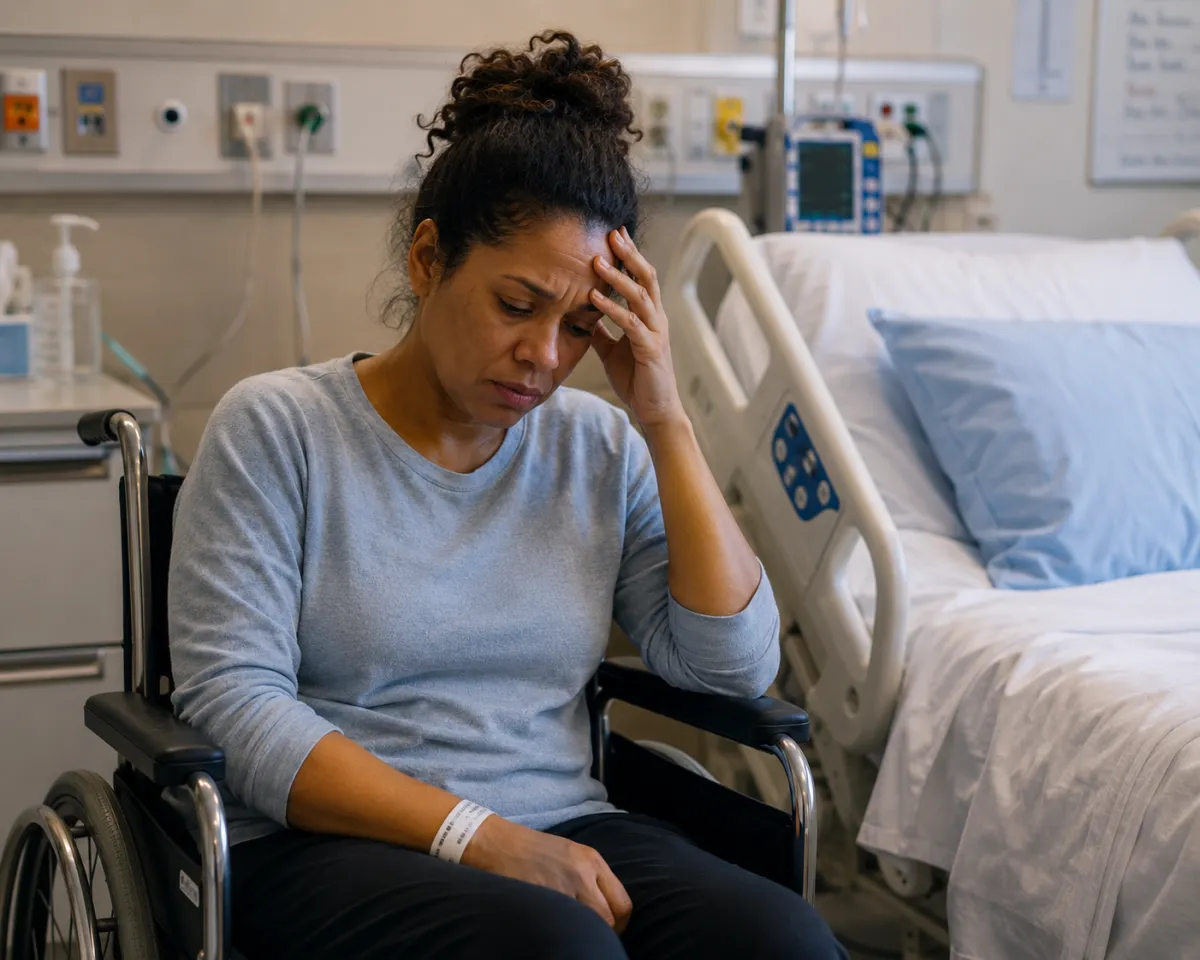
You may look around the hospital and think:
"Why am I here?"
Perhaps the other patients appear much older.
Someone tells you:
"You're very young to have had a stroke."
Friends are shocked.
Colleagues cannot believe it.
You may even struggle to believe it yourself.
You begin wondering...
"How could I have had a stroke at 42?"
"Does this mean something is seriously wrong with me?"
"Will I recover better because I am younger?"
"Can I go back to work?"
"Will I have another stroke?"
"What happens to the life I was building?"
Stroke in your 40s brings a particular set of challenges.
Because you are not only recovering from an injury to your brain.
You may also be trying to return to the middle of an already very busy life.
✦ ✦ ✦
The Good News
You are not "too young" to have had a stroke.
That phrase is medically meaningless.
Stroke can happen at any age, even though risk rises substantially as people get older. NHS England reiterated in 2024 that stroke can affect anyone at any age.
And younger stroke is not vanishingly rare.
UK research commonly describes stroke below age 55 as "young stroke", with studies estimating that up to around 10% of strokes occur in this group.
The Stroke Association has also reported that around a quarter of UK strokes occur among people of working age.
That matters.
Because it means thousands of people are dealing with exactly the sort of problems you may now face:
Returning to work.
Parenting.
Relationships.
Financial commitments.
Driving.
Rebuilding confidence.
Trying to understand how a serious neurological event fits into a life that was nowhere near finished.
✦ ✦ ✦
Why Can Someone Have a Stroke in Their 40s?
There is no single explanation.
Some people in their 40s have exactly the same vascular risk factors seen in older adults.
These can include:
✓ High blood pressure
✓ Diabetes
✓ High cholesterol
✓ Smoking
✓ Obesity
✓ Physical inactivity
✓ Atrial fibrillation
The NHS lists high blood pressure, diabetes, atrial fibrillation and high cholesterol among important medical conditions associated with stroke risk.
Research in younger adults also shows that traditional risk factors remain highly relevant.
Among adults aged 45 to 55 in one large study, high blood pressure was the most important traditional stroke risk factor identified.
So do not assume:
"I'm young, so it must have been something rare."
It might not have been.
But equally...
Younger stroke can sometimes involve causes or contributing factors that doctors investigate more closely because of the person's age.
You need proper investigation.
Not assumptions.
✦ ✦ ✦
High Blood Pressure Still Matters in Your 40s
People often think of hypertension as an older person's problem.
It isn't.
You can have significant high blood pressure in your 40s.
And you may feel completely normal.
That is part of what makes it dangerous.
Persistently raised blood pressure can damage blood vessels over time and increase the likelihood of stroke.
After a stroke, ask:
✓ What is my normal blood pressure?
✓ What target should I aim for?
✓ Do I need medication?
✓ How often should I check it?
✓ Are my readings consistently controlled?
Do not simply take one normal reading and assume the problem has disappeared.
If blood-pressure medication has been prescribed, the medication may be the reason your numbers are now better.
✦ ✦ ✦
Cholesterol Can Matter Too
You can have high cholesterol in your 40s.
You can also have high cholesterol while:
Looking slim.
Exercising.
Eating reasonably well.
Feeling perfectly healthy.
High cholesterol can contribute to fatty deposits developing inside arteries.
Over time, that can increase vascular risk.
The NHS includes high cholesterol among conditions associated with increased stroke risk.
After an ischaemic stroke, cholesterol is often part of the cardiovascular assessment.
You may also be prescribed a statin or another cholesterol-lowering treatment depending on your individual circumstances.
Do not decide your cholesterol status based on appearance.
Measure it.
✦ ✦ ✦
Diabetes and Blood Sugar
Diabetes is another important risk factor.
It can damage blood vessels over time and increase cardiovascular risk.
Some people already know they have diabetes before their stroke.
Others discover:
Prediabetes.
Type 2 diabetes.
Or abnormal blood glucose.
during stroke investigation.
The NHS identifies diabetes as an established stroke risk factor.
If diabetes is relevant to you, management may involve:
✓ Medication
✓ Dietary changes
✓ Exercise
✓ Weight management where appropriate
✓ Blood-glucose monitoring
✓ Regular reviews
The point is not to blame yourself for your stroke.
The useful question is:
"What can I change now?"
✦ ✦ ✦
Smoking in Your 40s Still Counts
Smoking-related vascular damage does not politely wait until you reach 70.
Smoking increases stroke risk.
And if you have already had a stroke...
Continuing to smoke leaves an important modifiable risk factor untouched.
AHA patient guidance explicitly identifies tobacco use, including smoking, as increasing stroke risk.
If you smoke, consider support such as:
✓ Stop-smoking services
✓ Nicotine-replacement therapy
✓ Appropriate medication
✓ Behavioural support
✓ Identifying your triggers
You do not get extra points for quitting through willpower alone.
Use the support available.
✦ ✦ ✦
What About Migraine?
Migraine is more complicated.
Most people with migraine will never have a stroke.
But certain migraine patterns have been associated with increased stroke risk, particularly in some younger populations.
Recent research highlighted by the American Heart Association found that non-traditional factors, including migraine, may account for a greater proportion of strokes in younger adults than they do in older age groups.
That does not mean:
"Migraine caused my stroke."
And it certainly does not mean everyone with migraine should panic.
But if you experienced stroke relatively young, migraine history may be relevant to your medical assessment.
Tell your doctors about it.
Let them decide its significance.
✦ ✦ ✦
Women in Their 40s May Have Additional Risk Factors
Women may also have additional stroke-related considerations.
Depending on individual circumstances, these can include:
✓ Migraine with aura
✓ Pregnancy
✓ The period after childbirth
✓ Pre-eclampsia
✓ Certain hormonal contraceptives
Research and cardiovascular guidance have linked some of these factors with stroke risk, particularly when several risks occur together.
For example, smoking combined with migraine and oestrogen-containing contraception may create a very different risk profile from any one factor alone.
That is why a detailed medical history matters.
Stroke risk is rarely one-dimensional.
✦ ✦ ✦
What If Doctors Cannot Find the Cause?
Sometimes doctors carry out extensive investigations and still cannot identify one definitive cause.
You may hear the term:
Cryptogenic stroke.
This essentially means the stroke occurred but no clear cause was identified despite appropriate investigation.
That can be psychologically difficult.
You want an explanation.
Because if you know exactly what caused the stroke...
Perhaps you can make sure it never happens again.
Unfortunately, medicine cannot always offer that certainty.
An unexplained stroke does not mean nothing caused it.
It means the cause has not been identified.
You may still need a prevention plan based on your stroke type and overall risk profile.
✦ ✦ ✦
The Shock of Being the Young Person on the Stroke Ward
This can be strange.
Perhaps most people around you are retired.
Meanwhile, you are worrying about:
Who is collecting your child from school.
Whether your manager knows what happened.
What will happen to your salary.
Who is paying the mortgage.
Whether your laptop is still at work.
Your life outside hospital may still be running at full speed.
But inside the hospital...
You may be learning how to:
Stand.
Walk.
Dress.
Swallow.
Use your hand.
Remember things.
The contrast can be brutal.
You are dealing with problems usually associated with profound illness while still carrying the responsibilities of midlife.
✦ ✦ ✦
Parenting After Stroke in Your 40s
Many people in their 40s have children still living at home.
Your child may be:
A toddler.
At primary school.
A teenager.
You may suddenly be unable to:
✓ Drive them somewhere
✓ Carry them
✓ Cook normally
✓ Play physically
✓ Attend activities
✓ Manage bedtime
✓ Do the school run
Perhaps your child sees you using:
A walking stick.
A wheelchair.
An orthosis.
Or struggling with something you previously did easily.
That can hurt.
You may feel that stroke has interfered with your identity as a parent.
But parenting is much larger than physical capacity.
You may temporarily parent differently.
Your family may need to adapt.
And as you recover...
Some responsibilities may gradually return.
✦ ✦ ✦
Your Partner May Suddenly Become a Carer
A stroke can change relationship roles almost overnight.
One day you are equal partners managing ordinary life.
Then your partner may suddenly need to:
Drive you.
Help you dress.
Manage medication.
Talk to doctors.
Do more childcare.
Handle finances.
Cook.
Help you walk.
Neither person necessarily chose this arrangement.
That can create strain.
You may resent needing help.
Your partner may become exhausted.
Intimacy can change.
Household responsibilities may become uneven.
The strongest approach is not pretending nothing has changed.
It is recognising the change while continuing to rebuild as much independence as possible.
✦ ✦ ✦
Returning to Work Can Feel Urgent
A stroke at 42 can create very different pressures from a stroke after retirement.
You may have:
✓ A mortgage
✓ Young children
✓ Career ambitions
✓ Financial commitments
✓ Professional responsibilities
✓ Decades before retirement
So while your rehabilitation team is thinking about neurological recovery...
You may already be thinking:
"When can I get back to work?"
That urgency is understandable.
But rushing back simply because you are frightened about your career can be a poor decision.
You may still be dealing with:
✓ Fatigue
✓ Slower processing
✓ Memory problems
✓ Physical weakness
✓ Visual difficulties
✓ Communication problems
✓ Reduced stamina
A phased return can sometimes be much more sustainable than trying to recreate your old working pattern immediately.
✦ ✦ ✦
Invisible Problems May Be Hardest at Work
You may look completely recovered.
You walk into the office.
Your speech sounds normal.
You look like yourself.
Everyone thinks:
"Great. You're back."
But inside...
You may be dealing with:
✓ Cognitive fatigue
✓ Word-finding difficulties
✓ Poor concentration
✓ Memory problems
✓ Sensory overload
✓ Headaches
✓ Reduced mental stamina
You may perform perfectly at 9am...
And feel neurologically exhausted at 2pm.
That does not necessarily mean you cannot work.
It may mean you need to work differently.
At least for now.
✦ ✦ ✦
What Happens to Your Career?
This question can become enormous.
You may have spent twenty years building professional experience.
Perhaps you were:
Managing people.
Running projects.
Studying for qualifications.
Developing specialist expertise.
Building a business.
Applying for promotion.
Then stroke pauses everything.
You may think:
"Have I just lost my career?"
Not necessarily.
Your stroke did not automatically erase:
Your qualifications.
Your experience.
Your professional judgement.
Your technical knowledge.
Your relationships.
Your achievements.
Some abilities may have been affected.
Some may recover.
Others may need strategies or workplace adjustments.
And some people ultimately decide that their previous career no longer fits the life they want.
That does not automatically represent failure.
Sometimes recovery changes your definition of success.
✦ ✦ ✦
Financial Pressure Can Be Enormous
Stroke in midlife can create immediate financial problems.
You may still have:
Mortgage payments.
Rent.
Childcare.
School expenses.
Loans.
Household bills.
Perhaps your employer provides generous sick pay.
Perhaps they do not.
You may suddenly need to understand:
✓ Statutory sick pay
✓ Employer benefits
✓ Income protection
✓ Critical illness insurance
✓ Mortgage protection
✓ Disability benefits
✓ Phased return arrangements
Financial stress can interfere with recovery.
It can make you feel that you have to return to work before your brain and body are ready.
If finances are becoming a serious concern, find out what support you are entitled to rather than assuming there is none.
✦ ✦ ✦
"But You Look Fine"
This sentence can become irritating very quickly.
Perhaps your walking has recovered.
Your face looks normal.
Your speech is clear.
So people assume your stroke is finished.
But stroke recovery can involve invisible problems.
You may still experience:
✓ Fatigue
✓ Tremor
✓ Cognitive difficulty
✓ Visual problems
✓ Reduced balance
✓ Poor coordination
✓ Memory problems
✓ Anxiety
Someone's inability to see an impairment does not make it imaginary.
You may need to explain functional problems clearly.
Not because you owe everyone your medical history.
But because invisible symptoms are easily misunderstood.
✦ ✦ ✦
"You're Too Young to Have Had a Stroke"
You may hear this repeatedly.
Most people mean:
"I am shocked this happened to you."
But the phrase reinforces a false idea.
Stroke does not have a minimum age.
NHS organisations continue to emphasise that stroke can happen to people of any age, including children and teenagers.
You were younger than the average stroke patient.
That is different.
You do not need to prove that your stroke was legitimate.
It happened.
Your age does not make it less serious.
✦ ✦ ✦
Will You Recover Better Because You Are Younger?
Maybe in some respects.
But nobody should promise complete recovery simply because you are 42 instead of 82.
Younger people may have:
✓ Greater physical reserve
✓ Fewer age-related diseases
✓ More capacity for intensive rehabilitation
But age is only one factor.
Recovery also depends on:
✓ Stroke severity
✓ Stroke location
✓ How much brain tissue was affected
✓ Complications
✓ Treatment
✓ Rehabilitation
✓ General health
✓ Individual neurological factors
A severe stroke can cause profound disability in a young person.
A mild stroke may allow remarkable recovery in someone much older.
So:
"You're young, you'll be fine"
may sound comforting.
But it is not a reliable prognosis.
✦ ✦ ✦
Recovery Can Continue for a Long Time
The first weeks and months receive enormous attention.
But recovery does not necessarily end when formal rehabilitation becomes less frequent.
You may continue improving:
Walking.
Strength.
Coordination.
Speech.
Stamina.
Confidence.
Daily function.
Some improvement may reflect neurological recovery.
Some comes from:
Practice.
Compensation.
Strength training.
Fitness.
Experience.
Technology.
Environmental adaptation.
The mistake is believing that whatever remains after a few months must automatically remain forever.
But the opposite mistake is equally unhelpful:
Assuming complete recovery is guaranteed if you simply try hard enough.
Recovery varies.
Work with the progress that actually occurs.
✦ ✦ ✦
Friendships Can Change
Your friends may also be in their 40s.
They are busy with:
Careers.
Children.
Relationships.
Travel.
Their lives continue moving.
Yours may temporarily become dominated by:
Hospital appointments.
Physiotherapy.
Medication.
Fatigue.
Neurology.
Recovery.
Initially, people may rally around you.
Then normal life resumes.
Messages become less frequent.
Visits reduce.
That can be painful.
Stroke sometimes exposes which relationships are capable of surviving prolonged difficulty.
You may lose some connections.
Others may become much stronger.
✦ ✦ ✦
Your Identity May Change
By your 40s, you may have spent decades building an identity.
Professional.
Parent.
Partner.
Friend.
Independent adult.
Provider.
Then another label arrives:
Stroke survivor.
You may embrace it.
Reject it.
Ignore it.
Or feel differently about it from one day to the next.
There is no rule saying stroke must become your identity.
It happened to you.
It may have changed you.
It may influence the rest of your life.
But you remain far more than the damaged area of your brain.
✦ ✦ ✦
Fear of Another Stroke
Once you have experienced a stroke...
You know it is possible.
That knowledge can be difficult to carry.
Before stroke:
A headache is a headache.
A numb hand may be because you slept awkwardly.
Forgetting a word is ordinary.
After stroke...
Everything can feel suspicious.
You think:
"Is it happening again?"
Some vigilance is useful.
Knowing FAST matters.
But constant monitoring can become exhausting.
The more useful strategy is controlling what can actually be controlled.
Know:
✓ Your blood pressure
✓ Your cholesterol
✓ Your medication
✓ Whether atrial fibrillation is relevant
✓ Your diabetes status
✓ Whether you smoke
✓ Your prevention plan
Then seek urgent help for genuinely new sudden neurological symptoms.
✦ ✦ ✦
Reducing Your Risk of Another Stroke
Having already experienced stroke increases the importance of secondary prevention.
Your plan may include:
✓ Blood-pressure control
✓ Cholesterol management
✓ Antiplatelet medication
✓ Anticoagulation where appropriate
✓ Diabetes management
✓ Treating atrial fibrillation
✓ Smoking cessation
✓ Physical activity
✓ A healthy diet
✓ Limiting excessive alcohol
Traditional modifiable factors such as hypertension, diabetes, cholesterol, smoking, alcohol and obesity are also major areas being studied specifically in young stroke populations.
You cannot make stroke risk zero.
Nobody can.
But you can systematically address the risks you actually have.
✦ ✦ ✦
Do Not Become Obsessed With Prevention
This distinction matters.
Prevention means:
Taking medication.
Checking blood pressure appropriately.
Attending appointments.
Exercising.
Eating reasonably well.
Not smoking.
Managing medical conditions.
Obsession means:
Checking your blood pressure repeatedly every day without clinical reason.
Panicking over every meal.
Checking your smile in the mirror constantly.
Avoiding exercise because your heart beats faster.
Searching symptoms every night.
Living as though another stroke is constantly seconds away.
That is not recovery.
Manage risk.
Then live.
✦ ✦ ✦
What If Stroke Changes Your Priorities?
It might.
Perhaps before stroke you cared enormously about:
Promotion.
Status.
Money.
Working late.
Being constantly available.
Keeping everybody happy.
Never saying no.
Then suddenly you experience something capable of taking all of it away.
Your priorities may shift.
Perhaps your career becomes even more important.
Or perhaps you decide:
"I am never giving that much of my life to work again."
Neither reaction is automatically correct.
Stroke in your 40s can force you to confront questions many people avoid until much later.
What matters?
What am I willing to sacrifice?
What do I want my next twenty years to look like?
A stroke can close doors.
But sometimes it also makes you finally question whether you wanted to walk through certain doors in the first place.
✦ ✦ ✦
Emotional Impact
Having a stroke relatively young can create:
✓ Anger
✓ Fear
✓ Grief
✓ Frustration
✓ Embarrassment
✓ Anxiety
✓ Isolation
You may feel cheated.
You may look at healthy people your age and think:
"Why me?"
That question does not always have a satisfying answer.
Sometimes there is a clear medical cause.
Sometimes several risk factors contributed.
Sometimes the explanation remains uncertain.
Recovery eventually requires moving from:
"Why did this happen?"
towards:
"What do I do now?"
You can still want answers.
But your life cannot remain indefinitely suspended while you search for perfect certainty.
✦ ✦ ✦
My Perspective
Having a stroke in your 40s can feel almost insulting.
You are not supposed to be doing this yet.
You are supposed to be working.
Raising children.
Planning holidays.
Building something.
Living.
Then suddenly...
Someone is teaching you how to walk.
Move your hand.
Conserve energy.
Remember things.
Get dressed.
Your life feels divided into:
Before.
And after.
But there is another side to being relatively young.
You may still have decades ahead.
Decades in which recovery can continue.
A career can rebuild.
Children can grow.
Relationships can change.
Strength can return.
Confidence can return.
New opportunities can appear.
Do not minimise the seriousness of what happened.
A stroke at 40-something is devastating.
But do not allow anyone to speak about your future as though it ended the moment your stroke began.
It didn't.
✦ ✦ ✦
When Should You Seek Emergency Medical Help?
Your age should never make you dismiss possible stroke symptoms.
Seek emergency medical help immediately if you develop sudden:
✓ Facial weakness
✓ Arm weakness
✓ One-sided numbness
✓ Speech difficulty
✓ Vision changes
✓ Severe loss of coordination
✓ Other new neurological symptoms
NHS services continue to emphasise that stroke can happen at any age and requires urgent treatment.
If stroke-like symptoms disappear...
They may still represent a TIA and require urgent assessment.
Do not think:
"I'm only 44. It can't happen again."
Age does not rule out stroke.
✦ ✦ ✦
Frequently Asked Questions
Can You Really Have a Stroke in Your 40s?
Yes.
Stroke can happen at any age, although the risk rises with age.
How Common Is Stroke in Younger Adults?
UK research estimates that up to around 10% of strokes occur in people younger than 55, while the Stroke Association has reported that around a quarter of strokes occur among people of working age.
Why Would Someone in Their 40s Have a Stroke?
Possible factors include high blood pressure, diabetes, high cholesterol, smoking, atrial fibrillation and other traditional vascular risks. Younger adults may also have non-traditional risk factors or causes that require investigation.
Will I Recover Better Because I Am Younger?
Being younger may be advantageous in some respects, but it does not guarantee complete recovery.
Stroke severity, location, complications, rehabilitation and individual biology all matter.
Can I Return to Work?
Many working-age stroke survivors do return to employment.
Some return to the same role.
Others need:
✓ A phased return
✓ Flexible hours
✓ Workplace adjustments
✓ Reduced responsibilities temporarily
✓ A different role
✓ A career change
Your return should reflect your actual capabilities rather than pressure to prove you are "back to normal."
Can I Have Another Stroke?
Yes.
A previous stroke or TIA is an important risk factor for another event.
That is why secondary prevention is so important.
Does Being Fit Mean I Shouldn't Have Had a Stroke?
No.
Fitness may reduce some cardiovascular risks.
It cannot eliminate every potential cause of stroke.
Fit and apparently healthy people can still experience stroke.
✦ ✦ ✦
Key Takeaways
✓ Stroke can happen in your 40s.
✓ Being younger than the average stroke patient does not mean you were "too young" for stroke.
✓ A significant proportion of strokes affect working-age people.
✓ High blood pressure, cholesterol, diabetes, smoking and atrial fibrillation can still matter in younger adults.
✓ Some younger stroke survivors have additional or non-traditional risk factors requiring investigation.
✓ Being younger does not guarantee complete recovery.
✓ Work, children, finances and relationships can make midlife stroke recovery particularly complicated.
✓ Invisible problems such as fatigue and cognitive difficulties may continue even when you look physically recovered.
✓ Fear of another stroke is understandable, but prevention should be systematic rather than obsessive.
✓ Your age should never cause you to dismiss new stroke symptoms.
✓ Having a stroke in your 40s may change your life without ending your future.
✦ ✦ ✦
Related Articles
Continue learning about stroke in younger and working-age adults:
Stroke in Young Adults
Why Do Young People Have Strokes?
Returning to Work After a Stroke
Confidence Returning to Work After Stroke
Workplace Discrimination After Stroke
Parenting After Stroke
Changing Careers After Stroke
Financial Stress After Stroke
Can You Prevent a Second Stroke?
Blood Pressure Targets After Stroke
TIA Warning Signs
Stroke Prevention Checklist
✦ ✦ ✦
About the Author
Alisia Gayle is a stroke survivor who achieved 96% neurological recovery following an ischaemic stroke.
After years of rehabilitation, she now shares practical, evidence-informed resources to help stroke survivors, carers and families better understand recovery and rebuild their lives with confidence.
Alisia is also the author of Brain Damage: My Journey to 96% Recovery, where she shares her personal stroke recovery story and the lessons she learned throughout her rehabilitation.
✦ ✦ ✦
Medical Disclaimer
This article is intended for educational purposes only and should not replace professional medical advice, diagnosis or treatment.
Stroke causes and risk factors can differ considerably between individuals, particularly in younger adults.
If you experienced a stroke in your 40s, discuss the suspected cause, investigations, medication and secondary-prevention plan with your stroke specialist, GP or another appropriate healthcare professional.
Do not start, stop or change stroke-prevention medication based solely on information in this article.
Seek emergency medical attention for sudden facial weakness, arm weakness, speech difficulty or other new neurological symptoms.
Your age does not rule out stroke.
✦ ✦ ✦
Final Thoughts
A stroke in your 40s...
Can feel wrong.
Too early.
Out of sequence.
You may look at your life and think:
"I was nowhere near finished."
And you weren't.
You may still have children to raise.
A career to build.
Places to travel.
Relationships to nurture.
Plans that have not happened yet.
Stroke may interrupt those things.
It may change some of them.
It may force you to rebuild others completely.
But 40-something is not the end of the story.
Understand why your stroke happened where possible.
Control the risks you can control.
Take prescribed medication.
Rehabilitate.
Protect your energy.
Return to work when you are ready.
Ask for support when you need it.
And do not allow the phrase:
"You're too young to have had a stroke"
to make you feel as though your experience does not belong.
Stroke does not respect age.
You were not too young.
You were simply younger than most people expect.
What matters now...
Is what you build next.