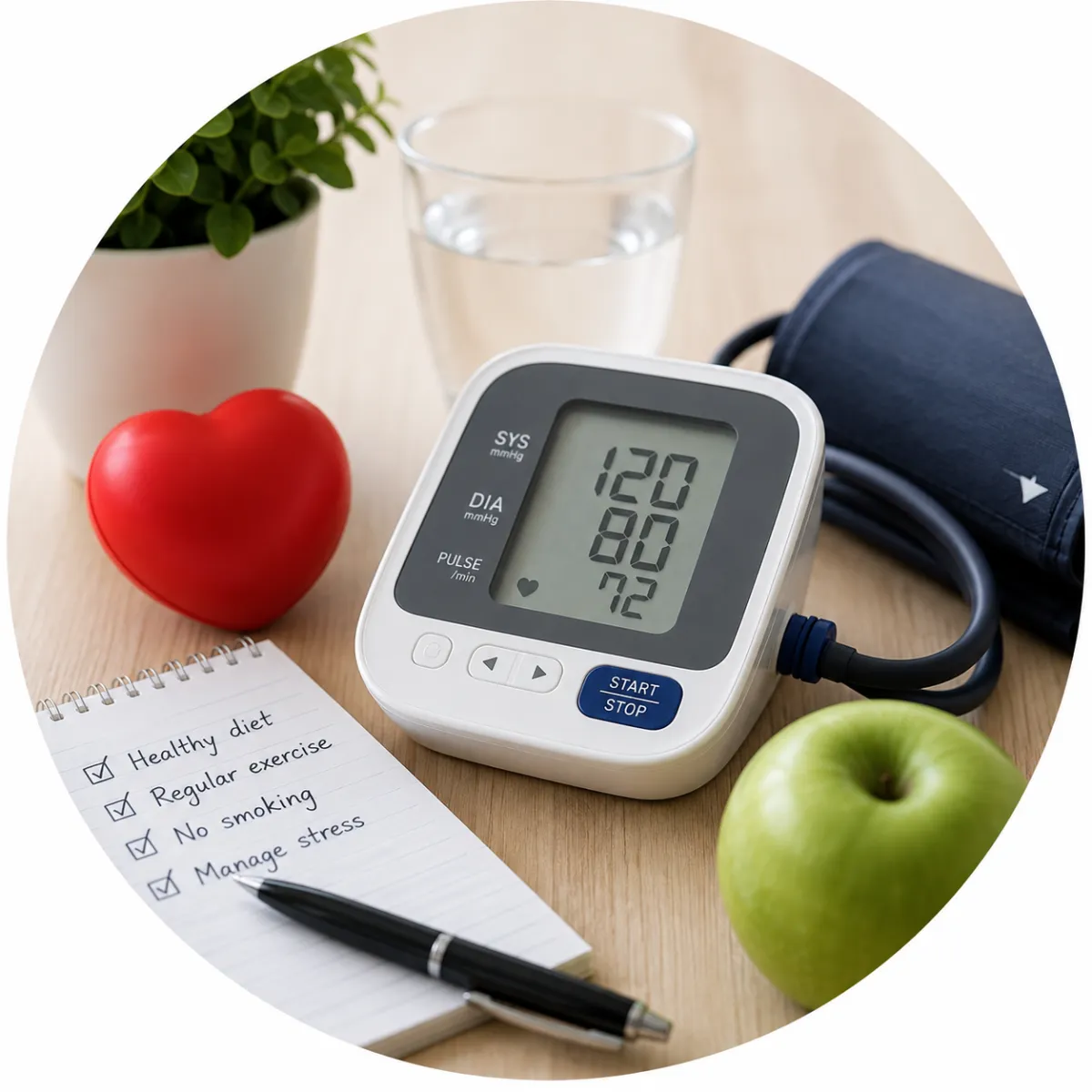
Preventing a stroke is rarely about one dramatic lifestyle change. It is about identifying the risk factors that apply to you and managing them consistently. Blood pressure, smoking, cholesterol, diabetes, atrial fibrillation, physical activity, diet, alcohol, weight and prescribed medication can all matter. If you have already had a stroke or TIA, prevention becomes even more important because your risk of another event is higher. This checklist can help you review the areas worth discussing with your healthcare team.
After a stroke...
You may hear dozens of recommendations.
Check your blood pressure.
Take your tablets.
Exercise.
Stop smoking.
Eat differently.
Manage cholesterol.
Drink less alcohol.
Watch your weight.
Check your heart rhythm.
It can feel like too much information at once.
So you begin wondering...
"What actually matters most?"
"Which risk factors should I be checking?"
"Am I doing enough?"
"What should I be discussing with my doctor?"
"Can another stroke really be prevented?"
No checklist can guarantee that you will never have another stroke.
But many important stroke risk factors can be identified and managed.
And that gives you something useful:
A prevention plan.
✦ ✦ ✦
The Good News
Many stroke risk factors are modifiable.
That means you may be able to reduce them through:
✓ Medication
✓ Medical treatment
✓ Lifestyle changes
✓ Regular monitoring
✓ Smoking cessation
✓ Physical activity
✓ Dietary changes
✓ Managing other health conditions
The NHS specifically recommends stopping smoking, eating a balanced diet, exercising and reducing excessive alcohol intake as ways of lowering stroke risk. Medical conditions such as high blood pressure, diabetes, atrial fibrillation and high cholesterol also need appropriate management.
The important thing is not trying to become perfect overnight.
It is knowing which risks apply to you...
Then dealing with them systematically.
✦ ✦ ✦
1. Know Why Your Stroke Happened
This should be near the top of your list.
Not every stroke has the same cause.
An ischaemic stroke may result from:
✓ Atherosclerosis
✓ A blood clot
✓ Atrial fibrillation
✓ Narrowing of an artery
✓ Small-vessel disease
✓ Other cardiovascular or clotting problems
A haemorrhagic stroke has a different mechanism.
Your prevention strategy therefore depends partly on what caused your original stroke.
Ask:
Do I know what caused my stroke?
Was atrial fibrillation investigated?
Were my carotid arteries checked if appropriate?
Were my blood pressure and cholesterol reviewed?
Was diabetes investigated?
Do I understand the prevention plan I was given?
If the cause remains unclear, ask your stroke team what has been investigated and whether any further follow-up is needed.
Prevention should be targeted.
Not generic.
✦ ✦ ✦
2. Know Your Blood Pressure
High blood pressure is one of the most important modifiable stroke risk factors.
It can damage blood vessels over time without causing obvious symptoms.
The NHS lists high blood pressure among the major medical conditions that increase stroke risk.
Your checklist:
Do I know my usual blood pressure?
Do I know the target my healthcare professional wants me to achieve?
Have I had my blood pressure checked recently?
If I monitor at home, am I using the cuff correctly?
Am I recording patterns rather than panicking over one reading?
Am I taking prescribed blood-pressure medication correctly?
Have I discussed dizziness or unusually low readings with my doctor?
Do not simply aim for the lowest blood pressure possible.
Your target should be appropriate for your age, stroke type, other conditions and treatment tolerance.
✦ ✦ ✦
3. Take Prescribed Medication Properly
This sounds obvious.
But it matters enormously.
Following a stroke or TIA, you may be prescribed medication to reduce future vascular risk.
That might include medicine for:
✓ Blood pressure
✓ Cholesterol
✓ Blood clot prevention
✓ Atrial fibrillation
✓ Diabetes
The NHS notes that most people who have experienced a TIA require one or more medicines long term to reduce the risk of another TIA or stroke.
Your checklist:
Do I know what each medication is for?
Am I taking it at the correct dose?
Am I taking it at the correct time?
Do I know what to do if I miss a dose?
Have I discussed side effects rather than simply stopping treatment?
Have I checked whether any supplements interact with my medication?
Never stop stroke-prevention medication just because you feel well.
Feeling well does not mean the underlying risk has disappeared.
✦ ✦ ✦
4. Understand Your Blood-Thinning Medication
Not every stroke survivor needs the same blood-thinning treatment.
Some people may receive an:
Antiplatelet medicine
while others may require an:
Anticoagulant
The correct choice depends on the cause of the stroke.
For example, atrial fibrillation often changes the type of treatment required.
NICE secondary-prevention guidance distinguishes between anticoagulant and antiplatelet treatment according to the underlying cause and clinical situation.
Your checklist:
Do I know whether I take an antiplatelet or anticoagulant?
Do I know why it was prescribed?
Do I understand the bleeding precautions?
Have I told my dentist and other healthcare professionals when relevant?
Do I check before taking over-the-counter medicines that might interact?
Do not add aspirin yourself because you have heard that it prevents strokes.
The wrong blood-thinning strategy can create serious harm.
✦ ✦ ✦
5. Check for Atrial Fibrillation
Atrial fibrillation, often shortened to AF, is an irregular heart rhythm that can significantly increase stroke risk.
Blood can pool inside the heart, allowing a clot to form.
That clot may then travel to the brain.
Some people know they have AF because they experience:
✓ Palpitations
✓ An irregular heartbeat
✓ Breathlessness
✓ Fatigue
But others have no obvious symptoms.
The NHS and Stroke Association both identify atrial fibrillation as an important stroke risk factor.
Your checklist:
Have I ever been diagnosed with AF?
Was my heart rhythm assessed after my stroke?
Have I mentioned unexplained palpitations to my doctor?
If I have AF, do I understand my anticoagulation plan?
Am I taking my anticoagulant consistently?
AF is not a minor detail.
If it caused your stroke, managing it may be one of the most important parts of preventing another one.
✦ ✦ ✦
6. Know Your Cholesterol
High cholesterol can contribute to fatty deposits developing inside arteries.
Over time, this can contribute to atherosclerosis and vascular disease.
The NHS lists high cholesterol as a condition that increases stroke risk.
Your checklist:
Have I had my cholesterol checked?
Do I know whether my cholesterol is considered too high?
Have I been prescribed a statin or another cholesterol-lowering medicine?
Am I taking it as prescribed?
Have I discussed side effects instead of stopping medication myself?
Is my diet helping support cardiovascular health?
Do not assume that because you are thin, active or eat reasonably well, your cholesterol must automatically be normal.
Measure it.
Do not guess.
✦ ✦ ✦
7. Stop Smoking
If you smoke, quitting should be a serious priority.
Smoking damages blood vessels and increases stroke risk.
The Stroke Association identifies smoking as a major modifiable risk factor, and NHS prevention advice also specifically recommends stopping smoking.
Your checklist:
Do I currently smoke?
Have I set a quit plan?
Have I asked my GP, pharmacist or stop-smoking service for support?
Have I considered nicotine-replacement treatment or other appropriate cessation support?
Have I identified the situations that trigger smoking?
Do not fall into the trap of thinking:
"I only smoke a few."
Reducing smoking is better than increasing it.
But the real objective should be stopping.
✦ ✦ ✦
8. Manage Diabetes
Diabetes can damage blood vessels over time and increase cardiovascular and stroke risk.
The NHS identifies diabetes among the medical conditions associated with increased stroke risk.
Your checklist:
Have I been checked for diabetes?
If I have diabetes, do I know my treatment plan?
Do I know my blood glucose or HbA1c target?
Am I taking diabetes medication correctly?
Am I following appropriate dietary advice?
Am I physically active at a level that is safe for me?
Am I attending diabetes reviews?
Do not manage diabetes based solely on how you feel.
High blood glucose can cause vascular damage even when you have no dramatic symptoms.
✦ ✦ ✦
9. Be Physically Active
Regular physical activity supports cardiovascular health.
It can also help with:
✓ Blood pressure
✓ Fitness
✓ Weight management
✓ Blood sugar control
✓ Strength
✓ Mobility
NHS guidance after TIA recommends regular exercise, with a general adult target of around 150 minutes of moderate activity or 75 minutes of vigorous activity weekly, plus strengthening exercises on two days, where this is appropriate and safe.
Your checklist:
Am I moving regularly throughout the week?
Am I gradually building my activity?
Am I doing some cardiovascular activity?
Am I including strength work where appropriate?
Am I breaking up long periods of sitting?
Have I adapted exercise around my stroke-related weakness, balance or fatigue?
You do not need to become an athlete.
You need to become less sedentary and more consistently active at a safe level.
✦ ✦ ✦
10. Eat for Vascular Health
A prevention diet does not need to be bizarre.
You do not need powders.
Juice cleanses.
Detoxes.
Or expensive supplements.
A balanced diet based around:
✓ Vegetables
✓ Fruit
✓ Wholegrains
✓ Beans and lentils
✓ Fish
✓ Nuts and seeds
✓ Unsaturated fats
can support cardiovascular health.
Stroke Association and NHS advice also recommends reducing foods high in salt, saturated fat and sugar.
Your checklist:
Am I eating vegetables regularly?
Am I eating whole fruit?
Am I choosing wholegrains where possible?
Am I eating beans or lentils?
Am I eating fish where appropriate?
Am I reducing heavily processed foods?
Am I watching excess salt?
Am I limiting foods high in saturated fat?
Think overall dietary pattern.
Not individual miracle foods.
✦ ✦ ✦
11. Reduce Excess Salt
Salt matters because excessive intake can contribute to high blood pressure.
And high blood pressure is one of the biggest stroke risks.
Salt can hide in:
✓ Ready meals
✓ Processed meats
✓ Sauces
✓ Stock cubes
✓ Crisps
✓ Takeaways
✓ Soups
✓ Some breads
Your checklist:
Am I checking food labels?
Am I routinely adding salt before tasting food?
Could I replace some salt with herbs and spices?
Am I eating a lot of processed or takeaway food?
You do not need tasteless food.
You need better seasoning choices.
✦ ✦ ✦
12. Keep Alcohol Within Recommended Limits
Excessive alcohol consumption can contribute to:
✓ High blood pressure
✓ Weight gain
✓ Irregular heart rhythms
✓ Other health problems
NHS stroke and TIA prevention guidance advises limiting alcohol and recommends not routinely exceeding 14 units per week for adults who drink.
Your checklist:
Do I know how many units I actually drink?
Do I regularly exceed recommended limits?
Do I have alcohol-free days?
Have I checked whether alcohol interacts with my medication?
Am I using alcohol to cope emotionally after stroke?
If you do not drink alcohol...
There is no stroke-prevention reason to start.
✦ ✦ ✦
13. Maintain a Healthy Weight Where Appropriate
Excess weight can increase the likelihood of several stroke risk factors, including:
✓ High blood pressure
✓ Type 2 diabetes
✓ Cardiovascular disease
NHS stroke services identify excess weight alongside hypertension, diabetes, cholesterol, AF and physical inactivity as modifiable areas that may influence further stroke risk.
Your checklist:
Is my weight affecting my blood pressure or diabetes risk?
Have I discussed an appropriate weight range with a healthcare professional?
Am I focusing on sustainable changes rather than crash dieting?
Am I protecting muscle while losing weight?
Not every stroke survivor should lose weight.
Some survivors struggle with:
✓ Dysphagia
✓ Poor appetite
✓ Unintentional weight loss
✓ Muscle loss
If that is you, weight loss may be the wrong goal entirely.
✦ ✦ ✦
14. Stay Adequately Hydrated
Hydration supports normal circulation and general health.
You do not need to force enormous quantities of water.
But regularly becoming dehydrated is not useful either.
Your checklist:
Am I drinking regularly?
Is my urine generally pale rather than very dark?
Do I increase fluids appropriately in hot weather?
Do I replace fluids after exercise?
Do swallowing problems make drinking difficult?
Has a doctor told me to restrict fluids?
If you have kidney disease, heart failure or another condition requiring fluid restriction...
Follow your individual medical advice.
Generic hydration targets are not more important than your clinical plan.
✦ ✦ ✦
15. Do Not Ignore Sleep Problems
Sleep can be overlooked during stroke prevention.
One condition that deserves particular attention is:
Sleep apnoea.
You may experience:
✓ Loud snoring
✓ Repeated pauses in breathing during sleep
✓ Waking gasping or choking
✓ Severe daytime sleepiness
✓ Morning headaches
Sleep-disordered breathing has been associated with cardiovascular and cerebrovascular risk.
Your checklist:
Do I snore heavily?
Has anyone noticed me stop breathing during sleep?
Am I constantly exhausted despite sleeping?
Have I mentioned suspected sleep apnoea to my doctor?
Do not simply assume every case of extreme fatigue after stroke is neurological fatigue.
Sometimes several problems overlap.
✦ ✦ ✦
16. Attend Your Medical Reviews
Prevention is not:
"Leave hospital and hope for the best."
Risk factors change.
Medication needs change.
Blood pressure changes.
Diabetes develops.
AF can be detected later.
Cholesterol needs monitoring.
Your checklist:
Am I attending GP reviews?
Am I completing requested blood tests?
Am I attending stroke follow-up where offered?
Are my medications being reviewed?
Do I know who to contact if something changes?
Routine follow-up may feel boring compared with dramatic hospital treatment.
But prevention is supposed to be boring.
A quiet appointment that prevents another emergency is a success.
✦ ✦ ✦
17. Know the Warning Signs of Another Stroke
Prevention does not remove the need to recognise symptoms.
Remember FAST.
Face
Has one side suddenly dropped?
Arms
Is one arm suddenly weak or numb?
Speech
Is speech suddenly slurred, confused or difficult?
Time
Seek emergency medical help immediately.
Your checklist:
Do I know FAST?
Does my family know FAST?
Would I act immediately if symptoms returned?
Do I understand that symptoms disappearing may still indicate a TIA?
Do not waste emergency time checking your blood pressure twenty times.
Do not go to bed and see how you feel tomorrow.
New stroke symptoms need urgent assessment.
✦ ✦ ✦
18. Do Not Ignore a TIA
A transient ischaemic attack may cause stroke-like symptoms that disappear.
That can create false reassurance.
A TIA can be an important warning sign of future stroke and requires urgent assessment. The NHS notes that people who have had a stroke or TIA are at increased risk of another event.
Your checklist:
Do I know what TIA symptoms can look like?
Would I seek help even if symptoms disappeared?
Do I understand that "mini-stroke" does not mean harmless?
Temporary symptoms can carry a serious warning.
✦ ✦ ✦
19. Review Your Risk Factors Regularly
Your stroke-prevention plan at 45 may not be identical to your plan at 65.
Risk changes.
New diagnoses appear.
Medication changes.
Lifestyle changes.
Your checklist:
When was my blood pressure last checked?
When was my cholesterol last reviewed?
Has my diabetes risk been assessed?
Has my heart rhythm been checked where appropriate?
Has my smoking status changed?
Has my weight changed significantly?
Am I less active than I was a year ago?
Have I developed new symptoms?
Prevention is not one assessment.
It is ongoing maintenance.
✦ ✦ ✦
What You Cannot Control
Not every stroke risk factor is modifiable.
You cannot change:
✓ Your age
✓ Your genetics
✓ Your family history
✓ The stroke you already had
And some medical conditions cannot simply be removed through lifestyle.
This is important psychologically.
Stroke prevention should not become:
"If I do everything perfectly, nothing bad can happen."
That is not true.
You can reduce risk.
You cannot abolish it.
Your job is to deal with the things you can influence.
Not torture yourself over the things you cannot.
✦ ✦ ✦
My Perspective
After a stroke, prevention can become overwhelming very quickly.
You are handed medication.
Leaflets.
Appointments.
Dietary advice.
Exercise advice.
Blood-pressure targets.
Then someone says:
"Reduce your risk."
As though there were one switch you forgot to turn on.
There isn't.
Stroke prevention is a system.
Know why your stroke happened.
Control your blood pressure.
Take the medication that has been prescribed for the reason it was prescribed.
Deal with AF if you have it.
Manage cholesterol.
Manage diabetes.
Stop smoking.
Move your body.
Eat reasonably well.
Do not drink excessively.
Attend your reviews.
And know FAST.
None of these actions makes you invincible.
But together they deal with many of the risks you actually have some power over.
That is a far more useful approach than chasing miracle supplements or blaming yourself for every imperfect meal.
✦ ✦ ✦
Frequently Asked Questions
Can I Completely Prevent Another Stroke?
No strategy can guarantee that another stroke will never happen.
But many important stroke risk factors can be treated or reduced, including high blood pressure, smoking, diabetes, high cholesterol, atrial fibrillation and physical inactivity.
What Is the Most Important Stroke Risk Factor to Control?
High blood pressure is one of the most important modifiable stroke risk factors, but your individual prevention priorities depend on what caused your stroke and which other risk factors you have.
Do I Still Need Medication If I Improve My Lifestyle?
Possibly.
Lifestyle improvements do not automatically replace antiplatelets, anticoagulants, statins, blood-pressure medication or diabetes treatment.
Medication changes should be made with your healthcare professional.
Is Exercise Important?
Yes.
Regular activity forms part of NHS stroke-prevention advice and can help manage several cardiovascular risk factors.
Is Diet Important?
Yes.
A balanced diet that emphasises vegetables, fruit, wholegrains and plant-based foods while limiting excess salt, saturated fat and heavily processed foods can support cardiovascular health.
What If I Have Atrial Fibrillation?
AF requires proper assessment and stroke-risk management. Anticoagulant treatment may be recommended depending on your individual risk.
Should I Take Aspirin to Prevent Stroke?
Do not start aspirin or another blood-thinning medicine without medical advice.
The correct treatment depends on your medical history and the cause of your stroke.
✦ ✦ ✦
Key Takeaways
✓ Know what caused your stroke if a cause was identified.
✓ Keep your blood pressure under appropriate control.
✓ Take prescribed medication consistently.
✓ Understand whether you require antiplatelet or anticoagulant treatment.
✓ Make sure atrial fibrillation is appropriately managed.
✓ Know your cholesterol and diabetes status.
✓ Stop smoking.
✓ Stay physically active at a safe level.
✓ Eat a balanced, vascular-friendly diet.
✓ Reduce excess salt and excessive alcohol.
✓ Maintain an appropriate weight for your health circumstances.
✓ Attend regular medical reviews.
✓ Know the warning signs of stroke and TIA.
✓ Remember that risk reduction is about consistency, not perfection.
✦ ✦ ✦
Related Articles
Continue learning about reducing your risk of another stroke:
Can You Prevent a Second Stroke?
Blood Pressure Targets After Stroke
High Blood Pressure After Stroke
Cholesterol and Stroke Risk
Atrial Fibrillation and Stroke
Smoking After Stroke
Mediterranean Diet After Stroke
Exercise and Stroke Prevention
Dehydration and Stroke Risk
TIA Warning Signs
Diabetes and Stroke Risk
Lifestyle Changes After Stroke
✦ ✦ ✦
About the Author
Alisia Gayle is a stroke survivor who achieved 96% neurological recovery following an ischaemic stroke.
After years of rehabilitation, she now shares practical, evidence-informed resources to help stroke survivors, carers and families better understand recovery and rebuild their lives with confidence.
Alisia is also the author of Brain Damage: My Journey to 96% Recovery, where she shares her personal stroke recovery story and the lessons she learned throughout her rehabilitation.
✦ ✦ ✦
Medical Disclaimer
This article is intended for educational purposes only and should not replace professional medical advice, diagnosis or treatment.
Stroke prevention depends on the type and cause of stroke, medical history, medications and individual risk factors.
Do not start, stop or alter antiplatelet medication, anticoagulants, blood-pressure treatment, statins, diabetes medication or other prescribed treatment based solely on this checklist.
Discuss your personal stroke-prevention plan with your doctor, stroke team, pharmacist or another appropriate healthcare professional.
Seek emergency medical help immediately if you develop sudden facial weakness, arm weakness, speech difficulty or other new stroke-like symptoms.
✦ ✦ ✦
Final Thoughts
Stroke prevention can look complicated.
Blood pressure.
Cholesterol.
Medication.
Exercise.
Smoking.
Diet.
AF.
Diabetes.
Weight.
Alcohol.
Appointments.
It is easy to look at the whole list and think:
"This is too much."
So do not treat it as one enormous task.
Treat it as a checklist.
What is my blood pressure?
What medication am I taking?
Do I smoke?
Am I active?
What is my cholesterol?
Do I have AF?
Is my diabetes controlled?
What can I improve next?
Then work through the answers.
You do not need perfection.
You need consistency.
Because preventing another stroke is not usually about one heroic decision.
It is about controlling the risks you can control...
Again.
And again.
And again.