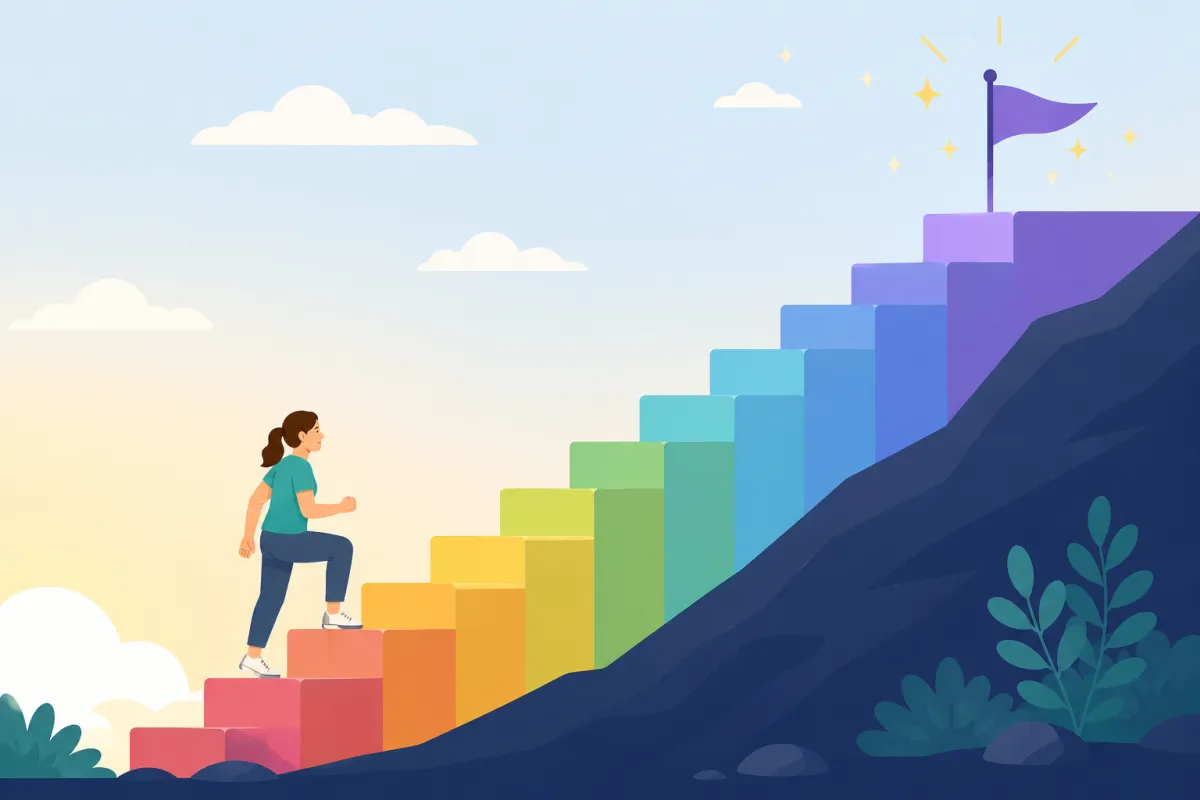
Stroke recovery does not follow one fixed timetable. Some survivors regain important abilities within weeks, while others continue making meaningful improvements months or even years after their stroke. Generally, the first three months are a particularly active period of recovery, when spontaneous neurological improvement and rehabilitation often produce noticeable changes. Progress may become slower between three and six months, but recovery does not suddenly stop. Improvements in walking, balance, arm and hand function, speech, cognition and independence can continue beyond six months and well past the first year.
The important thing is to treat stroke recovery milestones as guides rather than deadlines.
Your stroke was individual.
Your recovery will be too.
✦ ✦ ✦
After Your Stroke...
Suddenly, everyone seems to talk about time.
Three weeks.
Three months.
Six months.
One year.
At first, those numbers may sound helpful.
Then they can start feeling like a countdown.
You look at the hand that still will not move properly.
The leg that still feels heavy.
The words that still disappear.
The exhaustion nobody else seems to understand.
And you begin wondering...
“Should I be further ahead by now?”
Or...
“What if this is as good as I am going to get?”
Then you see another stroke survivor walking after two months when you are still struggling to stand.
It is difficult not to compare.
But their timeline is not your prognosis.
One person may regain walking quickly while struggling severely with speech.
Another may speak normally but live with significant weakness or visual problems.
Someone else may look completely recovered while dealing with fatigue, memory problems or cognitive changes nobody can see.
The calendar measures how long it has been since your stroke.
It does not measure how much recovery you still have ahead of you.
✦ ✦ ✦
The Good News
Your brain can continue adapting after a stroke.
This ability is called neuroplasticity.
Neuroplasticity allows surviving areas and networks within the brain to change, reorganise and strengthen connections as skills are repeatedly practised.
During the early weeks and months, several things may contribute to improvement.
✓ Swelling and disruption around injured brain tissue may settle.
✓ Previously impaired brain networks may begin functioning more effectively.
✓ Repeated rehabilitation helps reinforce movement and skills.
✓ Strength, balance and endurance may begin improving.
✓ You may learn new ways of completing everyday activities.
The early months are important.
But they are not your only opportunity.
Neuroplasticity does not switch off at three months.
Your brain does not stop learning at six months.
And reaching your first stroke anniversary does not close the door on further improvement.
✦ ✦ ✦
The First 24–72 Hours: Stabilisation
The first few days after a stroke are mainly about treating the immediate medical emergency and stabilising your condition.
Depending on the type of stroke, your medical team may focus on:
✓ Restoring blood flow where appropriate.
✓ Managing bleeding where applicable.
✓ Monitoring blood pressure and neurological symptoms.
✓ Assessing swallowing.
✓ Checking movement, speech and cognition.
✓ Investigating what caused the stroke.
✓ Reducing the risk of another stroke.
You may feel exhausted, confused or frightened.
Some survivors remember very little about this period.
Others remember being completely aware of what was happening while suddenly being unable to move, speak or communicate normally.
At this stage, it may be impossible to know exactly how much function will eventually return.
✦ ✦ ✦
Week 1: Early Rehabilitation Begins
Once you are medically stable, rehabilitation may begin surprisingly quickly.
Early milestones can look very small from the outside.
They may include:
✓ Sitting upright.
✓ Rolling over in bed.
✓ Maintaining sitting balance.
✓ Moving from the bed to a chair.
✓ Standing with assistance.
✓ Taking supported steps.
✓ Moving an affected arm or leg.
✓ Swallowing more safely.
✓ Saying simple words.
✓ Following instructions.
Before your stroke, sitting on the edge of a bed probably required no thought whatsoever.
After a stroke, being able to sit upright without falling sideways can represent enormous progress.
Early milestones are often the foundations on which later independence is built.
✦ ✦ ✦
Month 1: Building the Foundations
During the first month, some survivors experience noticeable changes.
Possible milestones may include:
✓ Improved sitting balance.
✓ Standing with assistance.
✓ Taking supported steps.
✓ Increased movement in an affected arm or leg.
✓ Small movements appearing in the hand or fingers.
✓ Improved swallowing.
✓ Clearer speech.
✓ Better understanding of language.
✓ Helping more with washing and dressing.
✓ Transferring with less assistance.
These are possibilities.
They are not requirements.
Someone who experienced a severe stroke may still need substantial assistance after one month.
Another person may already be walking independently.
Both can still have considerable recovery ahead.
✦ ✦ ✦
Months 2–3: Often a Major Recovery Period
The first three months are often associated with some of the fastest neurological and functional improvements.
You may notice changes in:
✓ Walking.
✓ Standing balance.
✓ Transfers.
✓ Arm movement.
✓ Hand control.
✓ Speech and language.
✓ Swallowing.
✓ Concentration.
✓ Memory.
✓ Everyday independence.
Sometimes progress is gradual.
Sometimes something suddenly happens that felt impossible a week earlier.
A finger moves.
You stand without holding on.
Your affected leg carries your weight more confidently.
You say a sentence that previously became stuck.
You walk several steps without assistance.
Those moments can feel enormous.
But do not panic if your recovery is slower.
Three months is an important stage of recovery.
It is not a deadline.
✦ ✦ ✦
Months 4–6: Progress May Become Less Obvious
This is where recovery can become frustrating.
During the earliest months, improvements may be dramatic.
You may have gone from being unable to stand to standing.
From not walking to taking your first steps.
Later changes are often smaller.
You might walk for seven minutes instead of five.
Your hand may open a little more easily.
You may climb stairs with better control.
Your foot may catch the ground less often.
You may need less support when standing.
These improvements are easier to overlook because they do not create the same dramatic before-and-after moment.
But they still matter.
✦ ✦ ✦
What Happens if Your Recovery Plateaus?
A stroke recovery plateau is a period when progress appears to slow down or stop.
It does not automatically mean you have reached your maximum recovery.
Sometimes your rehabilitation needs to progress.
You may need:
✓ A more challenging exercise.
✓ More repetition.
✓ Better-quality movement.
✓ Additional strengthening.
✓ Different rehabilitation techniques.
✓ Treatment for pain or spasticity.
✓ Better fatigue management.
✓ Reassessment from your therapist.
What challenged you during month two may be too easy by month six.
Your rehabilitation should develop as your abilities develop.
✦ ✦ ✦
Months 6–12: Rebuilding Everyday Life
By this point, recovery often starts becoming less about individual movements and more about what those movements allow you to do.
Early rehabilitation asks:
Can you stand?
Can you walk?
Later recovery asks:
Can you walk outside safely?
Can you cook?
Can you go shopping?
Can you return to work?
Can you travel?
Can you drive?
Can you look after your children?
Can you go somewhere alone?
Can you live independently?
This is where stroke recovery becomes about rebuilding a life rather than simply completing exercises.
✦ ✦ ✦
Hidden Effects May Become More Noticeable
There can be another difficult change during this period.
Other people may start thinking you are recovered.
You may look much better.
You may even be walking independently.
But you may still experience:
✓ Stroke fatigue.
✓ Memory difficulties.
✓ Poor concentration.
✓ Slower thinking.
✓ Aphasia.
✓ Balance problems.
✓ Weakness.
✓ Reduced coordination.
✓ Pain or spasticity.
✓ Anxiety.
✓ Loss of confidence.
Some of the hardest effects of stroke cannot be seen.
Recovery milestones should therefore include improvements in energy, cognition, confidence and independence — not only walking or arm movement.
✦ ✦ ✦
One Year After a Stroke
The first anniversary of your stroke can bring complicated emotions.
You may realise how far you have come.
You may also see everything that has not returned.
Both can be true.
One year is an important milestone.
But it is not a neurological finishing line.
After one year, improvements may continue in:
✓ Walking speed.
✓ Strength.
✓ Balance.
✓ Endurance.
✓ Hand function.
✓ Coordination.
✓ Communication.
✓ Confidence.
✓ Everyday independence.
Later recovery may require more deliberate practice than early recovery.
Slower progress does not mean no progress.
✦ ✦ ✦
Can You Still Improve Years After a Stroke?
Yes.
Improvement can continue years after stroke.
That does not mean every survivor will regain every ability. Stroke can cause permanent neurological disability, and nobody can guarantee complete recovery.
But neurological recovery is not the only way function improves.
You can also become:
✓ Stronger.
✓ Fitter.
✓ Better balanced.
✓ More coordinated.
✓ More flexible.
✓ More confident.
✓ More efficient at everyday tasks.
For example, some weakness may remain while your walking becomes considerably better because your hip strength, balance, endurance and movement control improve.
Long-term recovery is therefore about more than simply waiting for the brain to heal.
✦ ✦ ✦
Why Is Everyone's Stroke Recovery Timeline Different?
No two strokes are exactly the same.
Recovery may be influenced by several factors.
✦ ✦ ✦
Stroke Severity
More severe strokes generally cause greater neurological impairment and may require longer rehabilitation.
However, severity cannot predict an individual's exact eventual outcome.
✦ ✦ ✦
Stroke Location
Different areas of the brain control different abilities.
One stroke may primarily affect movement.
Another may affect speech.
Another may affect vision, sensation, memory, behaviour or coordination.
Comparing two survivors can therefore be extremely misleading.
✦ ✦ ✦
Your Starting Point
The function you have during early recovery can sometimes help healthcare professionals estimate likely recovery.
But predictions are not perfect.
Your starting point matters.
It is not necessarily your finishing point.
✦ ✦ ✦
Rehabilitation
Targeted rehabilitation gives your brain repeated opportunities to practise impaired skills.
The important word is targeted.
Thousands of repetitions are not automatically useful if the movement is inappropriate or poorly controlled.
Quality, repetition and progression all matter.
✦ ✦ ✦
Signs of Recovery You May Be Missing
Not every milestone is dramatic.
You may be making progress if:
✓ You stand slightly longer.
✓ You need less help getting out of a chair.
✓ Your foot catches the floor less often.
✓ Your affected hand opens more easily.
✓ You can reach further without losing balance.
✓ You walk further before needing a rest.
✓ Conversations require less effort.
✓ Everyday tasks require less concentration.
✓ You recover more quickly after activity.
✓ You hesitate less before attempting something difficult.
Instead of comparing yourself with yesterday, compare yourself with three months ago.
You may discover improvements that have quietly become your new normal.
✦ ✦ ✦
Practical Ways to Track Your Recovery
Recovery can be difficult to see unless you record it.
Try tracking meaningful functions.
✓ How far can you walk?
✓ How long can you stand?
✓ How much assistance do you need?
✓ How frequently does your foot catch?
✓ How many good-quality repetitions can you complete?
✓ How long can you concentrate before becoming tired?
✓ Are everyday tasks taking less time?
✓ Are you naturally using your affected hand more?
✓ Are you recovering more quickly after activity?
Occasional videos can also help.
A movement that feels unchanged today may look dramatically different when you compare it with a recording from several months earlier.
✦ ✦ ✦
When Should You Seek Medical Advice?
Speak to your GP, stroke team or rehabilitation professional if you experience:
✓ Increasing difficulty walking.
✓ Repeated falls.
✓ Persistent or worsening pain.
✓ Significant spasticity.
✓ Swallowing problems.
✓ Severe fatigue interfering with daily life.
✓ New difficulties that are affecting rehabilitation.
Sudden neurological symptoms should be treated differently.
Seek urgent medical attention for sudden new facial weakness, arm or leg weakness, numbness, speech problems, vision changes, confusion, severe unexplained headache or sudden loss of balance or coordination.
Do not assume new neurological symptoms are simply part of your previous stroke.
✦ ✦ ✦
My Perspective
After a stroke...
You want a date.
You want somebody to tell you:
“By three months, you will be walking.”
Or...
“By six months, your hand will be back.”
Because uncertainty is exhausting.
I understand why survivors search for timelines.
I did too.
But eventually I realised the calendar was not the best way to measure recovery.
The better question was:
“What can I do now that I could not do before?”
Could I stand longer?
Could I move more freely?
Did I need less help?
Was something becoming more automatic?
Was I less frightened?
Some improvements came quickly.
Others took much longer than I wanted.
And some things that once required enormous concentration eventually became ordinary again.
The calendar told me how long it had been since my stroke.
It could never tell me how far I was still capable of going.
✦ ✦ ✦
Frequently Asked Questions
✦ ✦ ✦
When Does Most Stroke Recovery Happen?
Many survivors experience particularly rapid improvement during the first few weeks and months after stroke. However, meaningful improvement can continue long afterwards.
✦ ✦ ✦
What Should I Expect Three Months After a Stroke?
Recovery varies enormously. Some survivors may have regained substantial independence, while others still require significant rehabilitation and assistance.
✦ ✦ ✦
Does Stroke Recovery Stop After Six Months?
No. Recovery may become slower or less obvious, but improvements in function can continue beyond six months.
✦ ✦ ✦
Can You Improve One Year After a Stroke?
Yes. Strength, mobility, balance, hand function, communication, endurance and independence can continue improving after the first year.
✦ ✦ ✦
Can Stroke Recovery Continue for Years?
Yes. The nervous system retains the ability to learn and adapt, although later recovery may require more deliberate and repeated practice.
✦ ✦ ✦
Why Am I Recovering More Slowly Than Someone Else?
Stroke severity, location, initial impairment, complications, rehabilitation and many other factors influence recovery. Another survivor's timeline cannot reliably predict yours.
✦ ✦ ✦
What Are Positive Signs of Stroke Recovery?
Improved movement, balance, endurance, communication, confidence and needing less help with everyday activities can all be signs of progress.
✦ ✦ ✦
Does a Plateau Mean My Recovery Is Finished?
Not necessarily. Progress may simply have become less noticeable, or your rehabilitation programme may need to be reassessed and progressed.
✦ ✦ ✦
Key Takeaways
✓ Stroke recovery does not follow one universal timetable.
✓ The first three months are often a particularly active period of recovery.
✓ Three months is not a deadline.
✓ Progress may become less obvious between three and six months.
✓ Six months does not mean recovery has ended.
✓ Improvements can continue beyond the first year.
✓ Small functional changes are genuine recovery milestones.
✓ A plateau does not automatically mean you have reached your maximum recovery.
✓ Rehabilitation should evolve as your abilities improve.
✓ Compare yourself with where you started, not with another survivor.
✦ ✦ ✦
Related Articles
Continue learning about stroke recovery with these helpful guides:
How Long Does Stroke Recovery Take? – Understand what influences the speed and extent of recovery.
Neuroplasticity After Stroke – Learn how your brain can adapt and relearn skills after injury.
Stroke Recovery Plateau – Understand why progress can slow and what you can do next.
Can You Still Recover Years After a Stroke? – Explore long-term rehabilitation and neuroplasticity.
Signs You Are Recovering From a Stroke – Recognise improvements that can easily go unnoticed.
✦ ✦ ✦
About the Author
Alisia Gayle is a stroke survivor who achieved 96% neurological recovery following an ischaemic stroke.
After years of rehabilitation, she now shares practical, evidence-informed resources to help stroke survivors, carers and families better understand recovery and rebuild their lives with confidence.
Alisia is also the author of Brain Damage: My Journey to 96% Recovery, where she shares her personal stroke recovery story and the lessons she learned throughout rehabilitation.
✦ ✦ ✦
Medical Disclaimer
This article is intended for educational purposes only and should not replace professional medical advice, diagnosis or treatment.
Always seek advice from your doctor, physiotherapist, occupational therapist, speech and language therapist or another qualified healthcare professional regarding your individual stroke recovery and rehabilitation.
If you experience sudden new symptoms that could indicate another stroke, seek emergency medical attention immediately.
✦ ✦ ✦
Final Thoughts
After a stroke...
It is natural to watch the calendar.
You want proof that you are recovering quickly enough.
But three months is not a judgement.
Six months is not a deadline.
One year is not a locked door.
Your real milestones may be quieter.
The extra step.
The steadier hand.
The first time you stand without thinking about your balance.
The conversation that requires slightly less effort.
The task you suddenly realise you can do alone.
Other people may not notice those moments.
You will.
Because you remember when they were impossible.
Use recovery timelines to understand what may happen.
Never use them to decide what cannot happen.
The calendar measures time. Your milestones measure recovery.