Having a stroke before the age of 50 can feel completely incompatible with the life you thought you were living. Stroke is often associated with old age, yet it can happen at any age, including in younger adults. The causes may include traditional cardiovascular risk factors such as high blood pressure, diabetes and smoking, but younger people can also experience stroke because of artery dissection, heart conditions, blood-clotting disorders and other less common causes. Recovery can bring particular challenges involving work, parenting, relationships, finances and rebuilding a future that suddenly feels less predictable.
After your stroke...
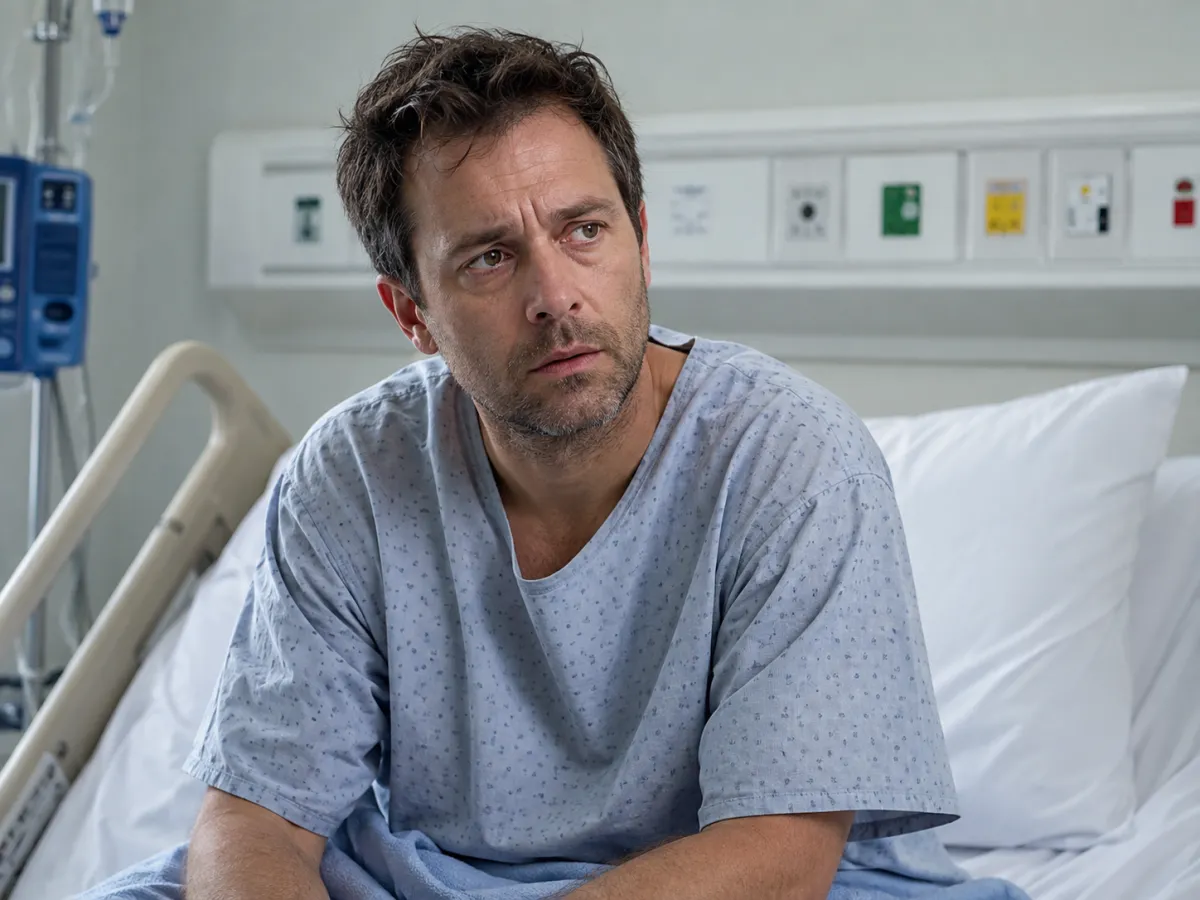
You may look around the stroke ward and immediately notice something.
Everyone seems older than you.
Much older.
You may have a career.
Young children.
A mortgage.
Plans.
Holidays booked.
Perhaps you exercised.
Perhaps you rarely visited your doctor.
Maybe you considered yourself healthy.
Then suddenly...
You are told you have had a stroke.
You begin wondering...
"How can I have a stroke at my age?"
"Did the doctors get it wrong?"
"Why did this happen?"
"Will I have another one?"
"Will I ever get back to work?"
"What does this mean for the rest of my life?"
These questions can feel particularly brutal when you are young.
Because stroke was never supposed to be part of the plan.
But stroke does not check your date of birth before it happens.
The NHS is clear that although stroke becomes more common with age, it can occur at any age.
✦ ✦ ✦
The Good News
You are not the only younger person who has experienced a stroke.
Research commonly describes "young stroke" using age limits somewhere below 50 or 55, depending on the study.
One UK research programme notes that up to around 10% of strokes occur in people under 55.
And the Stroke Association specifically provides information and support aimed at younger stroke survivors because the challenges of having a stroke during working and family life can be very different from experiencing one much later.
Recovery also does not suddenly become impossible because the injury is serious.
Rehabilitation may help you work on:
✓ Walking
✓ Arm and hand function
✓ Speech
✓ Communication
✓ Vision
✓ Balance
✓ Cognition
✓ Fatigue
✓ Independence
Your outcome will depend on the location and severity of the stroke, treatment, complications, rehabilitation and many individual factors.
Age alone does not determine how well you will recover.
✦ ✦ ✦
Why Can Someone Under 50 Have a Stroke?
Stroke occurs when blood flow to part of the brain is interrupted or when bleeding occurs in or around the brain.
The basic mechanism does not change because someone is younger.
An ischaemic stroke usually involves a blocked blood vessel.
A haemorrhagic stroke involves bleeding.
What may differ is the underlying reason the stroke happened.
Older adults are more likely to have accumulated cardiovascular disease over many years.
In younger adults, doctors may need to consider a broader range of possible causes.
That does not mean every young stroke has a rare explanation.
Traditional stroke risk factors still matter.
✦ ✦ ✦
High Blood Pressure Still Matters When You Are Young
There is a dangerous assumption that high blood pressure is an older person's problem.
It is not.
Hypertension can occur in younger adults and may cause no obvious symptoms.
The NHS identifies high blood pressure as one of the major conditions that increases stroke risk.
You can be:
Thirty-five.
Working full-time.
Going to the gym.
Looking completely healthy.
And still have high blood pressure.
That is why blood-pressure measurement matters even when you feel well.
If hypertension contributed to your stroke, long-term management may include:
✓ Medication
✓ Lower salt intake
✓ Weight management where appropriate
✓ Physical activity
✓ Reduced alcohol intake
✓ Regular monitoring
Do not dismiss blood pressure because you think you are too young for it to matter.
✦ ✦ ✦
Diabetes, Cholesterol and Smoking
Traditional cardiovascular risks remain relevant before 50.
These include:
✓ Diabetes
✓ High cholesterol
✓ Smoking
✓ Obesity
✓ Physical inactivity
✓ Excess alcohol
The NHS includes diabetes, high cholesterol and atrial fibrillation alongside high blood pressure among important stroke risk factors.
Smoking is particularly important because it damages blood vessels and contributes to clot formation and atherosclerosis.
A young person can therefore have several conventional stroke risks without recognising them.
Being younger does not make those risks harmless.
✦ ✦ ✦
Artery Dissection
One cause that may receive more attention in younger stroke patients is cervical artery dissection.
This happens when a tear develops within the wall of an artery supplying the brain, such as the carotid or vertebral artery.
Blood can enter the arterial wall and interfere with normal blood flow.
A clot may also form and travel into the brain.
Dissection may occur:
✓ Spontaneously
✓ After neck injury
✓ After relatively minor trauma
✓ In association with certain underlying connective-tissue conditions
Sometimes there is no obvious triggering event.
If your doctors suspect an arterial dissection, imaging of the blood vessels may form an important part of the investigation.
✦ ✦ ✦
Heart Problems Can Cause Stroke in Younger Adults
Not every stroke begins in an artery in the neck or brain.
Sometimes a clot forms in the heart and travels to the brain.
Potential cardiac factors can include:
✓ Atrial fibrillation
✓ Structural heart problems
✓ Heart-valve disease
✓ Certain congenital abnormalities
Depending on your circumstances, investigations may include:
✓ ECG
✓ Longer-term heart monitoring
✓ Echocardiogram
The purpose is to determine whether the heart could have been the source of the clot.
Finding the cause matters because prevention depends on it.
If a stroke came from a cardiac clot...
The treatment may be different from a stroke caused by arterial disease.
✦ ✦ ✦
What Is a PFO?
You may hear the term patent foramen ovale, or PFO.
A PFO is a small opening between the upper chambers of the heart that did not completely close after birth.
Many people have one and never know it exists.
In some younger people who have experienced an otherwise unexplained ischaemic stroke, doctors may investigate whether a PFO could have played a role.
But finding a PFO does not automatically prove:
"That caused my stroke."
It needs to be interpreted alongside:
Your age.
Stroke pattern.
Other risk factors.
Other test results.
The presence or absence of another plausible cause.
Treatment may vary considerably between individuals.
✦ ✦ ✦
Blood-Clotting Disorders
Some younger people undergo investigation for unusual clotting tendencies.
Certain inherited or acquired conditions can make blood more likely to clot.
Whether testing is appropriate depends on your stroke circumstances and medical history.
Do not assume that because you had a stroke young, you must have a genetic clotting disorder.
Most people do not need every rare test that exists.
Your stroke specialist should decide which investigations make sense based on:
✓ Your age
✓ Stroke location
✓ Family history
✓ Previous clots
✓ Pregnancy history
✓ Other medical conditions
✓ Imaging findings
Young-stroke investigation should be targeted.
Not a random hunt for every rare disease on the internet.
✦ ✦ ✦
Sometimes No Cause Is Found
This can be one of the hardest outcomes.
You undergo:
Brain scans.
Blood tests.
Heart investigations.
Vascular imaging.
Monitoring.
And eventually someone says:
"We cannot identify a definite cause."
This may be described as a cryptogenic stroke when an ischaemic stroke remains unexplained after appropriate investigation.
Emotionally, this can be difficult.
If doctors cannot tell you exactly why it happened, how can you prevent it happening again?
But "cause not identified" does not mean:
"Nothing can be done."
Your healthcare team may still address identifiable risks and recommend appropriate secondary prevention.
Uncertainty is uncomfortable.
But inventing your own explanation is worse.
✦ ✦ ✦
"But I Was Healthy"
Many younger survivors struggle with this.
You exercised.
You did not smoke.
You were not overweight.
You ate reasonably well.
So the stroke feels impossible.
But healthy behaviour reduces risk.
It does not create immunity.
There are stroke mechanisms that have little to do with whether someone ate vegetables or went running.
Conversely, looking fit does not prove that your:
Blood pressure.
Cholesterol.
Heart rhythm.
Blood glucose.
arteries
are perfect.
Health is not a moral reward system.
A stroke is not proof that you lived badly.
The useful question is not:
"Why did this happen to someone like me?"
It is:
"What does the evidence tell us about why this happened, and what can I do now?"
✦ ✦ ✦
Diagnosis Can Be Delayed in Younger People
One problem younger stroke survivors sometimes describe is that neither they nor people around them initially consider stroke.
Someone in their thirties may suddenly develop:
Dizziness.
Weakness.
Speech problems.
Visual changes.
Severe headache.
Balance problems.
But because they are young, another explanation may be considered first.
The NHS emphasises that stroke can occur at any age and that sudden neurological symptoms require emergency treatment.
Remember FAST:
Face weakness.
Arm weakness.
Speech difficulty.
Time to call 999.
Other symptoms can include sudden:
✓ Numbness
✓ Vision loss
✓ Confusion
✓ Dizziness
✓ Falling
✓ Severe headache
Do not allow age to reassure you falsely.
✦ ✦ ✦
Being Young Can Change the Recovery Experience
A younger stroke survivor may face completely different pressures from an older survivor.
Perhaps you are trying to recover while also:
✓ Raising children
✓ Paying a mortgage
✓ Building a career
✓ Managing a relationship
✓ Caring for relatives
✓ Planning another pregnancy
✓ Running a business
✓ Studying
You may not have expected to depend on anyone.
Then suddenly you need help:
Getting dressed.
Driving.
Looking after your children.
Managing money.
Travelling.
Cooking.
The physical disability may improve.
But the disruption to your expected life can remain enormous.
✦ ✦ ✦
Returning to Work Under 50
For many younger survivors, work becomes one of the biggest concerns.
You may worry about:
✓ Income
✓ Career progression
✓ Professional reputation
✓ Fatigue
✓ Memory
✓ Concentration
✓ Commuting
✓ Employer reactions
The Stroke Association notes that stroke affects many people of working age and provides specific guidance about returning to employment.
You may benefit from:
✓ A phased return
✓ Reduced hours initially
✓ Flexible working
✓ Workplace adjustments
✓ Occupational health input
✓ Written instructions
✓ More breaks
Returning to work does not have to mean pretending nothing happened.
The goal is sustainable work.
Not proving something by exhausting yourself.
✦ ✦ ✦
Parenting After a Young Stroke
Having young children can make stroke recovery emotionally complicated.
Your child may not understand why:
You cannot pick them up.
You cannot run after them.
You cannot drive.
You become tired quickly.
You need help.
You may feel guilty.
But parenting ability is not measured only by physical capacity.
You may need to adapt temporarily.
That can mean:
✓ Sitting activities
✓ Help with school runs
✓ Family support
✓ Simplifying routines
✓ Resting before demanding activities
Children also need explanations appropriate to their age.
Silence may leave them imagining something worse.
✦ ✦ ✦
Relationships Can Change
Stroke can alter the balance inside a relationship.
A partner may temporarily become:
Carer.
Driver.
Medication organiser.
Financial manager.
Parent to the children while you recover.
That can be difficult for both people.
The Stroke Association recognises that stroke can suddenly change roles at home and create strain within relationships.
Communication matters.
You may need help without wanting to feel helpless.
Your partner may want to protect you without taking away your independence.
These tensions often require adjustment rather than blame.
✦ ✦ ✦
Losing Your Independence Younger
Losing the ability to drive at 42 may feel completely different from choosing to stop driving at 82.
You may need the car for:
Work.
Children.
Shopping.
Appointments.
Social life.
Your entire routine may depend on mobility.
That is why practical rehabilitation matters so much for younger survivors.
Independence may involve:
✓ Driving assessment
✓ Vehicle adaptations
✓ Public transport planning
✓ Mobility rehabilitation
✓ Returning to work
✓ Relearning household tasks
Recovery is not only about improving a neurological score.
It is about rebuilding an actual life.
✦ ✦ ✦
The Fear of Another Stroke
This fear can be particularly strong when stroke happens young.
You may think:
"If this happened at 38, what happens at 48?"
Every:
Headache.
Tingling sensation.
Dizzy moment.
Word you forget.
can suddenly feel threatening.
Some vigilance is sensible.
But constant monitoring can become exhausting.
The better response is to understand:
✓ Why your stroke occurred where possible
✓ Which risk factors you have
✓ What medication you need
✓ What symptoms require emergency action
✓ What ordinary recovery symptoms you commonly experience
Information gives fear boundaries.
✦ ✦ ✦
Does Being Younger Mean You Will Recover Better?
Not automatically.
Younger age may sometimes be associated with certain recovery advantages, but stroke outcome depends on much more than age.
Important factors include:
✓ Stroke severity
✓ Location
✓ Amount of brain tissue affected
✓ Speed of treatment
✓ Complications
✓ Rehabilitation
✓ Other medical conditions
A mild stroke in a 70-year-old may produce a better outcome than a devastating stroke in a 30-year-old.
Do not allow:
"But you're young"
to minimise what happened.
Young people can experience severe disability after stroke too.
✦ ✦ ✦
Recovery Can Continue for a Long Time
You may improve rapidly during the first few months.
Then progress slows.
That does not necessarily mean recovery has finished.
Rehabilitation often becomes less dramatic.
Instead of:
Unable to walk → walking,
you may now be working on:
Walking faster.
Running.
Hand dexterity.
Balance.
Endurance.
Returning to work.
Driving.
Complex cognition.
These later-stage goals matter particularly for younger survivors who want to return to demanding lives.
Do not measure recovery only by whether you can perform basic activities.
Your goals may legitimately be much higher.
✦ ✦ ✦
Do Not Let "Young" Become an Excuse to Ignore Rehabilitation
Being younger can create another trap.
You think:
"My body will recover."
So you stop doing the work.
But neurological rehabilitation still requires:
Practice.
Repetition.
Progressive challenge.
Rest.
Consistency.
If physiotherapy gives you exercises...
Do them.
If speech therapy gives you strategies...
Use them.
If fatigue means you need pacing...
Learn it.
Youth is useful.
It is not a rehabilitation programme.
✦ ✦ ✦
Emotional Impact
Having a stroke under 50 can create a strange sense of separation from your peers.
Your friends are discussing:
Promotions.
Dating.
Children.
Holidays.
Buying houses.
And you are discussing:
MRI results.
Medication.
Physiotherapy.
Neurology appointments.
You may feel:
✓ Angry
✓ Isolated
✓ Frightened
✓ Embarrassed
✓ Jealous of healthy friends
✓ Grief for your old life
The Stroke Association recognises shock, grief and emotional changes as common consequences of stroke.
These reactions do not mean you are failing at recovery.
They mean a major life event happened.
✦ ✦ ✦
Finding Other Young Stroke Survivors
Peer support can be particularly useful when everyone in your immediate rehabilitation environment seems decades older.
You may want to speak with people who understand:
Returning to work.
Dating.
Parenting.
Fertility.
Career disruption.
Young children.
Social isolation.
The Stroke Association runs and supports services specifically aimed at younger and working-age survivors.
Sometimes hearing:
"That happened to me too"
removes an enormous amount of isolation.
You are still an individual.
But you are not the only one living this version of stroke recovery.
✦ ✦ ✦
My Perspective
Having a stroke young can mess with your understanding of how life is supposed to work.
You think serious illness belongs later.
Then suddenly your body ignores the schedule.
And everyone keeps telling you:
"But you're so young."
As though that somehow makes the stroke less real.
It doesn't.
Being younger does not erase brain damage.
It does not erase fatigue.
It does not automatically restore your career.
And it does not remove the fear that something catastrophic happened years before you expected to think seriously about mortality.
But being young also means you may have decades of life ahead of you.
That deserves attention.
Investigate the cause properly.
Take prevention seriously.
Do the rehabilitation.
Return to work if and when you can.
Adapt what needs adapting.
And do not allow one vascular event to become the definition of every year that follows it.
The stroke happened young.
That does not mean the rest of your life ended young too.
✦ ✦ ✦
When Should You Seek Medical Advice?
Seek urgent medical attention for any new sudden symptoms such as:
✓ Facial weakness
✓ Arm or leg weakness
✓ Numbness on one side
✓ Speech difficulty
✓ Sudden vision loss
✓ Severe unexplained headache
✓ Sudden severe dizziness or loss of balance
The NHS advises calling 999 for suspected stroke symptoms even if they disappear after a short period.
Also speak with your stroke team if:
✓ You do not understand what caused your stroke
✓ You are uncertain about your medication
✓ Your symptoms are worsening
✓ You are struggling emotionally
✓ Return to work is difficult
✓ Fatigue is preventing normal life
Understanding your individual stroke matters more than applying generic advice based only on your age.
✦ ✦ ✦
Frequently Asked Questions
Can You Really Have a Stroke Under 50?
Yes.
Stroke becomes more common with age, but it can occur at any age.
Why Do Younger People Have Strokes?
Possible causes include traditional cardiovascular risk factors, heart conditions, artery dissection, clotting disorders and other less common conditions.
Sometimes no definite cause is identified.
Are Strokes in Younger Adults Increasing?
Some research has reported increasing incidence of young stroke in high-income countries, although the reasons are not completely understood.
Does Being Young Guarantee a Full Recovery?
No.
Recovery depends on the severity and location of the stroke, treatment, rehabilitation and many individual factors.
Can I Return to Work?
Many people do.
The timing and support required vary, and some people benefit from phased return arrangements and workplace adjustments.
Can I Have Another Stroke?
Having experienced a stroke means future prevention matters.
Your individual recurrence risk depends on the cause of your stroke and other medical factors.
What If Doctors Cannot Find a Cause?
Some strokes remain unexplained despite investigation.
Continue following your specialist's prevention plan and ask what risk factors can still be addressed.
✦ ✦ ✦
Key Takeaways
✓ Stroke can happen at any age.
✓ Younger people can have both traditional and less common causes of stroke.
✓ High blood pressure, diabetes, cholesterol and smoking still matter under 50.
✓ Artery dissection and certain heart conditions may be particularly relevant in younger stroke investigations.
✓ Sometimes no definite cause is found.
✓ Looking healthy does not make someone immune from stroke.
✓ Stroke under 50 can create major challenges involving work, parenting, relationships and finances.
✓ Being younger does not guarantee complete recovery.
✓ Rehabilitation may continue beyond basic independence into higher-level goals such as work, driving, running and complex cognition.
✓ Understanding the cause of your stroke helps guide prevention.
✓ New sudden neurological symptoms should always be treated as an emergency regardless of age.
✦ ✦ ✦
Related Articles
Continue learning about stroke in younger adults:
Why Do Young People Have Strokes?
Stroke in Your 20s
Stroke in Your 30s
Stroke in Your 40s
Returning to Work After a Stroke
Confidence Returning to Work After Stroke
Parenting After Stroke
Dating After Stroke
Driving After a Stroke
Fear of Another Stroke
✦ ✦ ✦
About the Author
Alisia Gayle is a stroke survivor who achieved 96% neurological recovery following an ischaemic stroke.
After years of rehabilitation, she now shares practical, evidence-informed resources to help stroke survivors, carers and families better understand recovery and rebuild their lives with confidence.
Alisia is also the author of Brain Damage: My Journey to 96% Recovery, where she shares her personal stroke recovery story and the lessons she learned throughout her rehabilitation.
✦ ✦ ✦
Medical Disclaimer
This article is intended for educational purposes only and should not replace professional medical advice, diagnosis or treatment.
Stroke causes and recurrence risks vary considerably between individuals, particularly in younger adults where less common causes may need investigation.
Always discuss your individual stroke cause, investigations, medication and prevention plan with your doctor, neurologist or stroke team.
Never stop prescribed stroke-prevention medication because you are young, feel healthy or have recovered well.
Seek emergency medical attention immediately for new or sudden symptoms of stroke.
✦ ✦ ✦
Final Thoughts
Stroke under 50...
Can feel deeply unfair.
You may be building a career.
Raising children.
Travelling.
Making plans.
Thinking you have decades before serious illness becomes part of your life.
Then suddenly...
Everything changes.
But younger stroke is real.
And recognising that matters.
Do not let anyone dismiss symptoms because of your age.
Do not dismiss your own risk factors because you look healthy.
Investigate the cause.
Understand your medication.
Take prevention seriously.
Commit to rehabilitation.
Ask for support with work, parenting and relationships when you need it.
And allow yourself to build goals beyond simply surviving.
Because your recovery is not only about getting out of hospital.
It is about getting back into your life.
Work.
Family.
Driving.
Friendships.
Independence.
Ambition.
Whatever matters to you.
The stroke may have happened before 50.
That is one chapter of your life.
It does not get to write every chapter that comes afterwards.