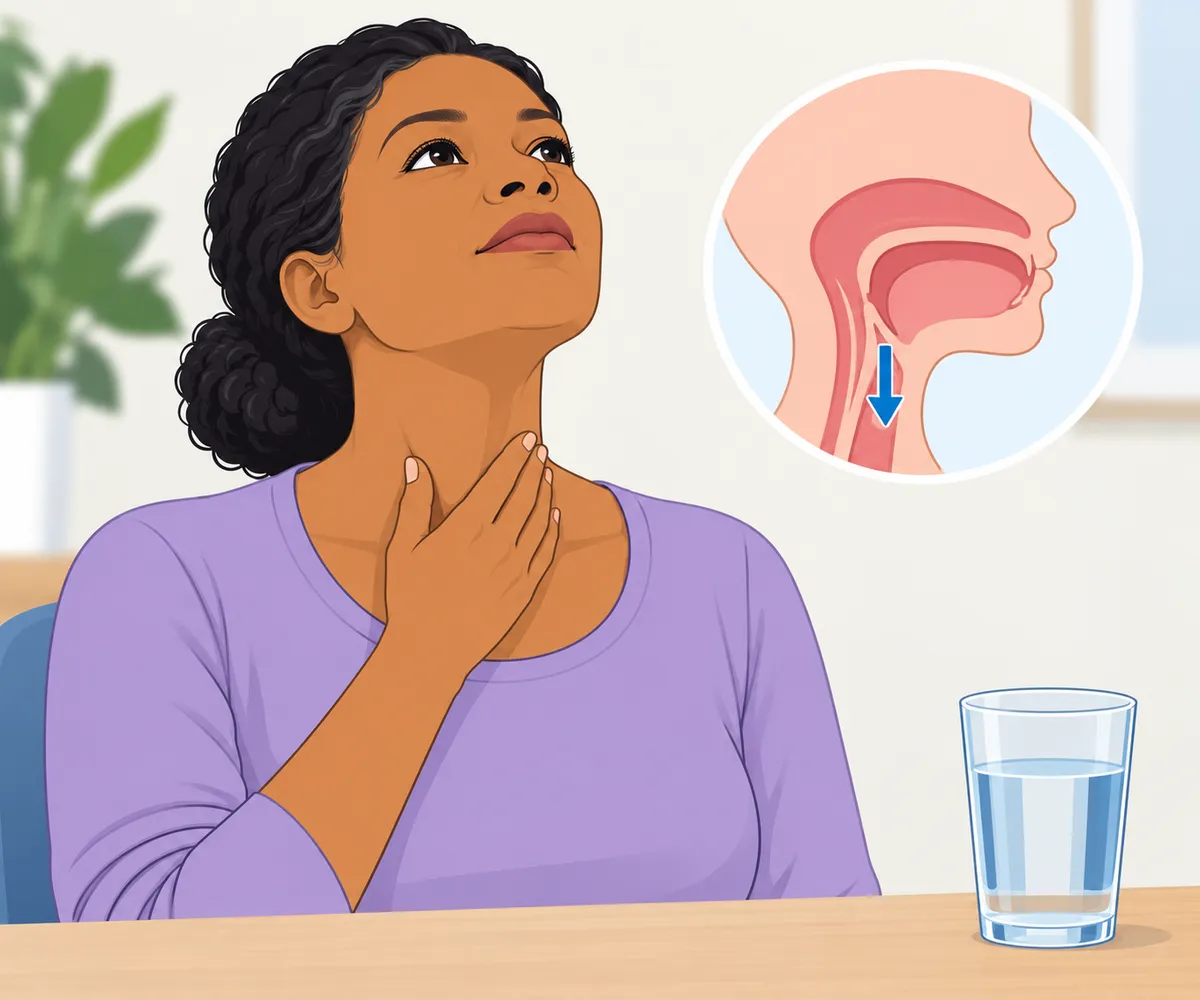
Swallowing exercises are an important part of recovery for many stroke survivors with dysphagia (difficulty swallowing). These exercises help strengthen the muscles involved in swallowing, improve coordination and reduce the risk of choking or aspiration. Learn which exercises may help, why they work, and why they should always be performed under the guidance of a speech and language therapist.
After your stroke...
Eating feels different.
Drinking water makes you cough.
Food seems to stick in your throat.
Meals become slow...
Stressful...
Sometimes even frightening.
You begin wondering...
"Can swallowing get stronger again?"
For many stroke survivors...
The answer is yes.
Swallowing muscles can often improve with rehabilitation and consistent practice.
✦ ✦ ✦
The Good News
Many people with dysphagia regain safer swallowing through swallowing exercises, speech and language therapy and the brain's ability to adapt through neuroplasticity.
Improvement may take weeks or months.
But every exercise is helping your brain and swallowing muscles work together again.
✦ ✦ ✦
Why Are Swallowing Exercises Important?
Swallowing isn't a simple action.
It involves more than 30 muscles and several nerves working together in perfect coordination.
A stroke can weaken these muscles or disrupt the signals between the brain and the muscles responsible for swallowing.
Swallowing exercises aim to:
✓ Strengthen swallowing muscles.
✓ Improve coordination.
✓ Improve airway protection.
✓ Reduce the risk of choking.
✓ Reduce the risk of aspiration.
✓ Make eating and drinking safer.
✦ ✦ ✦
Should Everyone Do Swallowing Exercises?
No.
Swallowing exercises should only be recommended by a speech and language therapist (SLT) or another qualified healthcare professional.
Different swallowing problems require different exercises.
Doing the wrong exercise may be ineffective or even unsafe.
Always follow the programme designed specifically for you.
✦ ✦ ✦
Common Swallowing Exercises
Your therapist may recommend one or more of the following exercises.
Effortful Swallow
Swallow as firmly as you can, squeezing all the muscles involved in swallowing.
This exercise helps strengthen the muscles of the throat and improves swallowing efficiency.
✦ ✦ ✦
Mendelsohn Manoeuvre
Swallow normally.
As your voice box (larynx) lifts, try to hold it in the raised position for a few seconds before relaxing.
This exercise helps improve coordination and allows the airway to stay protected for longer.
Only perform this exercise if your therapist has shown you how.
✦ ✦ ✦
Tongue Strengthening Exercises
Your therapist may ask you to:
✓ Push your tongue against the roof of your mouth.
✓ Push your tongue against a tongue depressor.
✓ Move your tongue from side to side.
These exercises improve tongue strength and control during swallowing.
✦ ✦ ✦
Lip Strengthening Exercises
Exercises that strengthen the lips can improve your ability to keep food and drinks inside your mouth while swallowing.
They may include:
✓ Pressing your lips tightly together.
✓ Smiling widely.
✓ Puckering your lips.
✦ ✦ ✦
Shaker Exercise (Head Lift Exercise)
While lying flat, lift your head to look towards your toes without lifting your shoulders.
This exercise strengthens muscles involved in opening the upper oesophagus.
Because it isn't suitable for everyone, only perform it if recommended by your therapist.
✦ ✦ ✦
Chin Tuck Against Resistance (CTAR)
This exercise involves pressing your chin down against a soft ball or similar object.
It strengthens muscles involved in swallowing and may be recommended as an alternative to the Shaker exercise.
✦ ✦ ✦
Supraglottic Swallow
This technique teaches you to:
✓ Take a breath.
✓ Hold it.
✓ Swallow.
✓ Cough immediately afterwards.
It helps protect the airway while swallowing.
Your therapist will teach you the correct technique if it's appropriate for you.
✦ ✦ ✦
How Often Should You Practise?
Follow the programme prescribed by your speech and language therapist.
In general:
✓ Little and often is best.
✓ Daily practice usually produces the greatest improvements.
✓ Consistency is more important than intensity.
Avoid doing extra repetitions unless advised by your therapist.
✦ ✦ ✦
How Long Does Recovery Take?
Recovery varies from person to person.
Some people notice improvement within weeks.
Others continue making progress over many months.
The speed of recovery depends on:
✓ The severity of the stroke.
✓ The underlying swallowing problem.
✓ How consistently exercises are practised.
✓ Overall health.
Your swallowing can continue improving long after you leave hospital.
✦ ✦ ✦
Practical Tips
Sit Upright
If your therapist recommends swallowing practice with food or drink, always sit upright.
Good posture improves swallowing safety.
✦ ✦ ✦
Practise Consistently
Doing your exercises regularly is far more effective than doing lots of repetitions occasionally.
Small daily efforts lead to steady progress.
✦ ✦ ✦
Don't Rush
Focus on performing each exercise correctly rather than quickly.
Quality is more important than speed.
✦ ✦ ✦
Stay Hydrated
If you're allowed to drink normally, staying hydrated supports your overall recovery.
Always follow any advice about thickened fluids if these have been prescribed.
✦ ✦ ✦
Celebrate Small Improvements
Perhaps you cough less.
Meals become easier.
Or swallowing feels smoother.
These small changes are signs that your rehabilitation is working.
✦ ✦ ✦
Tips for Family and Carers
If you're supporting someone with swallowing exercises:
✓ Encourage regular practice.
✓ Follow the therapist's instructions.
✓ Never introduce new exercises without professional advice.
✓ Allow plenty of time during meals.
✓ Watch for coughing or signs of choking.
Support and encouragement can make rehabilitation much easier.
✦ ✦ ✦
When Should You Seek Medical Advice?
Speak with your healthcare professional if:
✓ Swallowing becomes more difficult.
✓ You cough frequently while eating or drinking.
✓ You develop chest infections.
✓ You lose weight.
✓ Your swallowing exercises become painful.
Seek emergency medical attention immediately if:
✓ You are choking and cannot breathe.
✓ You suddenly develop severe difficulty swallowing.
✓ Swallowing problems occur alongside new weakness, facial drooping or speech difficulties.
These may be signs of another stroke.
✦ ✦ ✦
My Perspective
Swallowing is something we rarely appreciate...
Until it becomes difficult.
The encouraging thing is that swallowing muscles respond to practice just like many other muscles in the body.
Every exercise...
Every safe swallow...
Every meal you complete with confidence...
Is helping your brain and body rebuild an essential skill.
Progress may feel slow.
But every repetition matters.
✦ ✦ ✦
Frequently Asked Questions
Do Swallowing Exercises Really Work?
Yes.
For many people, therapist-prescribed swallowing exercises improve muscle strength, coordination and swallowing safety.
✦ ✦ ✦
Can I Find Exercises Online and Do Them Myself?
It's not recommended.
Different swallowing problems require different exercises.
Always work with a speech and language therapist to ensure you're performing the right exercises safely.
✦ ✦ ✦
How Long Will I Need to Do the Exercises?
This varies depending on your swallowing difficulty.
Some people need only a few weeks, while others continue rehabilitation for several months.
✦ ✦ ✦
Can Swallowing Continue to Improve Years After a Stroke?
Yes.
Thanks to neuroplasticity, improvements can continue long after the stroke, particularly when rehabilitation remains consistent.
✦ ✦ ✦
Key Takeaways
✓ Swallowing exercises help improve muscle strength and coordination after a stroke.
✓ They reduce the risk of choking and aspiration.
✓ Exercises should always be prescribed by a speech and language therapist.
✓ Daily, consistent practice produces the best results.
✓ Recovery varies, but many people continue improving for months or even years.
✓ Every exercise supports your brain's ability to rebuild swallowing function.
✦ ✦ ✦
About the Author
Alisia Gayle is a stroke survivor who achieved 96% neurological recovery following an ischaemic stroke.
After years of rehabilitation, she now shares practical, evidence-informed resources to help stroke survivors, carers and families better understand recovery and rebuild their lives with confidence.
Alisia is also the author of Brain Damage: My Journey to 96% Recovery, where she shares her personal stroke recovery story and the lessons she learned throughout her rehabilitation.
✦ ✦ ✦
Medical Disclaimer
This article is intended for educational purposes only and should not replace professional medical advice, diagnosis or treatment.
Always seek advice from your doctor, speech and language therapist or other healthcare professional regarding symptoms, concerns or changes in your condition.
Never begin swallowing exercises without professional assessment and guidance.
✦ ✦ ✦
Final Thoughts
Every safe swallow begins with a signal from your brain.
Every exercise strengthens that connection.
Every day you practise...
You're giving your brain another opportunity to heal.
Be consistent.
Be patient.
Trust the process.
Recovery happens one swallow, one exercise and one day at a time.