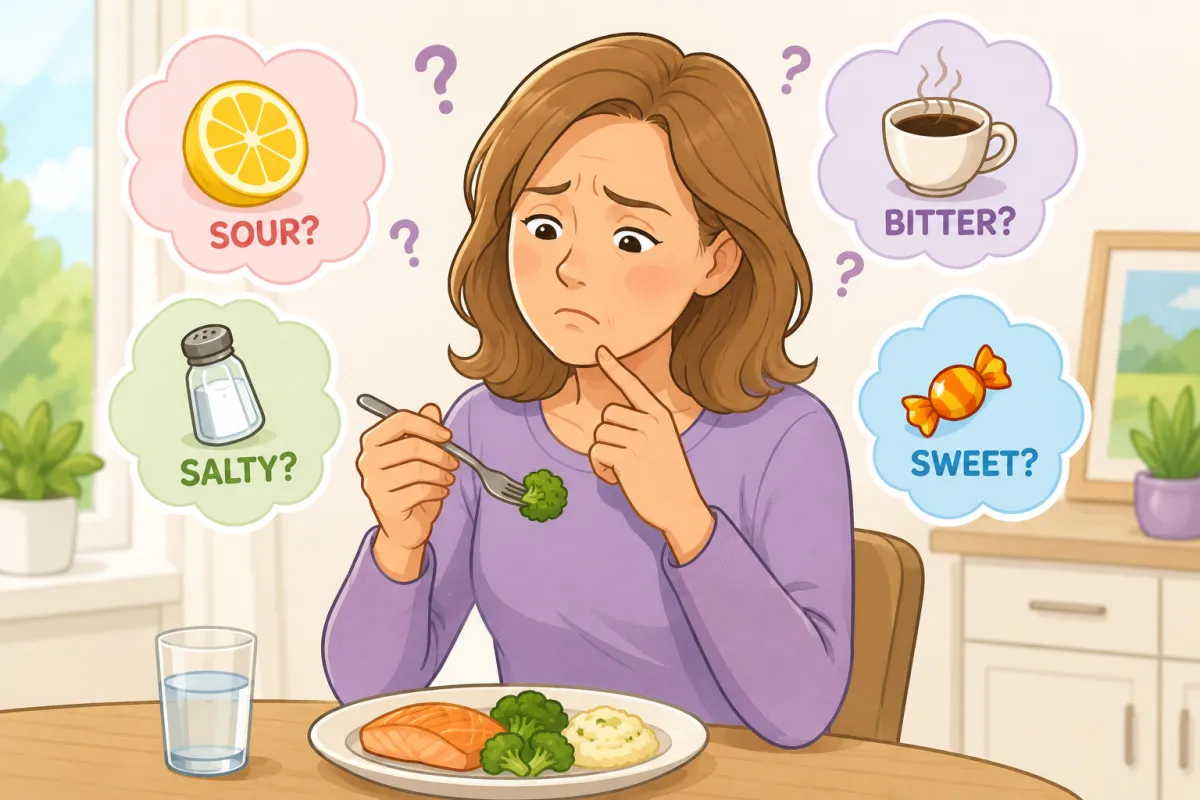
Taste changes after a stroke are more common than many survivors realise. Food may suddenly taste metallic, bitter, excessively sweet, strangely bland or simply different from how you remember it. Some people lose part of their sense of taste, while others find familiar foods become overpowering or unpleasant. These changes can happen when stroke affects the brain pathways involved in taste, but medication, changes in smell, dry mouth and oral health can also contribute.
For some people, taste begins to improve as the brain recovers and adapts. For others, changes may persist for months or longer.
Although altered taste may sound minor compared with problems such as weakness, speech difficulties or difficulty walking, it can have a real effect on recovery. If eating is no longer enjoyable, you may begin eating less, avoiding certain foods or losing interest in meals altogether.
That can affect your nutrition, energy levels, muscle strength and participation in rehabilitation.
Taste changes therefore deserve to be taken seriously.
✦ ✦ ✦
After Your Stroke, Did Food Suddenly Stop Tasting Like Food?
You take a bite of something you have eaten hundreds of times.
But something is wrong.
Your morning coffee suddenly tastes unbearably bitter.
Chocolate is far too sweet.
Meat has a metallic flavour.
Fruit tastes sour.
Or perhaps everything has become so bland that eating feels pointless.
You may initially blame the food.
You might ask someone else, “Does this taste strange to you?”
They tell you it tastes completely normal.
That is when you realise the food may not have changed.
Your perception of it has.
Taste is something most of us barely think about before something interferes with it. You simply expect your favourite foods to taste the way they always have.
After a stroke, however, that familiarity can disappear.
And when you are already adjusting to changes in your body, independence, energy and daily routine, suddenly losing the pleasure of food can feel like another small piece of your old life disappearing.
Other people may struggle to understand it because they cannot see the problem.
They may tell you:
“You used to love this.”
“Just try it.”
“It tastes fine.”
But if your brain is processing flavour differently, it genuinely may not taste fine to you anymore.
Taste disturbance after stroke is real.
And although it is not always talked about during rehabilitation, it can affect appetite, food choices, nutrition and quality of life.
✦ ✦ ✦
The Good News
Taste changes after stroke are not automatically permanent.
The brain is capable of adapting after injury, and sensory experiences can change during recovery.
Some survivors notice their taste gradually returning towards normal.
Others find that certain foods become enjoyable again even though their overall sense of taste remains different.
There is no single recovery timeline.
Your taste may begin improving within weeks.
It may take several months.
You may notice subtle changes rather than a dramatic return.
And some survivors continue experiencing altered taste long term.
The important point is that what tastes terrible today may not necessarily taste terrible forever.
That is why it can be worth revisiting foods rather than permanently removing them from your diet after one bad experience.
Your brain is still recovering.
Your sensory processing may still be changing.
And your food preferences may change with it.
✦ ✦ ✦
What Are Taste Changes After a Stroke?
Taste problems can take several different forms.
Some people lose sensitivity.
Some experience distorted flavours.
Others find that certain tastes become dramatically stronger.
Doctors may use specific terms to describe these problems.
✦ ✦ ✦
Dysgeusia
Dysgeusia means your sense of taste has become distorted.
Food still has flavour, but the flavour is not what you expect.
You may describe food as tasting:
Metallic
Bitter
Sour
Burnt
Chemical
Rotten
Excessively sweet
Unusually salty
Generally unpleasant
For example, you may know intellectually that you are eating chicken, but what you experience in your mouth does not match your memory of how chicken should taste.
This mismatch can make eating surprisingly difficult.
✦ ✦ ✦
Hypogeusia
Hypogeusia means your sense of taste is weaker than normal.
Food may taste dull or bland.
You may begin adding extra seasoning because you feel you cannot taste enough.
Some survivors describe it as though every meal has had the flavour turned down.
This can reduce enjoyment and may encourage excessive use of salt, sugar or sauces in an attempt to make food more noticeable.
✦ ✦ ✦
Ageusia
Ageusia means complete loss of taste.
True complete loss of taste is relatively different from simply experiencing food as bland.
Remember that flavour also depends heavily on your sense of smell.
If your sense of smell is reduced, food may seem almost tasteless even when the taste receptors on your tongue are still working.
That distinction can matter when healthcare professionals are trying to determine what is causing the problem.
✦ ✦ ✦
Why Can a Stroke Change Your Sense of Taste?
Taste involves much more than your tongue.
Taste receptors detect chemicals in food, but that information must travel through nerves and eventually reach areas of the brain responsible for interpreting it.
Your brain then combines taste with smell, texture, temperature and previous experience to create what you recognise as flavour.
A stroke can interrupt part of that pathway.
Depending on where the stroke occurred, the brain may receive taste information normally but interpret it differently.
In other cases, part of the sensory pathway itself may have been affected.
This is why two people who have both had strokes can experience completely different taste problems.
One survivor may lose sensitivity.
Another may develop a constant metallic taste.
Another may suddenly dislike sweet foods.
Another may notice virtually no difference at all.
The location and extent of brain injury matter.
✦ ✦ ✦
Your Sense of Smell May Also Be Involved
When people say, “I can't taste anything,” the problem is sometimes partly related to smell.
Taste and smell work together closely.
Your tongue can detect basic tastes such as:
Sweet
Sour
Salty
Bitter
Umami
But much of what you experience as flavour comes from smell.
Think about eating when you have a heavy cold.
You can still detect sweetness or saltiness, but the food seems strangely flat.
The same principle can apply after stroke if your perception of smell changes.
That means a survivor may believe their taste has disappeared when actually several sensory systems are contributing to the problem.
Texture and temperature matter too.
Crunchy food may still feel satisfying even when flavour is weak.
Cold fruit may seem more refreshing.
Warm soup may produce stronger aromas.
This is why experimenting with more than just seasoning can be useful.
✦ ✦ ✦
Could Medication Be Changing My Taste?
Yes, it is possible.
Not every change that appears after stroke is necessarily caused directly by the brain injury itself.
Stroke survivors are often prescribed several medications.
Some medications can contribute to:
If you noticed the problem shortly after starting a new medication or changing a dose, tell your doctor or pharmacist.
Do not stop taking prescribed medication on your own.
Medication used after stroke may be helping reduce the risk of another stroke or treating an important underlying condition.
Instead, explain exactly what you have noticed.
A medication review may help determine whether the medicine could be contributing and whether another option is appropriate.
✦ ✦ ✦
Dry Mouth Can Make Food Taste Different
Saliva plays an important part in tasting food.
It helps dissolve substances so they can interact with taste receptors in your mouth.
If your mouth is very dry, your perception of flavour can change.
Dry mouth can also make food more difficult or uncomfortable to chew and swallow.
Possible signs include:
If persistent dry mouth is affecting your eating, speak to your healthcare team.
Regular drinks may help if you are allowed normal fluids.
However, if you have swallowing difficulties and have been advised to use thickened drinks, follow your swallowing recommendations rather than changing your fluid consistency yourself.
✦ ✦ ✦
What Do Taste Changes After Stroke Feel Like?
The experience can vary enormously.
You may notice:
✓ Food tastes weaker than before.
✓ Everything has a metallic aftertaste.
✓ Meat suddenly tastes unpleasant.
✓ Sweet foods seem overwhelmingly sweet.
✓ Bitter flavours are much stronger.
✓ Coffee tastes completely different.
✓ Foods you used to love are now disgusting.
✓ Foods you previously disliked suddenly seem appealing.
✓ You need strong flavours before you can taste anything.
✓ You can taste one type of flavour better than another.
✓ Your appetite has fallen because food is no longer enjoyable.
✓ You feel hungry but lose interest once you start eating.
✓ Eating becomes something you do because you have to rather than because you want to.
This last point can have a significant impact on everyday life.
Meals are not only fuel.
They are part of social life, family routines, celebrations and enjoyment.
When food becomes unpleasant, that loss can feel far bigger than people around you realise.
✦ ✦ ✦
Why Taste Changes Matter More Than You Might Think
A change in taste may sound insignificant compared with some other effects of stroke.
But poor nutrition can directly affect your recovery.
If eating becomes unpleasant, you may gradually start eating less without noticing how much your intake has dropped.
Possible consequences include:
Unintentional weight loss
Loss of muscle
Reduced strength
Low energy
Dehydration
Reduced protein intake
Vitamin or mineral deficiencies
Difficulty maintaining rehabilitation activity
Longer recovery from illness
Lower overall quality of life
Muscle strength is particularly important during rehabilitation.
If you are trying to improve walking, balance or arm function, your body still needs enough energy and protein to support those efforts.
That is why persistent taste disturbance should not simply be dismissed as something you must tolerate.
✦ ✦ ✦
What Can You Do About Taste Changes After Stroke?
There is no single treatment that works for every survivor.
The most practical approach is often to experiment systematically and find out what your brain currently tolerates.
✦ ✦ ✦
1. Try Foods Again Later
If something tastes terrible today, do not automatically decide you can never eat it again.
Taste can change during recovery.
Try it again in a few weeks or months.
The experience may be different.
This is especially useful with foods you previously enjoyed or foods that provide important nutrients.
✦ ✦ ✦
2. Experiment With Temperature
Temperature can change how strong flavours seem.
You might find:
Cold fruit easier to tolerate
Chilled yoghurt more pleasant
Hot foods too intense
Warm soup more flavourful
Room-temperature foods easier than very hot foods
There is no correct option.
Experiment safely and see what works for you.
✦ ✦ ✦
3. Experiment With Herbs and Flavours
If food tastes bland, try adding flavour without automatically reaching for more salt or sugar.
Options may include:
Lemon
Lime
Garlic
Ginger
Fresh herbs
Mild spices
Vinegar
Pepper
Mustard
If strong flavours now feel overwhelming, do the opposite.
Choose simpler foods with milder seasoning.
Your goal is not to eat exactly the way you ate before your stroke.
Your goal is to find nutritious food that works for you now.
✦ ✦ ✦
4. Try Different Protein Sources
Some people experiencing altered taste find meat particularly unpleasant.
If that happens, do not simply remove protein from your diet.
Try alternatives such as:
If your diet becomes very limited, a dietitian can help you find alternatives that still meet your nutritional needs.
✦ ✦ ✦
5. Look After Your Mouth
Taste can also be affected by oral health problems.
Brush your teeth regularly and look after your gums.
Dental problems, infections, mouth sores and poor oral hygiene may make unpleasant tastes worse.
If you have persistent pain, bleeding gums, mouth ulcers or another dental concern, seek appropriate dental advice.
✦ ✦ ✦
6. Keep a Food Diary
A simple diary can help you spot patterns.
Write down:
Food → taste → temperature → whether you enjoyed it → whether you would eat it again.
After one or two weeks, you may begin seeing clear trends.
Perhaps colder food works better.
Perhaps sweet food has become unpleasant.
Perhaps spicy foods now taste normal.
Perhaps meat tastes metallic but fish does not.
That information can make meal planning easier.
✦ ✦ ✦
Do Not Confuse Taste Problems With Swallowing Problems
Taste problems and swallowing difficulties can happen at the same time after stroke.
But they are not the same thing.
Dysphagia means difficulty swallowing safely.
Possible warning signs include:
Coughing while eating or drinking
Choking
Food remaining inside the mouth
Difficulty controlling food
Wet or gurgly voice after swallowing
Repeated chest infections
Feeling that food is stuck
Difficulty managing drinks
If you have been given texture-modified food or thickened fluids, do not change these simply because another food tastes better.
Your swallowing safety comes first.
Speak to your speech and language therapist or dietitian before changing the consistency of your meals or drinks.
✦ ✦ ✦
When Should You Seek Medical Advice?
Speak to your GP, stroke team, pharmacist, dietitian or another appropriate healthcare professional if:
✓ You are losing weight without trying.
✓ You regularly skip meals because food tastes unpleasant.
✓ You are struggling to eat enough.
✓ You are drinking much less than usual.
✓ Your diet has become extremely restricted.
✓ Taste changes began after starting new medication.
✓ You have persistent dry mouth.
✓ You have pain, sores or dental problems.
✓ Your symptoms are becoming worse.
✓ You have new difficulty swallowing.
✓ You are coughing or choking during meals.
If you experience new sudden neurological symptoms, including facial weakness, arm weakness, speech problems, loss of balance or other sudden symptoms suggestive of another stroke, seek emergency medical attention immediately.
Do not assume a new neurological symptom is simply part of your previous stroke recovery.
✦ ✦ ✦
My Perspective
Stroke recovery is often measured by what people can see.
Can you walk?
Can you move your hand?
Can you speak?
Can you dress yourself?
But recovery also includes the small pieces of ordinary life that nobody measures.
Enjoying your morning coffee.
Eating your favourite dinner.
Going out to a restaurant.
Sharing food with family.
Looking forward to a meal rather than dreading it.
When taste changes, people around you may not understand why it matters.
But I think it matters because recovery is not only about keeping you alive.
It is about getting as much of your life back as possible.
If food suddenly tastes awful, acknowledge that something has changed.
But do not necessarily accept today's experience as permanent.
Your brain is still adapting.
Keep experimenting.
Revisit foods.
Protect your nutrition.
And if eating becomes difficult enough to affect your weight, hydration or strength, ask for professional support rather than trying to manage it alone.
✦ ✦ ✦
Frequently Asked Questions
✦ ✦ ✦
Can a stroke really change your sense of taste?
Yes. Stroke can affect brain regions and pathways involved in processing taste. Some survivors experience reduced taste, distorted taste or a change in how particular flavours are perceived.
✦ ✦ ✦
Will my taste return after a stroke?
It may improve.
Some survivors notice gradual recovery over weeks or months, while others continue experiencing changes longer term.
There is no guaranteed timeline.
✦ ✦ ✦
Why does everything taste metallic after my stroke?
A metallic taste may be related to neurological changes after stroke, but medication, dry mouth, oral health problems and changes in smell can also contribute.
Persistent symptoms should be discussed with a healthcare professional.
✦ ✦ ✦
Why do foods I loved before my stroke suddenly taste horrible?
Your brain may now be interpreting the sensory information from that food differently.
The food itself has not necessarily changed.
Your perception of it has.
✦ ✦ ✦
Can my food preferences change permanently?
Yes.
Some survivors develop new preferences after stroke.
However, preferences may continue to change as recovery progresses, so it can be worth revisiting foods periodically.
✦ ✦ ✦
Should I add extra salt because everything tastes bland?
Not automatically.
Excess salt may be inappropriate, particularly if you have high blood pressure or increased cardiovascular risk.
Try herbs, spices, citrus and other flavouring methods where appropriate.
✦ ✦ ✦
Can taste changes cause weight loss?
Yes.
If food becomes unpleasant, you may unintentionally reduce the amount you eat.
Significant or ongoing weight loss should be discussed with your healthcare team.
✦ ✦ ✦
Should I force myself to eat foods that taste horrible?
You need adequate nutrition, but you do not necessarily need to force yourself to eat one specific food.
Look for alternatives that provide similar nutrients and consider speaking with a dietitian if your diet becomes very restricted.
✦ ✦ ✦
Key Takeaways
✓ Stroke can change or reduce your sense of taste.
✓ Foods may taste metallic, bitter, unusually sweet, bland or simply different.
✓ Taste changes can be caused by the stroke itself, but medication, dry mouth, smell and oral health may contribute.
✓ Taste may improve during recovery.
✓ Foods that taste unpleasant today may become tolerable later.
✓ Experiment with temperatures, seasonings and alternative foods.
✓ Do not compensate for weak taste by automatically adding excessive salt or sugar.
✓ Protect your nutrition, hydration and protein intake.
✓ Seek professional advice if taste changes are causing weight loss, dehydration or difficulty eating.
✦ ✦ ✦
The Bottom Line
Taste changes after stroke are real, and they can affect far more than whether you enjoy your dinner.
When food stops tasting normal, your appetite can fall.
When your appetite falls, your nutritional intake can suffer.
And when nutrition suffers, maintaining strength and energy for rehabilitation becomes harder.
The stroke itself may be responsible, but medication, smell, dry mouth and oral health can also contribute.
For many survivors, things improve.
Until then, experiment.
Try different foods.
Change temperature.
Adjust flavour.
Revisit foods you rejected earlier.
Find nutritious alternatives when something no longer works.
And do not allow significant weight loss or poor nutrition to be ignored simply because taste disturbance is less visible than other stroke symptoms.
Eating is part of recovery too.
✦ ✦ ✦
Top 5 Related Articles
Loss of Appetite After a Stroke
Dysphagia After a Stroke
Difficulty Chewing After a Stroke
Choking After a Stroke
Swallowing Exercises After Stroke
✦ ✦ ✦
About the Author
Alisia Gayle is a stroke survivor and author of Brain Damage: My Journey to 96% Recovery.
Through her writing, Alisia combines lived experience with practical information designed to answer the everyday questions stroke survivors often find themselves searching for after leaving hospital.
Her work focuses not only on physical rehabilitation, but also on independence, relationships, identity and the less visible realities of rebuilding life after stroke.
✦ ✦ ✦
Medical Disclaimer
This article is for general information and educational purposes only. It is not intended to replace medical advice, diagnosis or treatment from a qualified healthcare professional.
Stroke recovery varies considerably between individuals.
Speak to your GP, stroke consultant, speech and language therapist, pharmacist, dietitian or another appropriate healthcare professional if you are concerned about changes in taste, appetite, swallowing, weight, hydration or medication.
Never stop or alter prescribed medication without speaking to an appropriate healthcare professional.
If you develop new sudden symptoms that could indicate another stroke, seek emergency medical attention immediately.
✦ ✦ ✦
Final Thoughts
Food may seem like a small thing when you have survived a stroke.
Until eating stops being enjoyable.
Then you realise how deeply food is woven into ordinary life.
Breakfast.
Family dinners.
Birthdays.
Restaurants.
Comfort food.
The cup of tea or coffee you have enjoyed for years.
If those familiar experiences suddenly taste different, it can be unsettling.
But different does not automatically mean permanent.
Your brain may still be recovering.
Your sensory system may still be adapting.
And what tastes awful now may not taste the same six months from now.
So keep experimenting.
Keep revisiting.
Keep eating enough to support your recovery.
And remember that getting your life back after stroke includes far more than learning how to move again.
Sometimes it also means finding pleasure in the ordinary things again.
Including food.