

MOBILITY & PHYSICAL RECOVERY

Sitting Balance After a Stroke.

A calmer, easier-to-scan guide to why sitting balance can change after stroke, what may help, and when to seek professional advice.

Why Can't I Write After a Stroke?

Why Can't I Write After a Stroke?

July 19, 20267 min read

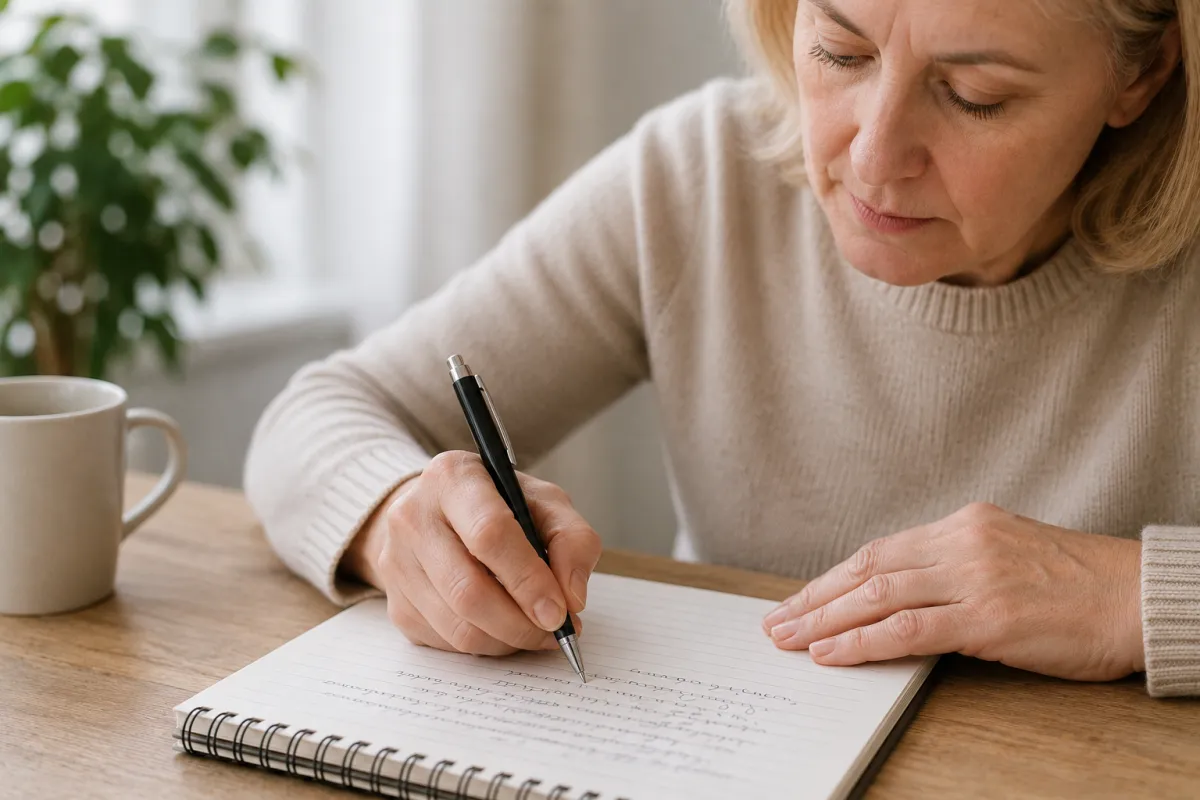
Difficulty writing after a stroke is a common problem that can affect both communication and independence. Some stroke survivors struggle to hold a pen because of weakness or poor coordination, while others know exactly what they want to write but cannot spell words or form sentences correctly. This problem can feel frightening and frustrating, particularly when writing was once automatic. Learn why writing difficulties happen after a stroke, what they may mean and what can help.

After your stroke...

Someone hands you a pen.

You try to write your name.

But the letters look wrong.

Perhaps your hand will not cooperate.

Or maybe you know exactly what you want to say...

But you cannot get the words onto the page.

You begin wondering...

"Why can't I write anymore?"

"Will this ever improve?"

These are very common concerns after a stroke.

✦ ✦ ✦

The Good News

Many people regain some or much of their writing ability after a stroke.

Recovery can continue for months and even years.

The brain has an extraordinary ability to adapt and reorganise itself through neuroplasticity.

With practice, therapy and time, meaningful improvements are often possible.

✦ ✦ ✦

Why Does a Stroke Affect Writing?

Writing is an incredibly complex task.

To write successfully, your brain needs to coordinate:

✓ Language.

✓ Memory.

✓ Attention.

✓ Vision.

✓ Hand sensation.

✓ Fine motor skills.

✓ Planning and organisation.

A stroke can affect one or several of these abilities.

This is why writing problems can vary greatly from person to person.

✦ ✦ ✦

Weakness in the Hand or Arm

Some people struggle to write because the muscles needed to hold and control a pen have been affected.

You may notice:

✓ Weak grip strength.

✓ Tremor.

✓ Poor coordination.

✓ Difficulty controlling movements.

✓ Fatigue when writing.

Even if your thoughts are clear, physical difficulties can make writing extremely challenging.

✦ ✦ ✦

Agraphia: A Language Problem

Some stroke survivors develop a condition called agraphia.

Agraphia is an acquired difficulty with writing caused by damage to language areas of the brain.

You may experience:

✓ Difficulty spelling.

✓ Missing letters.

✓ Writing incorrect words.

✓ Difficulty forming sentences.

✓ Trouble organising written thoughts.

Importantly, this does not mean you are less intelligent.

Your brain is simply having difficulty processing written language.

✦ ✦ ✦

Word-Finding Difficulties

If you have aphasia, writing may also become difficult.

You may know what you want to say but struggle to:

✓ Find the correct words.

✓ Remember spelling.

✓ Put sentences together.

Writing often requires many of the same language skills as speaking.

✦ ✦ ✦

Cognitive Difficulties Can Affect Writing

Stroke-related cognitive problems may also contribute.

These may include difficulties with:

✓ Concentration.

✓ Attention.

✓ Planning.

✓ Memory.

✓ Processing speed.

Writing may suddenly require much more mental effort than before.

✦ ✦ ✦

Visual Problems Can Play a Role

Some stroke survivors experience:

✓ Double vision.

✓ Visual field loss.

✓ Difficulty tracking across a page.

✓ Problems judging spacing.

These visual difficulties can make writing harder.

You may lose your place or struggle to keep letters aligned.

✦ ✦ ✦

Why Does My Handwriting Look Different?

Many people notice major changes in their handwriting.

It may become:

✓ Larger.

✓ Smaller.

✓ Shaky.

✓ Uneven.

✓ Slower.

This often reflects changes in coordination rather than permanent loss of ability.

✦ ✦ ✦

Fatigue Often Makes Writing Worse

Writing after a stroke can be mentally and physically exhausting.

When tired, you may notice:

✓ More spelling mistakes.

✓ Poorer handwriting.

✓ Increased frustration.

✓ Slower thinking.

Symptoms often fluctuate throughout the day.

Many survivors find writing easier earlier in the day.

✦ ✦ ✦

Can Writing Improve?

Yes.

Many people see gradual improvements.

Recovery may occur through:

✓ Neuroplasticity.

✓ Repetition.

✓ Therapy.

✓ Compensatory strategies.

✓ Increased confidence.

Progress may be slow, but small gains can become significant over time.

✦ ✦ ✦

How Can I Practise Writing Again?

Helpful activities may include:

✓ Writing your name.

✓ Keeping a diary.

✓ Writing shopping lists.

✓ Copying sentences.

✓ Practising individual letters.

✓ Using tracing exercises.

Short, regular practice sessions are often most effective.

✦ ✦ ✦

Technology Can Help

Many stroke survivors find technology useful.

Helpful tools may include:

✓ Speech-to-text software.

✓ Typing instead of handwriting.

✓ Predictive text.

✓ Electronic reminders.

✓ Voice notes.

Using these tools does not mean you have failed.

They can help maintain independence while recovery continues.

✦ ✦ ✦

Occupational and Speech Therapy

Therapy may focus on:

✓ Fine motor exercises.

✓ Hand strengthening.

✓ Language exercises.

✓ Writing practice.

✓ Cognitive rehabilitation.

Individual treatment plans often produce the best results.

✦ ✦ ✦

Emotional Impact of Losing Writing Skills

Writing difficulties can feel deeply upsetting.

You may grieve the loss of:

✓ Independence.

✓ Professional identity.

✓ Hobbies.

✓ Confidence.

These feelings are entirely understandable.

Try to be kind to yourself.

Recovery takes time.

✦ ✦ ✦

Tips for Family and Carers

If you're supporting someone who is struggling to write:

✓ Be patient.

✓ Encourage regular practice.

✓ Celebrate small improvements.

✓ Avoid criticising mistakes.

✓ Support alternative communication methods.

Encouragement can make a tremendous difference.

✦ ✦ ✦

When Should You Seek Medical Advice?

Arrange an appointment with your healthcare professional if:

✓ Writing difficulties are causing significant distress.

✓ Hand weakness is worsening.

✓ You are struggling with everyday tasks.

✓ Progress has stalled and additional support is needed.

Seek urgent medical attention immediately if you suddenly develop:

✓ New writing difficulties.

✓ Sudden speech problems.

✓ New weakness.

✓ Facial drooping.

✓ Sudden confusion.

These may be signs of another stroke.

✦ ✦ ✦

My Perspective

One of the hardest parts of stroke recovery...

Is discovering that simple things suddenly feel impossible.

Writing your name.

Filling in a form.

Writing a birthday card.

Activities that once required no thought may now demand enormous effort.

This can feel frightening and discouraging.

But recovery often surprises people.

A few letters become a word.

A few words become a sentence.

And slowly, confidence can return.

Never underestimate what the brain is capable of learning again.

✦ ✦ ✦

Frequently Asked Questions

Is It Normal to Lose the Ability to Write After a Stroke?

Yes.

Writing difficulties are relatively common and can occur because of weakness, language problems or cognitive changes.

✦ ✦ ✦

Will I Be Able to Write Normally Again?

Many people improve considerably, although recovery varies between individuals.

✦ ✦ ✦

Why Can I Speak But Not Write?

Writing and speaking involve overlapping but slightly different brain networks.

A stroke can affect one ability more than the other.

✦ ✦ ✦

Can Therapy Help?

Yes.

Speech and occupational therapy can often help improve writing abilities.

✦ ✦ ✦

Key Takeaways

✓ Writing difficulties are common after a stroke.

✓ Problems may result from weakness, aphasia, agraphia, cognitive changes or visual difficulties.

✓ Many people experience gradual improvement over time.

✓ Regular practice and therapy can help.

✓ Technology can support independence.

✓ Recovery may continue for months and years.

✦ ✦ ✦

Related Articles

Continue learning about communication and hand recovery with these helpful guides:

  • Writing Again After a Stroke

  • Expressive Aphasia After a Stroke

  • Difficulty Finding Words After a Stroke

  • Fine Motor Skills After a Stroke

  • Hand Coordination After a Stroke

✦ ✦ ✦

Final Thoughts

Not being able to write after a stroke can feel incredibly frustrating.

It may feel as though a part of your independence has been taken away.

But many stroke survivors regain skills they once thought were lost forever.

Every letter...

Every word...

Every small attempt...

Helps the brain continue rebuilding connections.

Progress may be slow.

But improvement is often possible.

And sometimes, the ability to write again begins with something as simple as writing your own name.

blog author avatar
Stroke Survivor and Author
Back to Blog

What you’ll learn

Why sitting balance can be affected after a stroke

Common problems people notice day to day

Simple rehabilitation approaches that may help

When changes in balance need medical attention

Why sitting balance matters

Sitting balance is often one of the foundations for standing, walking and everyday activities. After a stroke, some people find it difficult to sit upright without support, lean to one side, or feel unsteady when reaching.

The good news

Sitting balance often improves with rehabilitation, practice and time. Even small improvements can support confidence and independence.

Why can balance change after a stroke?

A stroke may affect several systems that help you stay upright, including strength, coordination, sensation, body awareness and balance control.

Strength

Trunk muscles may become weaker or slower to respond.

Coordination

Movements may feel less automatic or less controlled.

Sensation

You may have less feedback about where your body is in space.

Confidence

Fear of falling can make movement feel harder.

Common sitting problems after a stroke

  • Leaning to one side

  • Difficulty sitting upright without support

  • Feeling unstable when reaching

  • Falling or drifting backwards

  • Increased fatigue during longer periods of sitting

Some people may also experience pusher syndrome, where they actively push towards their weaker side. This should be assessed by a rehabilitation professional.

What May Help

Physiotherapy and occupational therapy often work on trunk control, weight shifting, posture, coordination and everyday activities.

Examples of exercises

  • Sitting unsupported for short periods

  • Gentle reaching tasks

  • Weight shifting from side to side

  • Trunk strengthening

  • Practising on different safe surfaces when appropriate

Keep it individual

Exercises should be matched to your own abilities and professional advice.

More detail: posture and positioning

Helpful strategies may include keeping both feet supported, maintaining an upright posture, and using supportive cushions when recommended.

More detail: fatigue and balance

Balance can become worse when you are tired. Regular rest periods and shorter practice sessions may help.

More detail: tips for family and carers

Encourage safe practice, avoid unexpected pulling or pushing, and help maintain good posture while celebrating small improvements.

When should you seek medical advice?

Arrange an appointment with a healthcare professional if sitting balance is worsening, falls are occurring, new weakness develops, or balance problems are significantly affecting daily activities.

Seek urgent medical attention for sudden new weakness, new speech difficulties, sudden confusion or sudden vision changes.

Key takeaways

Sitting balance is commonly affected after stroke.

Weakness, sensation and body awareness can all contribute.

Good sitting balance supports everyday activity and later mobility.

Recovery can continue over months and years.

Frequently asked questions

Is poor sitting balance common after a stroke?

Yes. Many stroke survivors experience difficulty with sitting balance, particularly during earlier stages of recovery.

Will my sitting balance improve?

Many people improve through rehabilitation, ongoing recovery and repeated practice.

Can exercises help?

Targeted exercises can help improve trunk control, balance and confidence when they are appropriate for the individual.

About Alisia

Alisia Gayle is a stroke survivor who achieved 96% neurological recovery following an ischaemic stroke.

After years of rehabilitation, she now shares practical, evidence-informed resources to help stroke survivors, carers and families better understand recovery and rebuild their lives with confidence.

Alisia is also the author of Brain Damage: My Journey to 96% Recovery, where she shares her personal stroke recovery story and the lessons she learned throughout her rehabilitation.

Next articles

Medical disclaimer

This article is intended for educational purposes only and should not replace professional medical advice, diagnosis or treatment.

Always seek advice from your doctor, physiotherapist or rehabilitation team regarding symptoms, concerns or changes in your condition.

Alisia Gayle is a stroke survivor, author, and advocate whose life was transformed in a single, ordinary day.

Contact us

800 1234 5678

FOLLOW US

Copyright 2026. Alisia Gayle | Stroke Recovery Through Lived Experience. All Rights Reserved.