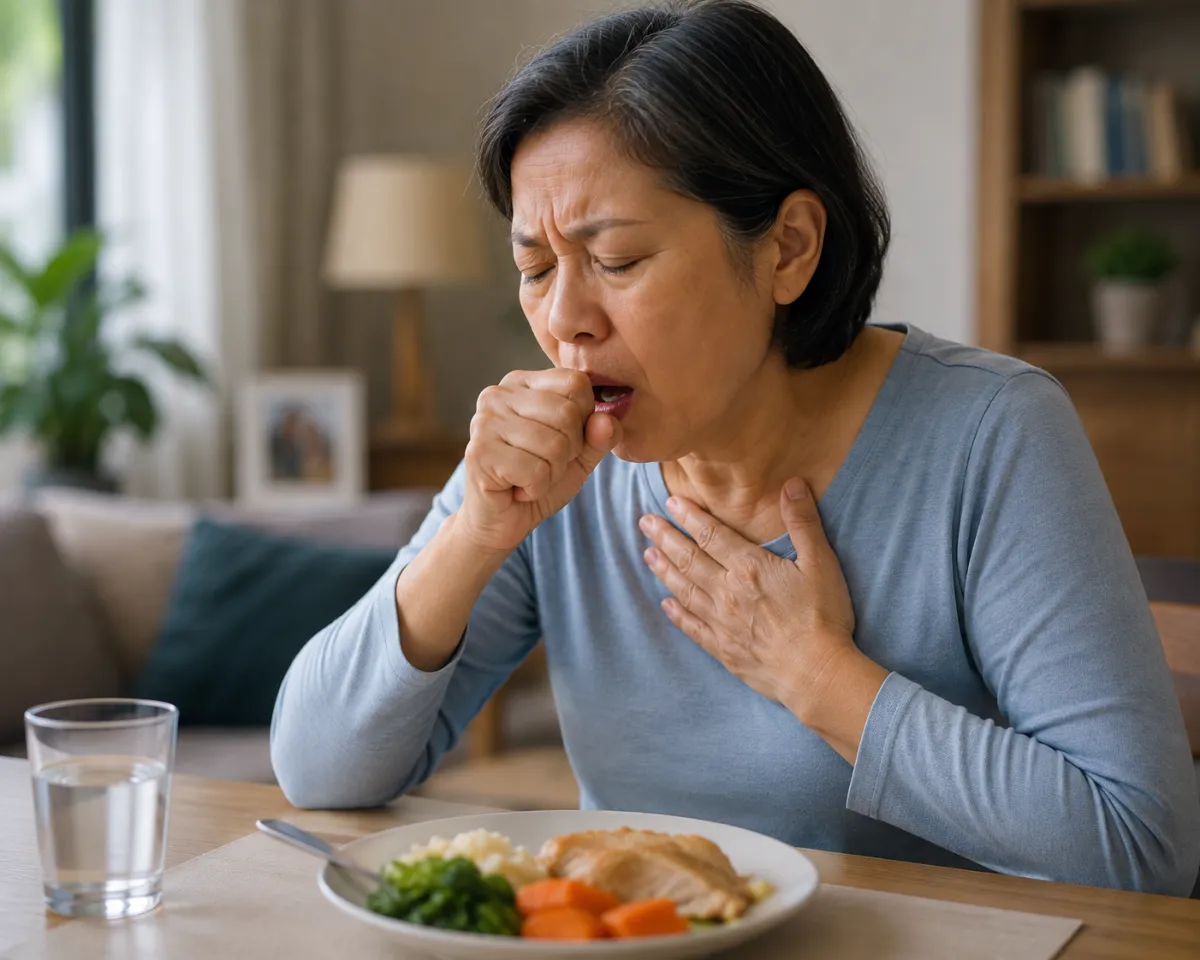
Coughing while eating after a stroke is often a sign of dysphagia (difficulty swallowing). It happens when food or drink enters the airway instead of travelling safely into the stomach. Learn why coughing occurs after a stroke, when it's a warning sign, and what treatments can help you eat and drink more safely.
After your stroke...
You take a sip of water.
Almost immediately...
You start coughing.
Or perhaps...
Food seems to go down the wrong way.
Every meal leaves you feeling anxious.
You begin wondering...
"Why do I keep coughing every time I eat or drink?"
For many stroke survivors...
This is a common problem.
And it's something that should never be ignored.
✦ ✦ ✦
The Good News
Many people who cough while eating after a stroke improve significantly with the right treatment.
Speech and language therapy, swallowing exercises and simple changes to the way you eat can make swallowing safer and more comfortable.
The sooner swallowing problems are identified, the better.
✦ ✦ ✦
Why Do I Cough When Eating?
Swallowing is a complex process involving more than 30 muscles and several nerves.
Normally, your airway closes automatically while you swallow, preventing food or drink from entering your lungs.
After a stroke, this process may become slower or less coordinated.
As a result...
Food or drink may enter the airway.
Your body responds by coughing to try to clear it.
In many cases, coughing is actually a protective reflex.
✦ ✦ ✦
Can a Stroke Cause Swallowing Problems?
Yes.
Difficulty swallowing (called dysphagia) is common after a stroke.
A stroke can affect:
✓ The tongue.
✓ The throat muscles.
✓ The swallowing reflex.
✓ The muscles that protect the airway.
This makes swallowing less efficient and increases the risk of coughing, choking and aspiration.
✦ ✦ ✦
What Else Can Cause Coughing During Meals?
While dysphagia is the most common cause after a stroke, coughing may also occur because of:
✓ Eating too quickly.
✓ Taking large mouthfuls.
✓ Drinking thin liquids too quickly.
✓ Poor sitting posture.
✓ Weak cough reflex.
✓ Reduced throat sensation.
✓ Food left behind in the mouth or throat after swallowing.
A swallowing assessment can help identify the exact cause.
✦ ✦ ✦
Warning Signs to Watch For
You may notice:
✓ Coughing while eating.
✓ Coughing after drinking.
✓ A wet or gurgly voice.
✓ Food sticking in your throat.
✓ Needing several swallows for one mouthful.
✓ Choking episodes.
✓ Taking much longer to finish meals.
✓ Repeated chest infections.
✓ Unexplained weight loss.
These symptoms should be discussed with your healthcare professional.
✦ ✦ ✦
Could It Be Aspiration?
Yes.
Sometimes coughing means food or drink has entered the airway.
This is called aspiration.
Aspiration increases the risk of:
✓ Chest infections.
✓ Aspiration pneumonia.
✓ Breathing problems.
Some people experience silent aspiration, where food enters the lungs without causing any coughing at all.
This is why professional assessment is so important.
✦ ✦ ✦
How Is the Cause Diagnosed?
A speech and language therapist will usually assess your swallowing.
They may check:
✓ Tongue movement.
✓ Lip control.
✓ Voice quality.
✓ Swallowing ability.
✓ Cough strength.
Further tests may include:
✓ Video Fluoroscopic Swallow Study (VFSS).
✓ Fibreoptic Endoscopic Evaluation of Swallowing (FEES).
These investigations help identify the safest way for you to eat and drink.
✦ ✦ ✦
Treatment Options
Treatment depends on the cause of your swallowing difficulties.
✦ ✦ ✦
Swallowing Therapy
Speech and language therapists teach exercises that improve swallowing strength and coordination.
Regular practice often reduces coughing during meals.
✦ ✦ ✦
Food and Drink Modifications
Some people may temporarily require:
✓ Soft foods.
✓ Puréed meals.
✓ Thickened drinks.
These changes can reduce the risk of aspiration and choking.
Only make dietary changes if recommended by your healthcare team.
✦ ✦ ✦
Safe Swallowing Techniques
Simple strategies may include:
✓ Sitting upright.
✓ Taking smaller bites.
✓ Eating slowly.
✓ Swallowing twice.
✓ Remaining upright for at least 30 minutes after meals.
These techniques often make swallowing much safer.
✦ ✦ ✦
Neuroplasticity
Recovery is possible because of neuroplasticity.
As your brain heals, it can develop new pathways that improve swallowing control.
Every swallowing exercise helps strengthen those pathways.
✦ ✦ ✦
Practical Tips
Eat Slowly
There's no prize for finishing first.
Take your time and allow each mouthful to be swallowed completely.
✦ ✦ ✦
Take Smaller Mouthfuls
Large bites are more difficult to swallow safely.
Small mouthfuls reduce the risk of coughing.
✦ ✦ ✦
Sit Upright
Always sit fully upright while eating and remain upright after meals.
Good posture helps protect your airway.
✦ ✦ ✦
Avoid Talking While Eating
Finish swallowing before speaking.
This reduces the chance of food entering your airway.
✦ ✦ ✦
Follow Your Swallowing Plan
Complete your swallowing exercises and follow any recommendations from your speech and language therapist.
These are designed to help you swallow more safely.
✦ ✦ ✦
Tips for Family and Carers
If you're supporting someone who coughs while eating:
✓ Encourage slow eating.
✓ Offer small mouthfuls.
✓ Reduce distractions during meals.
✓ Make sure they remain upright.
✓ Watch for signs of choking or aspiration.
✓ Follow any advice about food textures or thickened fluids.
A calm, unhurried mealtime is usually the safest.
✦ ✦ ✦
When Should You Seek Medical Advice?
Speak with your healthcare professional if:
✓ You regularly cough while eating or drinking.
✓ Food often sticks in your throat.
✓ Meals become increasingly difficult.
✓ You develop repeated chest infections.
✓ You lose weight without trying.
Seek emergency medical attention immediately if:
✓ You are choking and cannot breathe.
✓ You suddenly develop severe swallowing difficulties.
✓ Coughing while eating is accompanied by new facial drooping, arm weakness or speech problems.
These may be signs of another stroke or another medical emergency.
✦ ✦ ✦
My Perspective
Coughing during meals can be worrying.
But it isn't something you should ignore or simply accept as "part of having a stroke."
The right assessment...
The right rehabilitation...
And a few practical changes...
Can make eating safer and far less stressful.
Every safe swallow is another step towards recovery.
✦ ✦ ✦
Frequently Asked Questions
Is It Normal to Cough While Eating After a Stroke?
It's common, but it isn't considered normal.
Coughing often indicates a swallowing problem that should be assessed.
✦ ✦ ✦
Why Do I Cough More With Water Than Food?
Thin liquids move quickly through the throat.
If your swallowing muscles are slow or weak, water can enter the airway before it is fully protected.
✦ ✦ ✦
Will the Coughing Go Away?
Many people improve through swallowing therapy, rehabilitation and time.
Recovery varies from person to person.
✦ ✦ ✦
Should I Stop Eating If I Keep Coughing?
Don't ignore repeated coughing during meals.
Speak with your healthcare professional or speech and language therapist as soon as possible for an assessment before making major changes to your diet.
✦ ✦ ✦
Key Takeaways
✓ Coughing while eating is a common sign of swallowing difficulties after a stroke.
✓ It may occur when food or drink enters the airway.
✓ A swallowing assessment is important to identify the cause.
✓ Speech and language therapy can improve swallowing safety.
✓ Eating slowly and taking smaller mouthfuls often reduces coughing.
✓ Many people regain safer swallowing through rehabilitation.
✦ ✦ ✦
About the Author
Alisia Gayle is a stroke survivor who achieved 96% neurological recovery following an ischaemic stroke.
After years of rehabilitation, she now shares practical, evidence-informed resources to help stroke survivors, carers and families better understand recovery and rebuild their lives with confidence.
Alisia is also the author of Brain Damage: My Journey to 96% Recovery, where she shares her personal stroke recovery story and the lessons she learned throughout her rehabilitation.
✦ ✦ ✦
Medical Disclaimer
This article is intended for educational purposes only and should not replace professional medical advice, diagnosis or treatment.
Always seek advice from your doctor, speech and language therapist or other healthcare professional regarding symptoms, concerns or changes in your condition.
If you experience severe choking or sudden difficulty swallowing, seek emergency medical attention immediately.
✦ ✦ ✦
Final Thoughts
A cough during a meal is your body's way of telling you something isn't quite right.
Listen to it.
Every swallowing exercise...
Every safe meal...
Every small improvement...
Helps your brain and body work together again.
Recovery happens one safe swallow, one meal and one day at a time.