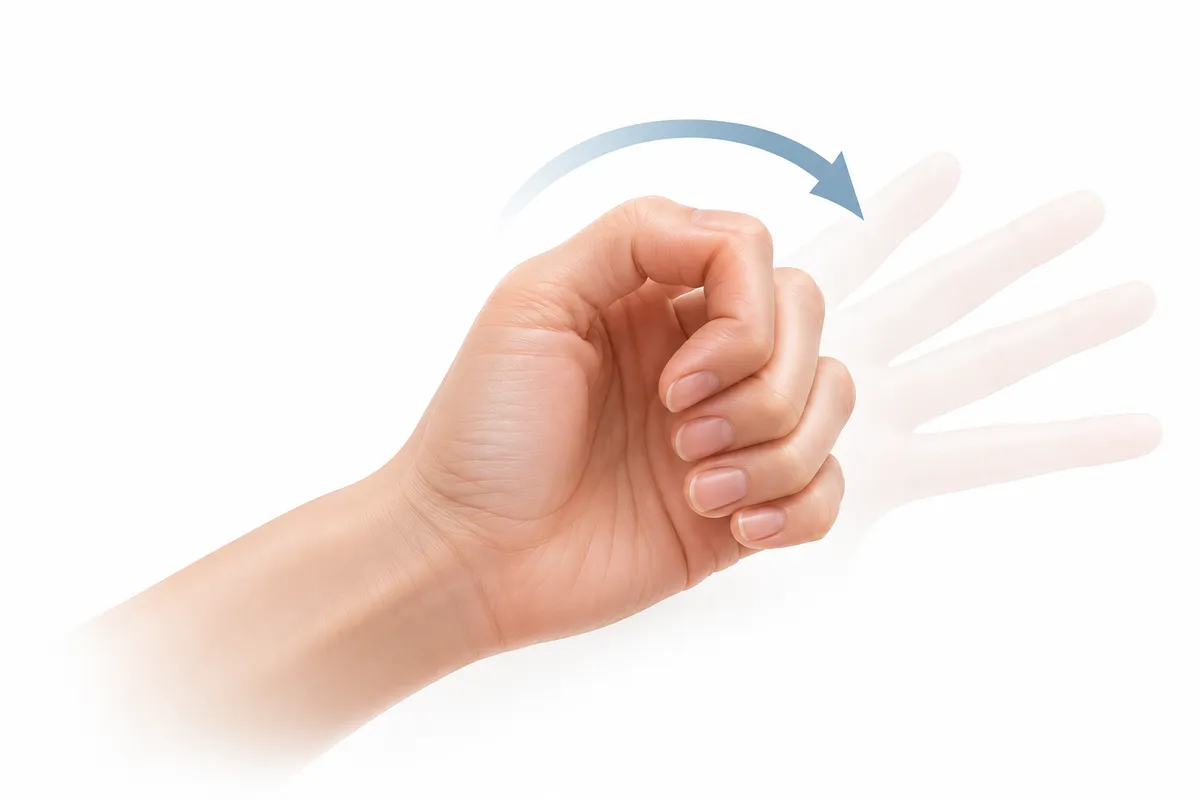
If your fingers won't straighten after a stroke, it is usually because the muscles that bend your fingers have become tight (spastic), while the muscles that straighten them have become weak. Damage to the brain disrupts the normal signals controlling your hand, making it difficult to fully open your fingers. Learn why this happens, the treatments available, and how rehabilitation can help improve finger movement.
After your stroke...
Your fingers stay curled into your palm.
You try to straighten them...
But they barely move.
Or perhaps...
Someone else can straighten them for you...
But as soon as they let go...
Your fingers curl straight back again.
You begin wondering...
"Why won't my fingers straighten?"
"Is my hand permanently damaged?"
For many stroke survivors...
This is one of the most common challenges during recovery.
✦ ✦ ✦
The Good News
Many people regain finger movement after a stroke.
Recovery depends on the severity of the stroke, the amount of muscle stiffness and the rehabilitation you receive, but your brain can continue learning and adapting through neuroplasticity for months and even years.
Improvement is often gradual...
But it is possible.
✦ ✦ ✦
Why Won't My Fingers Straighten?
Opening your fingers requires several muscles to work together.
After a stroke, communication between your brain and those muscles becomes disrupted.
As a result:
✓ The muscles that bend your fingers become overactive.
✓ The muscles that straighten your fingers become weak.
✓ Your brain struggles to coordinate smooth finger movements.
This imbalance makes it much easier to close your hand than to open it.
✦ ✦ ✦
Common Causes
Hand Spasticity
The most common cause is hand spasticity.
The muscles that close your hand remain constantly tight, pulling your fingers into your palm.
The harder you try to straighten them, the more resistance you may feel.
✦ ✦ ✦
Muscle Weakness
The muscles on the back of your forearm that straighten your fingers may be too weak to overcome the tight muscles pulling your fingers closed.
✦ ✦ ✦
Disrupted Brain Signals
Sometimes the muscles themselves are healthy.
The problem is that the brain cannot send accurate instructions telling them when and how to move.
This is why your hand may feel disconnected from what you're trying to do.
✦ ✦ ✦
Joint Stiffness
If your fingers remain bent for long periods, the joints, tendons and ligaments gradually become stiff.
This reduces your range of movement.
✦ ✦ ✦
Contractures
Without regular stretching and movement, muscles and tendons may shorten permanently.
This is known as a contracture.
Early rehabilitation helps reduce this risk.
✦ ✦ ✦
Symptoms
You may notice:
✓ Fingers curled into your palm.
✓ Difficulty straightening one or more fingers.
✓ Thumb tucked into the palm.
✓ Pain when stretching your fingers.
✓ Muscle spasms.
✓ Stiff finger joints.
✓ Fingernails pressing into your palm.
✓ Difficulty letting go of objects.
✓ Reduced hand function.
Symptoms often become worse when you're:
✓ Tired.
✓ Stressed.
✓ Cold.
✓ Unwell.
✦ ✦ ✦
How Does It Affect Everyday Life?
Finger stiffness can make everyday activities challenging.
You may struggle to:
✓ Hold cutlery.
✓ Button clothes.
✓ Wash your hand.
✓ Hold a toothbrush.
✓ Type on a keyboard.
✓ Use your phone.
✓ Pick up small objects.
✓ Carry shopping.
✓ Shake hands.
Many people also find it difficult to release objects once they've gripped them.
✦ ✦ ✦
Treatment Options
Treatment depends on the cause of your finger stiffness.
Most people benefit from combining several approaches.
✦ ✦ ✦
Physiotherapy
A physiotherapist can prescribe exercises to:
✓ Improve finger movement.
✓ Stretch tight muscles.
✓ Strengthen weak muscles.
✓ Improve hand coordination.
Regular rehabilitation helps your brain relearn movement.
✦ ✦ ✦
Occupational Therapy
Occupational therapists focus on improving hand function during everyday activities.
They may recommend:
✓ Task-specific exercises.
✓ Hand positioning techniques.
✓ Adaptive equipment.
✓ Splints.
The goal is to improve independence while encouraging normal movement.
✦ ✦ ✦
Stretching
Gentle stretching helps:
✓ Maintain flexibility.
✓ Reduce stiffness.
✓ Prevent contractures.
Stretch daily, but never force your fingers open if it causes severe pain.
✦ ✦ ✦
Splints
Some people benefit from hand splints that:
✓ Hold the fingers in a more open position.
✓ Reduce muscle shortening.
✓ Improve comfort.
✓ Support stretching.
Splints should always be prescribed by a healthcare professional.
✦ ✦ ✦
Botulinum Toxin (Botox)
If severe spasticity is preventing your fingers from straightening, Botox injections may help relax the overactive muscles.
Botox works best when combined with stretching and rehabilitation.
✦ ✦ ✦
Functional Electrical Stimulation (FES)
For some people, electrical stimulation may help activate the muscles responsible for opening the hand.
Your rehabilitation team can advise whether this treatment is suitable for you.
✦ ✦ ✦
Neuroplasticity
Your brain has the remarkable ability to reorganise itself after a stroke.
Every attempt to straighten your fingers...
Every exercise...
Every repetition...
Helps strengthen new neural pathways.
Progress comes through consistent practice.
✦ ✦ ✦
Practical Tips
Stretch Every Day
Daily stretching helps keep your fingers flexible and reduces muscle tightness.
Small, regular sessions are often more effective than occasional long ones.
✦ ✦ ✦
Practise Opening Your Hand
Even if your fingers only move a little, keep practising.
Every repetition encourages your brain to relearn the movement.
✦ ✦ ✦
Use Your Hand During Everyday Activities
Try to involve your affected hand whenever it's safe.
Even using it as a supporting hand provides valuable stimulation.
✦ ✦ ✦
Keep Your Palm Clean
If your fingers stay curled:
✓ Wash your palm daily.
✓ Dry it thoroughly.
✓ Check for redness.
✓ Check for broken skin.
This helps prevent infections and skin breakdown.
✦ ✦ ✦
Be Patient
Finger recovery is often slower than recovery of the shoulder or leg.
Focus on gradual progress rather than quick results.
✦ ✦ ✦
Tips for Family and Carers
If you're supporting someone whose fingers won't straighten:
✓ Encourage daily exercises.
✓ Help with stretching if you've been shown how.
✓ Never force the fingers straight.
✓ Keep the palm clean and dry.
✓ Encourage safe use of the affected hand during daily activities.
Small amounts of encouragement each day can make a big difference.
✦ ✦ ✦
When Should You Seek Medical Advice?
Speak with your healthcare professional if:
✓ Your fingers become increasingly stiff.
✓ Pain is getting worse.
✓ Your fingernails begin digging into your palm.
✓ You cannot clean your hand properly.
✓ Movement continues to decline.
Seek urgent medical attention if:
✓ Your hand becomes swollen, hot or red.
✓ You develop severe pain or signs of infection.
✓ You suddenly develop new weakness, facial drooping or speech difficulties.
These symptoms require immediate medical assessment.
✦ ✦ ✦
My Perspective
Recovering finger movement can be one of the longest parts of stroke rehabilitation.
Some days...
It feels like nothing is happening.
But your brain is constantly adapting.
Every stretch...
Every attempt to straighten your fingers...
Every repetition...
Is another opportunity for your brain to rebuild the connections needed for movement.
Don't underestimate the power of persistence.
✦ ✦ ✦
Frequently Asked Questions
Why Can I Make a Fist but Not Open My Hand?
After a stroke, the muscles that close your hand are often stronger and may become tight because of spasticity, while the muscles that open your hand are weaker.
This imbalance makes opening the hand much more difficult.
✦ ✦ ✦
Will My Fingers Straighten Again?
Many people regain meaningful finger movement with rehabilitation.
Recovery depends on the severity of the stroke, the amount of stiffness and how consistently you practise your exercises.
✦ ✦ ✦
Should I Force My Fingers Straight?
No.
Forcing stiff fingers can cause pain or injury.
Always use the stretching techniques recommended by your physiotherapist or occupational therapist.
✦ ✦ ✦
Can Finger Movement Improve Years After a Stroke?
Yes.
Because of neuroplasticity, many stroke survivors continue making improvements months and even years after their stroke through consistent rehabilitation.
✦ ✦ ✦
Key Takeaways
✓ Difficulty straightening the fingers is common after a stroke.
✓ Spasticity, muscle weakness and disrupted brain signals are the main causes.
✓ Daily stretching helps prevent stiffness and contractures.
✓ Physiotherapy and occupational therapy are key parts of treatment.
✓ Botox and splints may help some people with severe spasticity.
✓ Consistent practice supports neuroplasticity and long-term recovery.
✦ ✦ ✦
Final Thoughts
Fingers that won't straighten today...
Can still improve tomorrow.
Every stretch...
Every exercise...
Every repetition...
Is helping your brain reconnect with your hand.
Stay patient.
Keep practising.
Recovery happens one movement, one repetition and one day at a time.